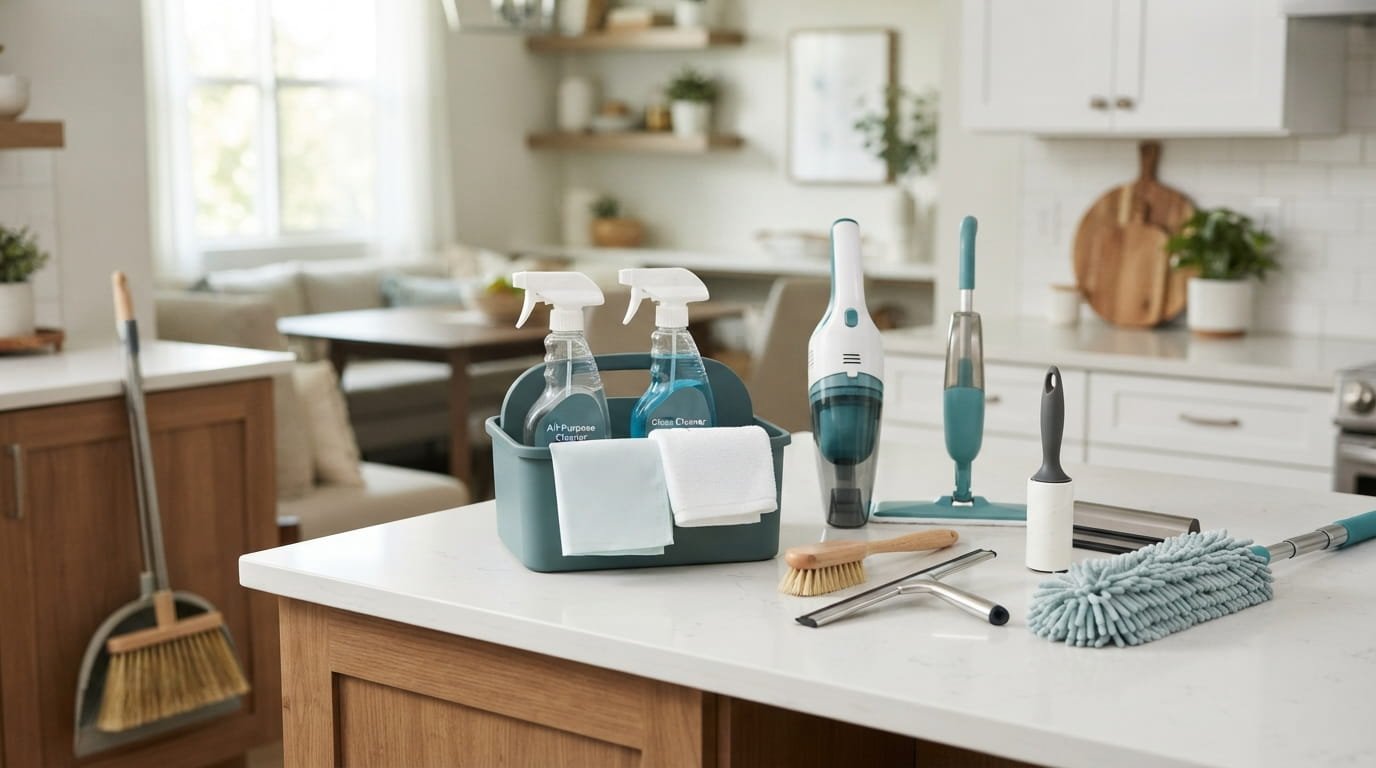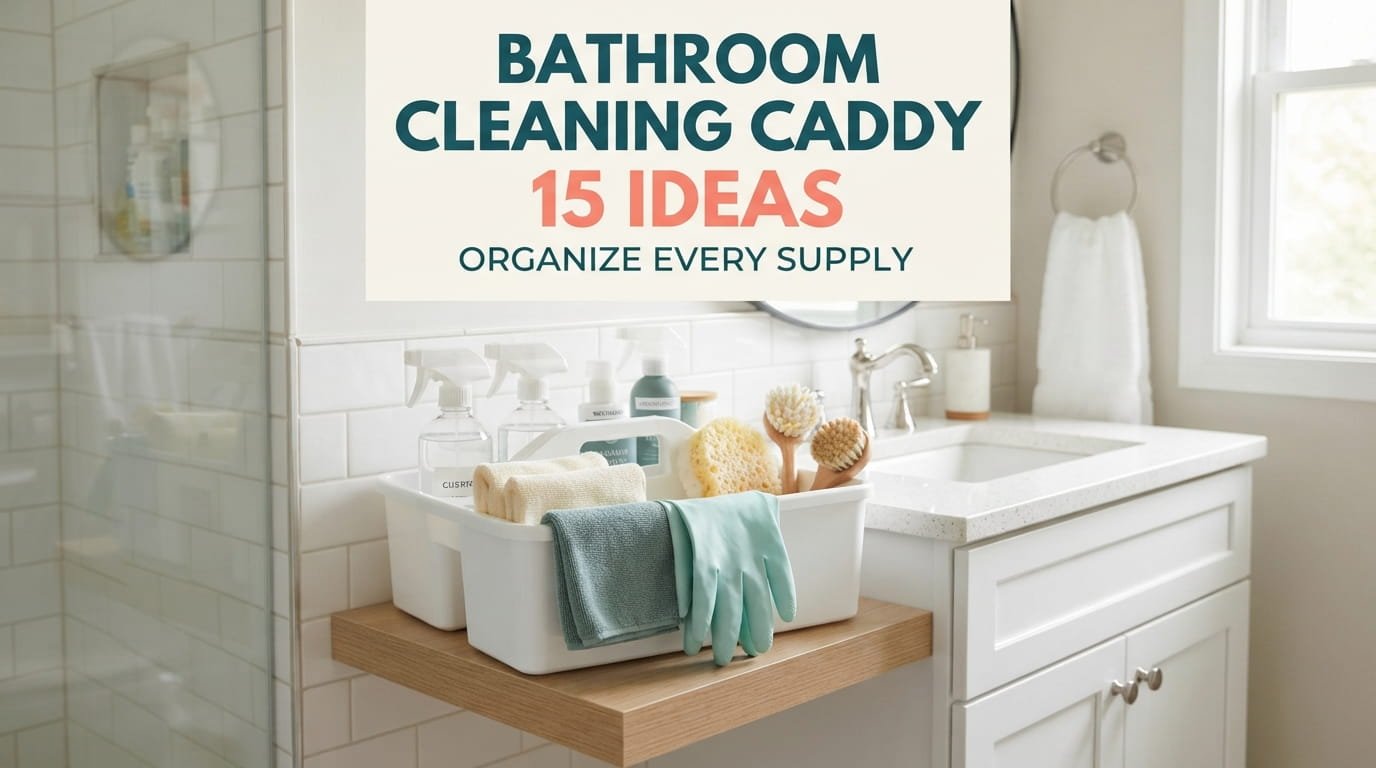
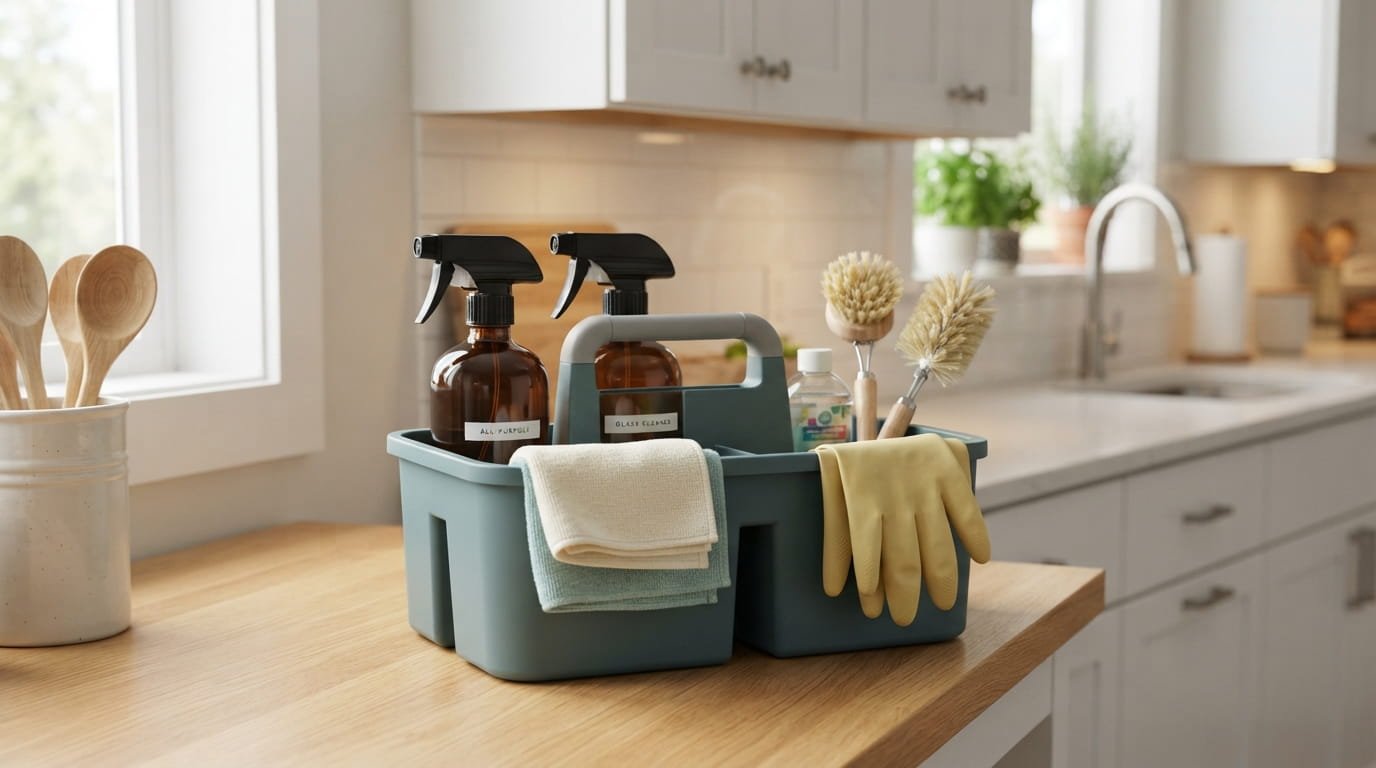
Carrying an armful of spray bottles from room to room gets old fast, and that’s usually the moment people start searching for the best cleaning caddy instead of just grabbing whatever bin happens to be under the sink. The problem is most caddies on the market look similar in photos but behave very differently once they’re actually loaded up and carried across a house.
Size, handle design, and what the compartments are actually built for make a bigger difference than people expect before they’ve used one for a few weeks. A caddy that looks sturdy in a product photo can still tip over if the weight isn’t distributed well, or feel awkward the second your hand starts to cramp halfway through a cleaning session.
This list walks through what actually matters when choosing one, not just what looks nice on a shelf. Some items cover physical features like handles and compartments. Others are about matching the caddy to your specific routine, whether that means stairs, multiple floors, or a small apartment. Work through a few of these before you buy, and the caddy you end up with will actually get used.
1. What a Cleaning Caddy Actually Needs to Hold
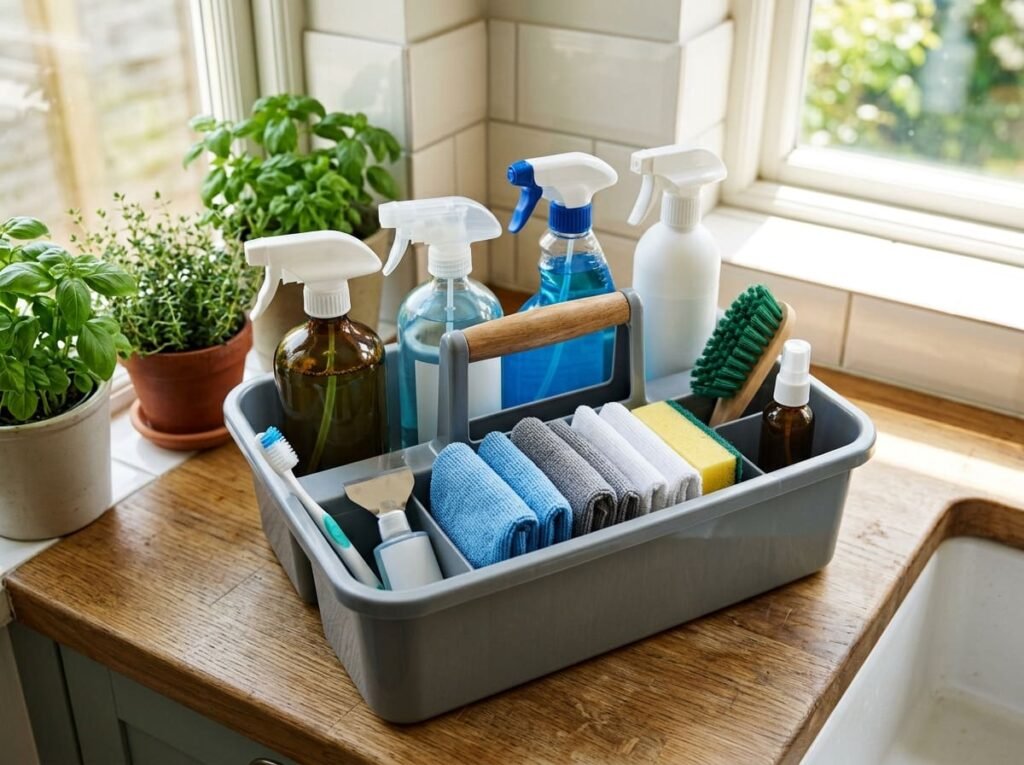
Before comparing any specific caddy, it helps to know what’s actually going in it, since that list shapes every other decision on this page.
Measure a few of your actual bottles before shopping, since caddy dimensions online don’t always account for the tall sprayer tops that stick up past the bottle itself.
2. Plastic Versus Metal Caddies, and Which Holds Up Longer
Plastic and metal caddies solve the same basic problem, but they wear differently over months of actual use, and the right choice depends on how rough your routine tends to be.
| Plastic | Metal |
|---|---|
| Lighter, less expensive, can crack over time. | Heavier, more durable, resists cracking entirely. |
| Easier to wipe clean of spills. | Can rust if left wet for long periods. |
For a caddy that gets dragged up and down stairs daily, metal tends to outlast plastic by a wide margin despite the extra weight.
3. The Handle Detail Most Buyers Overlook
A thin plastic handle might look fine sitting empty on a store shelf, but load it up with full bottles and that same handle can dig into your hand within minutes.
💡 Quick Tip
Look for a wider, slightly padded handle if you’ll be carrying the caddy for more than a few minutes at a time. A thin wire handle is the first thing people complain about after a few uses.
A center mounted handle also balances better than one off to the side, which matters once the caddy is fully loaded and you’re walking up a flight of stairs with it.
4. Open Tote Versus Closed Box With a Lid
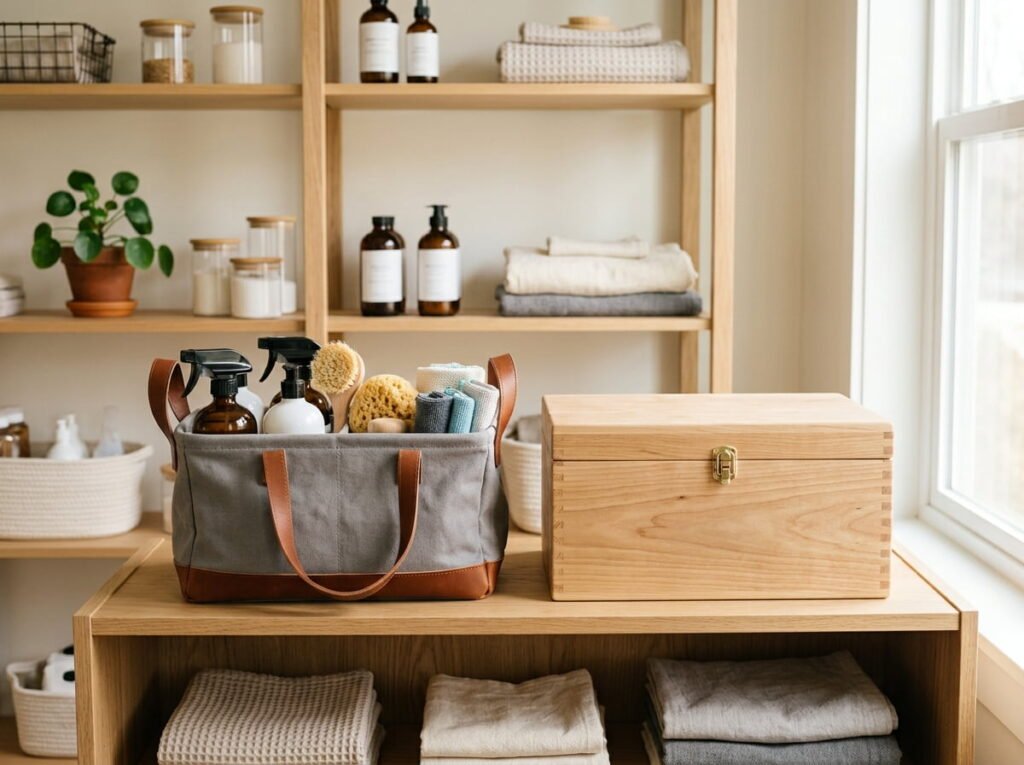
An open tote keeps everything visible and easy to grab, while a closed box with a lid keeps contents hidden and protected, and the right choice depends mostly on where it’s stored.
An open tote sitting on a visible shelf, mismatched bottles on display.
A closed box with a lid, tucked under the sink out of sight.
If the caddy lives somewhere visible, like open shelving, a lid helps it look intentional instead of like a pile of cleaning supplies on display.
5. Sizing a Caddy to Match How You Actually Clean
A caddy sized for a quick daily wipe down looks nothing like one meant to carry everything needed for a full weekend deep clean, and buying the wrong size for your actual habits leads to frustration either way.
If you’re unsure which size fits your routine, medium is usually the safer starting point, since it’s easier to pare down than to upgrade later.
6. The Mistake of Buying a Caddy Too Small for Full Size Bottles
A caddy that looks roomy in a product photo can turn out too shallow for a standard sized spray bottle, which only becomes obvious once it’s already sitting in your cart at home.
Check the listed interior dimensions, not just the overall size.
Measure a standard bottle you already own before ordering.
Assuming every caddy fits standard sized bottles.
Judging depth from a photo without checking the actual measurements.
A bottle that sticks out past the edge isn’t just inconvenient, it also tips the whole caddy off balance while you’re carrying it.
7. Caddies With Divided Compartments Versus One Open Bin
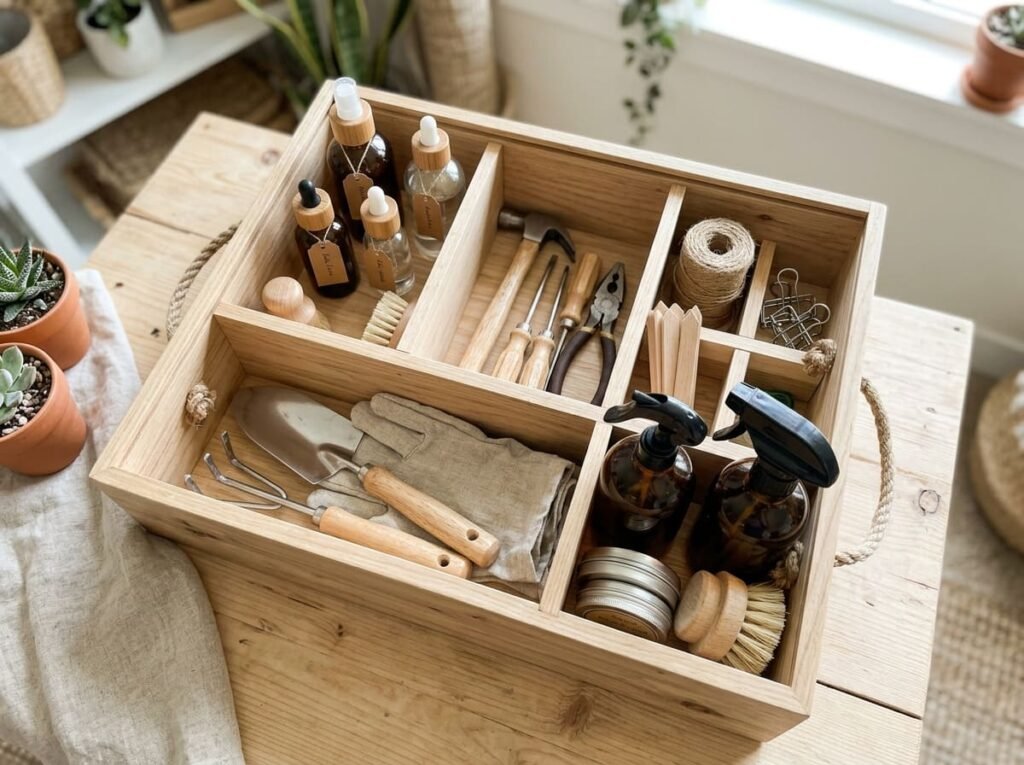
Some caddies split the interior into separate compartments for different supplies, while others leave one wide open bin for everything to shift around freely.
When divided compartments help most
An open bin works better for a minimalist routine with just a couple of bottles, where extra dividers only get in the way.
8. What to Check Before Buying a Caddy for Stairs
Stairs introduce a specific problem, carrying a loaded caddy up or down steps without it tipping or catching on a railing along the way.
- Check that the handle sits centered and locks in place, not a loose swinging loop.
- Measure the width against your narrowest stairwell point before buying.
- Pick a caddy with a flat, stable base so it can be set down safely on a step mid climb.
- ▸A lower center of gravity keeps a loaded caddy from tipping on uneven steps.
- ▸Textured rubber feet help it stay put if set down on a step temporarily.
- ▸A locking handle beats a loose swinging one for stair safety.
9. Rolling Caddies for Larger Homes or Multiple Floors
Carrying a heavy caddy through a big house gets tiring fast, and that’s exactly the problem a rolling caddy on wheels is built to solve.
The trade off is stairs, since wheels only help on flat ground, so these work best for single story homes or just one main floor of cleaning.
10. Wall Mounted Storage Versus a Portable Caddy
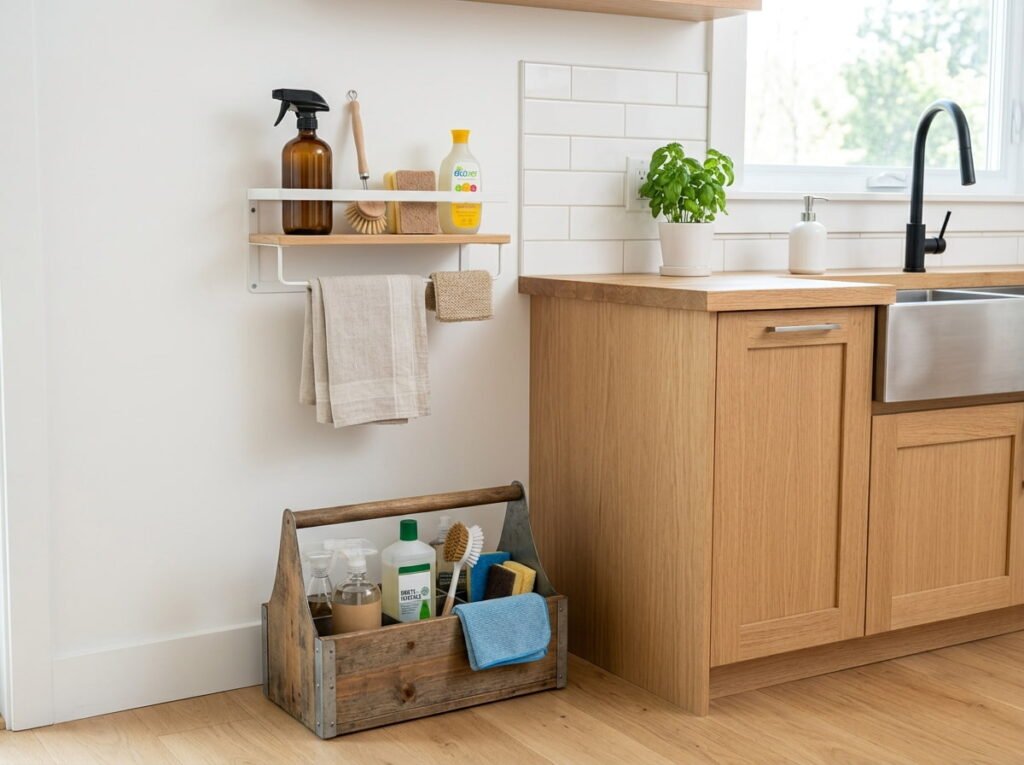
Some supplies don’t need to travel room to room at all, which makes a wall mounted rack a better fit than a caddy for certain parts of a routine.
- A mounted rack keeps bottles accessible right where a task happens, like near the kitchen sink.
- A portable caddy still makes sense for anything used across multiple rooms, like dusting supplies.
- Many routines actually benefit from a mix of both, rather than relying on just one.
- ▸A kitchen specific mount frees up a portable caddy for the rest of the house.
- ▸Mounted storage means one less thing to carry during a quick task.
- ▸Worth mapping out which tasks actually need portability before buying either.
11. Weight Capacity and Why It Matters More Than Looks
A caddy can look sturdy and still buckle under the weight of a few full bottles plus extra supplies, especially if the material is thinner than it appears in photos.
💡 Quick Tip
Add up the rough weight of what you plan to carry and check it against the listed weight capacity before buying, not after the handle starts to flex under the load.
A caddy rated for more weight than you’ll ever actually carry also tends to hold its shape longer, since it’s not working at its limit every single use.
12. Building a Caddy Around a Capsule Set of Supplies
A caddy overflowing with half used bottles and duplicate products is harder to carry and harder to find anything in once you’re mid task.
Six half used bottles crammed together, impossible to find the right one.
Three essentials, clearly visible, grabbed without digging around.
Picking the caddy size based on a pared down set of essentials, rather than everything you currently own, usually leads to a setup you’ll actually stick with.
13. Caddies Built for Under Sink Storage Between Uses
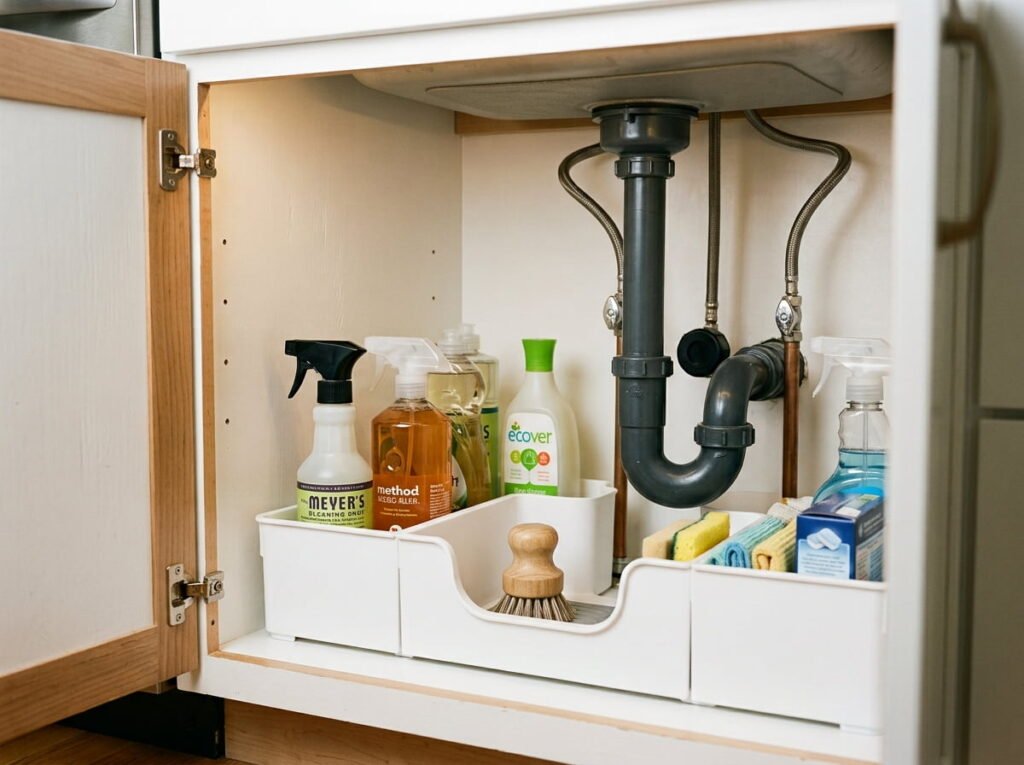
A caddy that gets used daily still needs somewhere to live in between, and under the sink is where most people end up storing it, which comes with its own set of size constraints.
What to check for under sink fit
A caddy that doesn’t quite fit under the sink tends to end up on the floor somewhere else in the house, which defeats the point of having a dedicated spot for it.
14. The Return Policy Detail Worth Checking Before You Buy
Dimensions and materials only tell part of the story, and a caddy that feels wrong once it’s actually loaded up is a common enough problem that return policy matters more than people think.
Check the return window before buying, not after it’s already too late.
Keep the original packaging until you’ve tested it fully loaded.
Tossing the box before you’ve carried it around the house once.
Assuming every seller offers the same return window.
A short return window on a product you can’t fully evaluate until it’s loaded and carried is a real risk worth weighing before checkout.
15. Matching a Caddy to Your Actual Cleaning Routine

There’s no single best cleaning caddy that works for every household, since the right one depends entirely on how, where, and how often you actually clean.
The best caddy is the one sized and shaped around your actual routine, not the one that looks best in a photo.
Walk through your own weekly routine once before buying, noting which rooms, which stairs, and which supplies actually come into play, and let that guide the final decision.
Conclusion
The best cleaning caddy isn’t really about brand or price, it’s about whether it actually fits how you move through your house on a normal cleaning day. A caddy sized for your real routine, with a handle that doesn’t dig into your hand and enough room for the bottles you actually use, ends up getting reached for every time instead of sitting forgotten under the sink.
Think through your own stairs, your own storage space, and your own go to supplies before deciding on size or style. Save this list for the next time you’re shopping for a cleaning caddy, and let your actual routine guide the choice instead of whatever looks nicest in a photo.