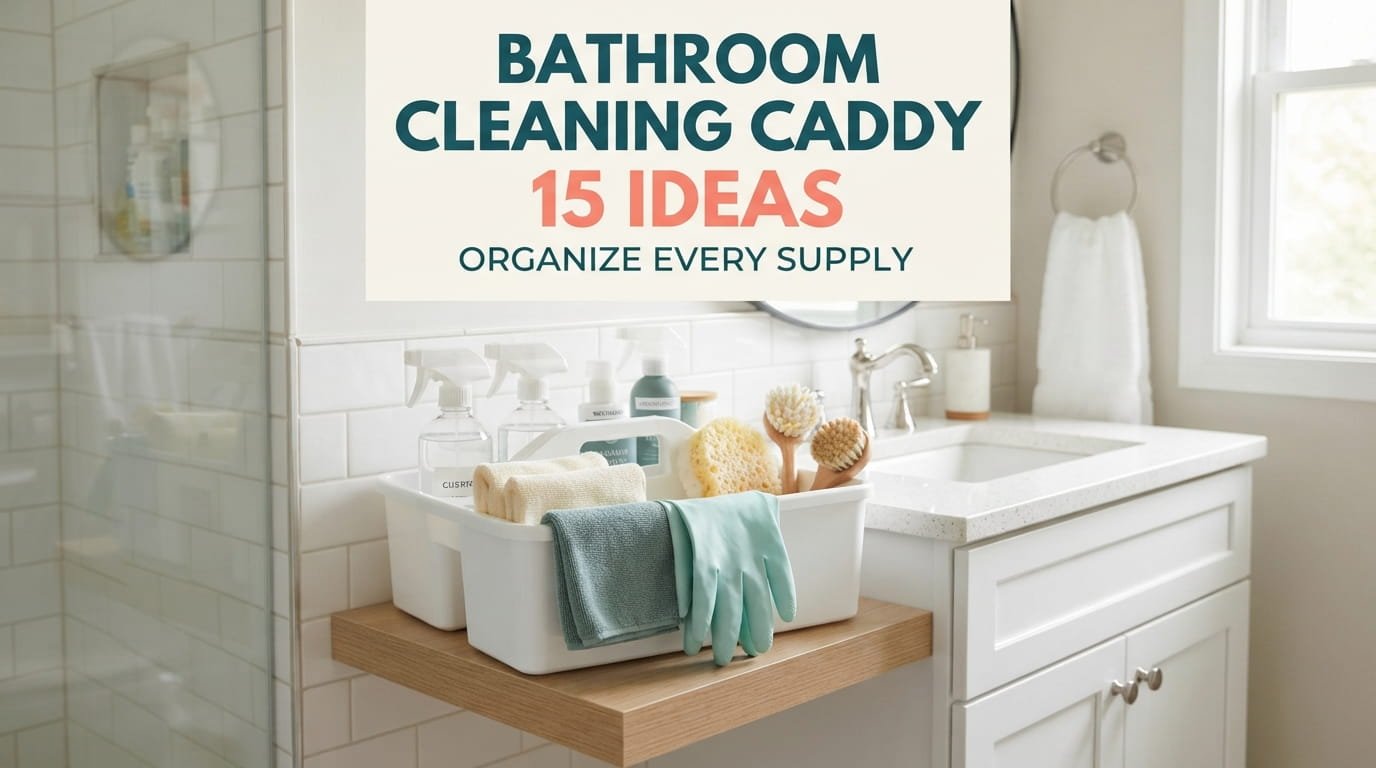
A fifteen minute cleaning routine sounds simple until you’re digging through three different closets looking for the right tool, and by the time you find it, half your window is already gone. The right tools for quick daily cleaning aren’t about owning more stuff. They’re about owning the few things that actually get grabbed instead of sitting untouched in a cabinet.
Most daily messes don’t need a deep clean arsenal. They need something fast, something that doesn’t require setup, and something that lives somewhere you’ll actually remember. A mop that needs filling, wringing, and draining doesn’t belong in a fifteen minute routine, even if it does a great job on a Saturday.
This list breaks down the specific tools worth keeping on hand for daily upkeep, along with a few habits that make the whole routine faster. Some items are about picking the right version of a tool you probably already own. Others are about storage, timing, or just avoiding tools that sound useful but never actually get used. Pick a few that fit your house and build a routine around them.
1. The One Tool That Should Live in Every Room, Not Just the Closet
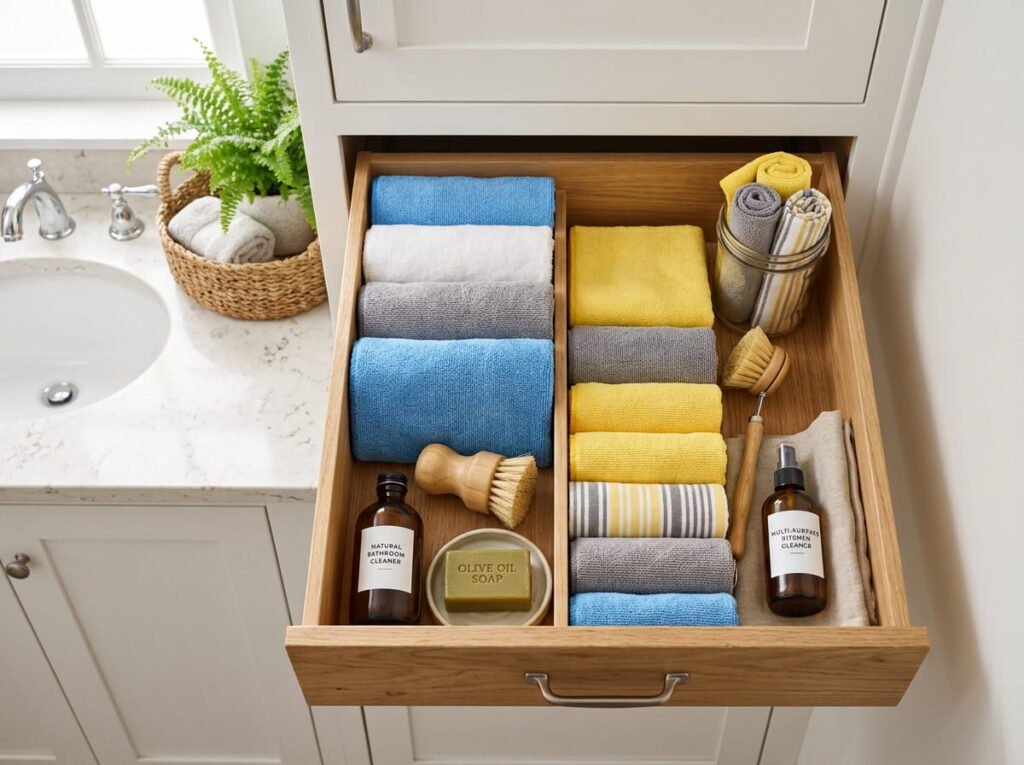
Most people own exactly one of their most used cleaning tool, which means every quick clean starts with a walk to go find it.
A second or third microfiber cloth stashed in the bathroom and kitchen saves more time than any gadget on this list.
Keep a cloth tucked in a drawer in every room where quick wipe downs actually happen, not just in the main supply closet.
2. A Microfiber Cloth Set That Covers Dusting and Spills at Once
One type of cloth that handles both dusting and wiping up spills cuts out the step of switching tools mid task.
💡 Quick Tip
Keep dry cloths separate from damp ones in two small labeled bins. Grabbing the wrong one mid task wastes time you don’t have in a fifteen minute window.
A set of six to eight cloths is usually enough to rotate through a week without needing an emergency laundry run mid routine.
3. Spray Mop Versus Traditional Mop and Bucket for a Fast Floor Pass
A traditional mop and bucket takes real setup time, filling water, adding solution, wringing it out, before you’ve even touched the floor, and that setup alone can eat half a fifteen minute window.
| Traditional Mop | Spray Mop |
|---|---|
| Requires filling, wringing, and a bucket of water. | Ready to grab and go, no setup required. |
| Better for a true deep clean of the whole floor. | Better for a quick daily pass on visible spots. |
Keep both if you have room, and reach for the spray version on busy days when a full mop session just isn’t happening.
4. A Handheld Vacuum for the Mess That Doesn’t Need the Big One
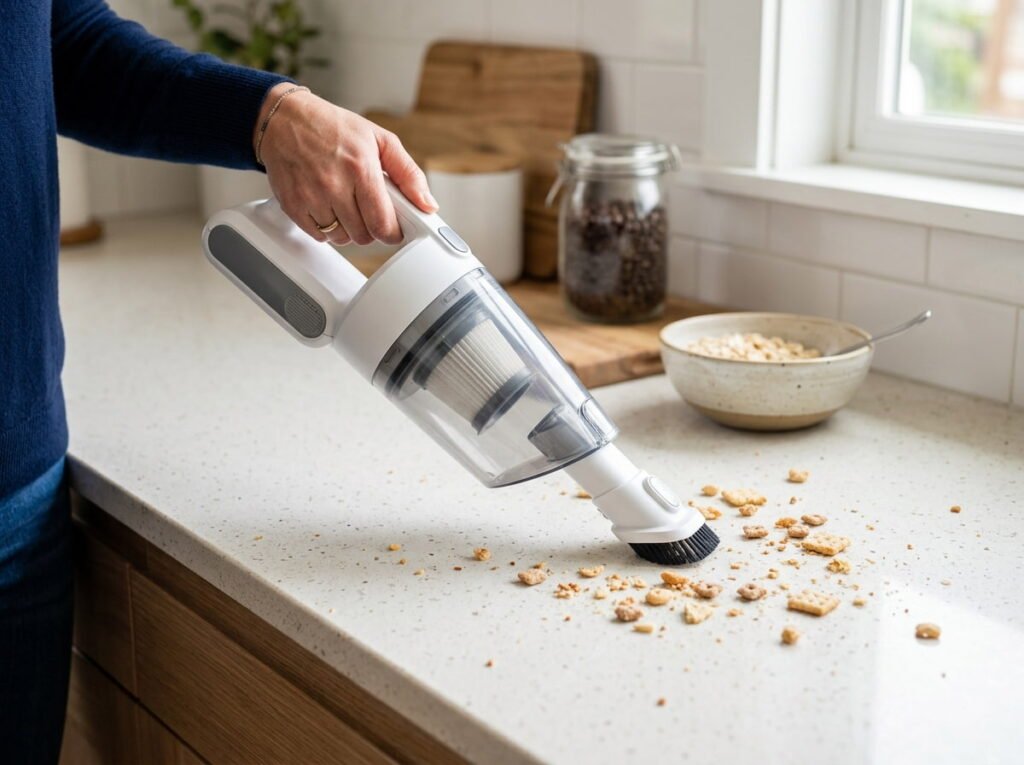
Dragging out a full size vacuum for a small spill of crumbs or cereal is one of the fastest ways to lose five minutes of a fifteen minute window to setup alone.
Keep it charged and stored somewhere visible, since a handheld vacuum buried in a closet gets used about as often as the big one.
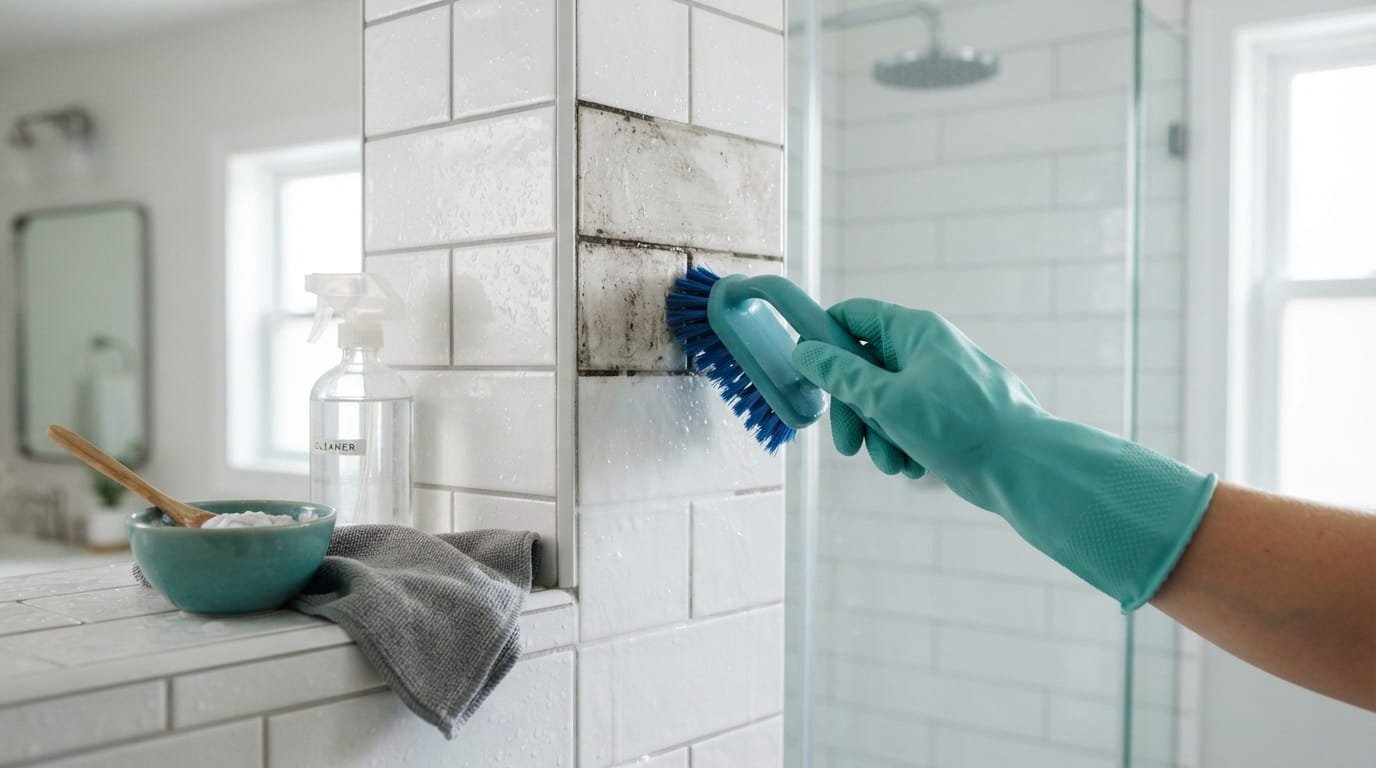
5. The Scrub Brush Detail That Saves Real Scrubbing Time
A scrub brush with stiff enough bristles cuts actual scrubbing time in half compared to a soft sponge that just pushes grime around instead of lifting it.
💡 Quick Tip
Look for a brush with a comfortable handle angle, not just stiff bristles. An awkward grip slows down scrubbing more than people expect, especially on tight corners.
A dedicated brush for the kitchen sink separate from the one used in the bathroom also keeps things more sanitary without much extra cost.
6. A Squeegee for Glass and Shower Walls in Under a Minute
Water spots on shower glass build up fast, and a quick squeegee pass after every shower takes less time than people assume once it becomes a habit.
Cloudy, water spotted glass that looks dirty even right after cleaning.
Clear glass with no spots, maintained in under a minute daily.
Hang it on a suction hook right inside the shower, since a squeegee stored anywhere else almost never gets used consistently.
7. Why a Lint Roller Belongs in the Cleaning Kit, Not Just the Closet
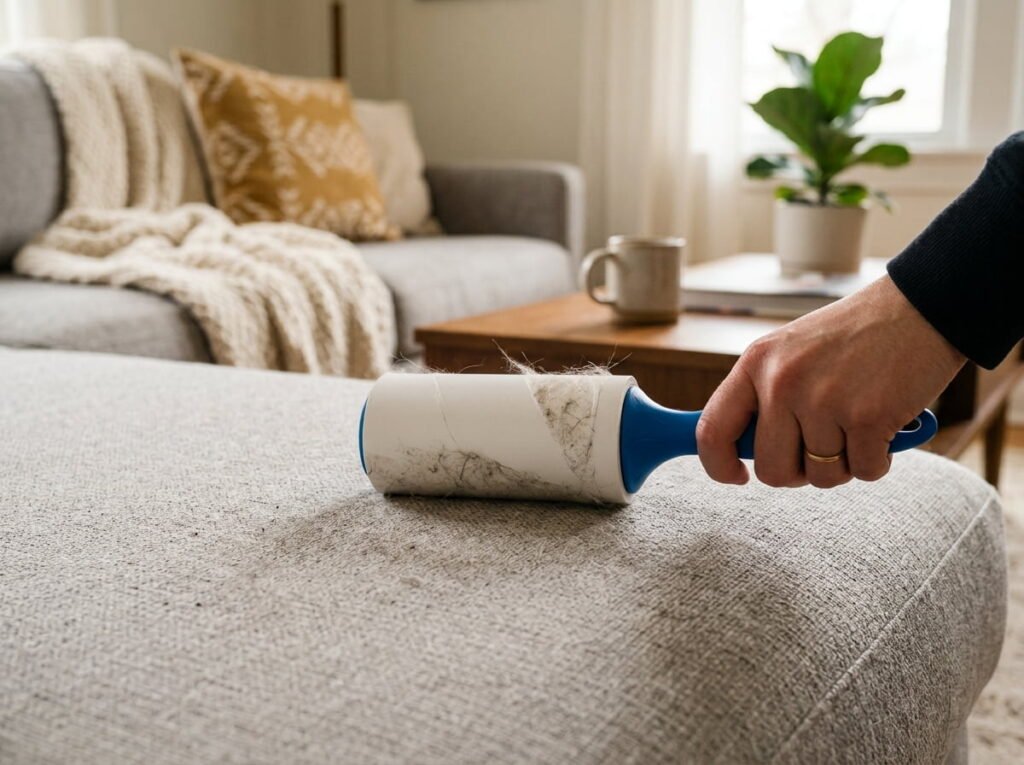
Most people only think of a lint roller for clothes, but it handles pet hair on furniture, dust on lampshades, and crumbs on upholstery faster than almost any other tool.
- Keep one near the couch for a quick pass before guests arrive unexpectedly.
- A second one in a drawer near the entryway catches hair on coats and bags.
- Refills are cheap enough to keep a small stock on hand at all times.
- ▸Works on lampshades and curtains just as well as clothing.
- ▸Faster than a vacuum for small, spot specific hair pickup.
- ▸A reusable fabric version cuts down on constantly buying refills.
8. A Dust Wand That Reaches Blinds and Vents Without a Step Stool
Dust settles on blinds and vents in a way that’s easy to ignore until it’s visibly thick, and a dust wand with some flexibility handles both without dragging out a step stool.
A washable microfiber head beats a disposable one for daily use, since it’s one less thing to restock on a regular basis.
9. The Mistake of Buying Tools That Need Their Own Storage System
A gadget that needs its own charging dock, separate storage bin, or dedicated shelf rarely survives long in a fast daily routine, no matter how well it works in theory.
Choose tools that fit into storage you already have.
Test a tool for two weeks before buying a second or backup one.
Buying a tool that only works if it’s charging in one specific spot.
Assuming a clever gadget will fit naturally into your routine.
If a tool adds a step just to use it, that friction usually means it ends up back in its box within a month.
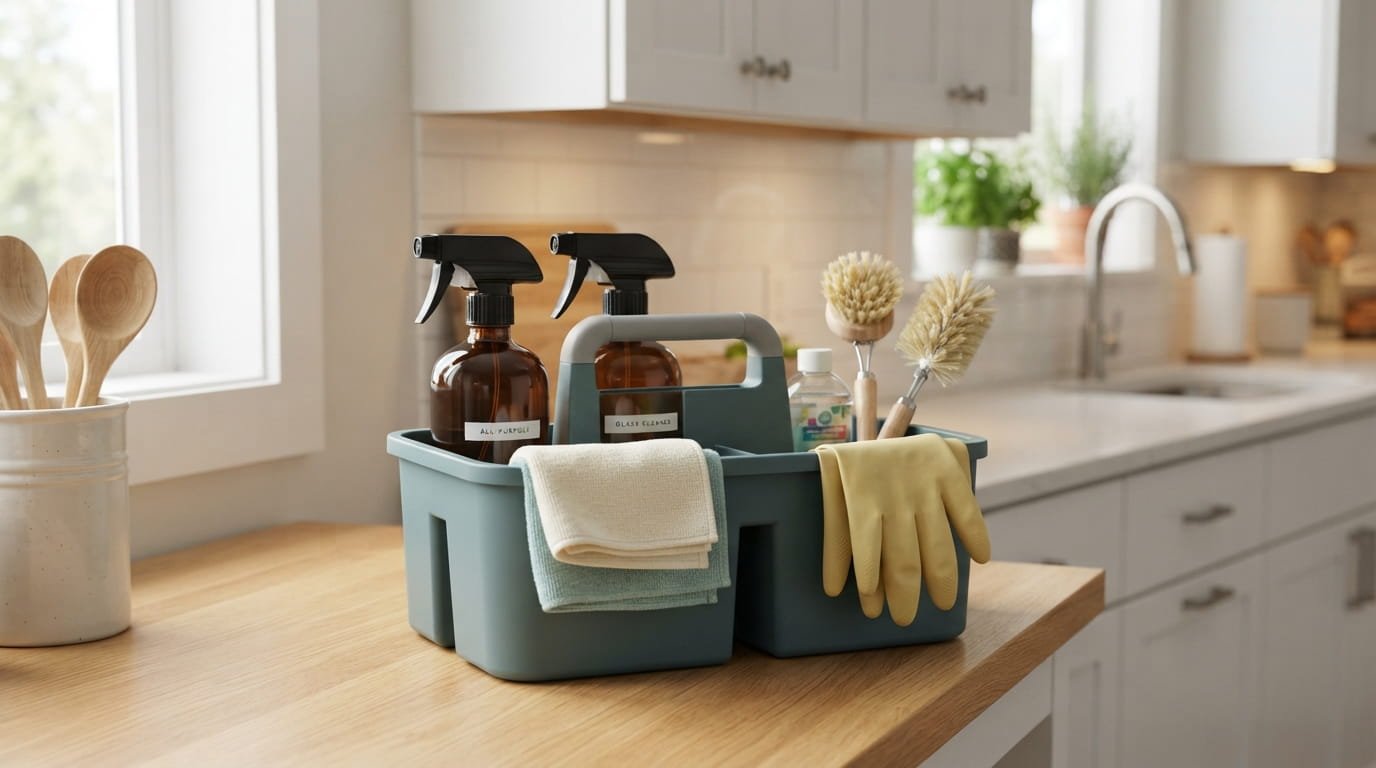
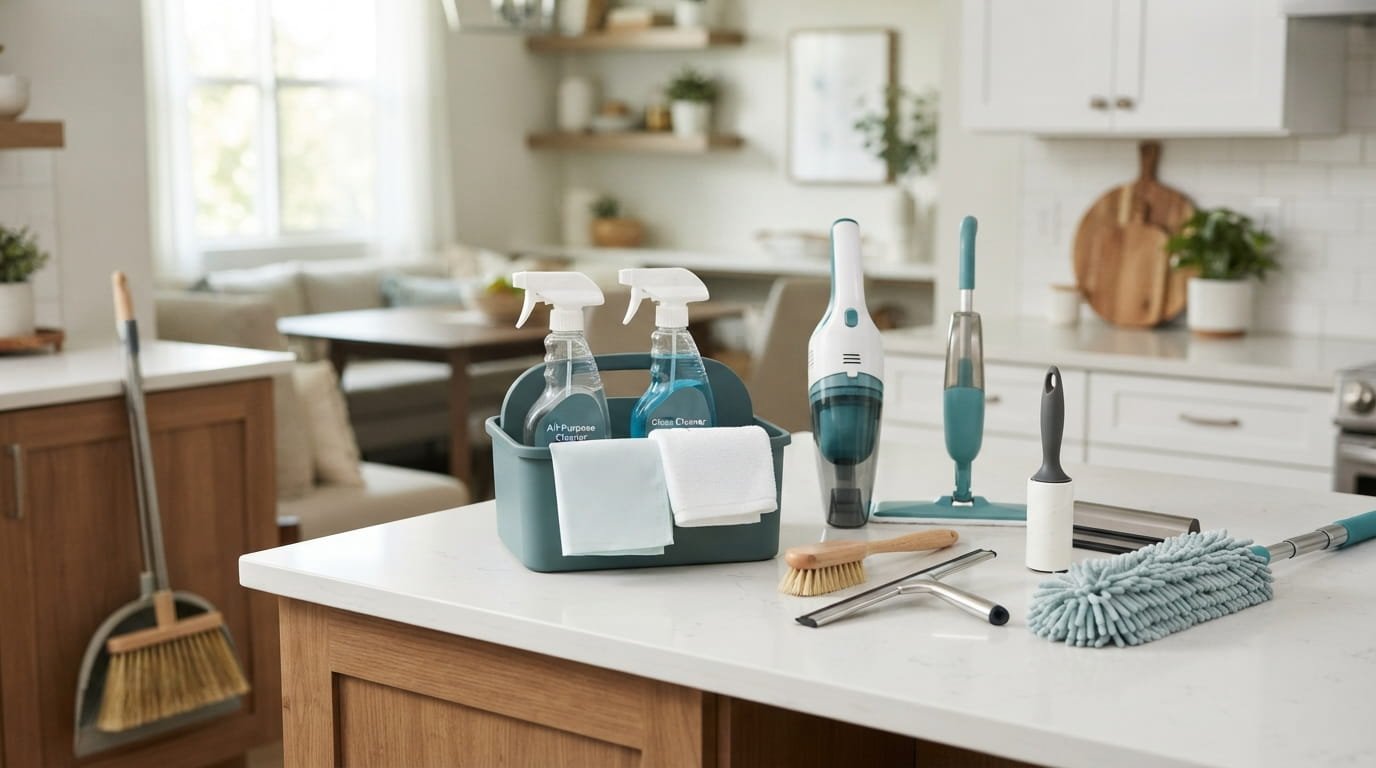
10. A Caddy or Bag That Keeps Every Tool in One Grab and Go Spot
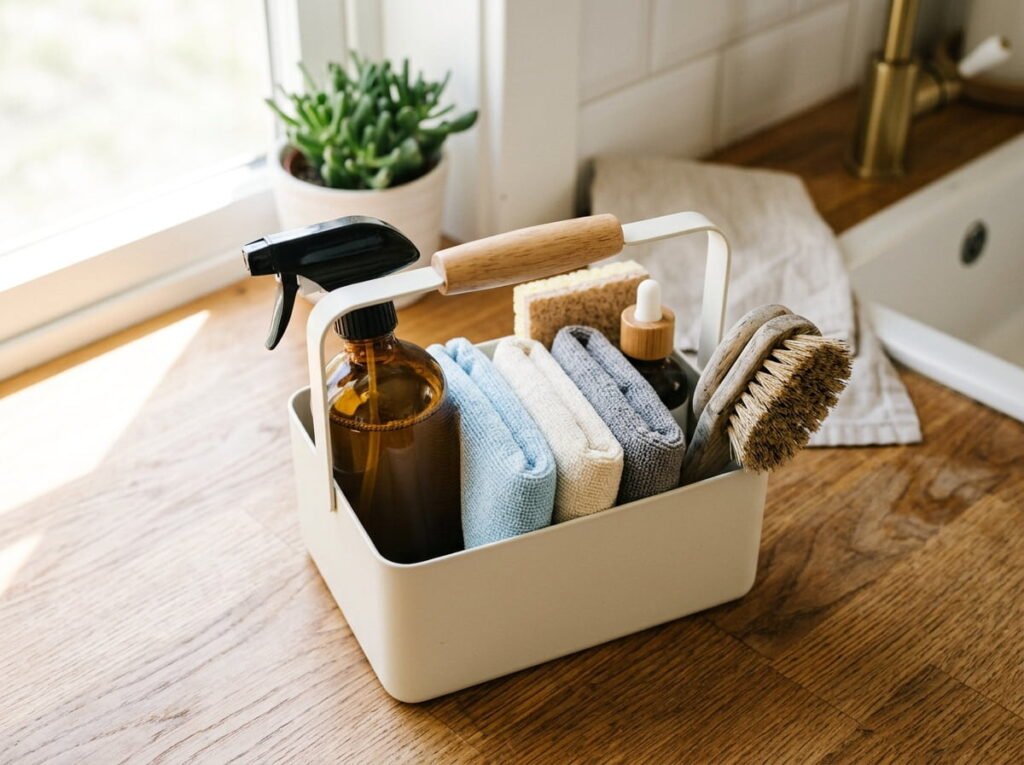
Scattering tools across different rooms sounds convenient until you need three of them for one quick task and have to hunt each one down separately.
What belongs in a grab and go kit
Store it somewhere central, like a hallway closet, so it’s never more than a few steps away when the fifteen minute window opens up.
11. Disposable Wipes Versus Reusable Pads for Quick Surface Passes
Disposable wipes and reusable cleaning pads both solve the same quick wipe down problem, but they fit different routines depending on how much laundry you’re already managing.
| Disposable Wipes | Reusable Pads |
|---|---|
| No washing needed, toss and done. | Needs regular washing, adds to laundry. |
| Convenient for travel or guest bathrooms. | Cheaper over time, less ongoing cost. |
A mix of both tends to work best, wipes for convenience on busy days and reusable pads for the regular daily routine.
12. A Small Broom and Dustpan Set Sized for Quick Kitchen Sweeps
A full size broom is overkill for sweeping up crumbs after dinner, and a smaller, lighter version sized for quick kitchen passes gets grabbed far more often.
Look for a dustpan with a rubber edge that sits flat against the floor, since gaps underneath leave crumbs behind no matter how carefully you sweep.
13. A Toilet Brush With a Holder That Doesn’t Drip on the Floor
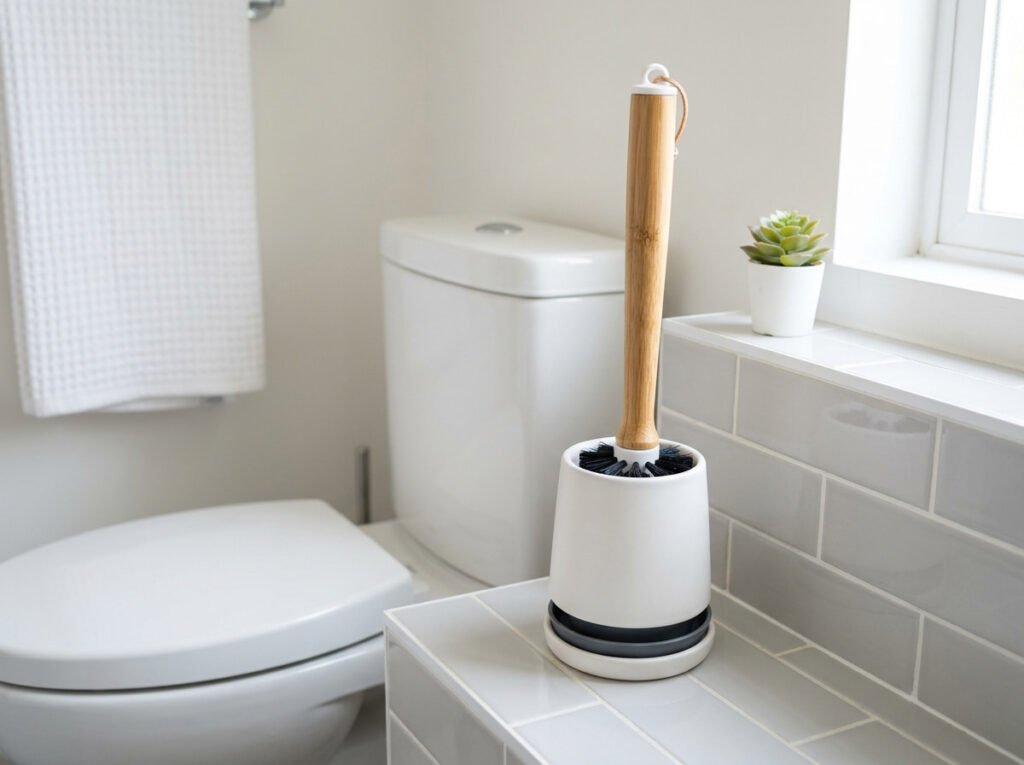
A toilet brush that drips water onto the floor every time it’s set down turns a thirty second task into one more thing to clean up afterward.
💡 Quick Tip
Look for a holder with a built in drip tray or vented design. It sounds like a small detail, but it’s the difference between a quick task and an extra cleanup step.
Replace the brush itself every few months regardless of how it looks, since bristles wear down in ways that aren’t always obvious from the outside.
14. Why a Timer Is Secretly One of the Most Useful Tools on This List
A timer isn’t a cleaning tool in the traditional sense, but it might be the single most useful thing on this entire list for actually keeping a routine to fifteen minutes.
A visible countdown keeps a quick clean from quietly turning into an hour long one.
A simple kitchen timer works just as well as a phone app, and it skips the temptation to get distracted scrolling once the phone is already in hand.
15. A Multi Surface Spray That Skips Switching Bottles Mid Clean
Reaching for a different spray bottle for every single surface slows down a quick routine more than most people realize until they actually time themselves.
Three separate sprays for counters, glass, and the bathroom sink.
One bottle, carried room to room, used on nearly everything.
Check the label for surfaces to avoid, like natural stone or unfinished wood, before relying on one spray for the entire house.
16. Extendable Tools for Ceiling Fans and High Corners Without a Ladder
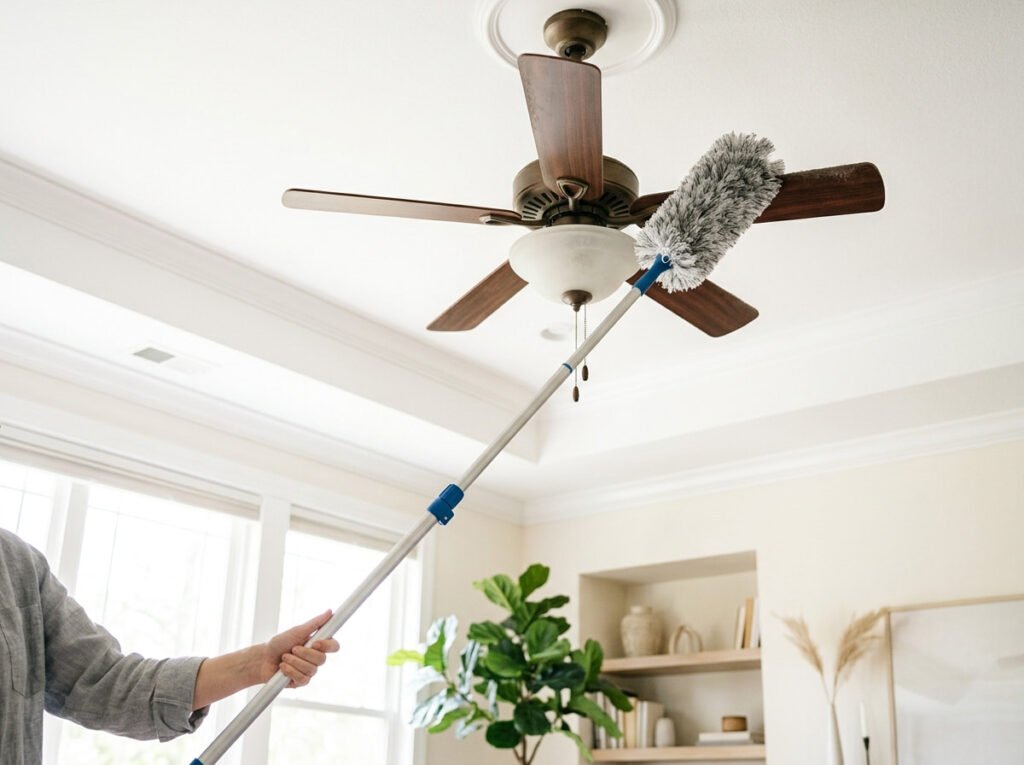
Ceiling fans and high corners get skipped more than almost anything else in a quick routine, mostly because reaching them usually means dragging out a ladder nobody has time for.
Keep an extendable duster collapsed near the broom for easy access.
Extend it fully before starting, rather than adjusting mid task.
Work in slow sweeping motions, since fast movements just scatter dust.
Add ceiling fans to a rotating weekly task list rather than daily, since they don’t collect dust fast enough to need constant attention.
17. The Mistake of Overbuying Tools You’ll Only Use Once a Year
A specialty tool built for one narrow task, like a grout brush or an oven rack cleaner, tends to sit unused for months between the few times it’s actually needed.
Ask whether a tool you already own could handle the same job.
Save specialty purchases for tasks that come up at least monthly.
Buying a highly specific tool after one viral video.
Letting rarely used tools take up space in the daily kit.
Keep the daily kit focused on tools that earn their spot through regular use, not tools that sound impressive but mostly collect dust themselves.
18. Building a 15 Minute Tool Kit That Actually Matches Your Home
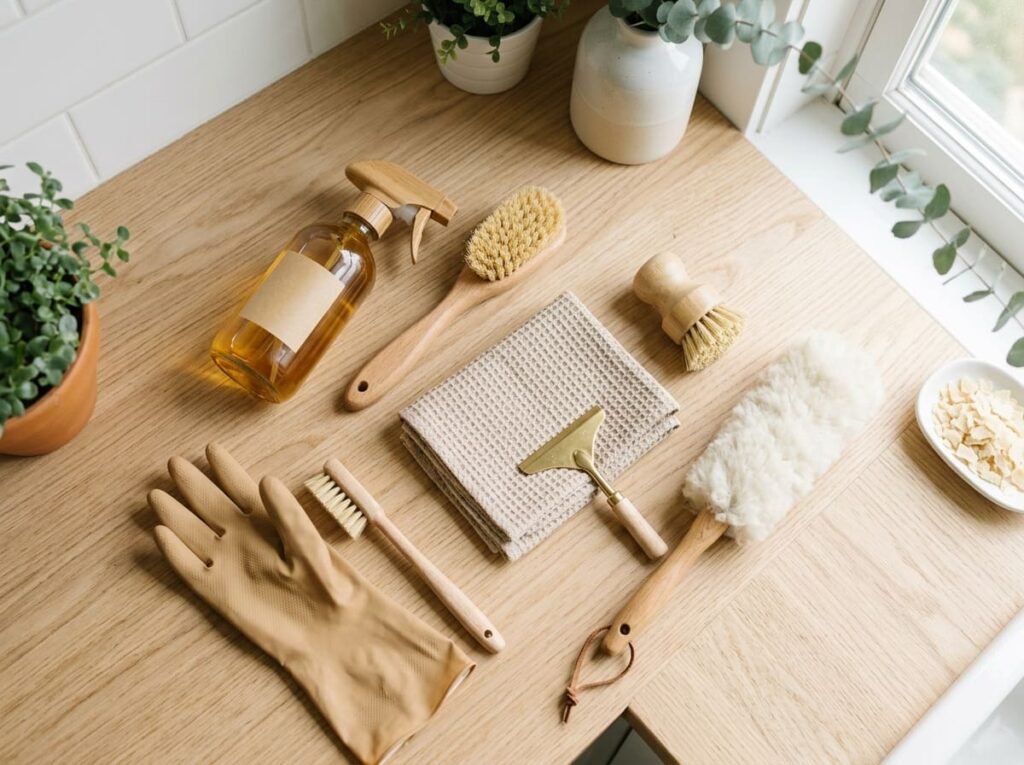
There’s no single perfect list of tools for quick daily cleaning, since the right kit depends entirely on your home’s layout, floor types, and where messes actually happen.
Final checklist before building your kit
Start with just five or six tools from this list, test them for a couple weeks, and adjust from there based on what actually gets used.
Conclusion
The right tools for quick daily cleaning aren’t the ones that look impressive on a shelf, they’re the ones that actually get picked up without a second thought. A cloth within reach, a spray that works on everything, a timer keeping the whole thing honest, none of it is complicated once the kit is built around how your house actually works.
Start small, test a handful of these for a couple weeks, and drop anything that doesn’t earn its spot in the routine. Save this list of tools for quick daily cleaning for the next time your fifteen minutes keeps turning into forty five, and let a simpler kit get you back on track.