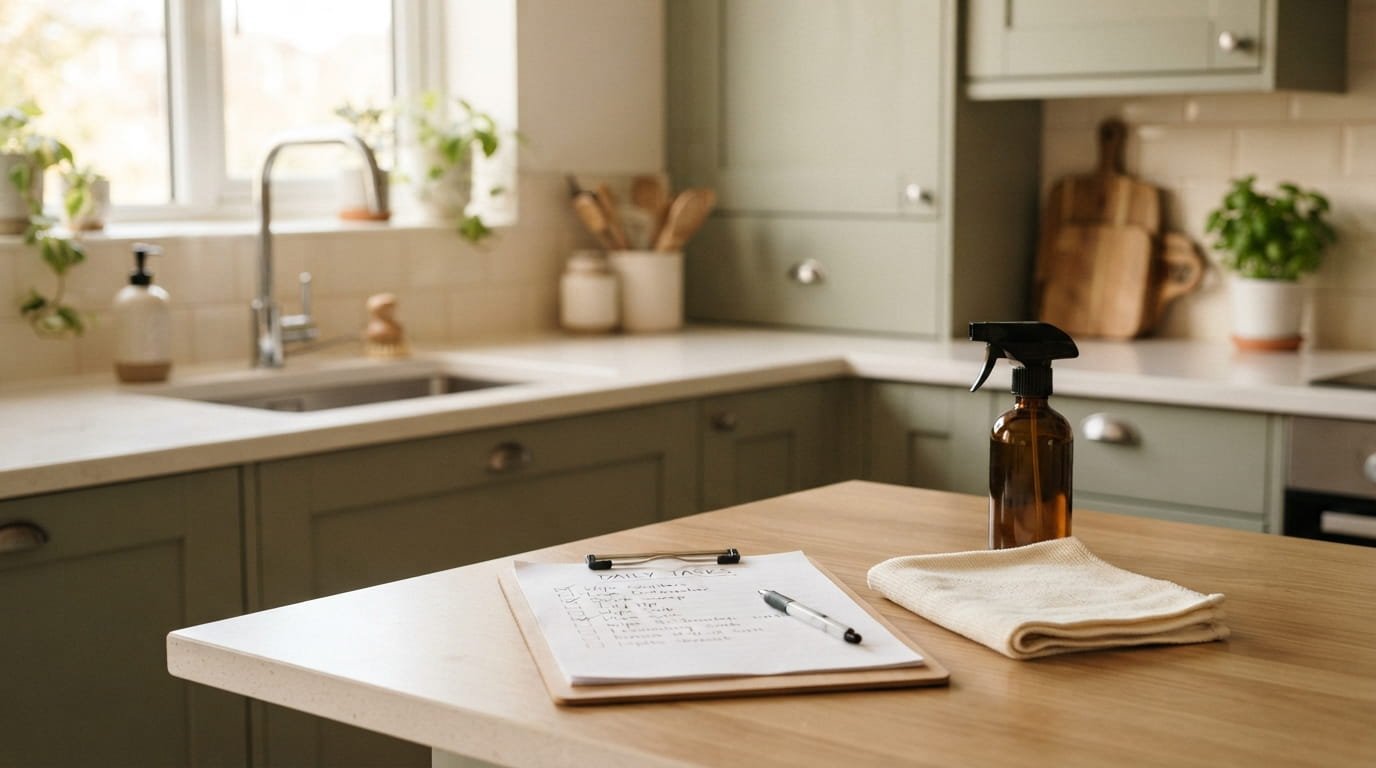
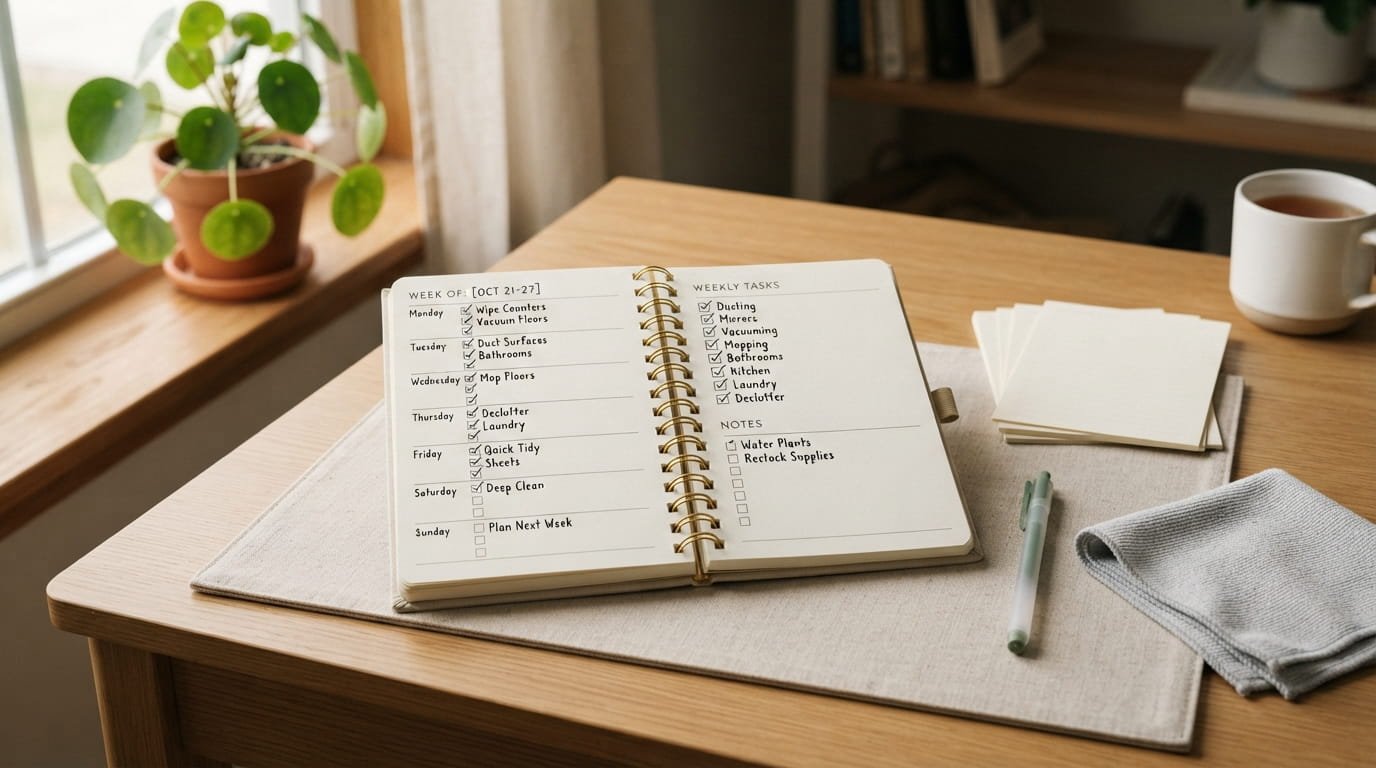
A pretty tracker downloaded off Pinterest sounds like the answer, right up until it sits unused in a drawer three weeks later because the format never matched how you actually clean. The problem usually isn’t motivation. It’s buying the wrong kind of cleaning routine tracker for the way your week actually works.
Some people need something they can touch and physically check off. Others need an app buzzing a reminder at exactly the right moment. Some want a basic grid, others want something cute enough that using it feels like a small reward. None of these are wrong, but picking blind usually means buying the wrong one first.
This list walks through where to actually find a tracker that fits, from big box stores to tiny online shops run by one person, plus a few ways to build your own if nothing on a shelf feels right. Start wherever matches your budget and your patience for shopping around.
1. Why a Tracker Only Works if the Format Actually Fits How You Live

A beautifully designed tracker means nothing if it’s the wrong format for your actual routine, whether that’s digital versus paper or detailed versus simple.
The best tracker is the one you’ll actually open every day, not the one that looks best in a photo.
Keep that in mind as you go through the rest of this list, since the right source depends entirely on which format you already know works for you.
2. Big Box Office Stores for Sturdy Planners You Can Flip Through Before Buying
A big box office supply store lets you physically hold a planner before buying it, checking the paper weight and binding in person instead of guessing from a photo online.
💡 Quick Tip
Check the household or home management section, not just the general planner aisle, since cleaning specific trackers often get shelved separately.
These stores also tend to restock seasonally, so checking back in January or late summer often turns up new options worth considering.
3. Craft and Stationery Stores for Trackers With Real Personality
Craft stores carry trackers with a level of design detail that bigger retailers rarely stock, often from smaller paper goods brands with distinct styles.
If liking how something looks actually makes you more likely to use it, this is worth the slightly higher price over a plain version elsewhere.
4. Online Print on Demand Shops for a Tracker Designed Around Your Exact Routine
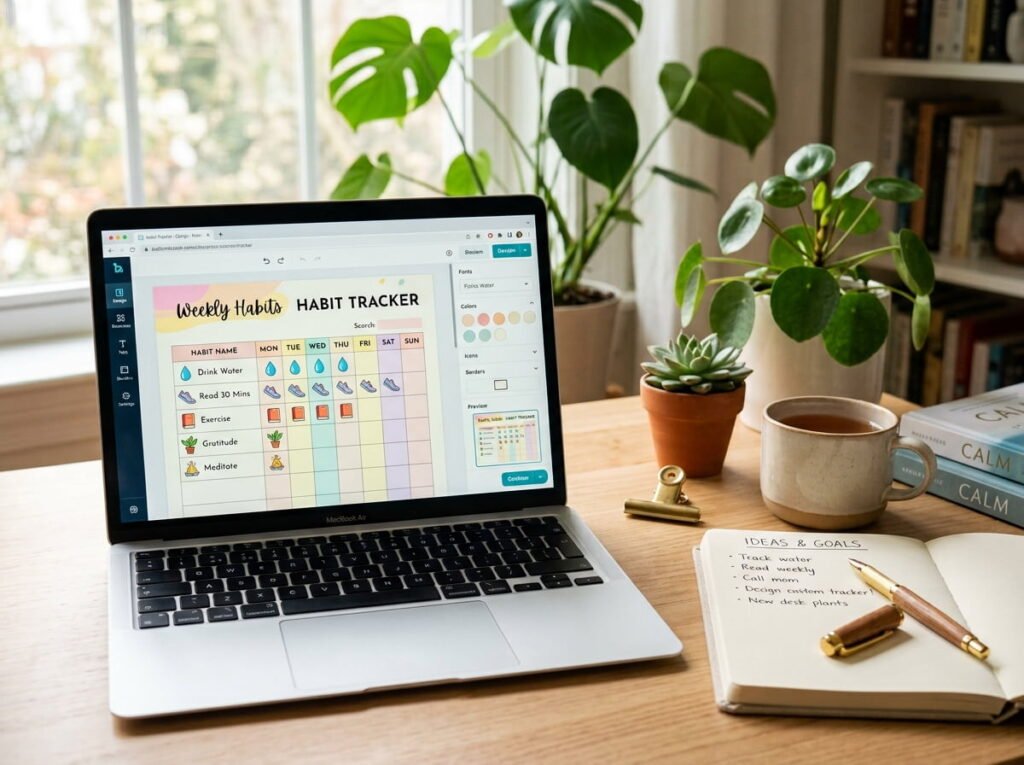
A print on demand shop lets you customize exactly which tasks appear on the tracker, instead of adapting your routine to fit someone else’s generic template.
What to look for
Custom options take longer to arrive than something off a shelf, so order with a few extra weeks of buffer if timing matters.
5. Digital Marketplaces Where Independent Creators Sell Printable Trackers
Independent creators on digital marketplaces often design trackers around very specific situations, small apartments, large families, zone cleaning, that bigger retailers never bother making.
Search specifically, not just “cleaning tracker,” and you’ll usually find something built for your exact situation rather than a generic version.
6. Why a Free Printable Is Worth Trying Before You Spend on Anything
Spending money on a tracker before knowing whether you’ll actually use one at all is a common way good intentions turn into an unused purchase.
📌 Good To Know
Try a free printable from a blog or newsletter first. If you stick with it for a month, that’s your sign a paid version is worth the investment.
A month of real use tells you more about what format works than any amount of browsing options online ever could.
7. Dollar Stores for a Basic Wall Calendar You Can Turn Into a Tracker Yourself
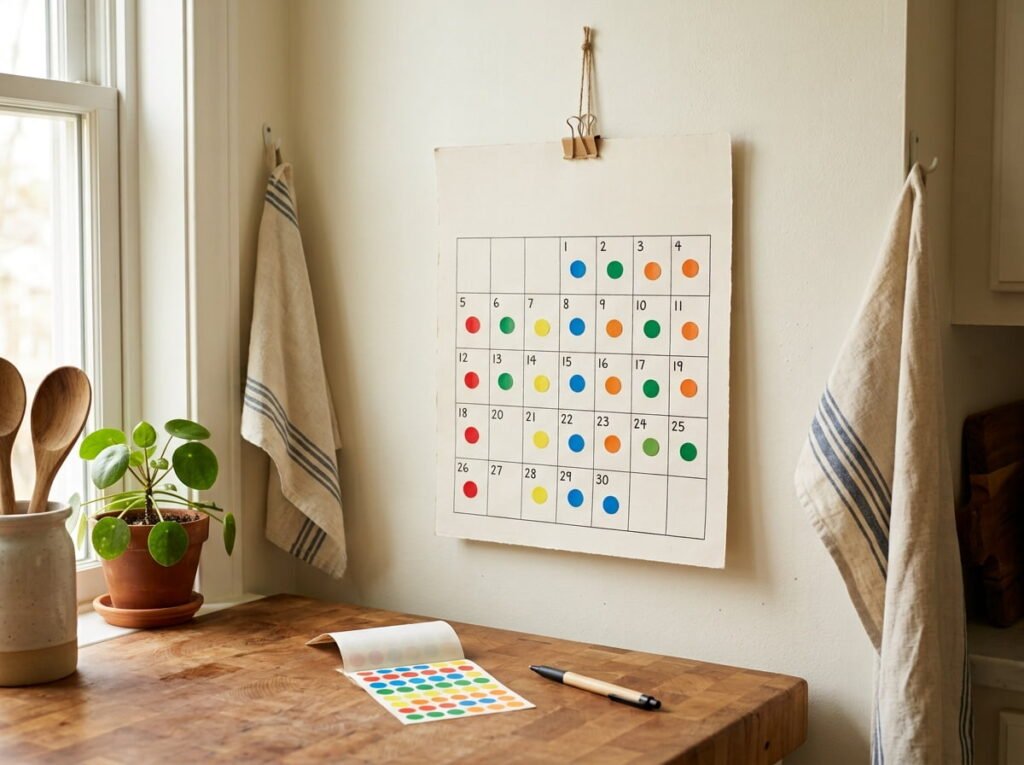
A plain wall calendar from a dollar store costs almost nothing and works perfectly well once you add your own simple system on top of it.
Grab a basic monthly calendar with large date squares.
Add your own color coded dots or stickers for tasks.
Don’t pick one with tiny squares that leave no room to write.
Don’t overcomplicate it with too many colors or symbols.
This low cost option works especially well for anyone who isn’t sure yet whether a formal tracker will even stick as a habit.
8. Specialty Planner Shops for Someone Who Wants Durability Over a Cheap Option
A specialty planner shop focuses entirely on build quality, thicker paper, sturdier covers, bindings that survive daily handling for a full year.
Look specifically for reinforced bindings if you’ll flip through it daily.
Check whether pages lay flat, which matters more than it sounds.
Ask about refill pages if you plan to keep using the same cover.
The higher price tag at these shops usually reflects something that survives being tossed in a bag or dropped on the kitchen floor more than once.
9. Digital Tracker Apps vs a Physical Paper System, Which Fits Your Habits Better
Neither format is better overall, but one almost always fits a specific person’s habits more naturally than the other.
| App Based | Paper Based |
|---|---|
| Sends reminders automatically | Stays visible without needing to open anything |
| Easy to close and forget about | Requires physically checking it to know status |
If you’ve abandoned digital reminders before, paper is probably worth trying instead, and the reverse is just as true.
10. Office Supply Stores for Laminating Sheets That Make Any Tracker Reusable
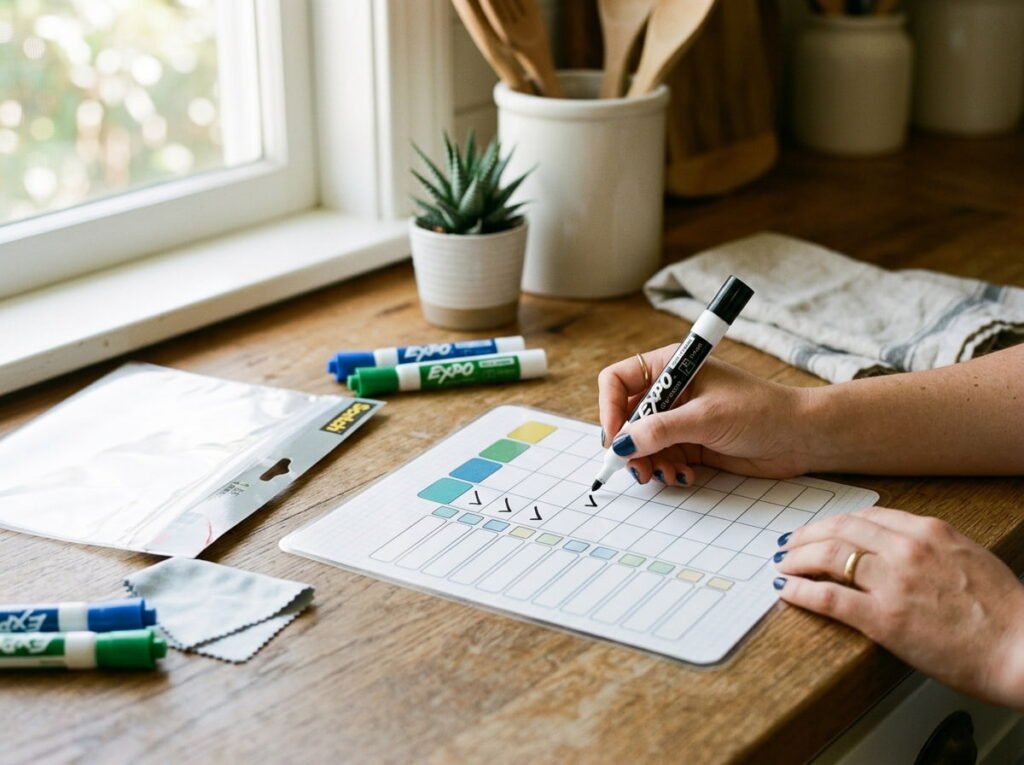
A paper tracker printed once gets used up fast, but an office supply store sells lamination sheets that turn the same page into something you reuse for months with a dry erase marker.
⚠️ Watch Out
Use fine tip dry erase markers only, standard ones can leave ghosting on laminate over time that’s hard to remove completely.
A single laminated sheet reused weekly beats reprinting a fresh tracker over and over, both for your wallet and the amount of paper you go through.
11. Secondhand and Thrift Shops for Planners Barely Used by Their First Owner
Planners and trackers show up at thrift shops more often than people expect, usually bought with good intentions and abandoned after just a few pages.
Paying full retail price for a planner that might not even get used.
A barely used thrifted planner for a fraction of the price, same test run.
Check for undated planners specifically, since a dated one from a previous year obviously won’t work for your current routine.
12. Subscription Boxes That Include a Tracker as Part of a Larger Cleaning Kit
Some cleaning focused subscription boxes bundle a tracker in with actual supplies, which means trying one out doesn’t require a separate purchase decision at all.
- Check what’s included before subscribing, not every box guarantees a tracker
- Look at past box photos or reviews to see actual tracker quality
- Consider a single box purchase instead of a full subscription to test it first
- ▸Check what’s included before subscribing, not every box has one.
- ▸Look at past box photos or reviews to judge the actual quality.
- ▸Consider one single box instead of a full subscription to test it.
This route works best for someone who wants the supplies anyway and treats the tracker as a nice extra rather than the main reason to buy.
13. Why Buying a Blank Tracker Beats One Already Filled With Tasks You Don’t Do

A pre filled tracker assumes your household looks like whoever designed it, right down to the specific chores and the order they’re listed in.
A pre filled tracker listing chores for a yard and pets you don’t have.
A blank tracker filled in with exactly the tasks your home actually needs.
A blank format takes a few extra minutes to set up, but it means every line on the page is actually relevant to your own house.
14. Checking Seller Reviews Before Buying a Printable Tracker Bundle Online
A listing photo can look polished while the actual file turns out blurry, oddly sized, or missing pages once it’s downloaded and printed.
Buyer photos in the review section usually show the printed result far more honestly than the seller’s own polished preview images.
15. Matching the Tracker Format to Whether You’re Accountable Alone or With Others
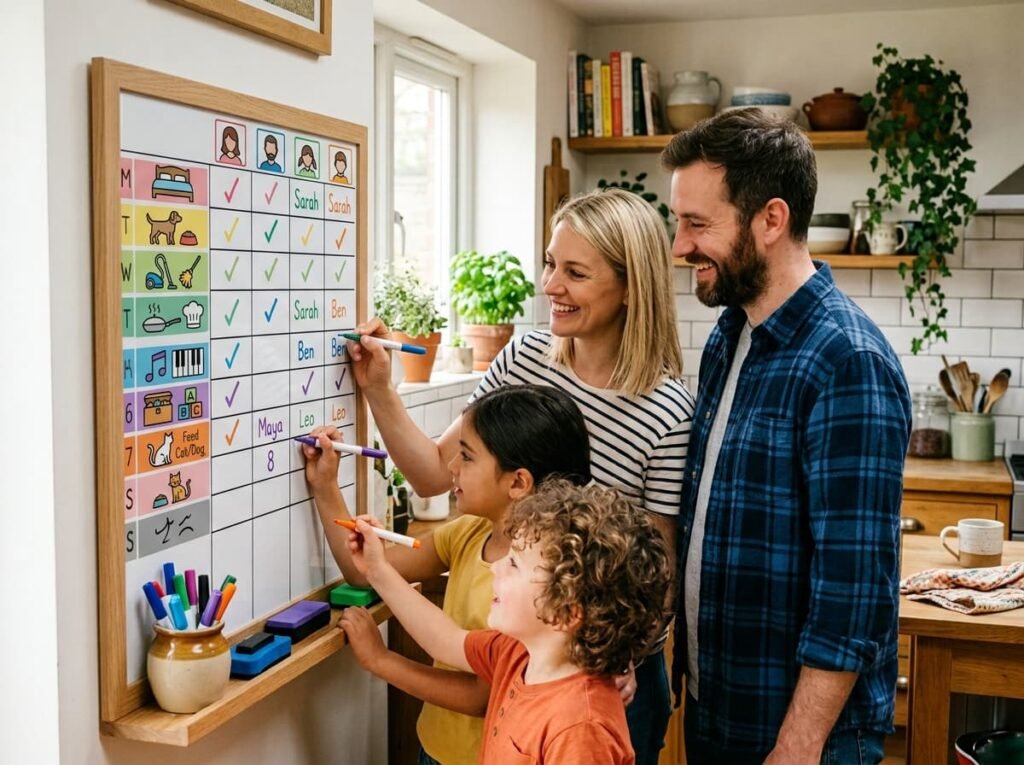
A tracker that works fine for one person managing their own routine often falls apart the moment multiple people in a household are supposed to use it together.
A shared household needs a tracker everyone can see and update, while a solo routine can stay as simple as a personal notebook.
If more than one person needs to check it, pick a wall mounted or app based option over something tucked away in a drawer that only you remember exists.
Conclusion
Finding the right cleaning routine tracker comes down to matching the format to how you actually live, not picking whatever looks best online. A free printable tells you more in one month than any amount of shopping around, and a blank template filled with your own tasks beats a pre made one built for someone else’s house.
Whether that means a sturdy planner from an office store, a custom printable from an independent shop, or a secondhand find at a thrift store, the goal is the same: something you’ll actually open and use, week after week, without it turning into another good intention gathering dust in a drawer.
Save this list for the next time you’re ready to build a cleaning routine that actually sticks.