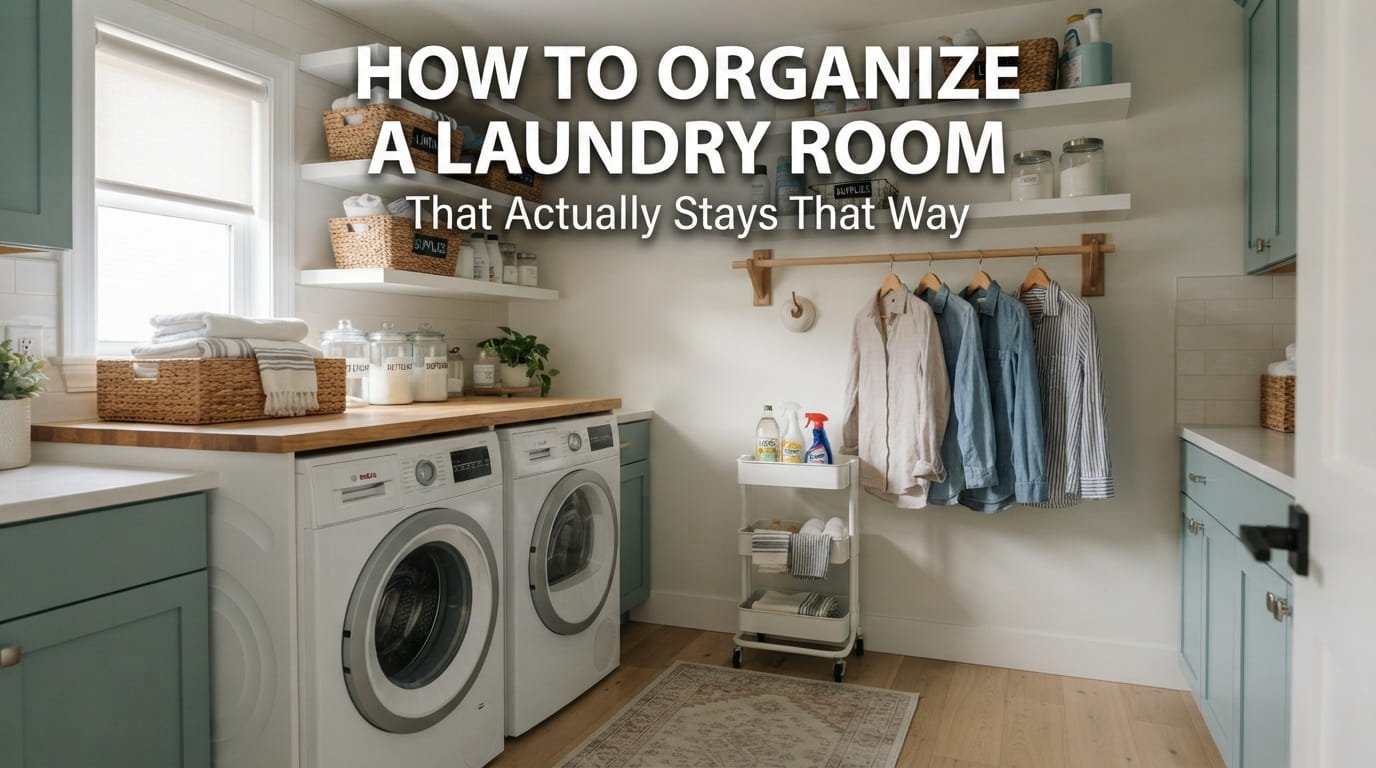
Most laundry rooms start organized for about a week, then slowly fill back up with stray socks, half empty detergent bottles, and a pile of clothes that never quite makes it into a hamper. The problem usually isn’t effort. It’s a system that looked good on day one but never matched how the room actually gets used.
Learning how to organize laundry room spaces that hold up means thinking past the first weekend of sorting and labeling. It means building in spots for the clothes fresh out of the dryer, the detergent running low, and the stray sock that shows up without its match. Get those pieces right and the room stops sliding back into chaos within a month.
This list covers ideas that work in a tiny closet style setup just as well as a full dedicated room. Some take an afternoon. Others are small habits worth building alongside whatever storage you choose. Start with whatever’s bothering you most about your own laundry space right now.
1. Why Most Laundry Rooms Fail Before You Even Start Organizing Them
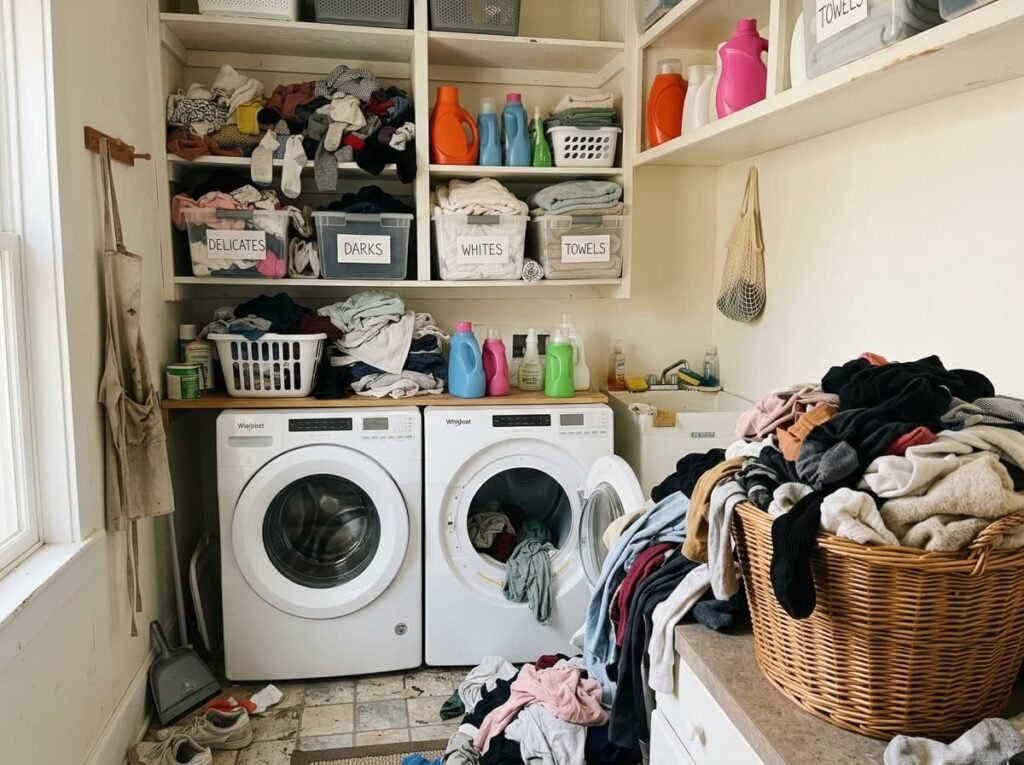
A laundry room organized around how it looks in a photo, rather than how laundry actually moves through the space, falls apart within weeks no matter how nice the bins are.
A system built around how laundry actually flows through the room lasts far longer than one built around how it looks.
Every idea on this list is meant to support that actual flow, from dirty clothes coming in to folded clothes heading back out.
2. Clearing Every Surface First So You Can See What You’re Actually Working With
Starting to organize while the room is still cluttered means working around problems instead of actually solving them.
💡 Quick Tip
Pull everything off every surface first, even the top of the machines. You need to see the actual empty space before deciding what goes where.
This step takes twenty minutes but saves hours later, since every decision after this gets made with the real space in view, not a guess.
3. A Wall Mounted Rod for Hanging Clothes Straight Out of the Dryer
Clothes pulled warm from the dryer wrinkle fast if they land in a basket instead of going straight onto a hanger.
A short rod installed at the right height means shirts and dresses go straight from dryer to hanger, skipping the wrinkled pile entirely.
4. Sorting Bins That Separate Laundry Before It Ever Hits the Machine
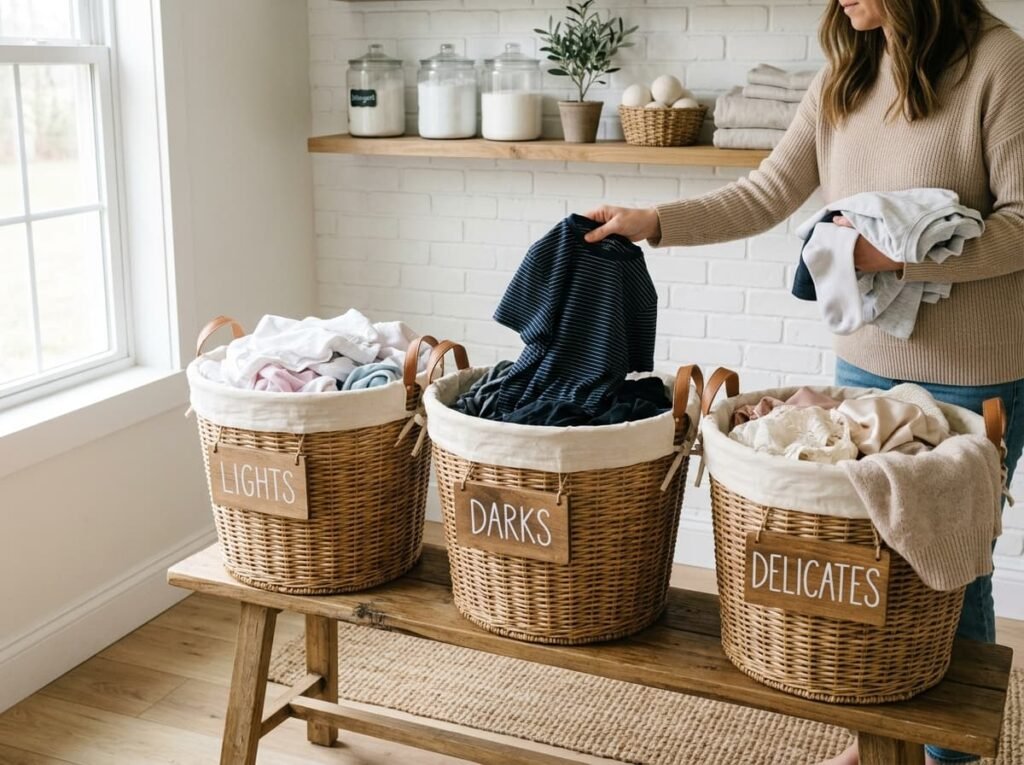
Sorting laundry at wash time, standing over a pile deciding what’s light and what’s dark, wastes time that happens every single week.
Set up two or three bins labeled by wash type, light, dark, delicates.
Have the household sort clothes into bins as they’re taken off, not later.
Grab a full bin and start a load without any sorting left to do.
The sorting work happens gradually throughout the week instead of all at once, which makes laundry day feel noticeably shorter.
5. Why a Folding Surface Changes the Whole Room More Than Any Shelf Does
A laundry room without a dedicated flat surface means folding happens on a bed, a couch, or balanced awkwardly on top of the dryer.
Add a countertop over the machines if there’s a gap, or a small fold out table.
Keep the surface clear at all times, not a catch all for random items.
Don’t fold laundry on top of the washer while it’s running.
Don’t let the folding surface become permanent storage for boxes.
Once folding happens right there in the room, clean clothes stop migrating to other parts of the house before they’re actually put away.
6. Clear Containers for Detergent and Pods So You Always Know What’s Running Low
Opaque detergent bottles hide exactly how much product is left, which means running out mid cycle happens more often than it should.
Clear container basics
A glance at a clear container tells you what a standard bottle never does, saving a wasted trip when you thought there was plenty left.
7. Using the Space Above the Machines Instead of Leaving It Empty
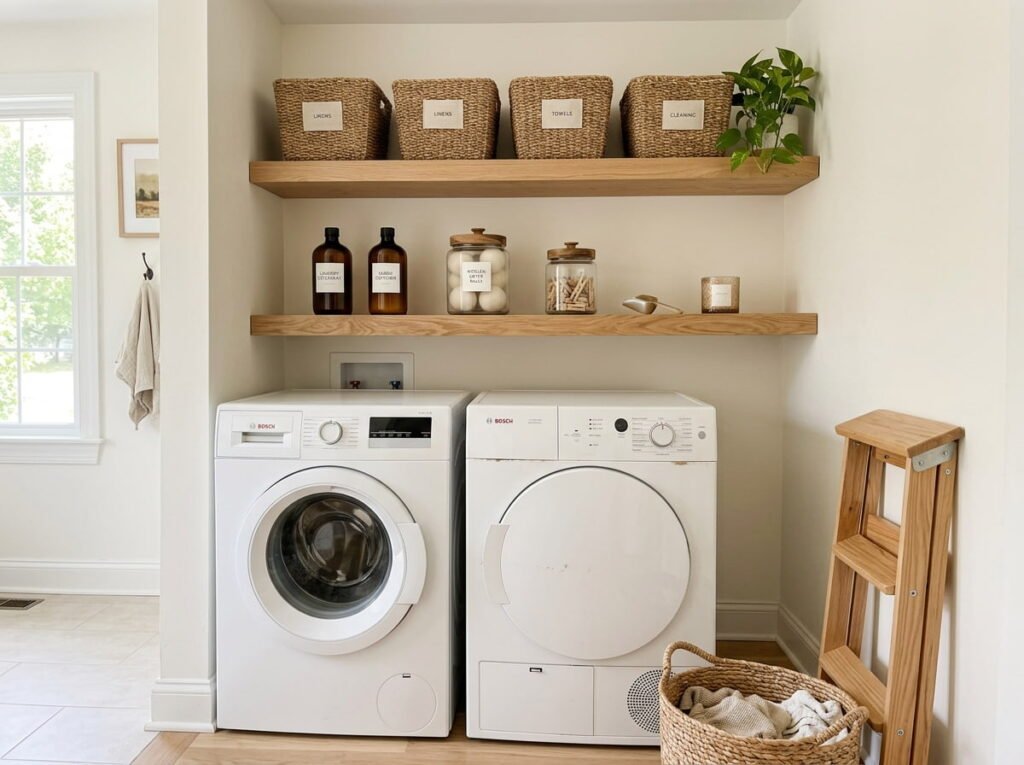
The wall space above a washer and dryer often sits completely empty, even though it’s one of the most accessible storage spots in the whole room.
📌 Good To Know
Floating shelves above the machines hold detergent, baskets, and extra supplies without taking up a single inch of floor space.
Keep heavier items on lower shelves and lighter ones up top, since reaching overhead for something heavy gets old fast.
8. A Narrow Rolling Cart for the Awkward Gap Beside the Washer
That thin strip of space between the washer and the wall usually sits wasted, too narrow for regular furniture but too wide to ignore entirely.
A narrow dead gap collecting dust and the occasional lost sock.
A slim rolling cart holding stain removers, extra hangers, and dryer sheets.
Measure the gap carefully before buying, since these narrow carts come in very specific widths and a half inch off won’t fit.
9. Labeling Every Bin and Shelf So Nobody Has to Guess Where Things Go
A system that only makes sense to the one person who set it up falls apart the moment anyone else in the house needs to use the room.
- Label bins with words, not just colors, since colors get forgotten fast
- Put labels at eye level where they’re actually seen
- Include younger kids in labeling if they’re old enough to help with laundry
- ▸Label with words, not just colors, since colors get forgotten.
- ▸Put labels at eye level where they’re actually seen.
- ▸Include kids in labeling if they’re old enough to help with laundry.
A clearly labeled room means the system survives even when you’re not the one putting things away that week.
10. A Drying Rack That Folds Flat Against the Wall When It’s Not in Use
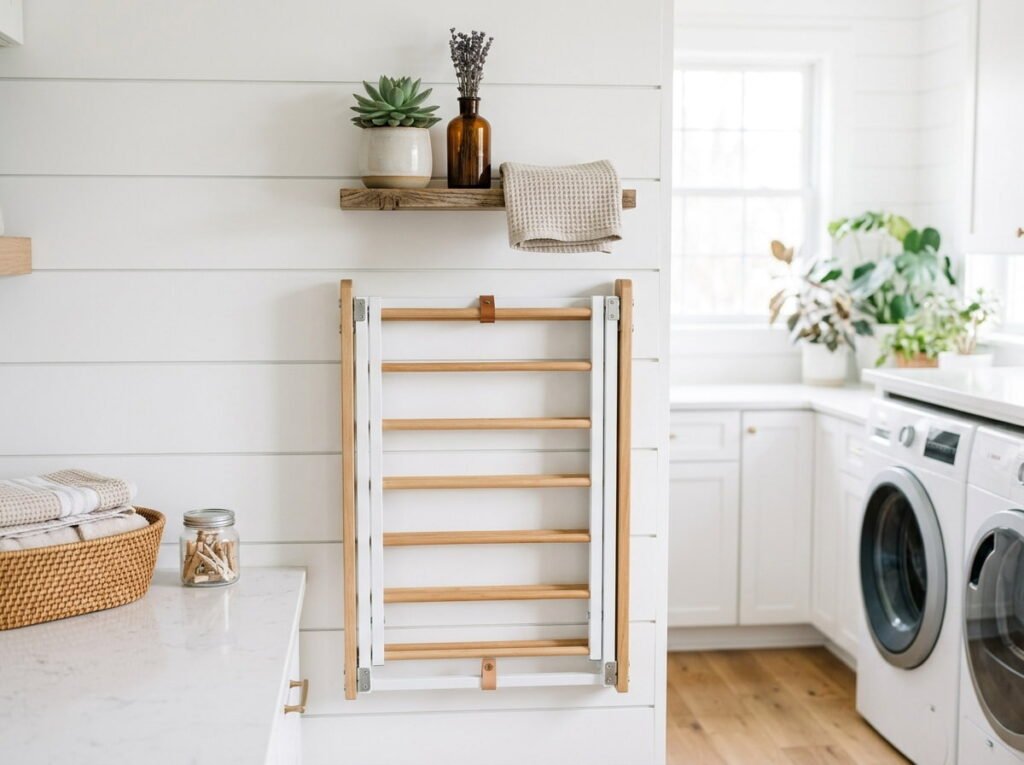
A bulky freestanding drying rack takes up floor space constantly, even on days when nothing’s actually air drying.
Mounted on the wall, it pulls out only when needed and tucks completely flat the rest of the time, freeing up the floor for everything else.
11. Open Shelving vs Closed Cabinets, Which Actually Suits a Laundry Room Better
The choice between open shelving and closed cabinets comes down to how tidy you can realistically keep things on display versus hidden away.
| Open Shelving | Closed Cabinets |
|---|---|
| Everything stays visible and easy to grab | Clutter stays hidden behind closed doors |
| Needs consistent tidiness to look organized | Forgives a messy shelf since nobody sees it |
If keeping things visually tidy isn’t realistic for your household, closed cabinets save you from a constantly visible mess.
12. A Small Hamper System That Keeps Dirty Clothes From Piling Up on the Floor
A single overflowing hamper in the corner is one of the most common reasons a laundry room feels chaotic even when everything else is organized.
⚠️ Watch Out
One oversized hamper tends to fill up and overflow before anyone notices, which is exactly what spills onto the floor and undoes the rest of the room.
Several smaller hampers, already sorted by type, get emptied more often simply because each one fills up faster on its own.
13. Hooks Near the Door for Items That Shouldn’t Go in the Wash at All
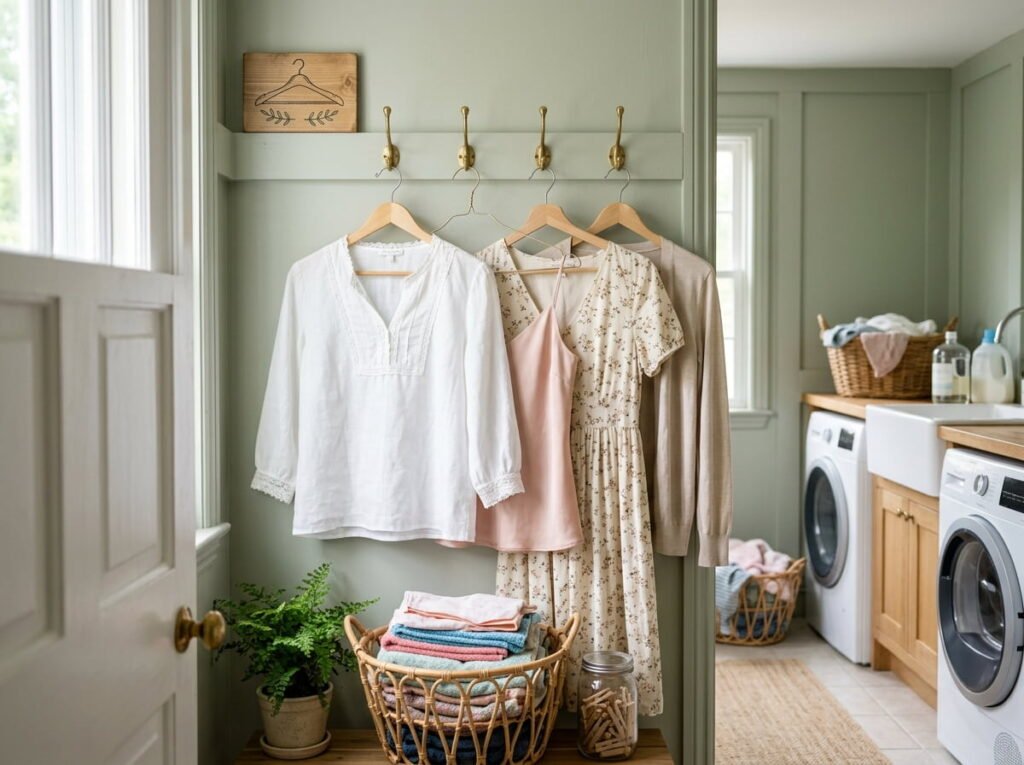
Dry clean only garments and delicate items left draped over a chair often end up tossed into a regular wash load by mistake.
Delicate items draped on a chair, easily confused with regular laundry.
A dedicated hook near the door clearly separating anything the washer shouldn’t touch.
A simple sign or tag above the hooks makes it obvious to anyone else doing laundry that these items follow different rules.
14. A Lost Sock and Stray Button Basket So Nothing Important Gets Thrown Out
A sock without its match or a button that fell off during a wash cycle usually ends up tossed immediately, even though the match often turns up weeks later.
Clearing this basket out every few months, rather than letting it grow indefinitely, keeps it useful instead of becoming its own clutter problem.
15. Keeping the System Working Long After the First Organizing Day Is Over
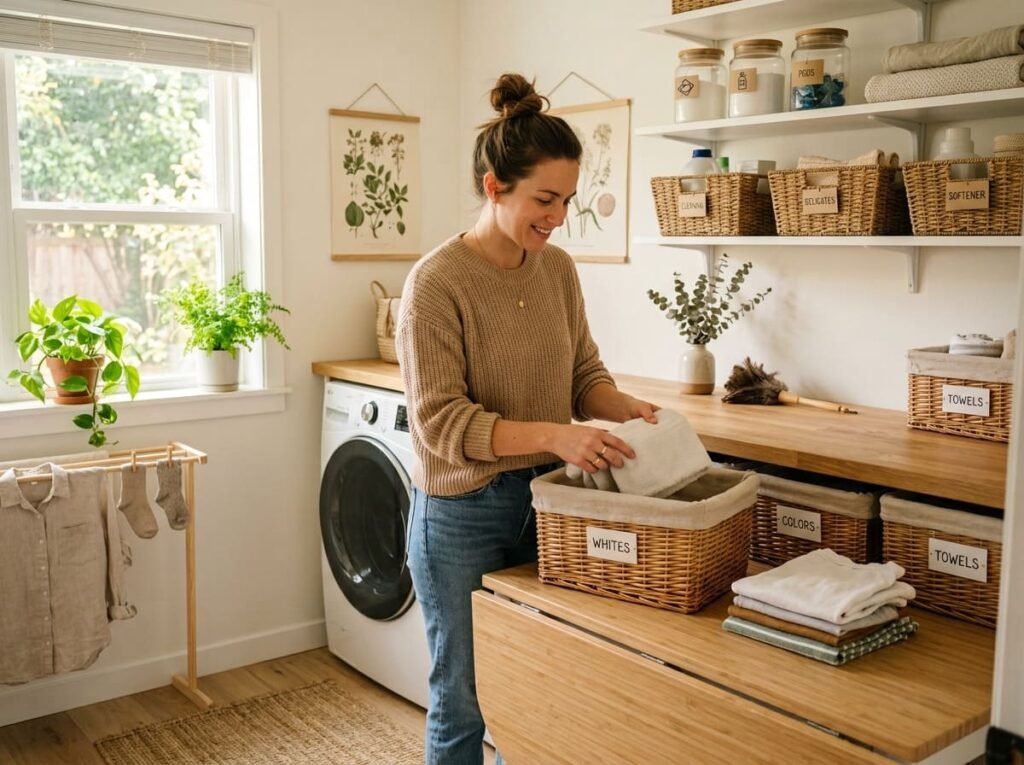
A laundry room looks perfect the day it’s organized, and the real test is whether that same system still works a full three months later.
Do a five minute reset of the room once a week, putting back anything that’s drifted out of its spot before it becomes a bigger mess.
That small weekly check is what actually separates a laundry room that stays organized from one that slides back to where it started within a month.
Conclusion
Learning how to organize laundry room spaces that actually last comes down to building a system around how the room gets used, not just how it looks on the first day. A wall mounted rod for clothes fresh from the dryer, sorting bins that do the work before wash day even starts, and a small weekly reset keep the whole thing running without another full overhaul.
Start with whichever idea solves the biggest frustration in your own space right now, and let the rest come together gradually. A laundry room that works with your actual habits will stay organized far longer than one built just to look good in a single photo.
Save this list for the next time your laundry room needs a system that actually holds up.