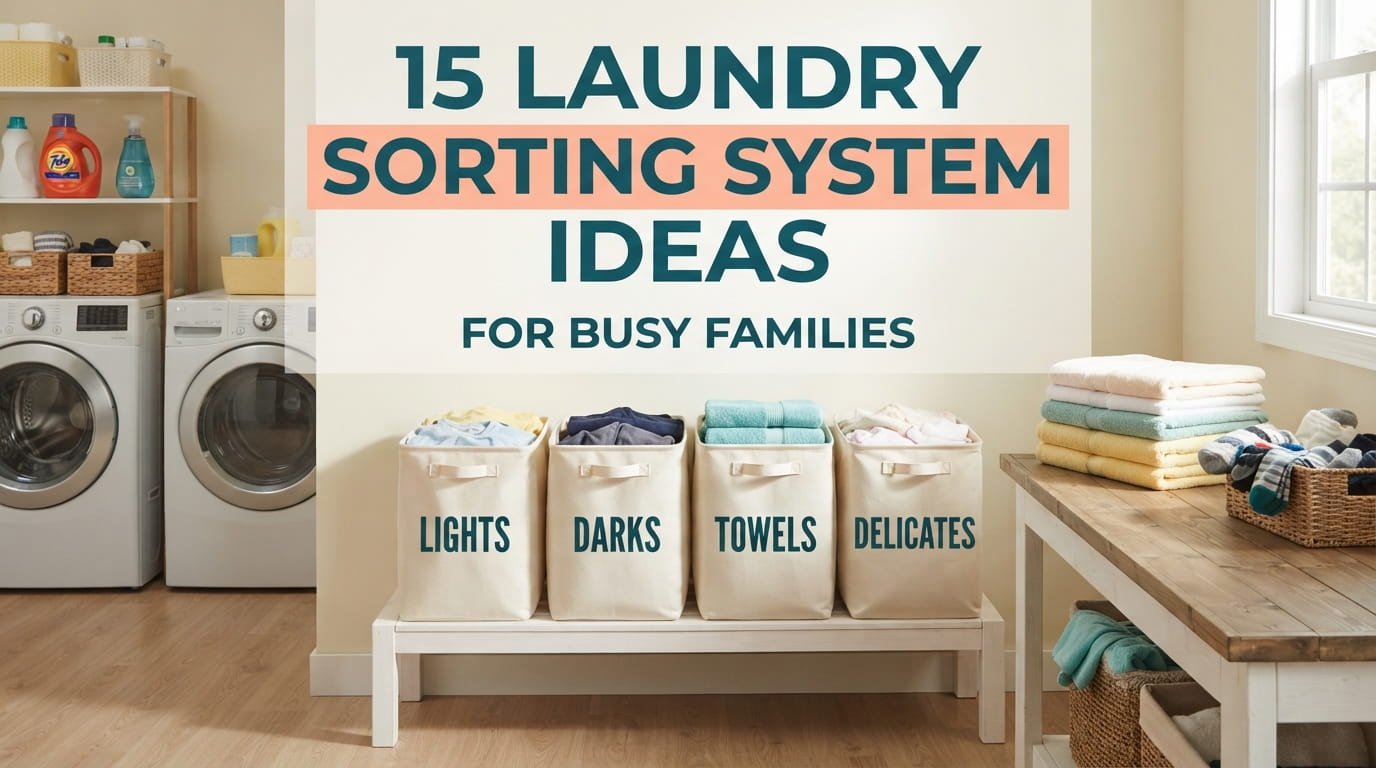
Laundry piles up in busy homes for a boring reason. Nobody agrees on what a pile is. One person sorts by color, another sorts by who wore it, and the rest goes straight into the machine in hope.
Most advice says to buy more baskets. That rarely helps, because baskets are not the problem. The missing piece is a plan everyone in the house can follow without asking you first.
A good laundry sorting system answers three questions. Where does a dirty item go? Who moves it to the machine? Who puts it away? Once those have clear answers, the pile stops growing and the arguments about it slow down.
Below are 15 ideas for building that plan, in the order most families need them. Start with how you sort, add the tools that fit your space, then lock in the routines that keep it going. Save the ones that fit your home and skip the rest.
1. Pick One Sorting Method Before You Buy a Single Bin

Choose the method first and the bins second. Otherwise you end up with a row of baskets nobody understands.
Most families land on one of three methods: by color and fabric, by person, or by day. Color sorting suits households that share clothes. Sorting by person keeps each family member’s laundry separate. Sorting by day spreads the work out so nothing piles up at all.
Look at how your family already behaves. If everyone drops clothes in the same spot, you may only need a divider. If every room has its own hamper, sort by person.
Give your choice two weeks before you change anything.
Decide how you sort first. The bins only follow the plan.
2. Choose How Many Piles Your Family Really Needs
More piles mean more bins, more steps, and more places for clothes to get lost. Fewer piles are easier to keep up, but they ask more of the person at the machine.
- Two piles: lights and darks, quick and fine for small households
- Three piles: lights, darks, and towels or bedding, which fits most homes
- Four piles: add one for delicates or hand wash items
Start with fewer piles than you think you need. You can always split one later.
| Two or three piles | Four or more piles |
|---|---|
| Quicker to keep up. | More control over fabric care. |
| Needs fewer bins and labels. | Needs more space and more labels. |
| Best for small households. | Best for mixed fabrics and larger families. |
3. Give Every Family Member a Color Coded Basket
The payoff is that nobody asks whose socks these are anymore.
Each person gets a basket in their own color, and clothes go to the machine in that color’s turn. Folding gets faster too, because the basket tells you where everything ends up. Match each color to a hook, label, or sticker in that person’s room. Small kids can follow a color long before they can read a name.
Mixed loads still happen, so keep one shared basket for towels and bedding.
4. Sort at the Hamper With a Three Section Rolling Sorter
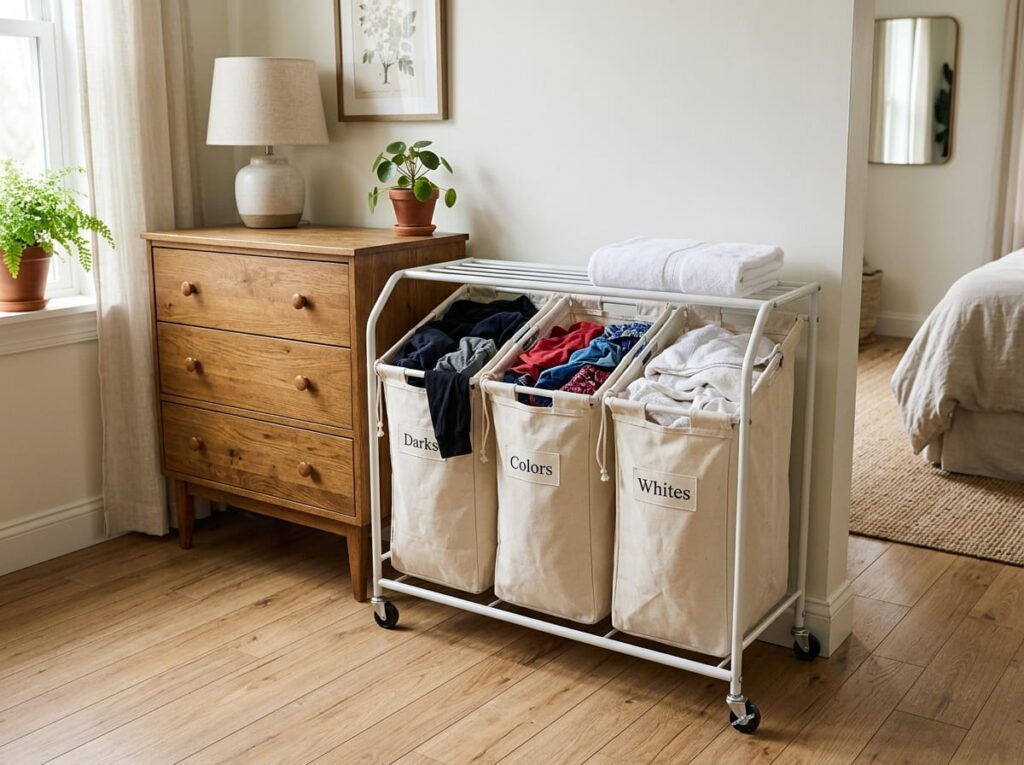
Place the sorter where clothes come off, not in the laundry room. People sort when sorting is easy, so a bedroom, hallway, or bathroom corner works better than a basement shelf.
Label each section with a simple word or icon. Roll it to the machine on laundry day, then tip each section into its own load.
- Measure the space first, including the walk path
- Pick sections that match your sorting method
- Choose bags that lift out for carrying
Check before you buy
5. Hang a Labeled Bag for Each Laundry Load
A row of cloth bags hangs from a door hook, each with a tag: lights, darks, towels, delicates. The floor stays clear and the whole system is visible at a glance.
Over the door hooks or a simple rail work in a closet, a bedroom, or the back of the laundry door. Choose bags with a drawstring or handle, so a full bag goes straight to the machine without being emptied first.
Wash the bags themselves now and then, since they collect lint and dust.
6. Keep a Small Bin for Items That Need a Second Look
Every family has the shirt with a stain, the jeans with a loose button, and the hoodie with a mystery pocket full of tissues.
Give those items their own small bin so they never ride along in a regular load. A stained shirt that gets washed and dried first is much harder to treat later. Check pockets too, since a stray pen or crayon can ruin an entire load.
Empty the bin once a week, treat what is in it, then send it on its way.
💡 Quick Tip
Tape a short note to the bin lid with the three reasons something belongs inside: stain, repair, or pocket check. Kids can sort it themselves once they know the rules.
7. Set Up a Sorting Station in a Hallway or Closet
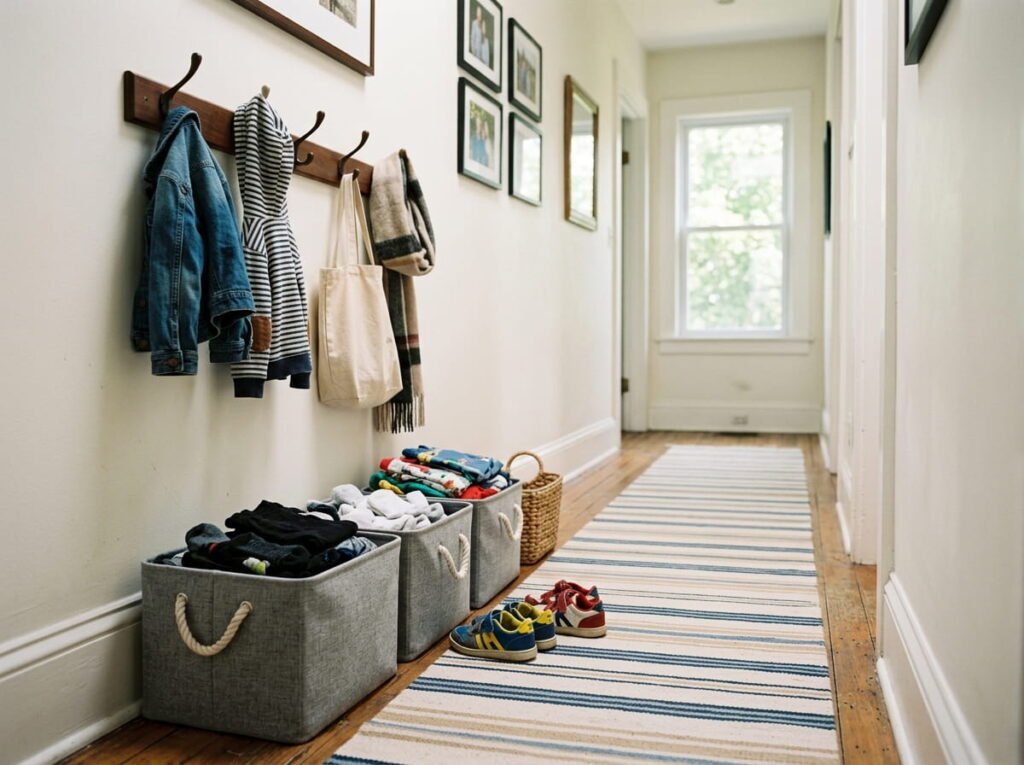
A hallway wall that sits empty is a sorting station waiting to happen.
Line up two or three bins along the wall, or fit a narrow shelf with labeled baskets inside a closet. The station sits where people walk, so dirty clothes land in the right bin on the way past. No trip to the laundry room, no pile on the bedroom floor.
Leave enough room to walk past without brushing the bins. A cramped station gets ignored fast.
Clothes pile up on the bedroom floor, then get carried to the machine in one giant, mixed armful.
Dirty clothes drop into labeled bins on the way past, and each bin is already a full load.
8. Sort by Day of the Week Instead of by Color
Some families give up on piles and let the calendar do the sorting.
Each day gets one type of laundry. Monday might be towels, Tuesday lights, Wednesday darks, and so on, with a weekend day left open for anything that slipped through. Nothing sits long enough to become a mountain, and no single day swallows your whole evening. It works best for households that run small loads often.
List the load types your family produces in a typical week.
Assign each type to a day, keeping the busiest days light.
Post the schedule near the machine and adjust after two weeks.
9. Use a Sock and Small Item Catch Bag
Socks go missing in the dryer, in the drum seal, and sometimes inside a duvet cover.
A mesh catch bag stops all of that. Each family member gets a small bag, and socks, underwear, and tiny items go inside before they hit the machine. Zip the bag, wash it, and the whole set comes out together. Pairing is much faster when the pairs never separated.
Do not overfill the bag, or the contents will not get clean.
Give each person a bag in their own color.
Zip it closed before it goes in the machine.
Stuffing the bag so full that water cannot reach everything.
Mixing one person’s items into another’s bag.
10. Teach Kids to Sort With Picture Labels
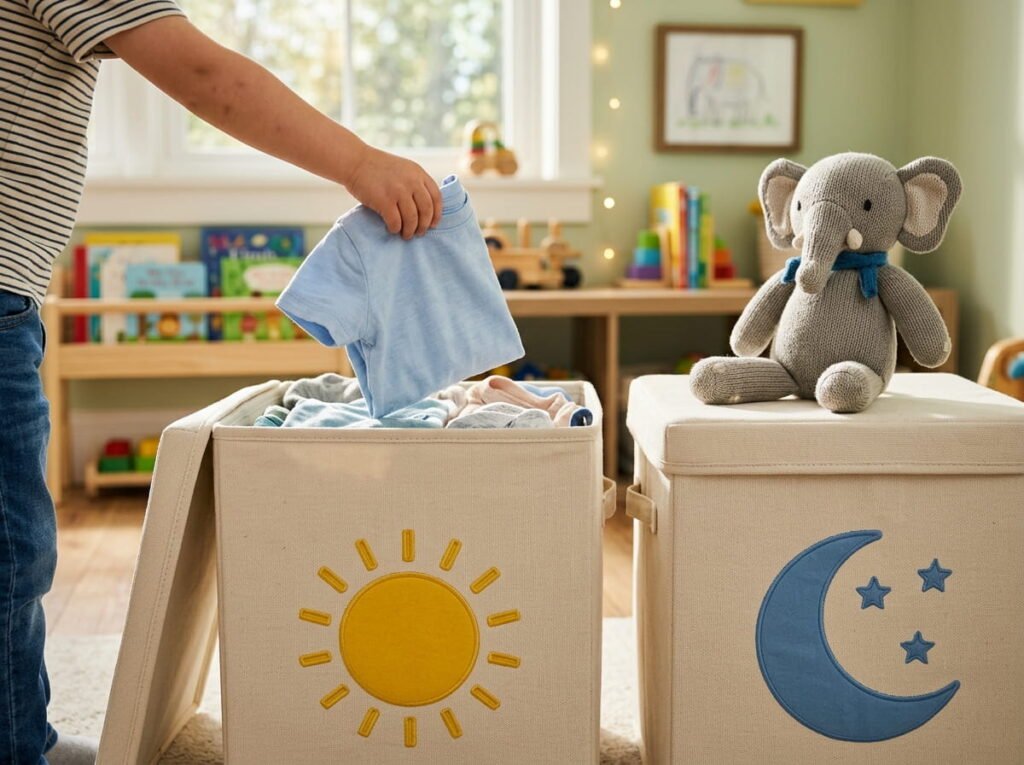
Pictures work before reading does.
Stick a simple icon on each bin: a sun for lights, a moon for darks, a towel for towels. A child who cannot read yet can still match a dirty shirt to the right picture. Older kids get the same benefit, since an icon is quicker to scan than a word. Start with one or two bins and add more as the habit sticks.
Keep the labels at kid height, so no one needs a stool.
- ▸Use big, simple icons that a young child can recognize.
- ▸Place the same icon on the bin and on the matching shelf.
- ▸Praise the sorting out loud for the first few weeks.
- ▸Keep the number of bins low until the habit sticks.
11. Assign Each Load an Owner
One rule keeps a laundry sorting system alive: every task has a name next to it.
Sorting, washing, and folding are three different jobs, and they do not have to belong to the same person. Split them up and the work feels lighter. A teenager can start the machine, a younger child can match socks, and a parent can handle the delicates. Write the roles down and rotate them every few weeks so no one gets stuck with the job they dislike.
Match the task to the age, and keep the first job small.
12. Add a Quick Check Before Every Load
The most common laundry mistake happens in the last ten seconds before the door closes.
A tissue in a pocket shreds across a whole load. A new red shirt tints the whites. A dry clean only label gets ignored. A quick check catches all of it. Make it a habit for whoever starts the machine, and tape the list to the lid or the wall above.
New dark or bright items can bleed in the first few washes, so wash them on their own until the water runs clear.
The ten second check
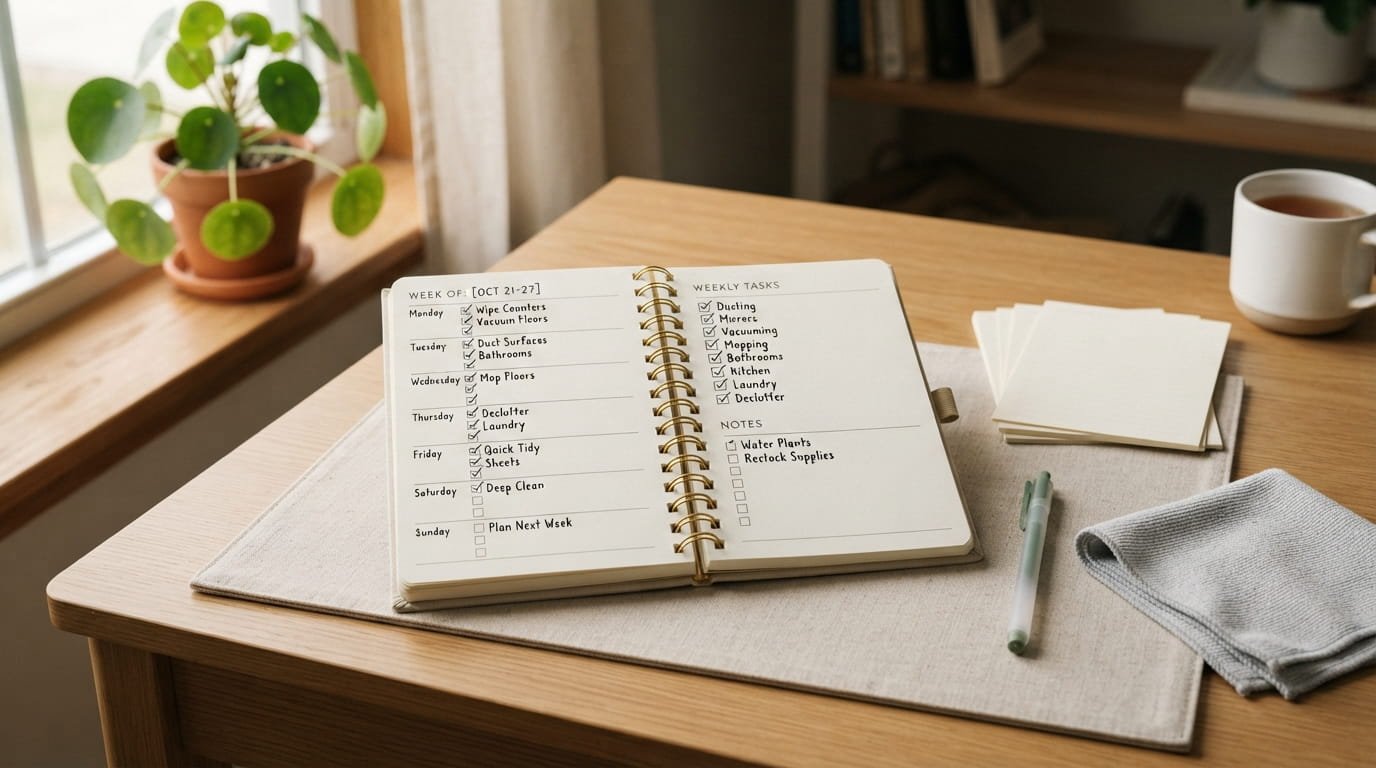
13. Make a Weekly Laundry Schedule the Whole Family Can See
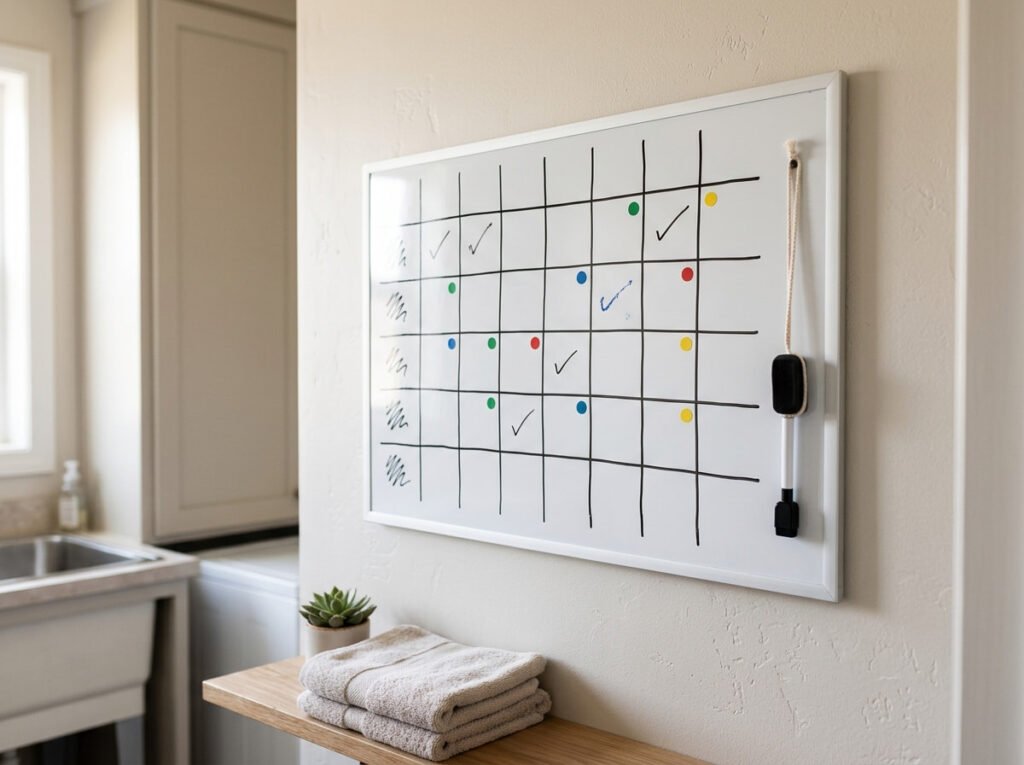
A whiteboard on the fridge or a printed grid by the machine does more than a reminder on your phone.
Everyone sees it, nobody has to ask, and changes are easy to make with a marker. Put days across the top and the load types or names down the side. Check off each box when the load is done, folded, and put away. A schedule is a tool, not a contract, so move it around when the week gets messy.
14. Fix the System When It Falls Apart
Buying more bins is the usual first reaction when a system stalls, and it rarely helps.
Systems break for specific reasons. The bin is too far away, a step is too hard, or one person is doing everything. Find the weak point and fix that one thing. If clothes miss the bin, move the bin. If a load sits unfolded, shrink the load size. If one person burns out, trade roles.
Change one thing at a time, so you can tell what worked.
⚠️ Watch Out
Changing three things at once hides the cause. If the system stalls, adjust one step, give it a week, then look again.
15. Reset the Whole System in One Sunday Session
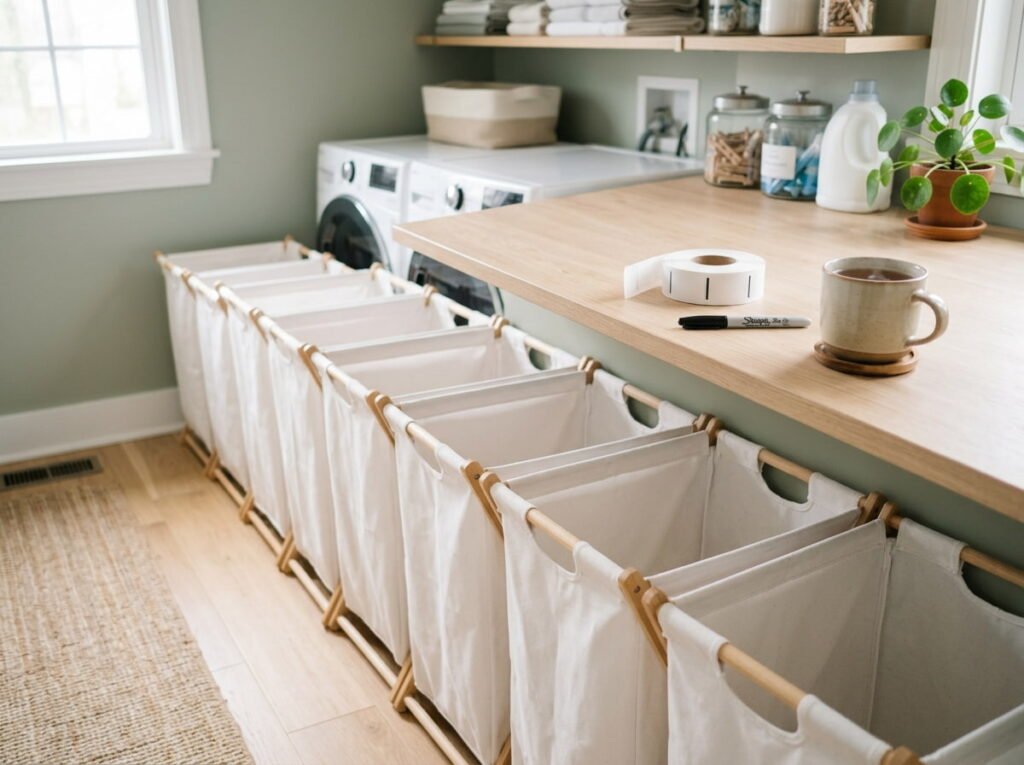
Every system drifts, and a monthly reset pulls it back.
Pick a quiet hour and go through each step. Empty the bins, wash the bags, check the labels, and rewrite the schedule if the week has changed. Pull out anything that no longer fits, from outgrown clothes to stained items waiting for treatment. Reset the second look bin and restock the stain kit. When the hour is over, the system feels new again without any new purchases.
Labels have peeled, bins are overflowing, and the schedule no longer matches the week.
Fresh labels, empty bins, an updated schedule, and a system that feels easy to follow again.
Conclusion
A laundry sorting system works when it is simple enough to follow on a tired Tuesday. Pick a method, put the bins where clothes come off, and give every task a name. The rest is small adjustments.
You do not need a perfect setup on day one. Try one or two of these ideas this week, see what sticks, and change what does not. A monthly reset keeps it from drifting.
The goal is a house where laundry moves along without anyone having to chase it, and where the pile on the bedroom chair finally has somewhere better to go.Save this list to your Pinterest board so your laundry plan is ready the next time the pile starts to grow.