A printable cleaning checklist feels like the easy part of getting organized, until it ends up crumpled in a drawer three weeks later, barely used. That gap between downloading something and actually sticking with it is where most cleaning printable mistakes happen, and almost none of them are about the printable itself.
The real issues are smaller and easier to fix than people expect. A layout that doesn’t match your actual routine. A sheet that never got laminated and fell apart fast. A spot on the wall nobody walks past. None of these mean the whole system failed, they just mean one detail needs adjusting.
This list covers fifteen of the most common ones, in plain language, so the next printable you print actually earns its spot on the wall instead of joining the pile of good intentions in a drawer somewhere.
1. Downloading a Printable That Doesn’t Match How You Actually Clean
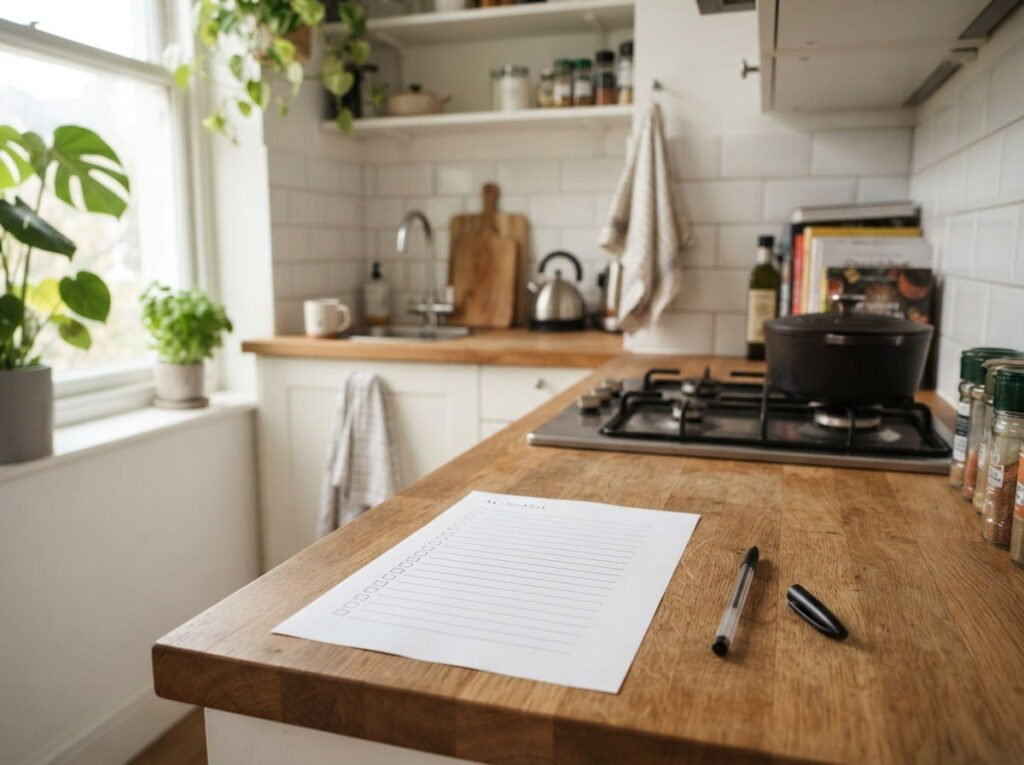
A beautifully designed printable built for a five bedroom house doesn’t help much if you live in a two bedroom apartment with one bathroom. The mismatch is subtle at first, then it just stops getting used.
- Check the room list before downloading anything
- Match the frequency to your real routine, not an ideal one
- Skip printables built for a lifestyle that isn’t yours
The right printable should feel like it was made for your actual house, not an average one.
2. Printing at Full Page Size Without Checking If It Fits Your Binder
A printable saved at standard letter size doesn’t always match the sheet protector or binder someone already owns, and the mismatch only shows up after it’s printed. Checking the dimensions against your binder before hitting print saves a wasted page and a second trip to the printer.
💡 Quick Tip
Print one test page on scrap paper first and hold it up to your binder before running the final copy.
3. Skipping Lamination and Wondering Why It’s Falling Apart in a Month
A printable left as plain paper survives about as long as any other piece of paper taped to a wall, which is not very long. Water splashes, marker smudges, and constant handling wear it down fast without a protective layer.
A torn, water stained sheet that needs replacing after a few weeks.
A laminated sheet that wipes clean and lasts for months.
4. Using a Permanent Marker by Mistake on a Laminated Sheet

Not every marker labeled for writing works the way it should on laminate, and grabbing the wrong one from a junk drawer is an easy mistake. A permanent marker used once will not wipe off, no matter how much water or rubbing alcohol gets thrown at it.
Before you write on it
5. Filling Out a Printable Once and Never Actually Using It Again
A printable checked off once, the day it was printed, then never touched again isn’t really being used, it’s just decoration. The whole point disappears if it doesn’t get a regular pass, even a quick one, built into an actual routine.
6. Choosing a Layout That’s Too Detailed to Keep Up With
- Count how many boxes the printable actually has
- Ask honestly if you’ll fill in that many every single time
- Pick a simpler version if the answer is no
A printable with forty tiny tasks looks thorough on Pinterest but usually gets abandoned within a week in real life.
Count how many boxes the printable actually has.
Ask honestly if you’ll fill in that many every single time.
Pick a simpler version if the answer is no.
7. Hanging the Printable Somewhere You Never Actually Walk Past

A checklist taped inside a rarely opened cabinet might as well not exist, since nobody remembers what they can’t see. The spot matters just as much as the content, and a hallway wall or fridge door usually works better than a closet shelf.
Hang it on the fridge or a hallway wall.
Pick a spot you already pass daily.
Tucking it inside a closed cabinet.
Storing it somewhere you rarely open.
8. Assuming One Printable Can Cover the Whole House
A single sheet trying to track daily tasks, weekly tasks, and seasonal deep cleaning all at once usually ends up too cramped to actually read, let alone use. Splitting things into a few focused printables, one for daily habits and another for the bigger jobs, keeps each one usable.
| One Sheet | Split Sheets |
|---|---|
| Cramped, hard to read at a glance | Each one focused and easy to scan |
| Daily and seasonal tasks blend together | Clear separation by frequency |
9. Not Adjusting the Printable Once Your Routine Actually Changes
A checklist built for a routine from two years ago doesn’t automatically update itself when a new pet, a new schedule, or a new roommate changes what actually needs doing. Sticking with the same outdated sheet is one of the fastest ways it stops feeling useful.
A printable should change when your life does, not stay frozen from the day you first printed it.
10. Storing Loose Printables Instead of Keeping Them in One Place
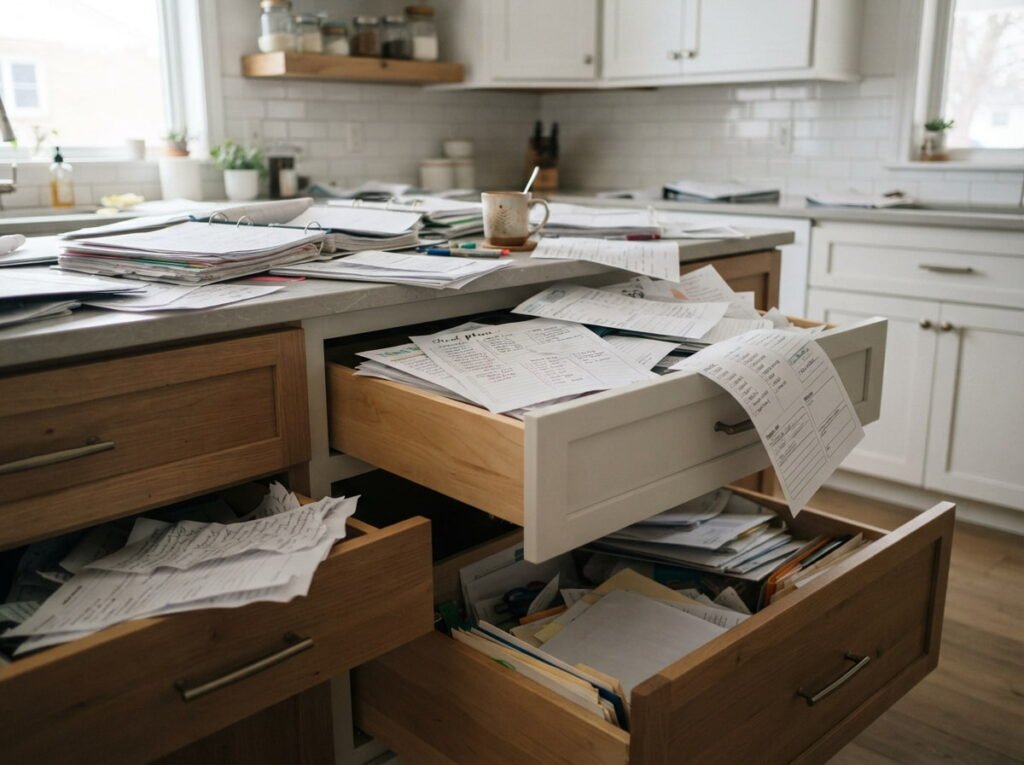
Printables scattered across different drawers and cabinets are easy to lose track of, and a missing sheet often just means the whole habit quietly stops. Keeping every printable in one binder or folder means there’s always one obvious place to look.
- ▸Keep every printable in one binder or folder.
- ▸Label sections so you find the right one fast.
- ▸Store it somewhere central, not tucked away.
11. Printing in Draft Mode and Ending Up With Faded, Hard to Read Text
Draft mode saves ink, but it also leaves text looking thin and gray once it’s sealed under laminate, where print quality issues tend to show up more, not less. Switching to a higher quality setting for the final print keeps every line crisp and easy to read from across the room.
12. Picking a Design You Like Instead of One You’ll Actually Use
A pastel floral printable might match the kitchen decor perfectly, but if the layout doesn’t fit how your week actually runs, the pretty design won’t save it. Looks matter less than whether the structure matches your real habits.
💡 Quick Tip
Pick the layout first based on how you clean, then look for a design in a style you like within that layout.
13. Forgetting to Leave Room for Tasks That Come Up Occasionally
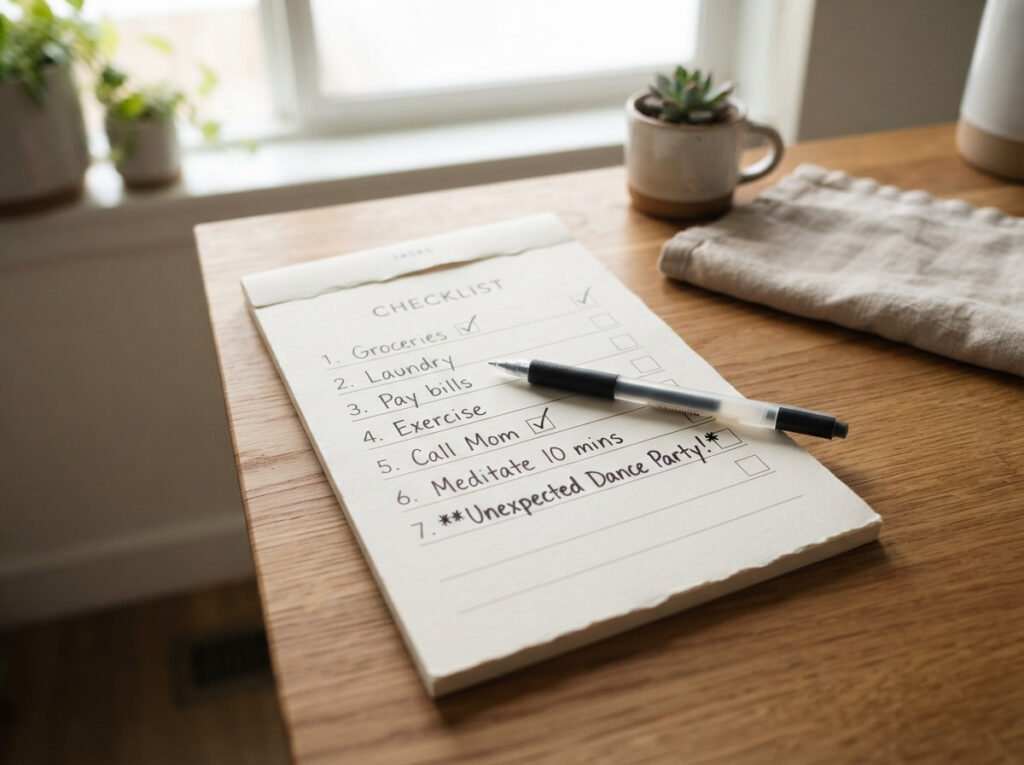
A printable built only around fixed, recurring tasks leaves no space for the odd job that pops up once, like wiping down a spilled drawer or scrubbing a stain nobody planned for. A blank line or two for flexible tasks keeps the sheet useful even on unpredictable weeks.
A rigid list with no room for the unexpected task of the week.
A couple of blank lines that flex with whatever actually comes up.
14. Using the Same Printable for Every Season Without Any Changes
Spring cleaning tasks and winter tasks aren’t the same, yet a lot of people keep one printable up year round without swapping anything out. Gutters and window screens matter in the fall, not January, and a printable that ignores that difference stays half relevant most of the year.
What to swap seasonally
15. Never Actually Checking Off Anything Because It Feels Too Official to Mark Up

Some people hesitate to write on a nicely designed printable, treating it more like a poster than a working tool, and the checklist ends up untouched because of it. A laminated sheet exists specifically to be marked up and wiped clean, over and over, not preserved.
Conclusion
Most cleaning printable mistakes aren’t really about the printable itself, they’re about small habits that keep it from actually working. The right layout, the right marker, a spot on the wall you pass daily, and a willingness to actually mark it up all matter more than how nice the design looks.
Fix even one or two of these and a printable that used to end up forgotten in a drawer starts earning its spot on the wall again. None of it takes much, just a little attention to the details that quietly make or break whether a system sticks.
Save this list so it’s ready the next time you’re setting up or troubleshooting a cleaning printable.