
The bags have been sitting by the front door for three weeks. Every time you walk past, you think about dropping them off, and every time you wonder where they should actually go.
That pause is the reason so many decluttered items end up back in the closet. The sorting is done, the decision is made, and then the question of where to take everything stalls the whole project.
Knowing where to donate decluttered items is mostly a matter of matching each type of thing to the right place. Clothes go one way, books another, and old electronics somewhere else entirely. Each place has its own rules about what it will take, and a quick call can save you a wasted trip.
The 18 steps below walk you through sorting, choosing the right kind of place for each item, and getting everything out of your house. You will not find specific store names here, since the best options depend on where you live. You will find what to look for and what to ask. Let’s get those bags moving.
1. Sort Everything Into Donate, Sell, Recycle, and Trash Piles First
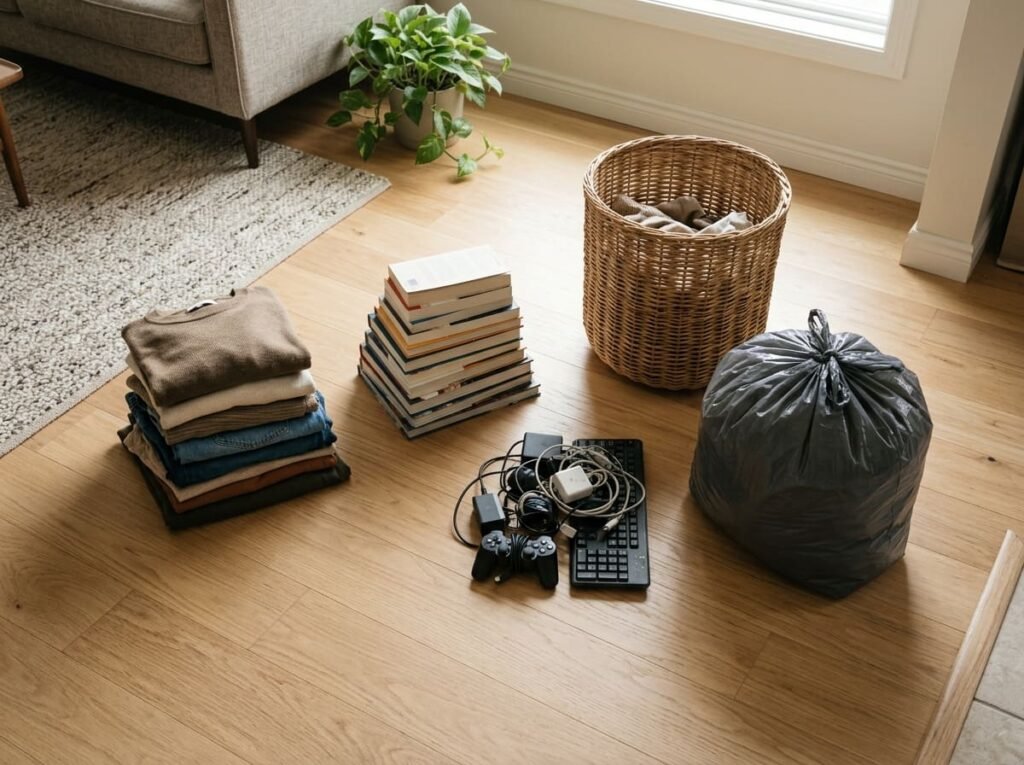
One pile for everything is why bags sit by the door for weeks.
Before you search for a place, split what you have into four piles. Donate is for items in good condition that someone else can use. Sell is for items worth the effort of listing. Recycle covers electronics, batteries, and certain materials. Trash is for what is broken, stained, or unsafe to pass on.
Each pile has a different destination, so sorting first makes every later step quicker.
2. Donate Only What You Would Give to a Friend
A good rule of thumb saves donation centers a lot of work.
Ask yourself whether you would hand the item to a friend. If it is clean, working, and complete, it probably qualifies. If it is stained, torn, missing pieces, or broken, it becomes a cost for the charity instead of a gift. Many places spend time and money throwing away what they cannot sell.
A donation is meant to help. Pass on what someone can actually use.
💡 Quick Tip
If you are unsure about an item, set it aside and ask the donation place when you call. They are used to the question.
3. Confirm What Each Place Accepts Before You Load the Car
Showing up with a full car and being turned away is the most common donation disappointment.
Every organization has its own list of what it needs and what it cannot take. Many post it on a website or a social page, and most will answer a quick call or message. Check three things: the kinds of items they accept, their drop off hours, and whether they offer pickup.
A short check beforehand saves a trip and keeps your items from ending up in the wrong place.
4. Match Each Item to the Right Kind of Place
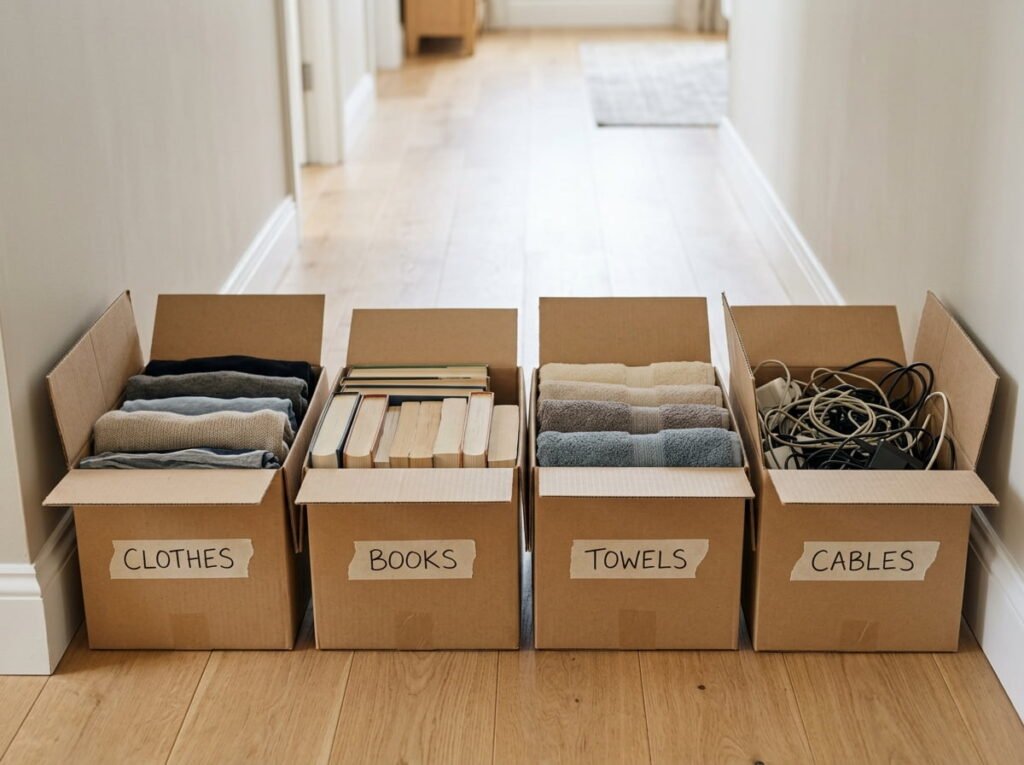
The same box of things can have four different homes, and the right one depends on what is inside.
Use the table as a starting map. Clothing and housewares usually suit thrift shops and shelters. Books fit libraries and schools. Pet blankets fit animal shelters. Electronics go to recycling points. Always confirm with the organization, since needs change and rules vary by area.
Sorting by type first means you only make a few stops, not a dozen.
| Item | Often suits |
|---|---|
| Clothes and housewares | Charity shops, shelters, community groups |
| Books and school supplies | Libraries, schools, community centers |
| Old towels and blankets | Animal shelters and rescues |
| Electronics and batteries | Proper recycling points |
5. Take Clothes and Housewares to a Charity Thrift Shop
Thrift shops are the most familiar home for everyday things, and they take a wide range.
Clothes, shoes, kitchenware, small decor, and bedding are common items. Many charity shops use sales to fund their work, so the quality of what you bring matters. Wash clothes, wipe down kitchenware, and pack items in sturdy bags or boxes.
Search for charity shops near you, then check what each one is looking for before you go.
Wash clothes and wipe housewares first.
Pack items in sturdy, closed bags.
Dropping off stained or torn items.
Leaving bags outside a closed shop.
6. Ask About Pickup for Furniture and Large Items
A sofa does not fit in a car trunk, and many people give up at that point.
Some charities and community groups offer pickup for furniture and larger items. Others have a drop off point with a loading area. Ask about both, and ask what condition they need. Many places will not take upholstered pieces with stains, tears, or odors, or items that need repair.
Measure the item and take a photo, since a picture speeds up the answer.
Measure the item and take a clear photo from the front and the side.
Contact the charity and ask whether they accept it and offer pickup.
Clear a path to the item and make sure someone is home on the pickup day.
If pickup is not available, ask a friend to help with drop off.
7. Ask Shelters and Support Groups What They Need Most
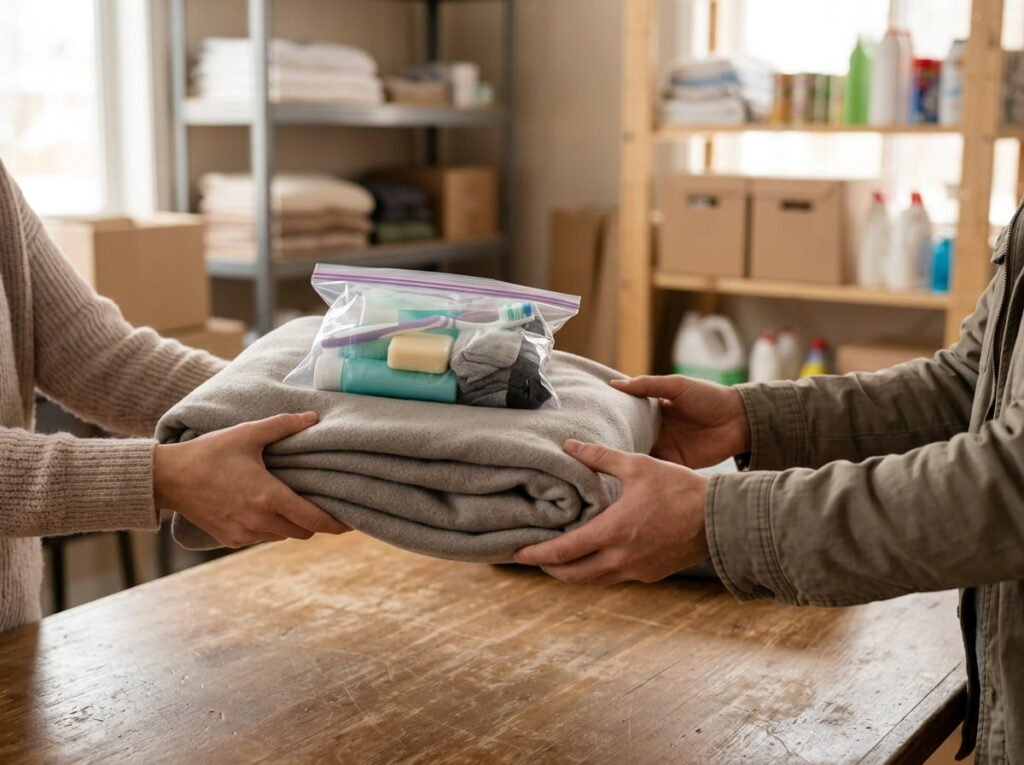
Shelters and support groups often need very specific things, and the list changes.
Clothing in common sizes, linens, towels, and basic household supplies are frequent requests. Some places want new toiletries instead of used ones. A quick message asking what they need most avoids guesswork and puts your items where they will actually help.
It also means your donation does not add to a pile they cannot use.
Ask what they need most before you bring anything. The right item in the right place does the most good.
8. Bring Books and School Supplies to Libraries, Schools, and Community Centers
Books are easy to donate if you know who wants them.
Libraries sometimes accept gently used books for sales or shelves. Schools and community centers often welcome supplies like notebooks, pens, art materials, and games. Skip old textbooks and encyclopedias, since many places cannot use outdated editions.
Check what each place is looking for, and keep books dry and in good shape.
Good to bring
9. Give Old Towels and Blankets to Animal Shelters
Towels that are too worn for guests can still keep an animal warm.
Animal shelters and rescues often welcome clean, old towels, blankets, and sheets for bedding and cleanup. Frayed edges and faded colors do not matter to them. Call first, since some shelters have limits on what they can store.
It is one of the few places where a well loved towel is just as welcome as a new one.
A stack of faded, frayed towels taking up space in the linen cupboard.
A clean bag of towels at a local shelter, where they become bedding and cleanup cloths.
10. Check Places of Worship and Community Groups for Collection Drives
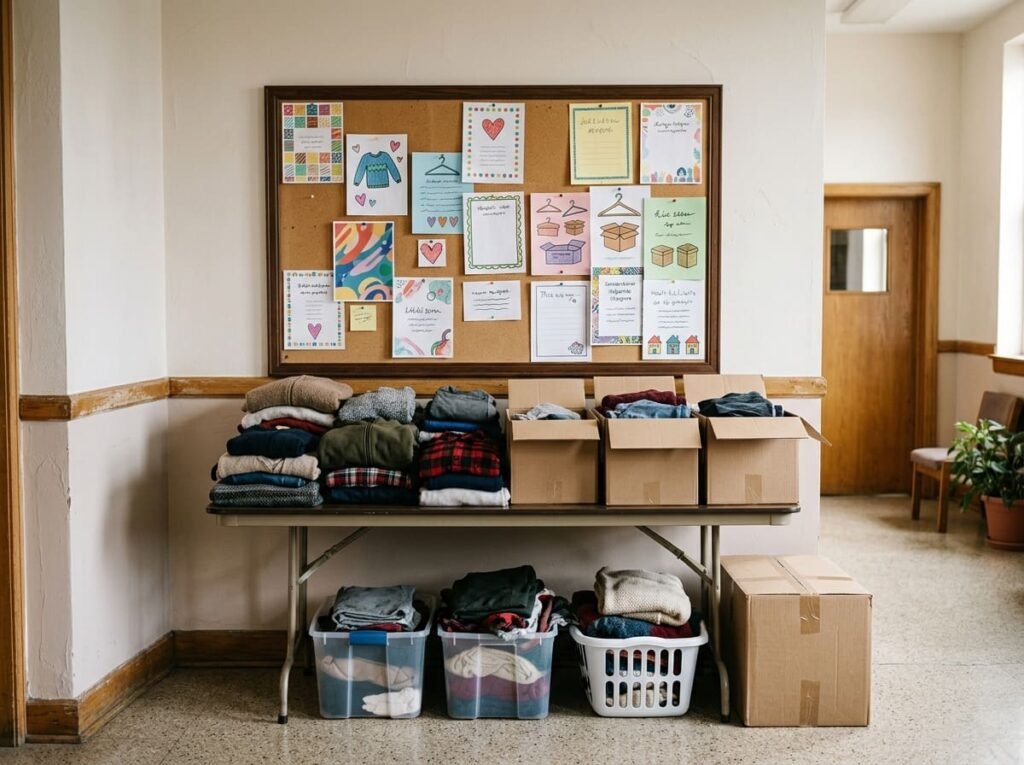
Many neighborhood groups run collection drives, and they are easy to miss.
Places of worship, community clubs, and local volunteer groups often collect clothes, food, and household goods for people in need. They tend to announce drives on notice boards and social pages. Some pass items directly to families in the area, which keeps your donation close to home.
Ask what they are collecting and when, so your timing fits.
📌 Good To Know
Drives often run around specific seasons or events. Ask a local group how to hear about the next one.
11. Offer Items to Neighbors Through Local Give Away Groups
Sometimes the best home for an item is a few streets away.
Local give away groups let you post what you no longer need and hand it to someone who asks for it. They work well for furniture, plants, kids’ items, and kitchen gear that a thrift shop might turn down. Pickup is usually quick, and you see exactly who benefits.
Take a clear photo, describe the condition honestly, and arrange a time for collection.
12. Sell Items Worth Selling First, Then Donate What Is Left
Some things are worth more to you as money than as a donation.
A good rule is to sell items that are in great condition, in demand, and easy to ship or hand over. Everything else goes straight to donation. Selling takes effort, so set a limit: list the item for a short window, and if it does not sell, donate it.
That keeps the project moving and stops items from sitting in a corner waiting for a buyer.
| Sell it if | Donate it if |
|---|---|
| It is in excellent condition | It is in good, everyday condition |
| People actively search for it | Listing it would take more effort than it is worth |
| You are happy to wait for a buyer | You want it gone this week |
13. Take Electronics and Batteries to a Proper Recycling Point
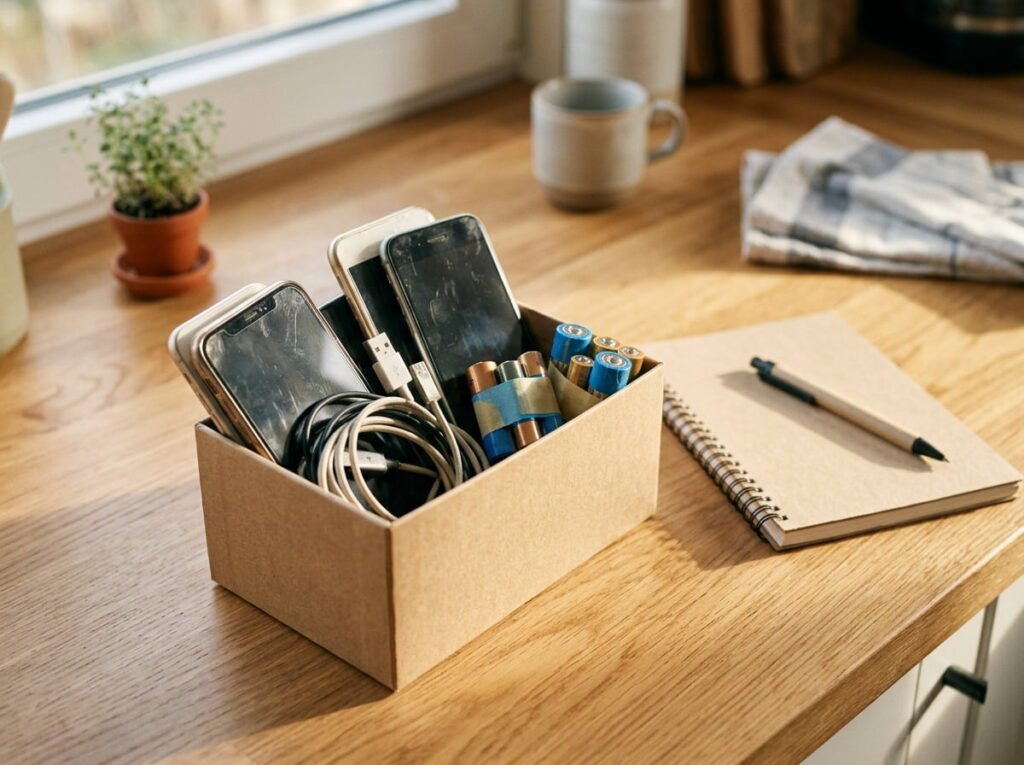
Old phones, chargers, and batteries should never go in the regular trash.
They contain materials that can harm the environment and, in the case of batteries, can be a fire risk. Many areas have electronics recycling points, collection days, or shops that take them back. Wipe personal data from phones and computers first, and tape the ends of loose batteries.
Search for an electronics recycling point near you, and check what it accepts.
Wipe personal data from devices first.
Take electronics to a designated recycling point.
Throwing batteries in the regular trash.
Donating broken electronics to a thrift shop.
14. Clean, Bag, and Label Donations So They Are Easy to Accept
Donations that arrive clean and sorted get processed much faster.
Wash or wipe items before you pack them. Use sturdy bags or boxes, and keep like with like, so clothes are in one bag and kitchenware in another. A plain label on each bag, such as clothes or kitchen, helps staff sort quickly.
Never pack fragile or damp items together, and keep boxes light enough to lift.
Wash clothes and wipe housewares so everything arrives clean and dry.
Group similar items together and use sturdy bags or boxes.
Label each bag with a simple word like clothes, books, or kitchen.
Keep boxes light enough to carry, and pad anything fragile.
15. Ask for a Receipt and Keep It With Your Records
A receipt is a small step that can matter later.
Many organizations will give you a receipt or a record of your donation if you ask. Keep it with your household papers. Rules about donations and records differ from place to place, so check your local requirements or ask a qualified adviser if you have questions about anything financial or tax related.
Take a quick photo of what you donated too, so you have a simple list.
Ask for a receipt and keep it. Check your local rules for anything tax related, since they vary.
16. Schedule a Drop Off Time That Fits Your Week
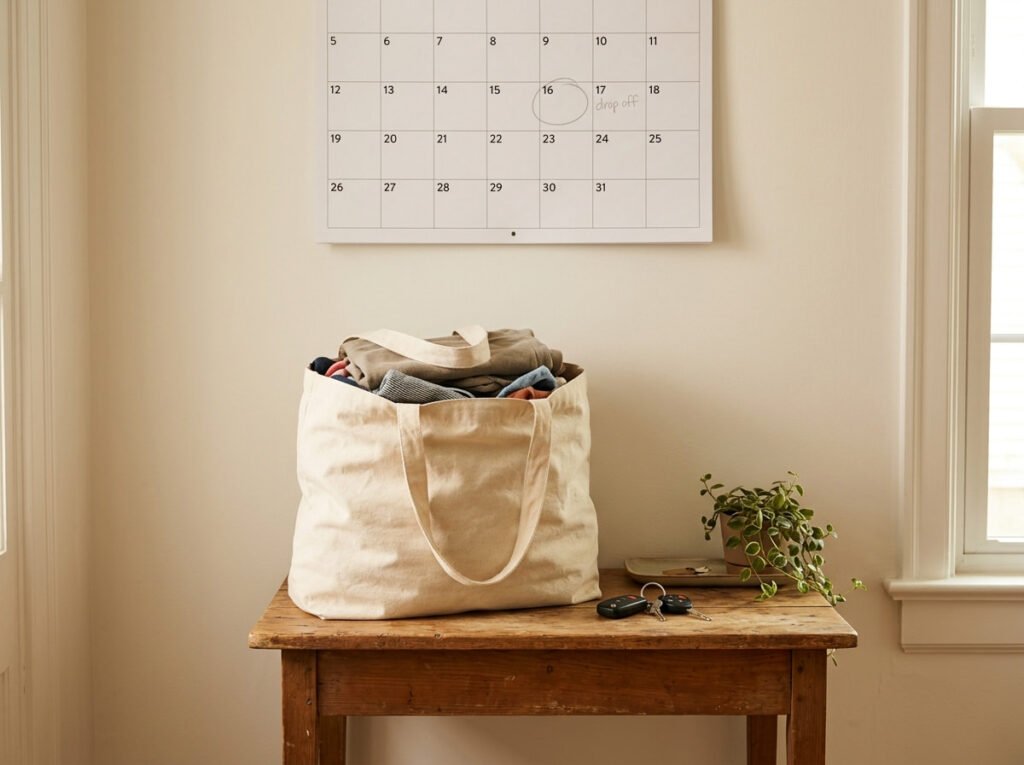
A plan without a date turns into another bag by the door.
Pick a specific time to drop off, and put it on your calendar. Combine it with another errand if you can, like a grocery trip or a school run. Check the donation place’s hours the day before, since small organizations often have short opening times.
If you need pickup, book it right away, as slots can fill up.
Before you set a date
17. Know What Most Places Cannot Accept
Even the friendliest donation center has a list of things it has to turn away.
Opened toiletries, expired food, broken electronics, mattresses, car seats, and hazardous products like paint or cleaners are common examples. Items with recalls, missing parts, or safety concerns often cannot be passed on. Policies vary, so ask before you bring anything unusual.
Dispose of what they cannot take through the proper local channels.
18. Close the Loop by Getting the Bags Out of the House the Same Day
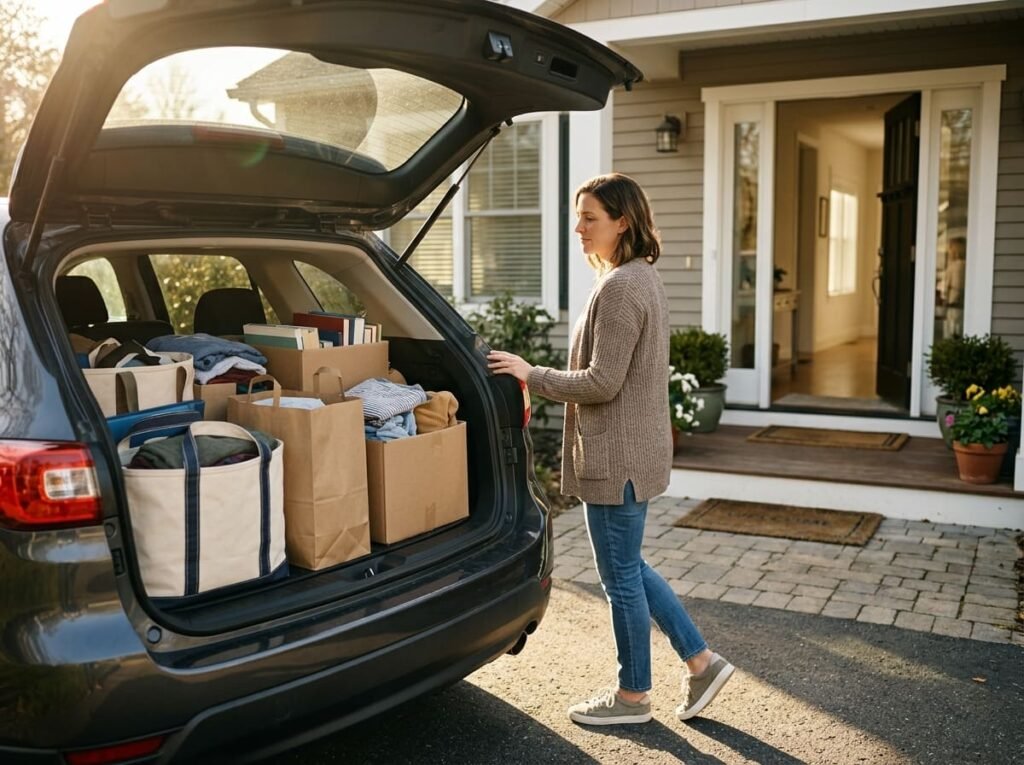
The last step is the one that makes all the others count.
Once you have sorted, chosen a place, and checked what it accepts, move the bags straight to the car. Seeing them in the trunk is far more motivating than seeing them by the door. Drop them off on your next outing, then feel the relief of an empty corner.
A decluttering project is not finished until the items are out of your house.
💡 Quick Tip
Put the bags in the car the moment you finish sorting. Out of the house is the real finish line.
Conclusion
Knowing where to donate decluttered items turns a pile of bags into a finished job. Sort first, match each item to the right kind of place, and confirm what it accepts before you go.
You do not need to visit every place on this list. Choose the one or two that suit what you have. A thrift shop for clothes, a library for books, and a recycling point for electronics cover most households.
Clean, packed items that arrive at the right place are far more useful than a rushed drop. Put a date on the calendar, load the car, and let the empty corner be your reward.
Save this list to your decluttering board so it is ready the next time you have bags waiting by the door.