Most people trying to build a cleaning system for beginners start the same way: they download a pretty printable, tape it to the fridge, and give up within two weeks because the chart was built for someone else’s life, not theirs. A system that actually works has to start with your own habits, not a template you found online.
This guide walks through the real building blocks, figuring out your frequency, breaking your home into zones, picking a format you’ll actually check off, before you ever open a printable design tool. Printables are a tool in this process, not the whole plan. The plan comes first.
Eighteen steps, in a logical order, take you from a blank page to a working system you’ll still be using in three months. Some steps are quick decisions. Others take a bit of trial and error to get right. None of them require special skills, just a little honesty about how you actually clean versus how you think you should clean.
Start at the beginning and build as you go.
1. Figure Out Your Cleaning Frequency Before You Print Anything

Jumping straight to a printable chart before deciding how often you’ll actually clean each thing sets the whole system up to fail. Frequency is the foundation everything else gets built on, so it has to come first.
💡 Quick Tip
Sort every task into daily, weekly, monthly, or seasonal before you design a single page.
Once frequency is settled, the format you choose later will actually fit your life instead of fighting against it.
2. Start With a Daily Reset List, Not a Full Deep Clean Chart
A full deep clean chart on day one feels productive, but it’s also the fastest way to burn out before the system even has a chance to stick. A short daily reset list is a better starting point, since it builds the habit of checking something off at all.
Long list, overwhelming on day one, easy to abandon.
Short, doable, builds the habit of checking something off.
Five items or fewer is plenty for a daily list. Anything longer starts to feel like a chore instead of a quick reset.
3. Break Your Home Into Zones Instead of Room-by-Room Chaos
Trying to track every single room separately gets confusing fast, especially in a home with a lot of small spaces like closets and hallways. Grouping rooms into a few broader zones keeps the whole system simpler to plan around.
How to define your zones
Zones make it much easier to rotate cleaning tasks across the week without losing track of what’s already been done.
4. Choose a Weekly Task Rotation That Actually Fits Your Schedule
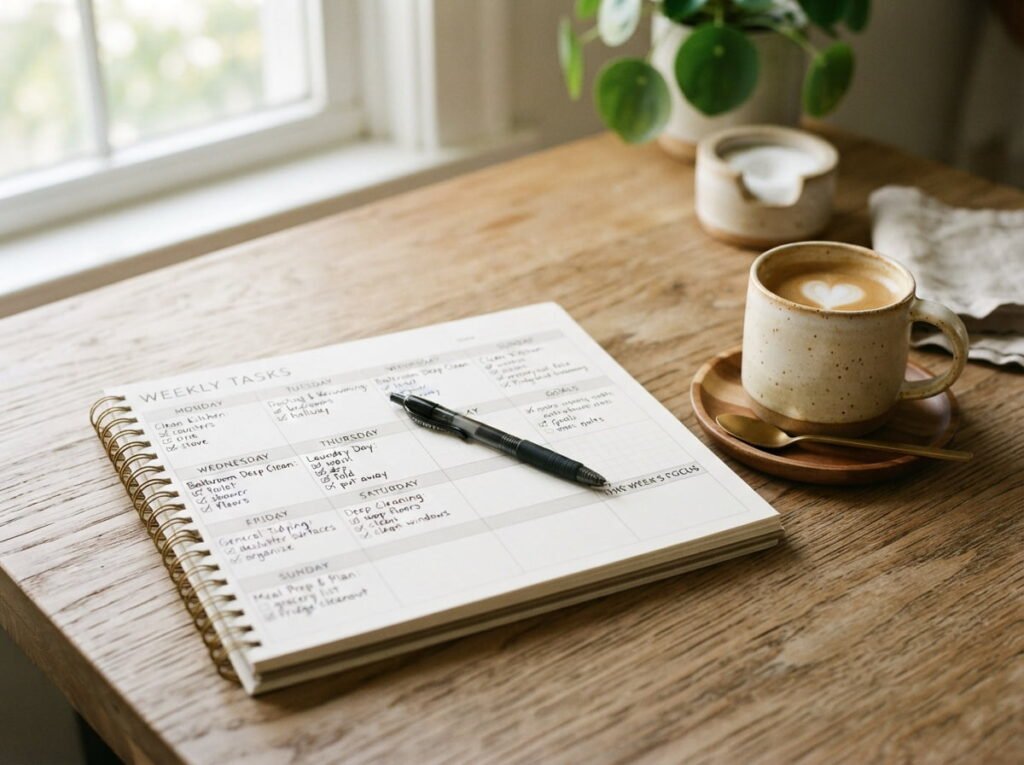
A rotation built around someone else’s work week rarely matches your own days off or busiest evenings. The right rotation style depends entirely on how your week is actually shaped.
There’s no wrong choice here, only the one that actually matches the week you really have, not the one you wish you had.
5. Print a Simple Chore Chart Before Building Anything Fancy
A single, plain chore chart teaches you more about your own system than a polished bundle ever will, since it’s fast to adjust once you see what’s actually working. Save the elaborate design for later, once you know what you need.
List your zones and daily tasks on one plain page.
Print one copy and use it for a full week before changing anything.
Note what got skipped or felt off, and adjust before printing a second version.
A basic version tested for real beats a beautiful one built on guesses about what your week actually looks like.
6. Understand the Difference Between Maintenance and Deep Cleaning
Wiping down a counter and scrubbing behind the stove are not the same task, even though both fall under the general idea of cleaning. Knowing which category a task belongs to changes how often it actually needs to happen.
| Maintenance | Deep Cleaning |
|---|---|
| Quick, done daily or weekly | Thorough, done monthly or seasonally |
| Keeps things from getting worse | Resets things back to a real baseline |
Mixing these two categories together on one list is a common reason a chore chart starts to feel impossible to keep up with.
7. Set a Realistic Number of Tasks Per Day

Cramming ten tasks onto a single day, even small ones, almost guarantees a few get skipped, and skipped tasks are what make people abandon the whole system. Fewer tasks done consistently beats a long list that rarely gets finished.
Keep each day to three or four tasks at most.
Push anything extra to a lighter day later in the week.
Piling every leftover task onto one busy day.
Assuming a longer list means a more thorough system.
A shorter list that actually gets finished builds more trust in the system than a long one that rarely does.
8. Use a Monthly Overview Page to See the Bigger Picture
A day-by-day chart alone makes it hard to see how the month is really going, since you’re only ever looking at one day at a time. A monthly overview page fills that gap by showing patterns a daily list can’t.
Looking back at a month all at once often reveals a zone that’s quietly been skipped for weeks.
9. Build a Seasonal Task List for Things You Only Do a Few Times a Year
Baseboards, ceiling fans, and window tracks don’t belong on a weekly list, but they still need to happen sometime, and a seasonal list is where those tasks actually get remembered instead of forgotten indefinitely.
💡 Quick Tip
Tie seasonal tasks to something you already do, like a season change or a holiday, so they’re easier to remember.
This list doesn’t need to be long. Four or five tasks per season is usually enough to cover what regularly gets missed.
10. Track What You’ve Actually Completed, Not Just What’s Planned

A chart full of tasks you meant to do but never checked off tells you nothing useful about how the system is actually working. Tracking completion honestly is what turns a chart into a real tool instead of a wish list.
Looks organized on paper, but hides what’s actually being skipped.
Shows real patterns, honest about what needs adjusting.
An honest check mark, even one showing a missed task, gives you far more useful information than a chart that was never really followed.
11. Keep a Running Supply List So You’re Never Caught Without Something
Running out of a cleaning supply mid-task, right when you’re finally motivated to tackle it, kills momentum fast. A running list means you notice you’re low before it becomes a problem instead of after.
What belongs on it
Keep the list somewhere you’ll actually see it, like near where the supplies are stored, not buried in a notes app you rarely open.
12. Adjust Your System After the First Two Weeks, Not the First Day
Changing the whole plan after one rough day throws out information you haven’t actually gathered yet. Two weeks gives you enough real data to see what’s genuinely not working versus what just needed a single off day.
Give the system a full two weeks before making major changes.
Note patterns across several days, not just one bad one.
Scrapping the whole plan after one missed day.
Redesigning the chart before you’ve actually used it once.
A rough Tuesday doesn’t mean the system failed. It just means Tuesday was a rough day, which happens to everyone occasionally.
13. Pick a Format That Matches How You Actually Check Things Off

Some people love crossing a task off with a pen, and others forget a paper chart exists the moment it’s out of sight. The right format is whichever one you’ll actually interact with, not the one that looks the most organized.
| Paper | Digital |
|---|---|
| Physical, satisfying to check off by hand | Always on your phone, harder to ignore |
| Needs a visible spot to actually get used | Needs notifications turned on to stay useful |
Try both for a week if you’re not sure. Most people already know which one they’ll actually stick with, even before testing it.
14. Assign Specific Days to Specific Rooms
A vague plan to “clean the bathroom sometime this week” tends to slide until the week is over and nothing happened. Assigning a specific day to each zone removes the decision fatigue of figuring out what to do each morning.
List your zones from step three and match them to specific days.
Match the busiest zones to your least busy days.
Write the assignment somewhere visible so it’s not something you have to remember.
Once each zone has a set day, you stop deciding what to clean and start just doing it, which is where a lot of the mental effort disappears.
15. Build In a Buffer Day for Whatever Gets Missed
Real weeks rarely go exactly as planned, and a system with no room for a missed day quietly falls apart the first time something comes up. A single buffer day absorbs that without derailing the whole week.
If nothing got missed that week, the buffer day is simply a day off, which is a nice bonus rather than wasted planning.
16. Keep the System Visible So You Actually Use It

A chart tucked inside a drawer or saved in a folder you never open might as well not exist, since out of sight quickly becomes out of mind. Visibility is often the difference between a system that gets used and one that quietly gets abandoned.
A spot on the fridge, inside a cabinet door, or clipped to a binder that stays on the counter all work well, as long as it’s somewhere you’ll actually see it.
17. Don’t Copy Someone Else’s System Exactly
A system built for someone else’s household, someone else’s schedule, and someone else’s tolerance for mess rarely transfers over cleanly. It’s a fine starting point, but it’s not meant to be the final version.
💡 Quick Tip
Use someone else’s system as a rough outline, then swap in your own zones, frequencies, and task limits.
The goal isn’t finding the perfect existing system. It’s building one that actually fits the house and the week you really have.
18. Revisit and Simplify the System Once a Season

A cleaning system built months ago doesn’t always match the life you’re living now, especially once routines shift or a season changes what actually needs attention. A quick seasonal check-in keeps the system from quietly going stale.
Revisit the system once a season and cut anything you’ve stopped actually doing. A simpler system you follow beats a detailed one you’ve abandoned.
If a task has been skipped every single week for a month, that’s not a failure. It’s useful information about what the system doesn’t actually need.
Conclusion
Building a cleaning system for beginners isn’t about finding the perfect printable on the first try. It’s about starting simple, paying attention to what actually works, and adjusting as you go instead of scrapping the whole plan after one rough week.
The system you end up with in three months will probably look different from the one you start with today, and that’s exactly how it should go. What matters is that it fits your actual home and your actual week, not someone else’s.
Save this list for the next time you’re ready to build a system that finally sticks, instead of one more chart that ends up forgotten in a drawer.