
You know the feeling of walking into a room and relaxing a little. The counters are clear, the floor is open, and nothing is asking for your attention. Most people want that feeling at home and assume it takes a weekend of throwing everything away.
It does not. A calmer home usually comes from many small choices, made one drawer, one shelf, and one surface at a time. Less stuff also means less to move, dust, and wipe, so cleaning gets faster as a bonus.
This list of minimalist decluttering ideas covers fifteen gentle steps you can take at your own pace. Minimalism looks different in a family home than in a studio, so keep what you use and love, and let the rest go. Nothing here asks you to own as little as possible.
Pick one idea, start small, and see how it feels. If an item belongs to someone else, ask before you move it.
1. Start With One Drawer, Because Small Wins Build Calm Faster Than a Whole House Purge
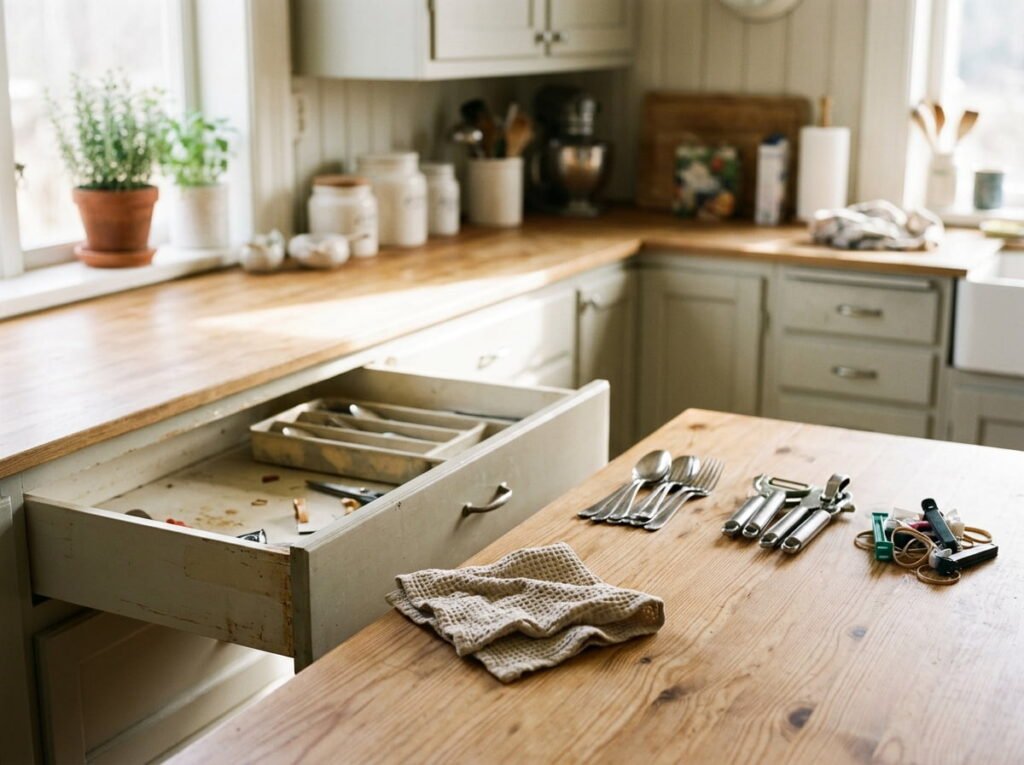
Starting big is how decluttering projects stall by Saturday afternoon.
Pick a single drawer, the junk drawer, the sock drawer, or the one under the bathroom sink. Empty it onto a table, wipe the inside, and put back only what you use. Everything else gets a decision.
A small, finished job is motivating. You see the result right away, and it proves the process works.
Choose a spot you open every day, so the win shows up again tomorrow.
2. Ask What You Want Your Home to Feel Like Before You Touch a Single Item
Decluttering without a goal turns into moving piles around.
Take a minute to describe the feeling you are after. Maybe it is quiet mornings, a kitchen you enjoy cooking in, or a living room you can tidy in five minutes. Write it down in a few words and keep it handy.
That sentence becomes your filter. When you hold an item, ask whether it supports that feeling or works against it.
Share the goal with anyone you live with, so you are all aiming at the same thing.
Questions to ask before you start
3. Clear Flat Surfaces First, Since Empty Counters Change a Room Instantly
Flat surfaces collect things, and they are the first place the eye lands.
Clear a kitchen counter, a bathroom vanity, or a coffee table, and the whole room reads as calmer. It also makes cleaning easier, since you can wipe in one pass without lifting a dozen items.
Keep only what earns a spot: the kettle you use daily, a soap dispenser, a single plant. Everything else moves to a cupboard or leaves the house.
Do one surface a day instead of all of them at once.
A counter crowded with mail, bottles, and gadgets, so wiping it means moving everything first.
A clear counter with a few daily items, one wipe to clean, and room to actually use the space.
4. Use a Three Box Method So Every Item Gets a Quick Decision
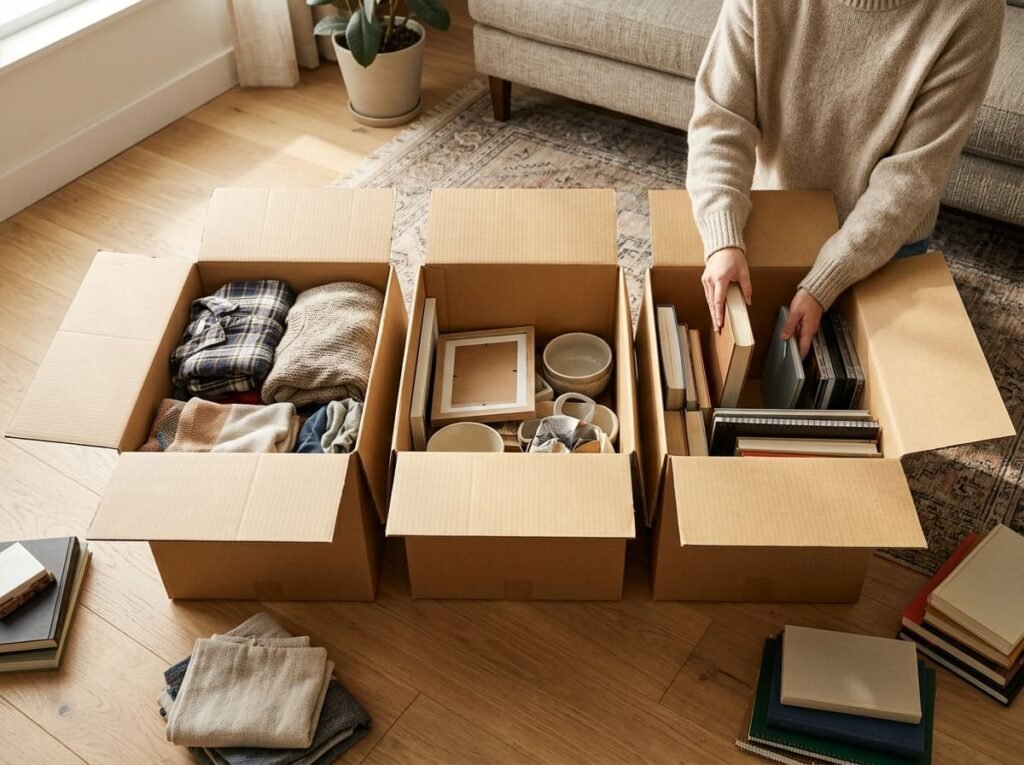
Holding an item and wondering what to do with it is where time disappears.
Set out three boxes labeled keep, let go, and unsure. Pick up each item, decide fast, and drop it in a box. Keep the unsure box small, and give it a date. If you have not needed anything in it by then, let it go.
The goal is momentum, not perfection. Most decisions are easier than they feel.
Set out three boxes: keep, let go, and unsure.
Handle each item once and place it in a box without overthinking.
Put the keep items back in their spots, and take the let go box out of the house the same day.
Seal the unsure box, write a date on it, and revisit it later.
5. Set a Ten Minute Timer When Decluttering Feels Like Too Much
Ten minutes is short enough to start and long enough to matter.
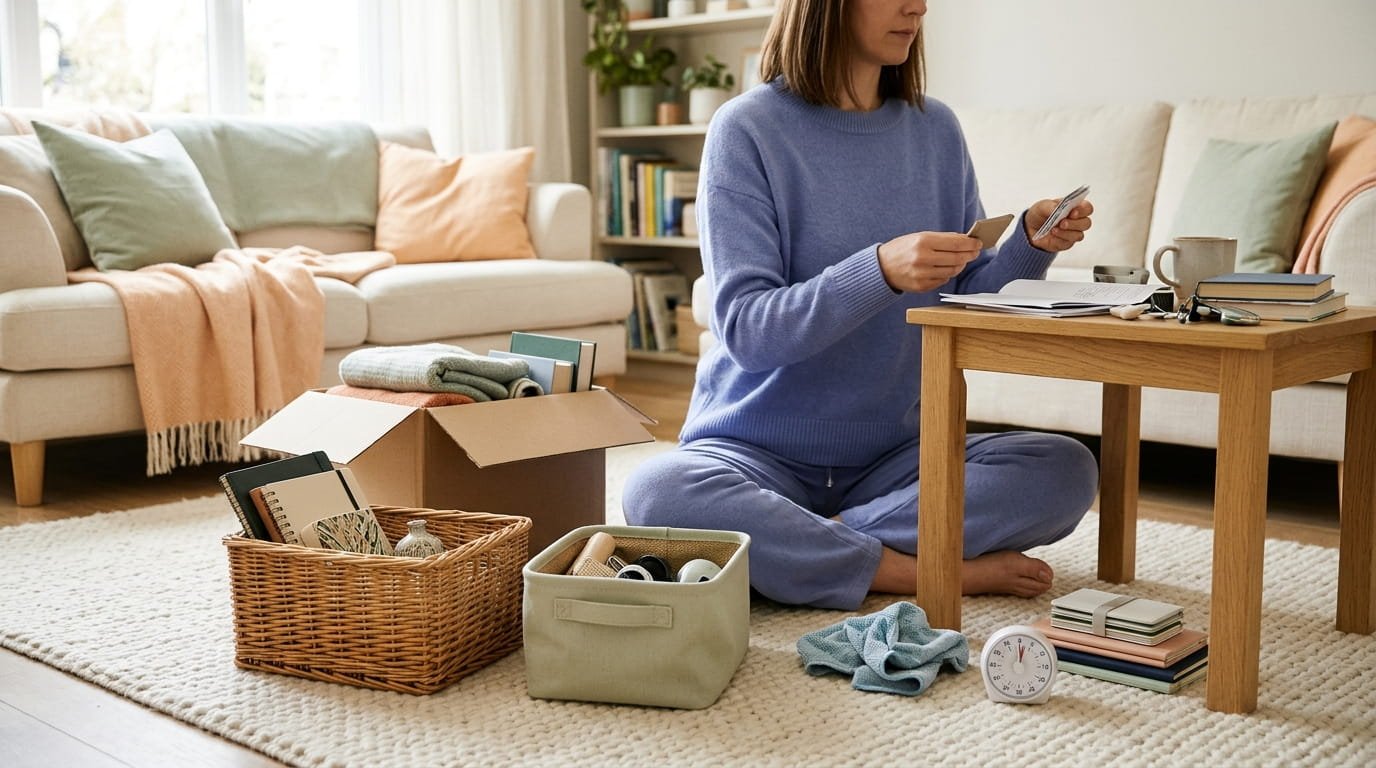
Set a timer, pick one small area, and stop when it rings. Most people find they want to keep going, but stopping is allowed. A bathroom shelf, a coat pile by the door, or the top of a dresser all fit in ten minutes.
Do it daily for a week and you will have worked through more than you expect. It also keeps decluttering from taking over your whole weekend.
6. Let Go of Duplicates First, the Easiest Things to Part With
Three spatulas, five water bottles, a drawer of pens that mostly do not work. Nobody feels attached to the extras.
Duplicates are the easiest place to build momentum because you are not losing anything. You still have one that works. Gather similar items in one spot, keep the best one or two, and pass the rest along.
Check for expired items while you are at it, like old sunscreen, dried-out markers, and tired cleaning sprays.
Do not combine or pour old products together. Dispose of cleaners and chemicals as your local guidance advises.
💡 Quick Tip
Line up every duplicate side by side before you choose. Seeing four of the same thing makes it much easier to keep just the best one.
7. Keep Only the Mugs, Towels, and Sheets You Actually Use
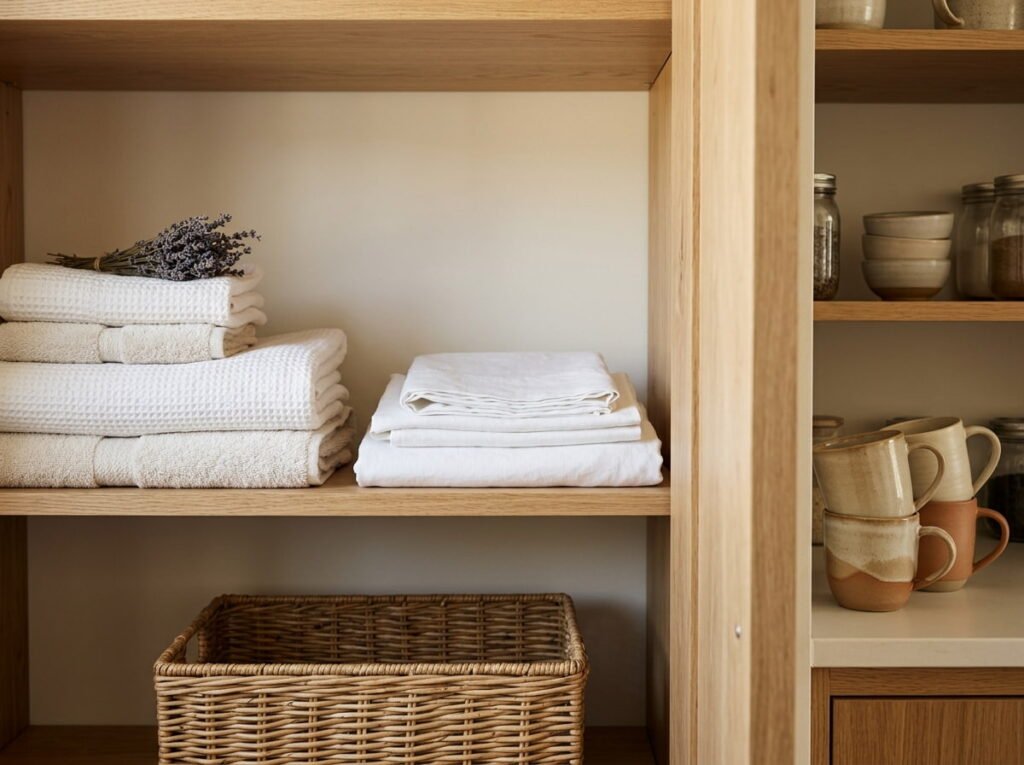
Look at what you reach for each week. That is your real set.
Most homes hold far more mugs, towels, and bed linens than the people living there use. Keep what fits your household, with one spare set of sheets per bed and enough towels for a week of laundry. Frayed, stained, or mismatched extras can go, or be repurposed as cleaning rags.
A smaller set also makes laundry and cupboards easier to manage, which means less to wash, fold, and store.
Count your household, not your cupboard.
Keep one spare sheet set per bed.
Keep towels for each person plus a few guests.
Turn worn linens into cleaning rags.
Keeping every mug from every event.
Hoarding sheets “just in case” for years.
Tossing a family member’s things without asking.
8. Handle Sentimental Items Gently and Keep a Small Memory Box
Sentimental things are not clutter just because you do not use them.
Go slowly with these, and do them last, after the easy decisions have built your confidence. Choose the pieces that matter most and keep them in one small box or shelf. A photo of a larger item can hold the memory without the space.
There is no rule about how much to keep. If a decision feels heavy, set it aside and come back another day.
Never discard something that belongs to someone else, or that was a gift from a person you still see, without thinking it over.
📌 Good To Know
A memory box has edges. When it is full, it is time to choose again, rather than getting a bigger box.
9. Give Every Item a Home, or It Becomes Clutter Again
Clutter is usually just stuff with nowhere to live.
When an item has a clear spot, putting it away takes seconds. When it does not, it ends up on the nearest flat surface. Walk through your kept items and decide where each one belongs, close to where you use it.
Keys by the door, chargers by the bed, cleaning cloths under the sink. Label shelves or bins if it helps the whole household remember.
If something has no good home, ask whether it needs to stay.
10. Try the One In, One Out Rule to Keep Things From Piling Back Up
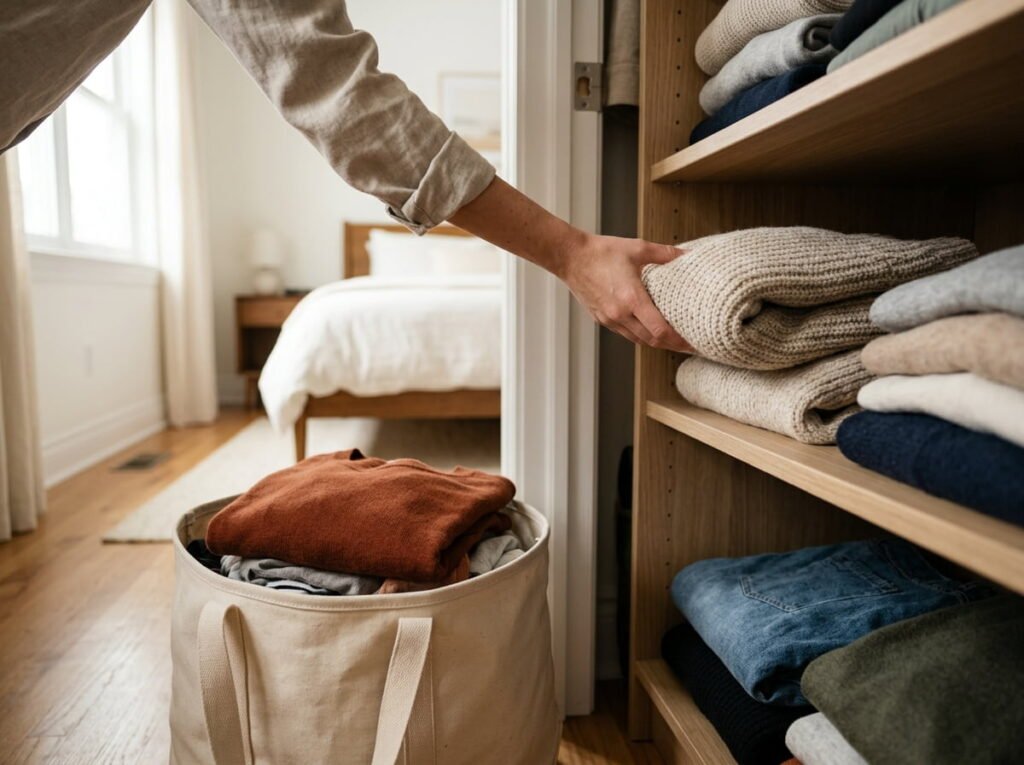
Decluttering fails when more comes in than goes out.
The rule is simple. When you bring something new into the house, something similar leaves. A new shirt means an old one goes. A new mug means an old mug moves on. It keeps the total steady without any big purge.
It works best for categories that fill up quietly, like clothes, kitchen gadgets, and books.
Be flexible with it. A rule that feels like punishment will not last.
| When something comes in | Something goes out |
|---|---|
| A new shirt or sweater | An old one you no longer wear |
| A new kitchen gadget | One you rarely use |
| A new book | One you have finished and will not reread |
11. Clear the Bathroom and Kitchen Counters So Cleaning Takes Minutes
The two rooms you clean most are also the two that collect the most small things.
A bathroom counter with a dozen bottles and a kitchen worktop crowded with appliances both turn a thirty second wipe into a ten minute job. Move the extras into a cabinet or drawer and keep out only what you use every day.
Use a small tray to hold the daily items, like a soap dispenser and a toothbrush cup. Lift the tray, wipe, and put it back.
It is a small change, and it makes the daily wipe something you will actually do.
A clear surface takes one wipe. A crowded one takes a whole afternoon, so you put it off.
12. Edit Your Closet by Wearing, Not by Guessing
“I might wear it someday” is the sentence that fills closets.
Try a simple wear test. Turn every hanger backward. When you wear something and wash it, hang it back the right way. After a season or two, the backward hangers show what you never reach for.
Look at those pieces honestly. Do they fit, feel good, and suit your life now? If not, they can go. Keep a few special occasion items, and let go of the rest.
Check pockets and fold lines for anything worth saving before you donate.
Ask these about each piece
13. Tame Paper and Digital Clutter Before It Quietly Takes Over
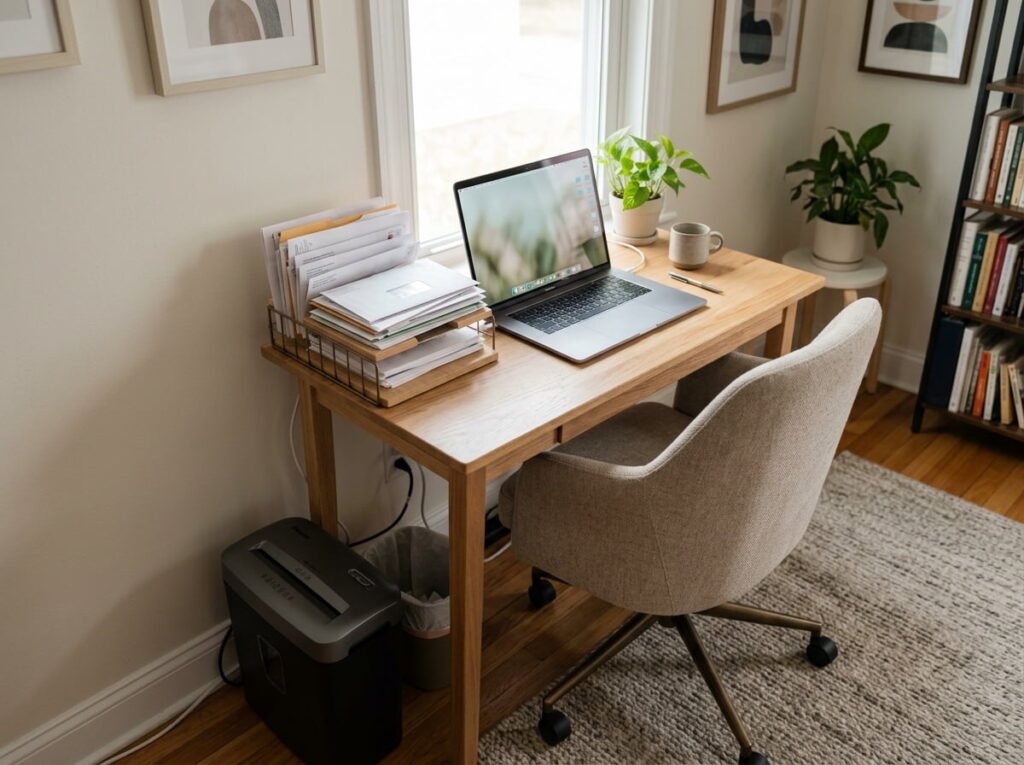
Paper piles and full inboxes are clutter you can feel but not always see.
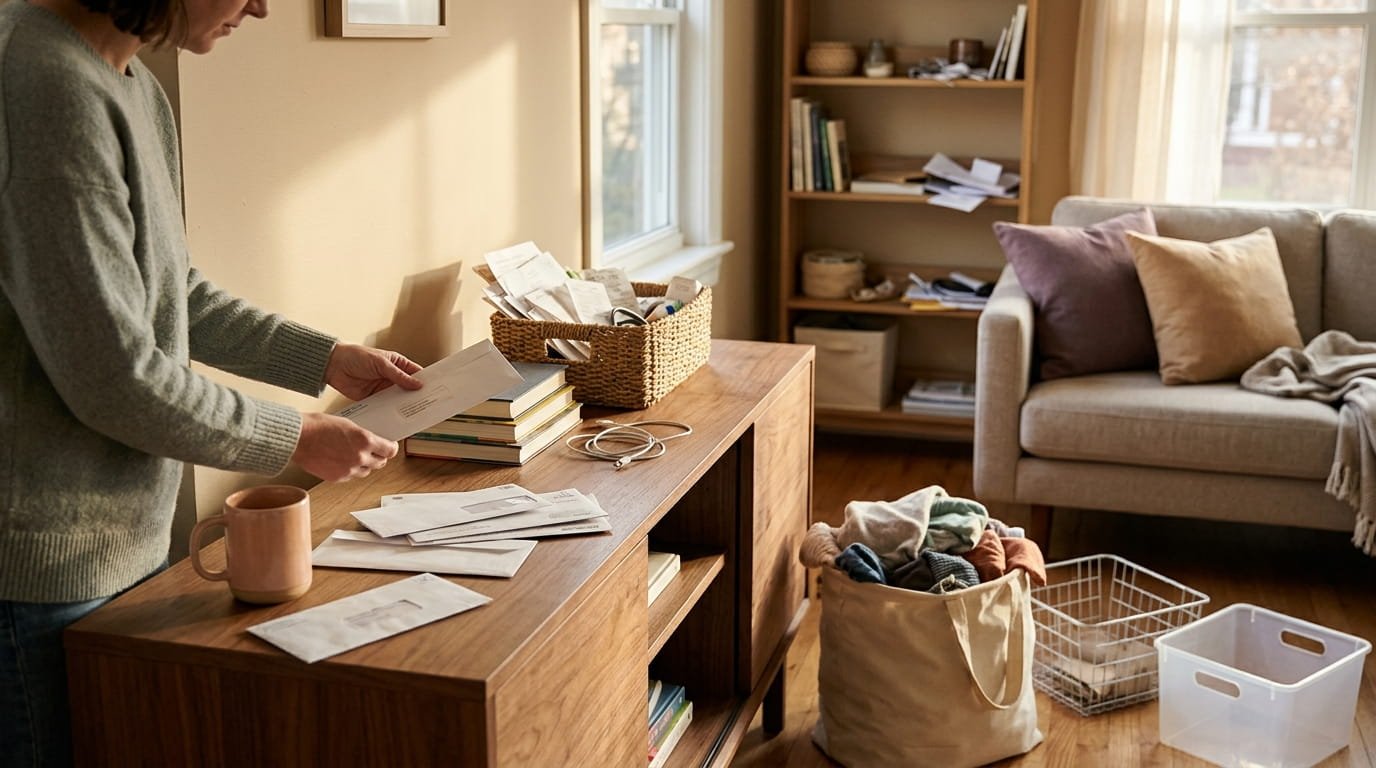
For paper, set up one spot for incoming mail and sort it once a week. Recycle junk right away, and keep only what you need to act on or store. Shred papers with personal details instead of tossing them whole.
For digital clutter, start small. Delete old screenshots, clear a downloads folder, and unsubscribe from a few emails.
Keep important documents, like IDs and tax papers, in a safe, labeled place, and check local guidance on how long to hold them.
14. Donate, Sell, or Recycle So Letting Go Feels Good
Decluttering stalls when the let go box sits by the door for months.
Give each item a clear destination. Good condition items can be donated or sold. Broken or worn items may be recyclable. Some things, like batteries, electronics, and old chemicals, need special disposal.
Take the box out the same week you fill it. Put it in the car, and drop it off on your next errand.
Check what your local donation center accepts first, so you do not make a wasted trip.
Sort the let go box into donate, sell, recycle, and special disposal.
Check what your local donation center and recycling service accept.
Load the car or set the bags by the door right away.
Drop everything off on your next trip out, and do not reopen the bags.
15. Keep a Gentle Weekly Reset So the Calm Lasts
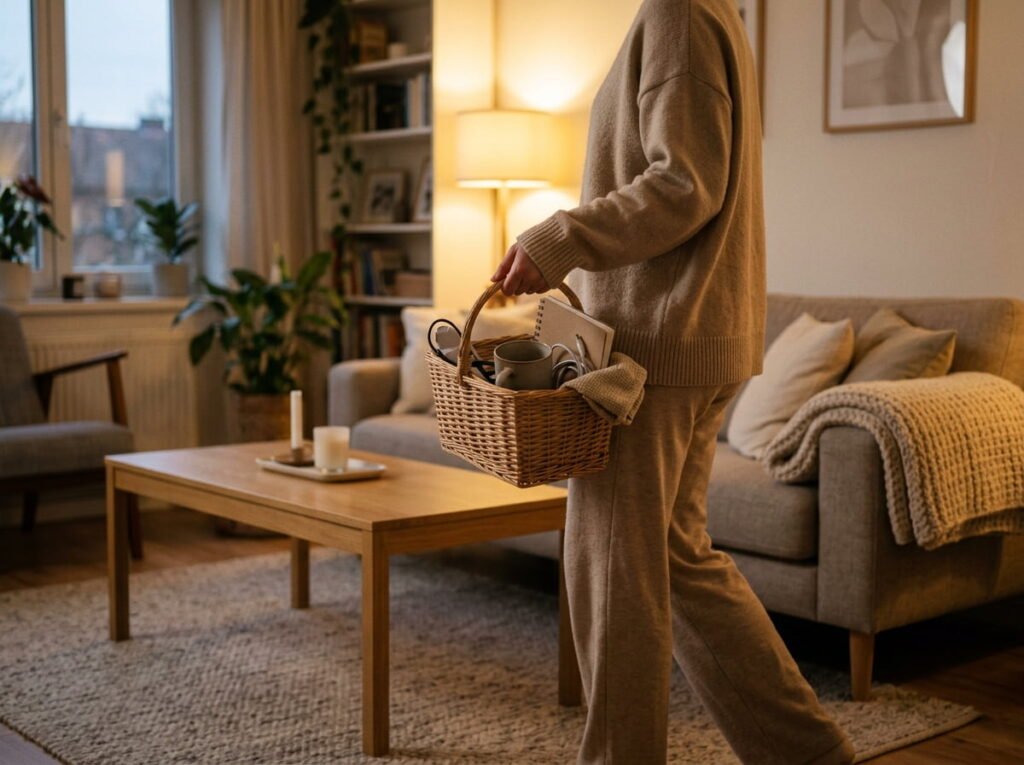
A decluttered home stays that way through small, regular upkeep.
Choose a short window each week, maybe fifteen minutes on Sunday evening. Walk through the house with a basket and return stray items to their homes. Clear the counters, check the entryway, and glance at the mail pile.
This is not a big clean. It is a quick reset that stops clutter from building again.
If something keeps ending up out of place, it may need a better home, or it may be ready to go.
Small piles building through the week, until the house feels crowded again and needs another big purge.
A short weekly reset that returns things to their homes, so the calm you built stays in place.
Conclusion
A calmer home does not come from owning as little as possible. It comes from keeping what you use and love, giving it a place, and letting the rest go without guilt.
Minimalist decluttering works best in small steps. One drawer, one counter, and one ten minute timer will take you further than a single exhausting weekend. As a bonus, clear surfaces wipe down in seconds, so cleaning gets easier too.
Start with the spot that bothers you most, and be kind to yourself along the way.
Save this list on Pinterest so you have a gentle plan the next time your home starts to feel crowded.