You spent a weekend clearing a shelf, and three weeks later it looks the same. That is not a character flaw. It usually means something small went wrong in how the space was cleared, not in how hard you tried.
Most backsliding comes from a short list of habits. A pile with no home, a bag that never leaves the house, a new purchase with nothing going out. Each one quietly refills the space you worked for.
This list of decluttering mistakes covers fifteen of them, with a plain fix for each. If you are brand new, our decluttering 101 guide covers the basics first. Here we focus on why cleared spaces refill and how to stop it.
None of these mean you did it wrong. They are normal, and every one is fixable.
If an item belongs to someone else, ask before you move it.
1. Skipping the “Why” Makes Every Choice Harder and Every Pile Come Back

Without a reason, every item feels like a coin flip.
You hold a mug and wonder, keep or go, with nothing to measure it against. So you keep it, and the shelf stays full. A short goal fixes that. Write one line, like “a counter I can wipe in one pass,” and keep it visible.
Now each item gets one question: does this help that goal? It speeds up decisions and gives you something to point back to when old habits creep in.
2. Decluttering the Whole House at Once Leads to Burnout and Half-Done Rooms
Ambition is the enemy of finished rooms.
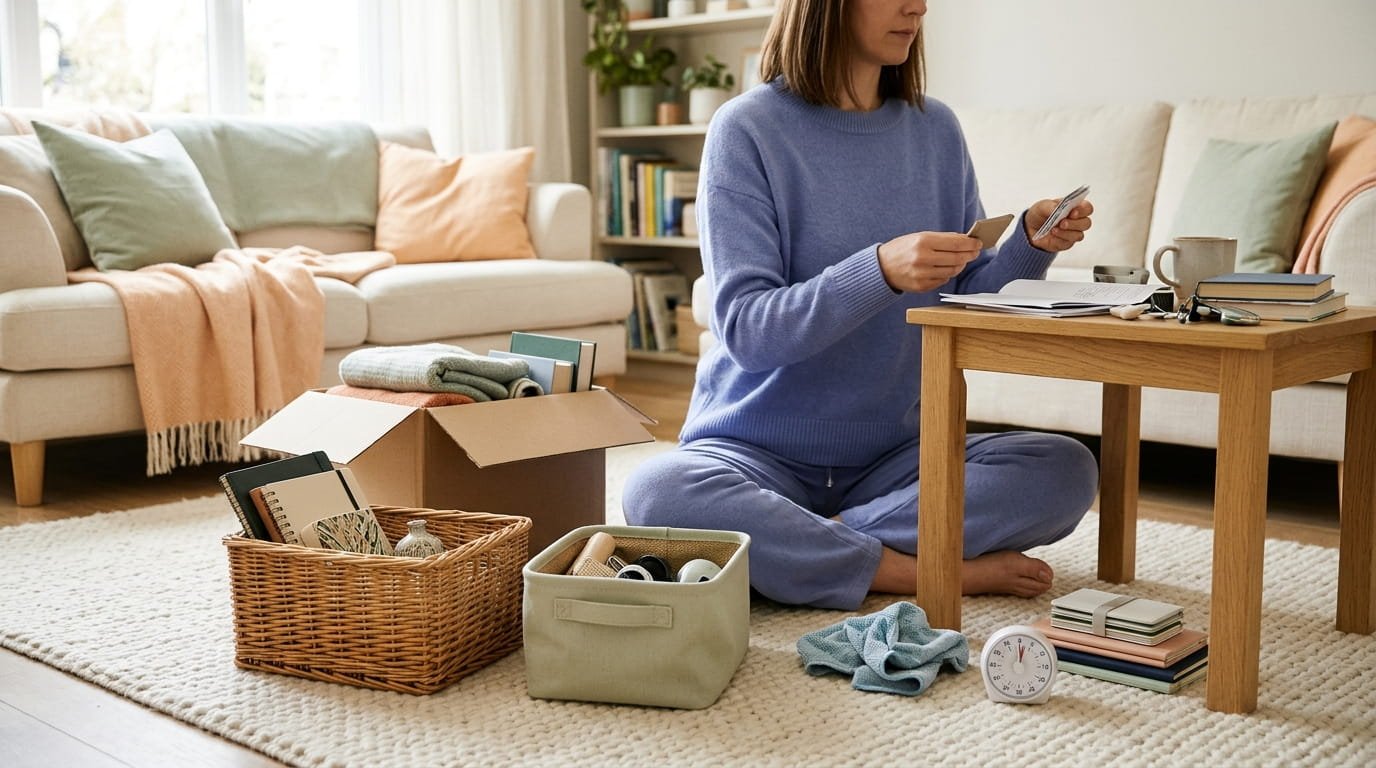
When every cupboard is open at once, nothing gets closed. By evening you are tired, the hallway is full of bags, and the plan quietly dies. Choose one small zone instead, finish it, and stop.
A half-sorted space often looks worse than the original and makes starting again harder.
Keep each session finishable
3. Buying Organizers Before You Declutter Just Gives Clutter a Nicer Home
A new bin makes a pile look intentional. It is still a pile.
Buying containers first means you size the storage to the mess, not to what you actually keep. Declutter first, see what remains, then measure and buy only what the keepers need.
You will often find you need fewer containers than you thought.
New bins bought first, filled with everything, and the same amount of stuff in tidier boxes.
Declutter first, measure what is left, and buy only the few pieces it needs.
4. Keeping Things Out of Guilt Fills the Space You Just Cleared
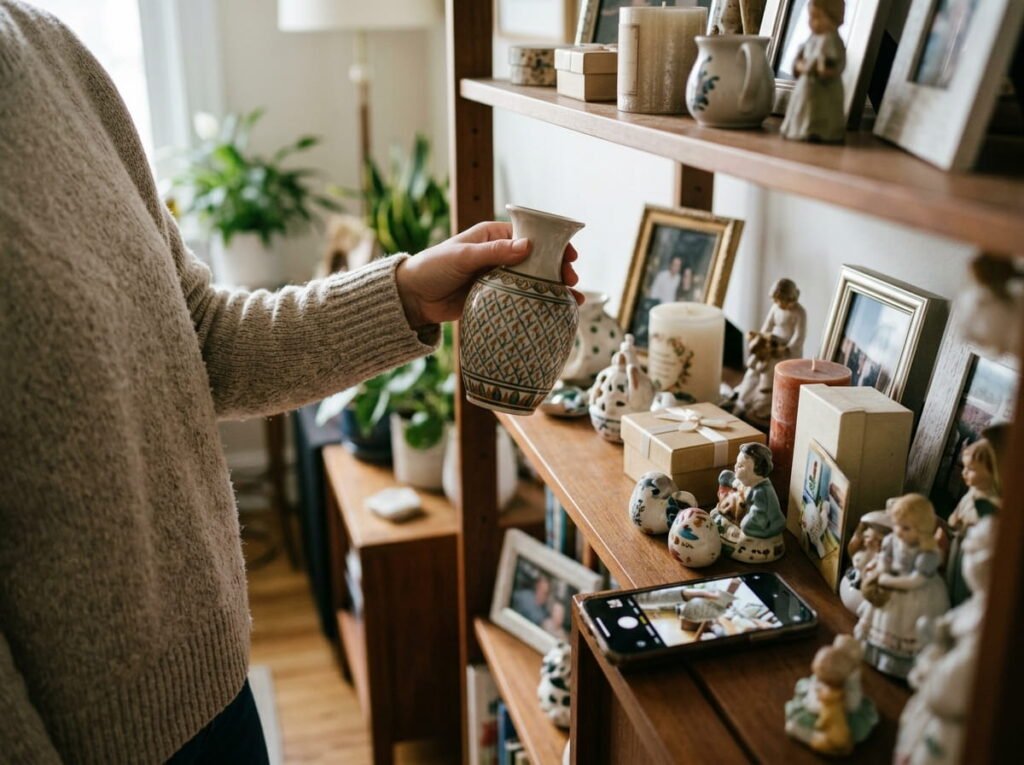
“But it was a gift” is the sentence that saves the most clutter.
Guilt keeps items that serve no one. A gift did its job when it was given. If you do not use or enjoy it, passing it on lets someone else get value from it.
Keep what you love. Release the rest without a speech.
💡 Quick Tip
Take a photo of an item you feel guilty about, then let it go. The memory stays, and the shelf space comes back.
5. Saying “I Might Need It” About Everything Keeps the Pile Alive
Almost anything might be needed someday. That is the problem.
If the answer is always “maybe,” nothing leaves. Give the phrase a test: could you replace it easily and cheaply, and have you used it in the past year? If both answers favor letting go, let it go.
Keep real exceptions, like tools and documents, and be honest about the rest.
Ask if it is easy to replace.
Ask if you used it in the past year.
Put true unsure items in a dated box.
Keeping duplicates “just in case.”
Saving broken things you will not fix.
Letting the maybe box grow forever.
6. Leaving the Donation Bag by the Door Invites a Second Look
A bag by the door is a bag you will open again.
The longer it sits, the more items get rescued. “Actually, I might wear that” is how half the pile comes back. Fix it with a deadline. Set the bag in the car the same day, and drop it off on your next errand.
Check what your local donation center accepts first, so the trip is not wasted. Keep anything that needs special disposal, like batteries or chemicals, in a separate bag.
Once it is gone, do not go looking for it.
Tie the bag as soon as the session ends.
Check what your local center accepts and its opening hours.
Put the bag in the car the same day.
Drop it off on your next trip out, and do not reopen it.
7. Giving Items No Home Means They Land on the Nearest Surface
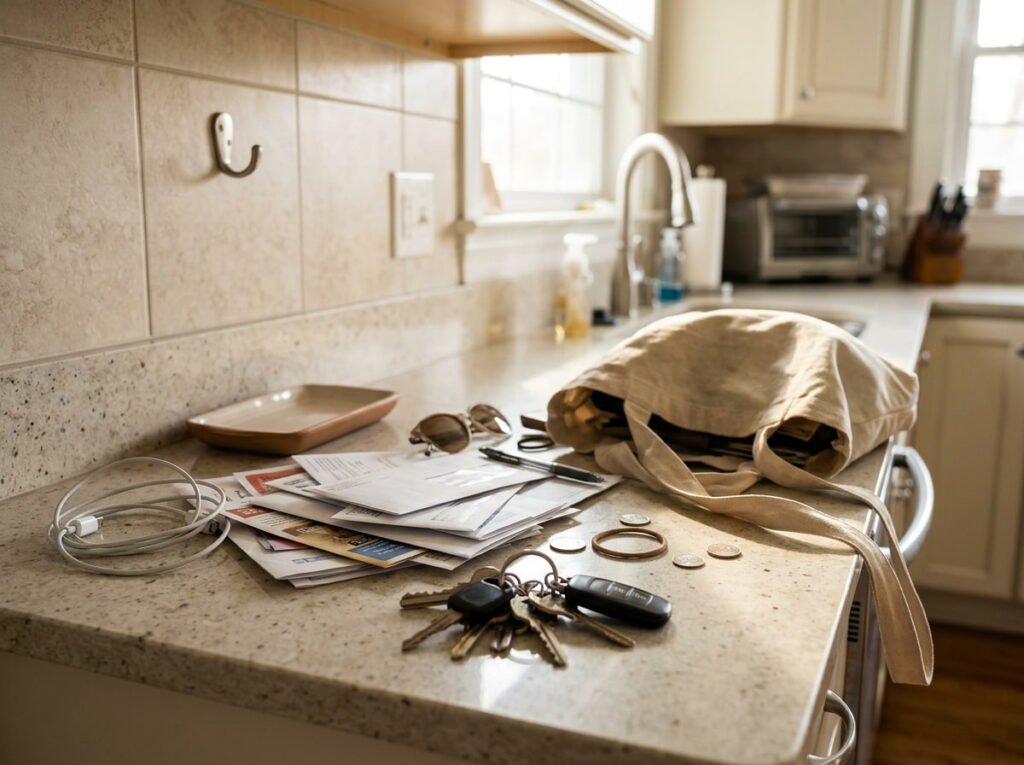
Clutter is often just stuff with nowhere to live.
Keys, mail, chargers, and bags end up on the counter because nothing else is closer. Walk through what you kept and decide where each thing belongs, near where you use it. Then make that spot easier than the counter.
If an item has no good home, ask whether it needs to stay.
8. Letting New Things In Without Letting Old Things Out Undoes the Work
You cleared the shelf, then a few small purchases filled it again.
The fix is a simple balance. When something new comes in, something similar goes out. A new top means an old top leaves. A new mug means an old one moves on. It keeps the total steady without another big purge.
Be flexible. A rule that feels like punishment will not last.
| Comes in | Goes out |
|---|---|
| A new top or sweater | An old one you rarely wear |
| A new kitchen gadget | One you seldom use |
| A new book | One you have finished and will not reread |
9. Decluttering Other People’s Things Without Asking Starts Arguments
Clearing someone else’s space feels helpful. To them, it often feels like a violation.
Your tidy shelf may be their organized system. Their old things may matter in ways you cannot see. Edit only what is yours. For shared spaces, agree on zones first and let each person decide about their own items.
If someone is not ready, wait. A good result is a calm home, not a won argument.
Declutter your own things freely. For anyone else’s, ask first and accept the answer.
10. Ignoring Paper and Digital Clutter Lets the Quiet Piles Grow

You can clear every shelf and still feel buried.
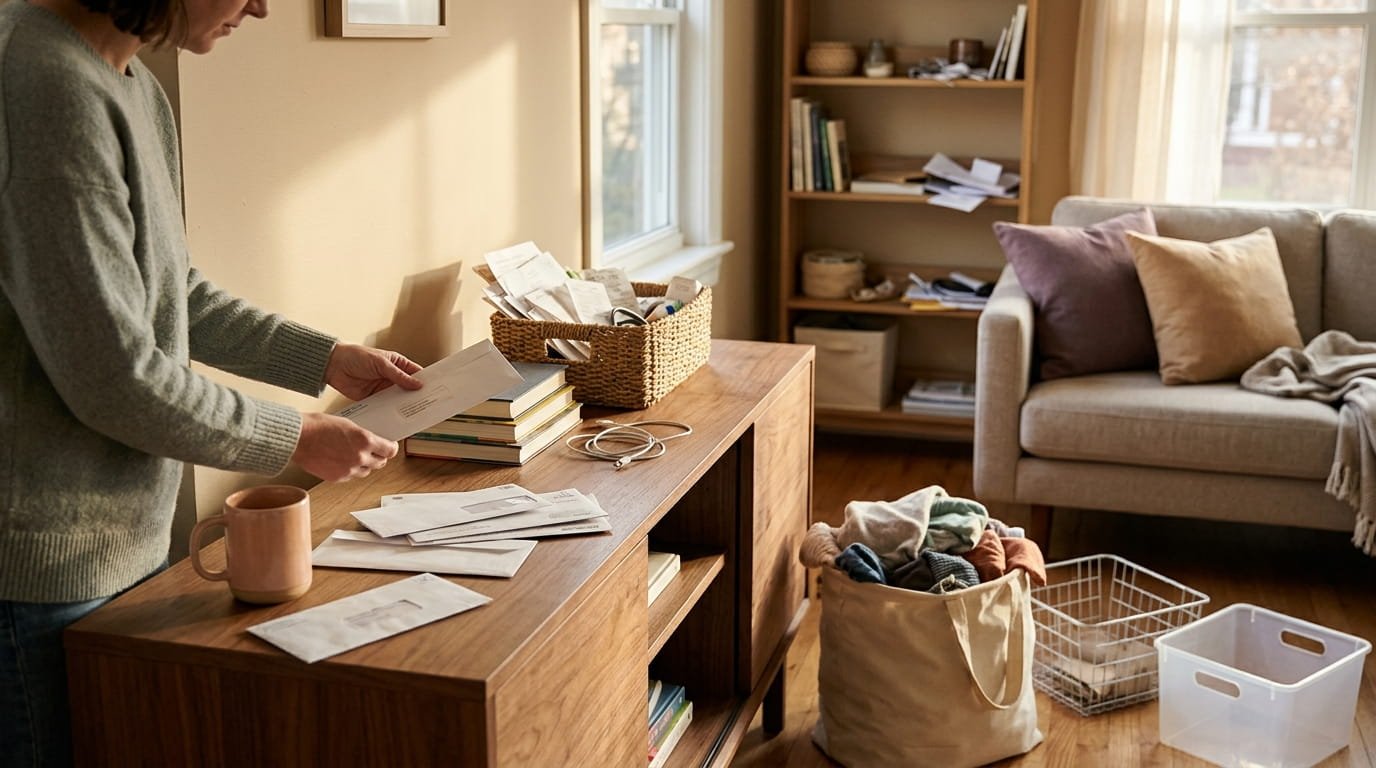
Paper arrives daily and screens fill silently. Set one spot for incoming mail and sort it weekly into act on, file, and recycle. Shred anything with personal details. For digital clutter, delete old screenshots, clear the downloads folder, and unsubscribe from a few emails.
Keep important documents in one labeled place, and check local guidance on how long to hold them before shredding.
📌 Good To Know
Open mail over the recycling bin. Junk goes straight in, and only the pieces that need action reach the table.
11. Treating Sales and Freebies as Savings Refills the House
A free item is only free if you actually use it.
Sale racks, giveaway bags, and bulk deals bring in things you did not plan to own. Each one needs space, cleaning, and a decision later. Before you say yes, ask where it will live and whether you would buy it at full price.
If the answer is no, a polite pass saves you the cleanup.
12. Skipping the Wipe-Down Leaves the Space Looking Unfinished
An emptied shelf is the only time you can clean all of it.
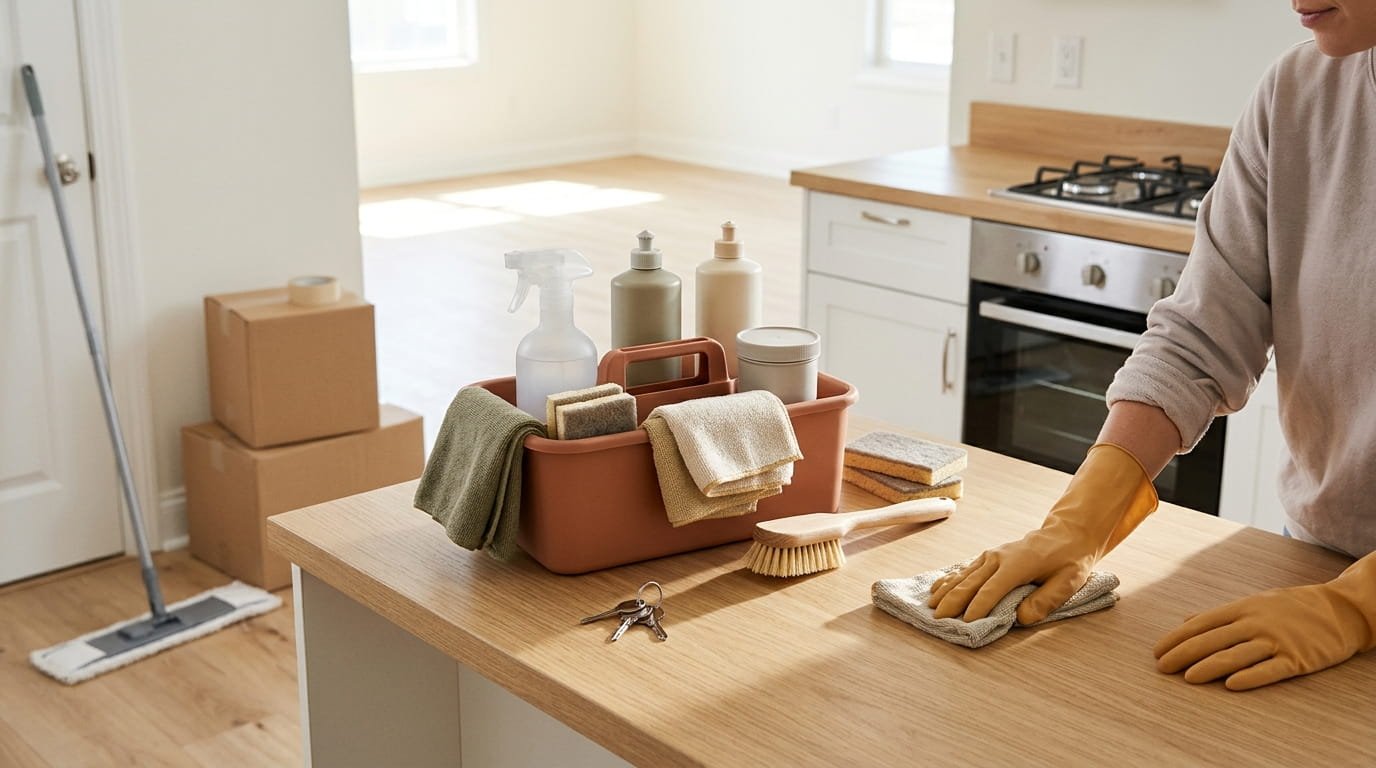
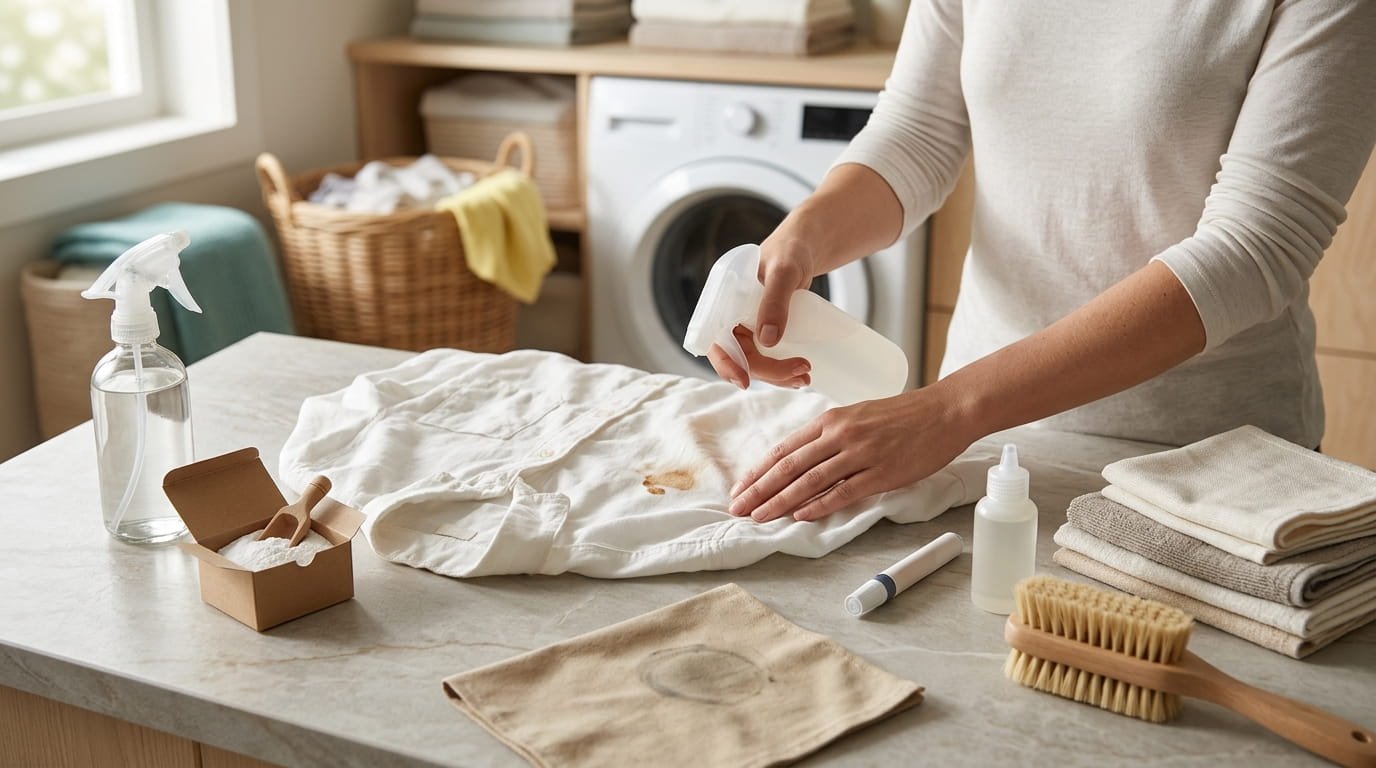
Many people sort, put everything back, and move on, leaving dust and crumbs underneath. The space never feels fresh, so it never feels done. Wipe each surface before the keepers return, working from top to bottom.
Use one cleaner at a time, never mix products, and test a hidden spot on wood or painted surfaces.
Before the keepers go back
13. Declutter Once and Never Check Again, and the Pile Rebuilds

A cleared space is not a finished space. It is a starting point.
Small things drift back in every week: a receipt, a spare cable, a mug that migrated from another room. Without a check, those add up until the shelf looks like it did before.
A short, regular look keeps the drift small enough to fix in minutes.
A cleared shelf left alone for months, slowly refilling until it needs another big session.
A short monthly look that returns strays and catches drift while it is still small.
14. Expecting Perfection Makes One Slip Feel Like Failure
One messy week does not undo your progress.
If a shelf fills up again, that is information, not failure. It may need a better home for its contents, or fewer contents. Reset it and keep going.
Aim for a home that works, not one that looks staged. A lived-in house will always have some clutter.
⚠️ Watch Out
Do not respond to a slip with a giant purge or by throwing out things you will regret. Reset one small spot, and keep expired products and chemicals for proper disposal under local guidance.
15. Build a Simple Weekly Habit That Stops the Backslide
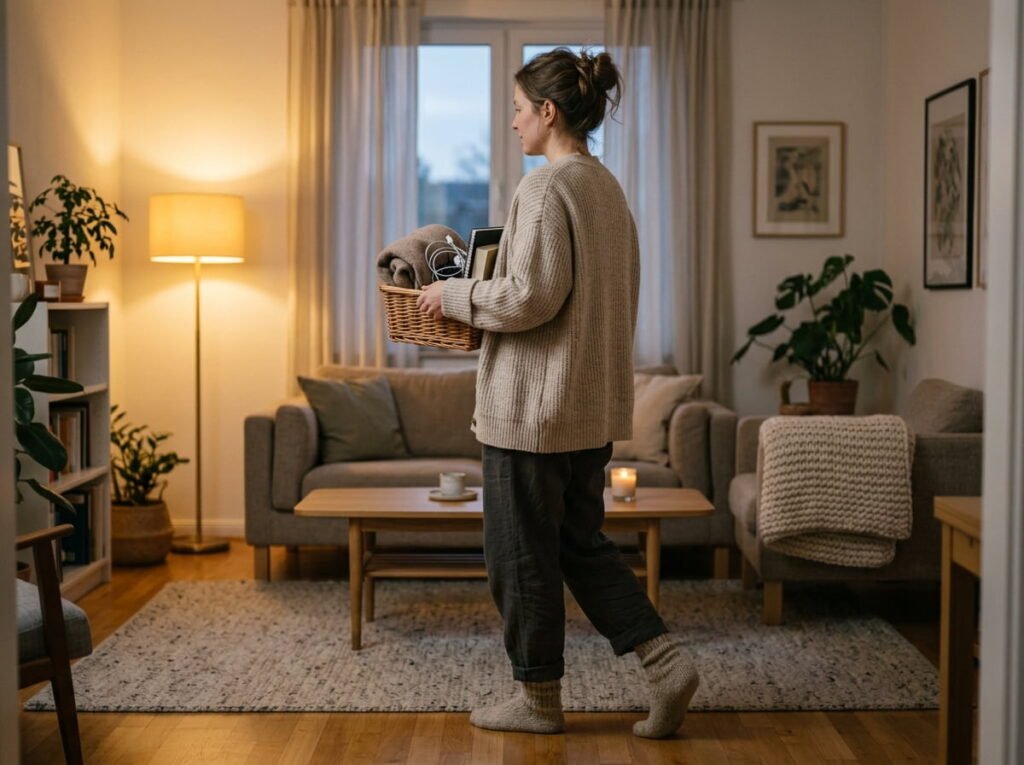
A small weekly habit beats a big yearly purge.
Pick one short window, maybe fifteen minutes on Sunday evening. Walk through with a basket, return strays to their homes, clear the main surfaces, and empty the bags by the door. Check the mail pile and the entryway.
It is not a deep clean. It is a quick reset that keeps the work you already did.
Conclusion
Most re-cluttering is not about willpower. It comes from a few small habits: a bag left by the door, items with no home, new things coming in with nothing going out. Fix those and a cleared space tends to stay cleared.
Avoiding common decluttering mistakes does not mean doing it perfectly. It means catching the drift early, with a short weekly reset and a kind attitude toward the slips.
Pick one mistake from this list that sounds like your house, and fix just that one first.
Save this list on Pinterest so you have it ready the next time a cleared shelf starts to refill.