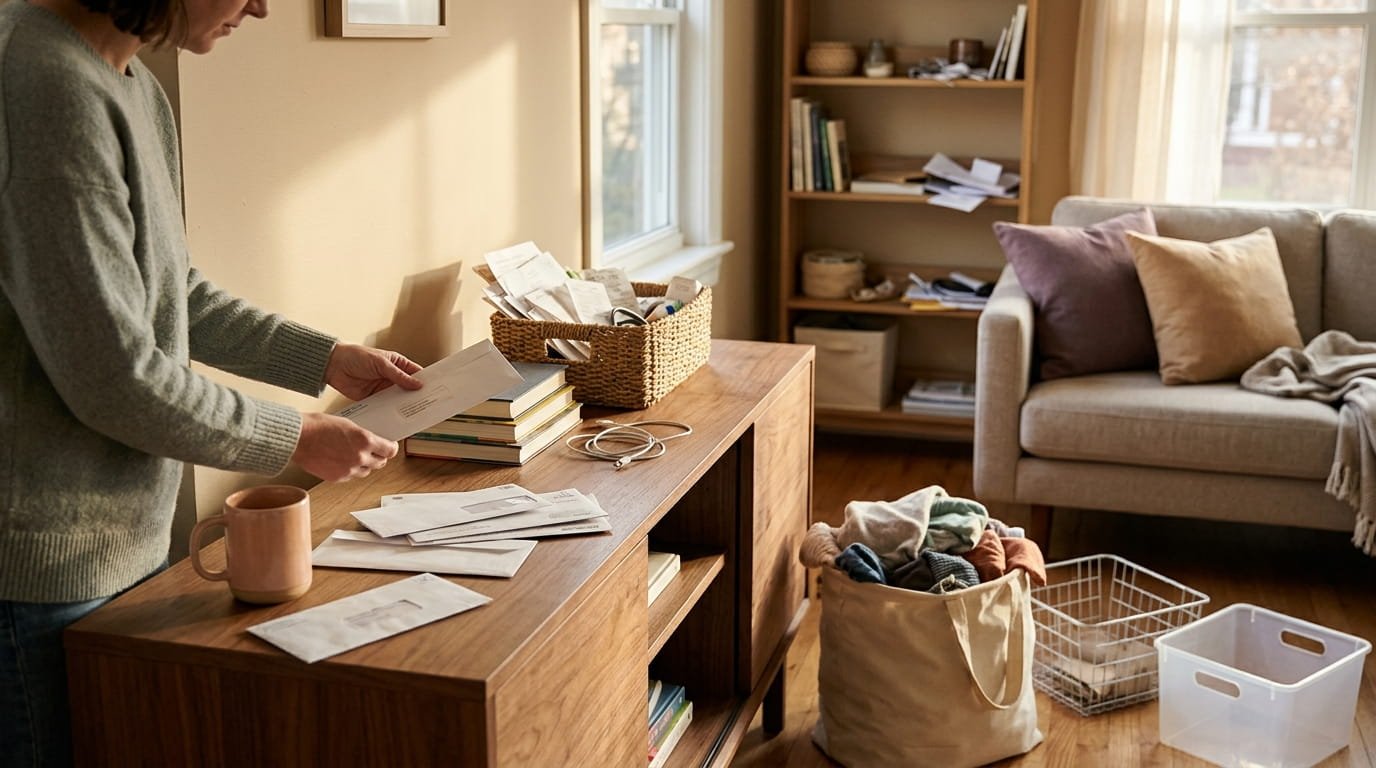

It is 8 p.m., you are tired, and the pile on the chair has been there for a month. You know you should deal with it. You also know you will not, because the whole idea feels too big for the energy you have left.
That is a common place to start, and it does not mean you are lazy. It usually means the plan is too large. A smaller plan fits a smaller day.
This list shows how to start decluttering with no motivation, using eighteen tiny moves that take minutes, not weekends. Each one lowers the bar so that beginning feels possible. If you want the full step by step version later, our decluttering 101 guide covers it.
If low energy is constant and heavy, not just a busy week, it is worth talking to a doctor or someone you trust.
If something belongs to another person, ask before you move it.
1. Lower the Bar First: Five Minutes Counts as Decluttering

Five minutes is real work, so count it.
Most people quit before they start because they picture a full day of sorting. Drop that picture. Decide that five minutes of clearing is a complete success, and anything beyond it is a bonus.
Many people find that once they begin, they keep going a little. If you do not, you still did something, and the pile is smaller than it was.
2. Pick the One Spot That Bugs You Every Single Day
Choose by annoyance, not by size.
Think about the spot you see and sigh at: the kitchen counter, the chair of clothes, the hallway pile. Clearing it pays you back every day, which is a small reward your tired brain can feel.
Skip the garage and the attic for now. They can wait for a day with more energy.
Good spots for a low energy start
3. Start With Trash Only, Since Nobody Has Feelings About Trash
Decisions are the heavy part. Trash needs none.
Grab a bag and collect only the obvious: wrappers, empty bottles, broken items, junk mail, expired food. There is nothing to weigh or feel guilty about, and the space looks different within minutes.
That quick change is often enough to make the next step feel easier.
A surface buried in wrappers, receipts, and empty bottles, so the whole spot looks hopeless.
Only the obvious trash gone, no decisions made, and the spot already looks workable.
4. Use a Timer and Give Yourself Permission to Stop When It Rings
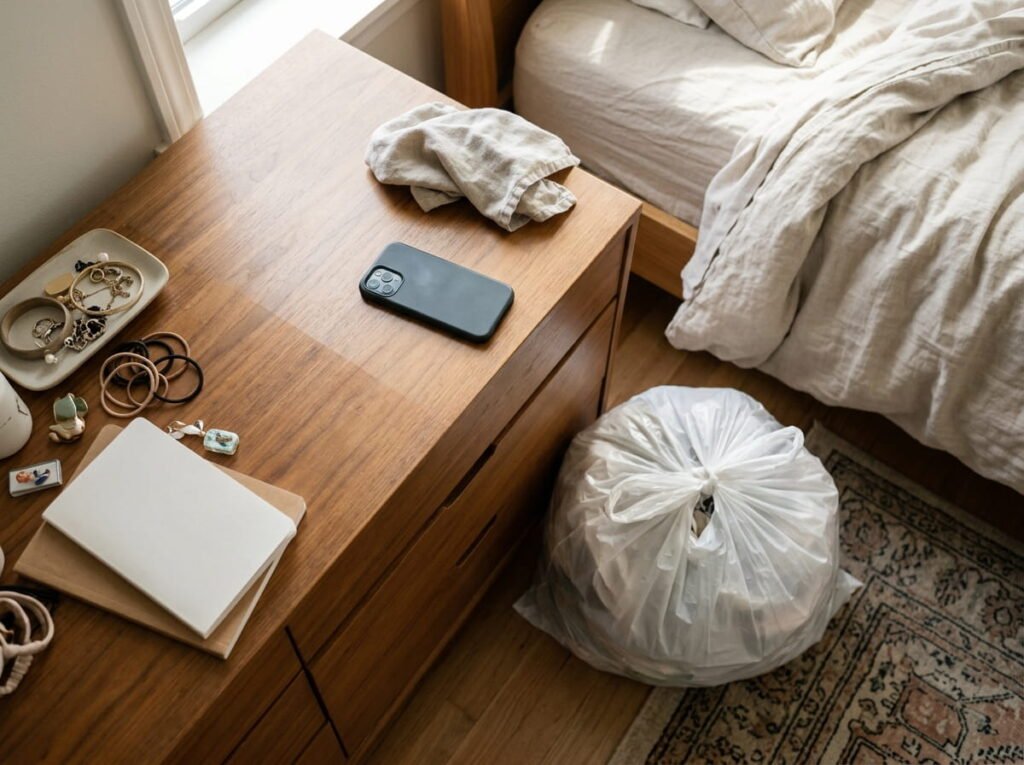
A finish line makes starting easier.
Set a timer for a short stretch and work until it rings. When it does, you are allowed to stop, and that permission matters. Knowing the end is close makes the start less scary.
If you want to keep going, reset it. If not, you are done, with no guilt.
Pick one small spot and set the timer for a short stretch.
Work only on that spot until the timer rings.
When it rings, stop or reset it, whichever feels right.
Tie off any bag you filled before you walk away.
5. Set Out the Bag or Box Before You Feel Ready
Preparation can be the whole first step.
Put a trash bag and a donation bag by the spot you picked. That is it. Having them in plain sight removes the “where do I even start” problem, and it often tempts you to drop one thing in.
If you do nothing else today, the bags are still ready for tomorrow.
6. Declutter During Something You Already Do, Like a Phone Call
Some of the best time is time you have already spent.
While you wait on hold, chat with a friend, or let the kettle boil, you can clear one small thing. Put away three items, sort a handful of mail, or wipe a single shelf. Your hands are free, and nothing new has to be fit into your day.
Pick a cue that happens daily, and keep a small bag nearby so there is no setup.
💡 Quick Tip
Pair one tiny task with one daily cue, like clearing the counter while the kettle boils. The old habit reminds you of the new one, so you need less willpower.
7. Do One Item a Day When Even One Drawer Feels Like Too Much
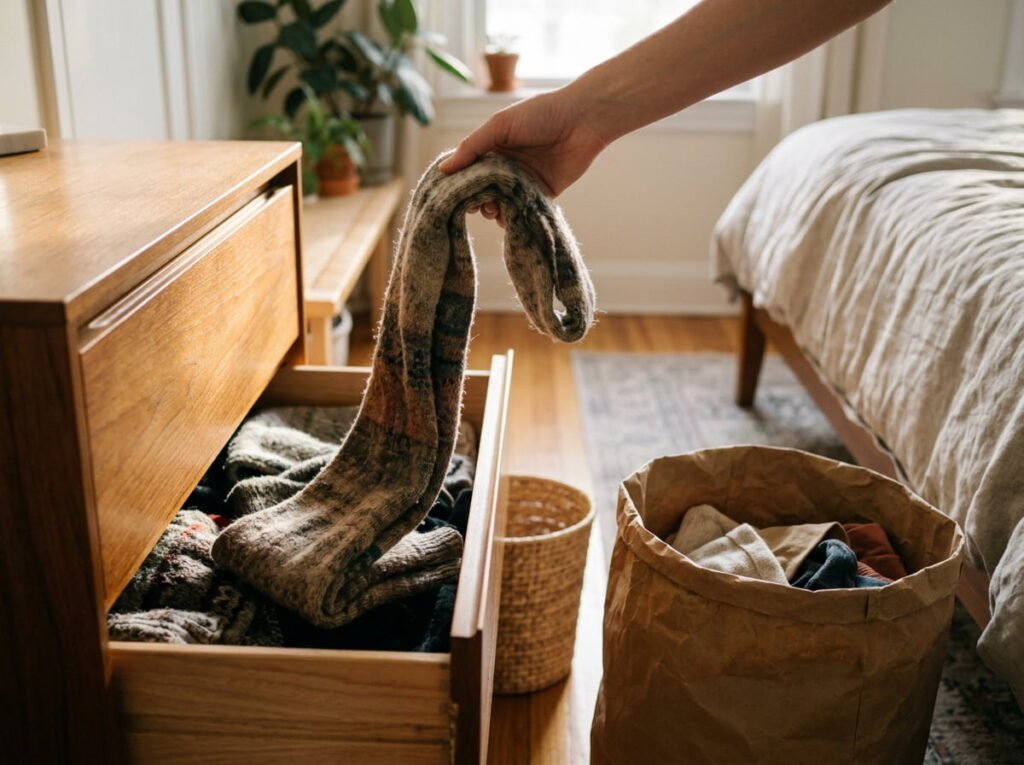
Sometimes the honest plan is one thing.
Pick up a single item today and decide: keep, bin, or donate. That is the whole task. It takes under a minute, and it keeps the habit alive on days when nothing bigger is possible.
A small streak is easier to restart than a big plan that collapsed.
Choose one item and decide right away.
Count it as a full day’s work.
Take it out of the house soon.
Feeling bad that it was only one.
Starting a second item you cannot finish.
Skipping the day because it is too small.
8. Try the “One Surface” Rule on the Messiest Flat Spot
A single surface is a finishable job.
Choose one table, counter, or dresser top. Clear everything off, wipe it, and put back only what you use. Everything else goes to its home, the bin, or a holding box.
You get a clear before and after in a few minutes, which gives a tired mind something satisfying to see.
| Whole room | One surface |
|---|---|
| Feels endless | Has a clear finish line |
| Needs a lot of energy | Fits a low energy day |
| Easy to leave half done | Easy to finish and wipe |
9. Make It Easier by Putting On Music or a Podcast
Boring work gets lighter with something to listen to.
Choose music you like or an episode you have been saving. Save it just for decluttering if you can, so the two become linked. Time passes faster, and the job feels less like a chore.
Keep the volume low enough to hear a timer, and stop when the episode ends if you like.
You do not need to feel like it. You only need to start, and something to listen to helps you start.
10. Skip the Decisions: Move Things to a Holding Box and Decide Later

Deciding is what drains energy, so postpone it.
Fill a box with everything that is not trash and not obviously in the right place. Close it, write a date on it, and set it out of sight. You still cleared the space, and you did not have to choose anything today.
When the date arrives, you decide with fresh energy, and you will often find the box easy to let go of.
📌 Good To Know
A holding box is for sorting later, not for storing forever. Check the date, and if you have not needed anything in it, let it go. Only box up your own things, and ask before moving anyone else’s.
11. Ask a Friend or Family Member to Keep You Company
Some jobs get lighter when someone else is in the room.
A friend does not need to sort anything for you. They can sit on the bed, chat, and hand you things, or just be there while you work. Having company makes it harder to drift off to your phone and easier to keep going.
Ask for a specific, small favor, like “Can you keep me company for twenty minutes?” People often say yes to that.
12. Match the Task to Your Energy on Low Days
Not every day needs the same job.
On a flat day, pick something that needs hands and no thinking: collecting trash, wiping a shelf, gathering stray cups. Save choices like sorting clothes or paper for a day with more energy.
Matching the task to the day keeps you moving without wearing you out.
Low energy jobs
13. Reward the Finish With Something Small and Real

A tiny reward gives the effort somewhere to land.
Choose something you enjoy and can have right away: a cup of tea, ten minutes on the sofa, a favorite show, a walk. Decide it before you start, so you know what is waiting.
Keep it simple and kind. The point is to end the session on something pleasant, so starting next time feels a little easier.
14. Notice What Is Already Better and Let That Carry You
Look back before you look ahead.
Stand in the doorway and see what changed: a clear counter, a smaller pile, a bag by the door. It is easy to focus on what is left, and that is how effort starts to feel pointless.
Take a photo if it helps. Seeing the difference can be the nudge you need next time.
💡 Quick Tip
Take a quick before and after photo of each small spot. A phone album of tiny wins is easy to scroll through on a day you do not feel like starting.
15. Stop Comparing Your Home to Photos Online
Staged photos are not a fair measuring stick.
Tidy, bare rooms online are usually styled, edited, or cleared just for the shot. A lived-in home has things in it, and that is normal. Measure your progress against your own yesterday, not someone else’s picture.
A home that works for you is the goal, not one that looks like a showroom.
Scrolling perfect rooms online, feeling behind, and deciding it is not worth trying.
Comparing only to your own last week, and counting every small step as real progress.
16. Know When Tired Is Just Tired and Rest Is the Right Call

Some days the honest answer is to rest.
If you worked all day, slept badly, or are simply drained, a decluttering session may cost more than it gives. Skip it without guilt. A rested you will clear more in ten minutes tomorrow than a worn out you will in an hour tonight.
Rest is part of the plan, not a break from it. Pick the day back up when you can.
If the tiredness or lack of drive lasts for weeks, or feels heavy, it is worth talking to a doctor or someone you trust.
⚠️ Watch Out
Do not use decluttering to push through exhaustion, and do not lift heavy boxes or climb on unsteady chairs when you are tired. If low energy is constant, check in with a doctor or someone you trust.
17. Keep a Tiny Daily Habit So You Never Start From Zero Again
Starting is the hardest part, so avoid restarting.
A tiny daily habit keeps the door open. Put away three things before bed, clear one surface after dinner, or empty the bag by the door once a week. It takes a minute or two, and the space never drifts far from tidy.
On busy days, do the smallest version. A habit that survives a bad week is worth more than a perfect plan that does not.
Tie the habit to something you already do.
Keep a smaller version for bad days.
Start again the next day after a miss.
Adding five new habits at once.
Quitting after one missed day.
Making the habit longer than a few minutes.
18. Build a Starter Plan for the Next Seven Days
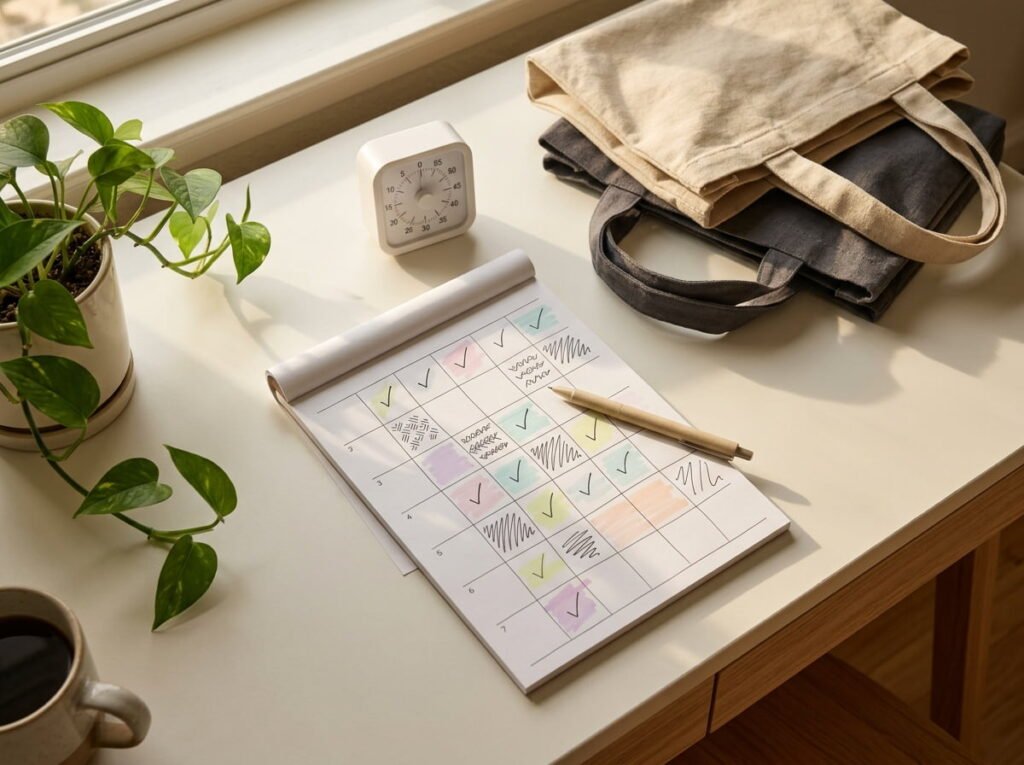
A week of small steps is enough to build momentum.
Keep every day under a few minutes, and let each one be easy. The point is to have a plan you can read on a tired evening and follow without thinking. Skip a day if you need to, and pick up where you left off.
For the fuller method, see our decluttering 101 guide.
Days one and two: set out two bags and collect trash from one spot.
Days three and four: clear and wipe one surface, with a short timer.
Days five and six: fill a holding box, and take the donation bag to the car.
Day seven: look at what changed, take a photo, and choose a small reward.
Conclusion
You do not need motivation to begin. You need a task small enough to fit the energy you have today. Five minutes, one surface, one bag by the door: each of these counts, and each makes the next step a little easier.
If you want to start decluttering with no motivation, lower the bar until starting feels almost silly, then let the small wins add up. Rest when you need to, and come back tomorrow.
A cleared corner is proof that you can do this.
Save this list on Pinterest so you have a gentle starting point on the next day when everything feels like too much.