Cleaning aisles are built to make you spend. Every shelf promises a special spray for the shower, a different one for the sink, and another for the stove.
Most renters walk in with a vague list and walk out with a cart full of single use bottles. Then the move in bill climbs, and half of it sits under the sink unused.
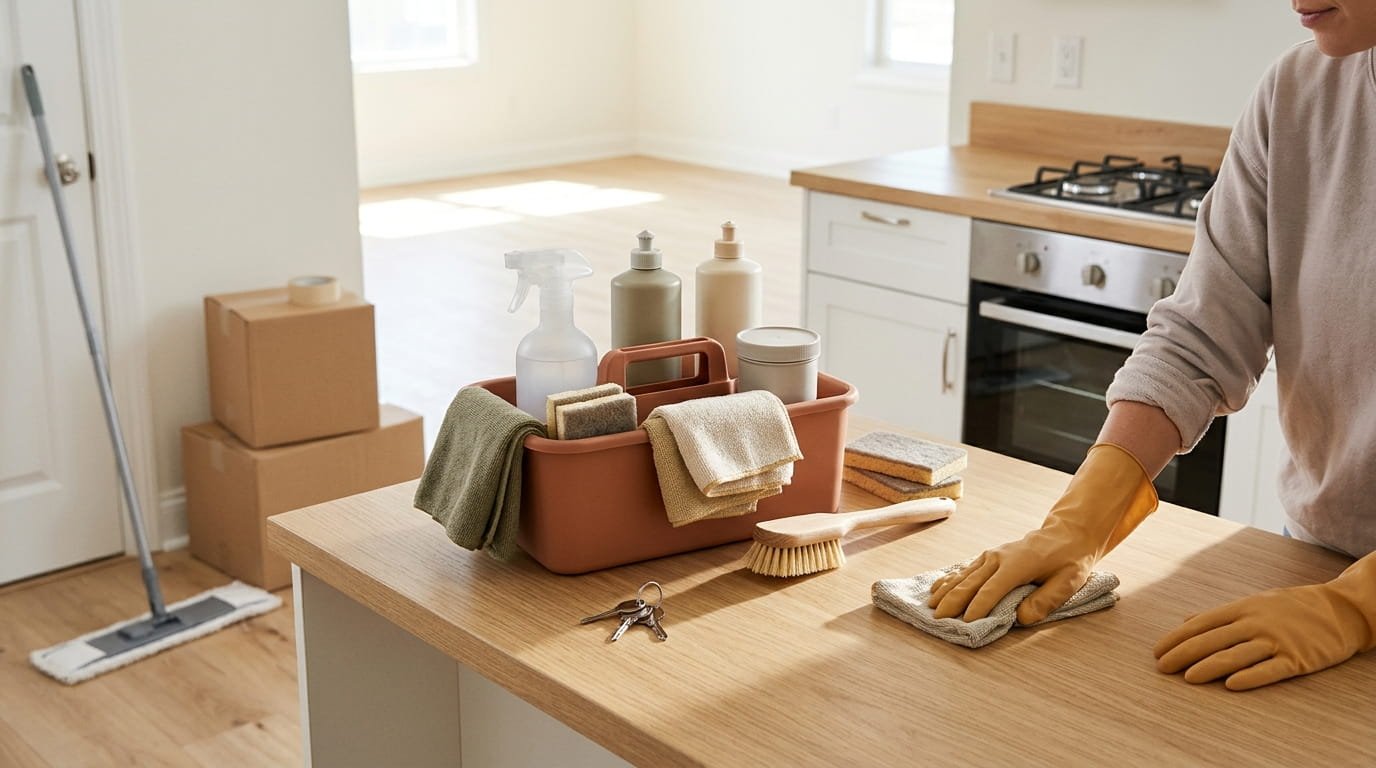
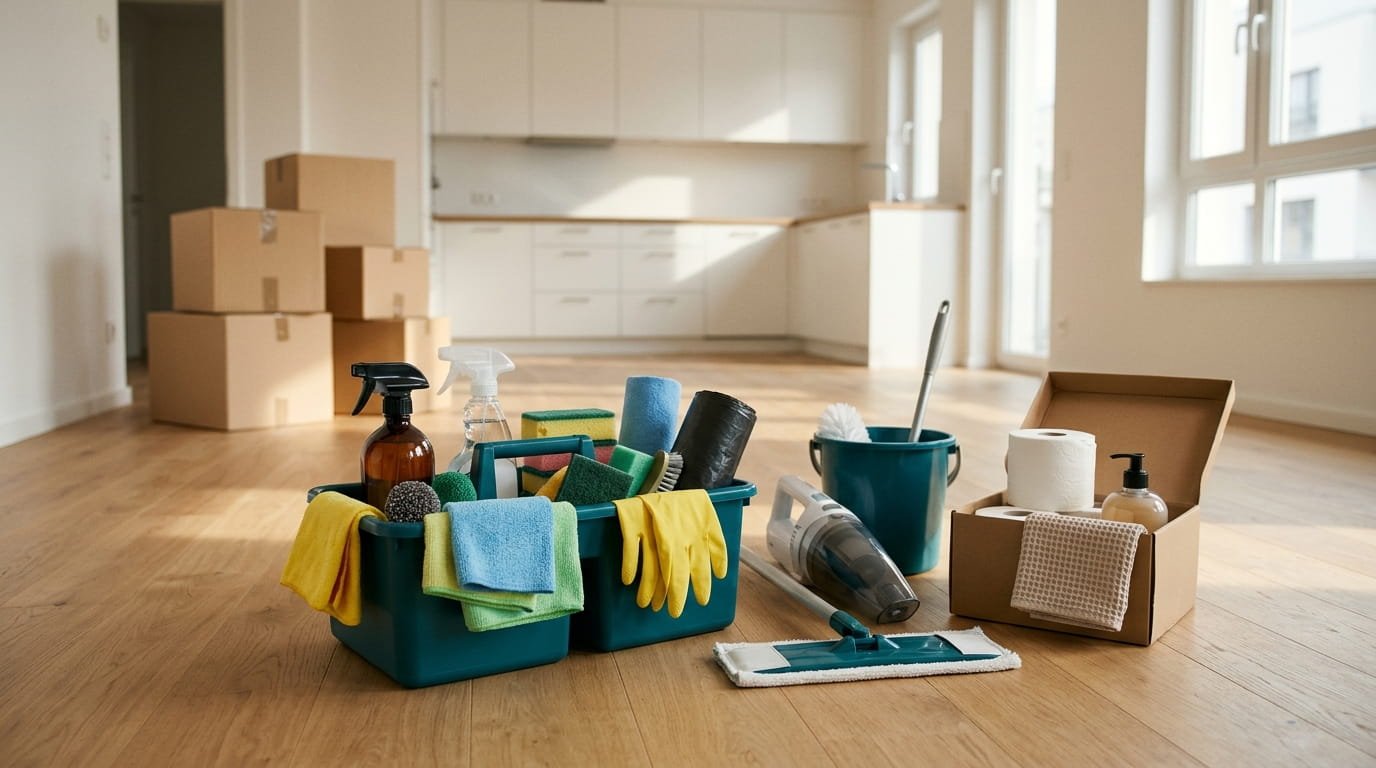
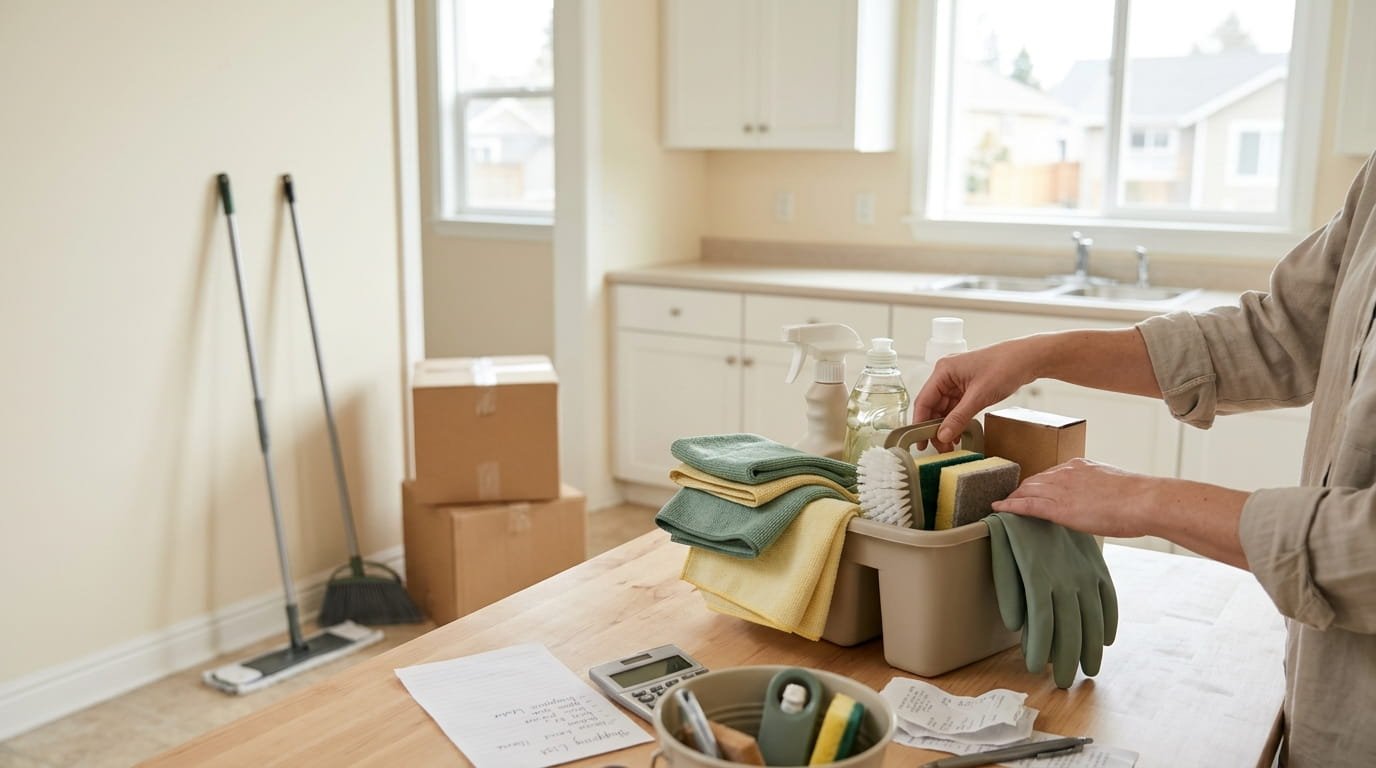
The better plan is a short list of budget move in cleaning essentials, bought in the right places and in the right order. A few multi use cleaners, good cloths, and one solid brush cover nearly every job in an empty apartment.
Below are 18 steps, each with a clear method and a quick reference you can screenshot. Some cost almost nothing, a few are worth a little extra, and several are better borrowed or skipped. Prices change by store and place, so use this as a guide, not a quote.
1. Start With a Budget Move In Cleaning Essentials List Before You Open Your Wallet

A written list is the cheapest cleaning tool you will ever own.
Walk through the empty place first and note what each room needs. Then group items by job, such as kitchen, bathroom, floors, and general. Cross off anything you already own. Set a spending cap before you leave home, and stick to it at the register.
- Write the list by room, not by aisle
- Mark each item as need now or can wait
- Decide your spending cap in advance
Take the list to the store on your phone, so you can check things off as you shop.
2. Check What You Already Own Before You Buy a Single Bottle
Most people own half a cleaning kit without knowing it.
Look under the sink, in the laundry room, and in old moving boxes. Dish soap, old towels, a bucket, and a few rags all count. Ask a friend or family member if they have spare gloves, a mop, or a vacuum to lend. Borrowing costs nothing, and you only need most of these things for one weekend.
Use up half finished bottles first, as long as they are still in good condition.
💡 Quick Tip
Cut up old cotton t-shirts and worn towels into cleaning rags. They work well for dusting, scrubbing, and drying, and they cost nothing.
3. Buy These Five Multi Use Cleaners and Skip the Rest
You do not need a separate bottle for every surface.
Five products handle almost everything in an empty rental: an all purpose spray, dish soap, a degreaser for the kitchen, a bathroom cleaner, and glass cleaner. Baking soda and white vinegar can fill in gaps for light jobs. Read the label to confirm each product works on the surface you plan to clean.
Buy small sizes if you only need them for the move in clean.
Never mix bleach with ammonia or vinegar, and open a window while you work.
4. Choose Reusable Microfiber Cloths Over Paper Towels

Paper towels disappear in an afternoon, and a pack of cloths lasts for years.
Microfiber grabs dust and grime without much cleaner, and it washes and dries for reuse. Buy a multipack and assign colors by room, so bathroom cloths never touch the kitchen. Wash them after each use without fabric softener, which clogs the fibers.
Keep a few paper towels on hand for truly gross jobs, like the inside of an oven.
Buy a multipack and sort the cloths by color for each room.
Rinse each cloth as you go so you lift dirt instead of spreading it.
Wash them hot, skip fabric softener, and dry on low heat for reuse.
5. Shop Dollar Stores for the Basics Where Quality Barely Matters
Some cleaning items are the same no matter who sells them.
Dollar and discount stores often carry sponges, rubber gloves, trash bags, buckets, spray bottles, and basic brushes at low prices. These are one weekend items, so a simple version works fine. Check each item before buying, since quality can vary from one store to the next.
Skip items where a failure causes a problem, such as a flimsy mop head or a weak trash bag.
Buy sponges, gloves, buckets, and spray bottles here.
Check the handle and bristles before you buy.
Buying thin trash bags that tear under a full load.
Grabbing unfamiliar chemical cleaners without reading the label.
6. Compare Grocery Stores, Big Box Stores, and Hardware Stores for Each Item
No single store wins on every item, so match each product to the shop that handles it best.
Grocery stores are handy for dish soap, baking soda, vinegar, and sponges, and you can grab them with your weekly food shop. Big box stores usually carry the widest range and bigger multipacks. Hardware stores are best for sturdy tools, such as a scraper, a scrub brush, a bucket, or a mop head.
Plan one trip to one or two stores, not four. Extra driving costs more than most savings.
Compare unit sizes on the shelf label, since a bigger bottle is not always the better deal.
| Grocery store | Big box or hardware store |
|---|---|
| Dish soap, baking soda, vinegar, and sponges. | Brushes, buckets, scrapers, and mop heads. |
| Easy to add to a regular shop. | Wider range and larger multipacks. |
| Best for small, quick top ups. | Best for sturdy tools that last. |
7. Make Your Own Cleaners From Vinegar, Baking Soda, and Dish Soap, Safely
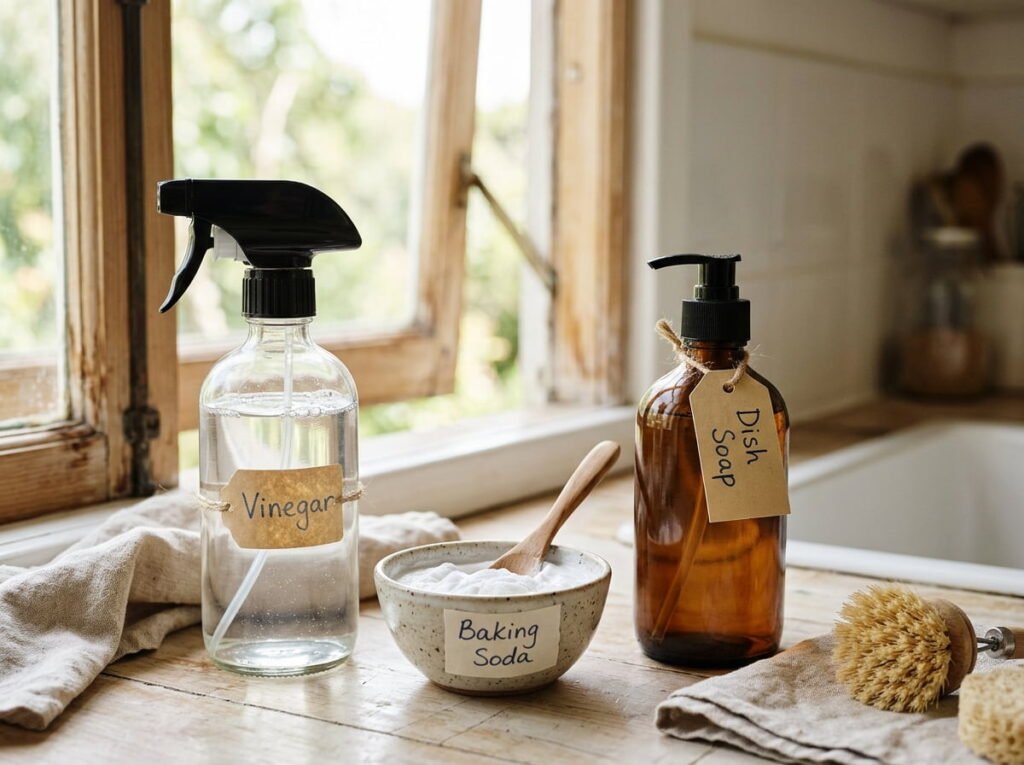
A few pantry items can cover light cleaning jobs for very little money.
Mix equal parts white vinegar and water in a spray bottle for glass, faucets, and mineral spots. Make a paste of baking soda and a little water for grout and oven walls. A few drops of dish soap in warm water handles most grease and sticky counters.
Skip vinegar on natural stone counters, which it can dull. Label every bottle you fill.
Never mix bleach with ammonia or vinegar, and never combine cleaners in one bottle. The fumes can be dangerous.
A cart full of single use bottles, each aimed at one surface and mostly used once.
A few labeled bottles and a box of baking soda that cover the light jobs at a low cost.
8. Spend a Little More on a Good Scrub Brush, Sponge, and Gloves
Cheap is smart for most things, but a few tools reward a small upgrade.
A sturdy scrub brush with stiff bristles saves your wrists on grout and baked on spots. Non scratch sponges protect surfaces you want to keep intact. Thick rubber gloves resist tearing and keep harsh cleaners off your skin. Fit matters, so try gloves on if you can.
A good brush can last through several moves, which makes it cheaper over time.
Buy one at a time if the budget is tight, and start with the brush.
Worth a small upgrade
9. Buy a Plunger, Toilet Brush, and Mop Before the First Night
Some items cannot wait until the second weekend.
A plunger and toilet brush top the list, since a blocked or dirty toilet on night one is no fun. A mop and bucket come next, followed by a broom and dustpan. Check what the landlord left behind first, and test any old tools for wear before relying on them.
Basic versions work fine for all of these. Spend on a mop with a washable head, so you are not buying refills.
Buy the toilet tools and the mop first. Everything else can wait until you know what you actually need.
10. Pick One Vacuum Option: Borrow, Buy Secondhand, or Buy New

A vacuum is the biggest single purchase on the list, so choose with care.
Borrowing from a friend or neighbor costs nothing and is enough for one move in clean. Secondhand models from thrift stores or local groups can be a solid middle ground, but test them before paying. Buying new makes sense if you have carpet or pets and plan to keep it for years.
- Ask around before spending anything
- Test suction, the cord, and the attachments on a used model
- Check that bags or filters are still sold for the model
- ▸Borrow if your floors are mostly hard and you only need one big clean.
- ▸Buy used only if you can see it run before you pay.
- ▸Buy new when carpet, pets, or long term use justify the cost.
11. Stock the Bathroom Basics You Will Need on Day One
The first night in a new place is not the time to discover there is no toilet paper.
Set aside a small day one bag for the bathroom. It should hold toilet paper, hand soap, a towel, a shower curtain with liner, and a bath mat. Add a few trash bags and a small bin if there is none. These cost little, and most can come from a grocery or discount store in one stop.
Check the shower for a curtain rod and hooks before you buy a curtain.
Pack the bag last and carry it in yourself, so it never gets lost in a pile of boxes.
12. Get the Kitchen Supplies That Landlords Never Provide
Landlords leave you an empty kitchen, and the small items add up quickly.
Start with what you need to clean and eat on day one: dish soap, a sponge, a dish rack or towel, trash bags, and a small bin. Then add a few basics, such as a dish brush, oven mitts, and a roll of paper towels. Skip specialty gadgets until you know how you cook.
Buy shelf liner only if the shelves are in poor shape.
Wash every dish and utensil before first use, even if it is new.
Buy the cleaning basics first: dish soap, a sponge, and trash bags.
Add a dish rack or towel and a small bin for the counter.
Wait a week before buying gadgets, so you only get what you really use.
13. Check Thrift Stores, Marketplace Groups, and Buy Nothing Groups for Gear
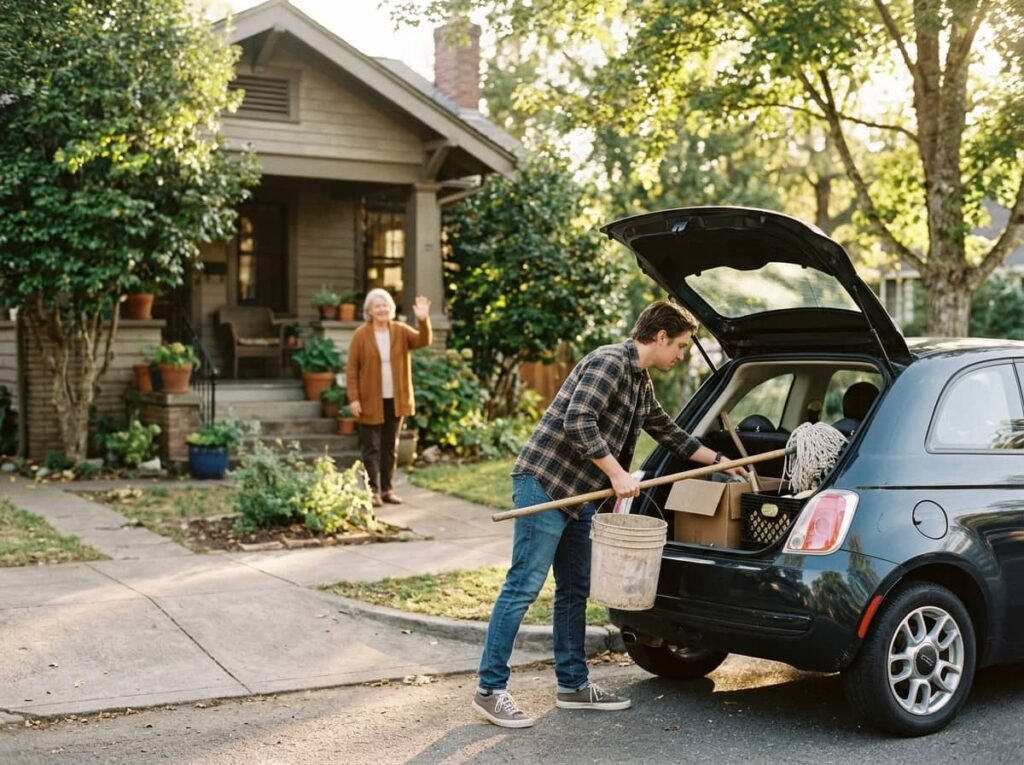
The cheapest cleaning tool is the one someone else is giving away.
Thrift stores often carry buckets, mops, brooms, and vacuums at low prices. Local marketplace listings and community groups, including Buy Nothing groups, sometimes offer free or cheap items from people who are moving out. Ask for what you need, and offer to pick up quickly.
Test used tools before you pay, and wash them well at home.
Skip secondhand sponges, gloves, and anything meant to touch skin or food.
14. Use Coupons, Store Apps, and Multipacks Without Overbuying
A deal is only a deal if you would have bought the item anyway.
Check store apps and digital coupons for cleaning products before you shop. Multipacks of cloths, sponges, and trash bags often cost less per piece, and you will use them all. Cleaners are different. Buying a large size of a product you only need once wastes money.
Read the unit price on the shelf tag to compare sizes fairly.
| Good for multipacks | Better in small sizes |
|---|---|
| Microfiber cloths and sponges. | Specialty sprays you use once. |
| Trash bags and gloves. | Oven cleaner and drain products. |
| Items you will use all year. | Anything you only need for the move. |
15. Avoid the Overpriced Extras That Fill Cleaning Aisles
Packaging is loud, and most of what it promises you do not need.
Skip heavily scented sprays, single use wipes for every surface, and gadgets with replacement parts. Skip brand name versions of basics like baking soda and vinegar, which cost less in plain packaging. Ignore bundles that include items you already own.
Ask what job a product does that your multi use cleaner cannot do. If the answer is nothing, leave it on the shelf.
Buy plain basics in simple packaging.
Check the unit price before choosing a size.
Gadgets that need pricey refills.
Bundles full of items you already own.
16. Store Your Supplies Safely in a Small Rental

Cleaning products are fine under the sink until a toddler or a curious cat finds them.
Keep every bottle in its original container with the label facing out, so nobody mistakes it for a drink. Store cleaners on a high shelf or in a latched cabinet, away from food, kids, and pets. Keep bleach and ammonia based products in separate spots, and never stack heavy bottles above lighter ones.
Wipe any drips on the outside of a bottle before it goes back.
Keep the area dry and cool, since heat and damp can weaken caps and spoil some products.
⚠️ Watch Out
Never pour a cleaner into an old food or drink bottle. Label every homemade spray, and keep all products out of reach of children and pets.
17. Build a Starter Kit by Budget Level: Bare Minimum, Basic, and Full
Not every move in needs the same kit, so pick the level that fits your place and your wallet.
The bare minimum covers a fairly clean apartment: one all purpose cleaner, dish soap, a few cloths, trash bags, and gloves. The basic level adds a bathroom cleaner, a scrub brush, a mop, and a broom. The full kit adds a degreaser, glass cleaner, a scraper, and a step stool, which suits a place that was left dirty.
Start at the lowest level and add items only when a real job calls for them.
All purpose cleaner, dish soap, cloths, trash bags, and gloves. Cost level: lowest.
Adds bathroom cleaner, degreaser, glass cleaner, a scrub brush, a mop, a scraper, and a step stool. Cost level: highest, but only for dirtier places.
18. Make a Shopping List and Set a Spending Cap Before You Go

The last step is the one that keeps all the others on budget.
Write your list by store, so you do not wander the aisles. Add a spending cap, and tally items on your phone as they go in the cart. If you go over, put back the lowest priority item. Keep receipts for anything you might return, such as unopened bottles you did not need.
Shop once, with a clear list, and leave the rest for next week.
Before you leave for the store
Conclusion
A good cleaning kit is not the one with the most bottles. It is the short list that matches the place you are moving into and the money you have to spend.
Check what you own, borrow what you can, and buy new only where it counts, like sponges, gloves, and one sturdy brush. With a plan for budget move in cleaning essentials, you walk out of the store with a lighter cart and a heavier wallet. Your first weekend in the new place goes to unpacking, not to wondering what you forgot.
Save this list for the next time you get new keys, so it is ready before you head to the store.