

You hold your favorite sweater in one hand and the care tag in the other. The tag is a row of tiny pictures: a tub, a triangle, a square with a circle inside. You guess, toss it in with everything else, and pull out something two sizes smaller.
That one wrong guess is how most clothes get ruined, and it has little to do with being careless. Nobody ever taught us the code.
This laundry symbols cheat sheet breaks the code into 18 small pieces. You will learn what the tub, the triangle, the square, the iron, and the circle each mean, plus how to read the dots and lines that change the message. There is also a plan for faded tags and a quick reference to save.
Keep a favorite garment nearby and match the symbols as you read. Within a few minutes, that row of pictures will start to make sense.
1. Laundry Symbols Cheat Sheet: The Five Shapes Behind Every Care Tag

Every care tag is built from just five shapes. Learn them once and the rest is detail.
The wash tub covers washing. The triangle covers bleach. The square covers drying. The iron covers pressing. The plain circle covers professional dry cleaning. Dots, lines, and crosses added to each shape change the instruction.
- A cross through any shape means do not.
- More dots usually mean more heat.
- More lines underneath usually mean a gentler setting.
Symbols vary a little by region, so your garment’s own tag is the final word.
Tub means wash, triangle means bleach, square means dry, iron means press, circle means dry clean. A cross means do not.
2. Find the Tag and Learn Its Layout Before You Wash Anything
The tag is usually in the least convenient place possible.
Check inside the side seam, at the back of the neckline, or inside the waistband. Some brands print the symbols right on the fabric instead of a tag. Once you find them, read left to right: washing first, then bleach, then drying, then ironing, then dry cleaning.
Take a quick photo of the tag before you cut it out or it wears off.
How to read any tag in order
Locate. Check the side seam, neckline, or waistband.
Read in order. Wash, bleach, dry, iron, then dry clean.
Follow the strictest one. If two symbols disagree, choose the gentler choice.
3. The Wash Tub: What the Water Symbols Mean
The tub looks like a small bucket with a wavy line of water, and it answers one question: how should this be washed?
An empty tub with no marks means normal washing. A tub with a hand means hand wash only. A tub with a cross means do not wash at all. Dots or a number inside show the highest water temperature the fabric can handle.
When unsure, choose cooler water. Cold rarely ruins anything.
4. Dots Mean Heat: How to Read Temperature Marks

Dots are the easiest part to learn once you know the rule.
More dots mean more heat. One dot is the coolest setting, and each extra dot allows a warmer one. Some tags use a number instead, which is the highest temperature the fabric should face. Your washer’s manual shows which settings match those marks.
The same dot idea shows up on iron and dryer symbols too.
| What you see | What it means |
|---|---|
| One dot | Lowest heat, cool or cold |
| Two or three dots | Medium to warm heat allowed |
| A number in the tub | The highest water temperature the fabric can take |
5. The Hand in the Tub and the Crossed Out Tub
Hand wash and do not wash look alike at a glance, and mixing them up is costly.
A hand in the tub means gentle washing by hand. Fill a basin with cool water, add a mild detergent, press the garment under, and swish softly. Do not wring or twist. A crossed out tub is stricter: this item should not be washed in water at all.
Press water out between towels and dry flat unless the tag says otherwise.
Hand wash gently in a basin of cool water.
Press out water between towels.
Wringing or twisting a hand wash item.
Putting a crossed out tub item in the machine.
6. Lines Under the Tub: Gentle and Delicate Cycles
Look closely and some tubs have one or two lines drawn underneath them. Those lines are about the machine, not the water.
One line points to a permanent press or reduced cycle, which is a bit gentler than normal. Two lines point to a delicate or gentle cycle, with slow spinning and less tumbling. Fewer lines usually means a sturdier fabric. More lines means the clothes need a softer touch.
- No line: normal cycle.
- One line: reduced agitation.
- Two lines: very gentle handling.
Putting delicates in a mesh bag adds extra protection, even on a gentle cycle.
💡 Quick Tip
Remember it this way: more lines underneath means more gentleness. Check your washer’s manual to see which cycle name matches the lines on your tag.
7. The Triangle: Bleach Rules in Plain Words

The triangle is the symbol people most often misread, and it is the one that can leave permanent marks.
An empty triangle means bleach is allowed. A triangle with diagonal lines inside means use only non-chlorine, color-safe bleach. A solid black triangle with a cross through it means do not bleach at all. Chlorine bleach on the wrong fabric can strip color or weaken fibers for good.
When the triangle is crossed out, skip every bleach product, including laundry boosters that contain bleach.
Never mix bleach with other cleaners, and keep the room ventilated.
8. The Square With a Circle: Tumble Dry Symbols
A circle inside a square is a dryer, and it is the part of the tag that shrinks the most clothes.
An empty circle means tumble drying is allowed. Dots inside show the heat level, with one dot for low and more dots for hotter settings. A circle with a cross through it means do not tumble dry. Filled circles or lines beneath the square can point to gentler cycles, just like with the tub.
When in doubt, choose low heat and take the item out while it is still slightly damp.
Before you press start on the dryer
9. Square Dry Symbols Without the Circle: Line, Flat, and Drip Dry
A plain square, with no circle inside, is about air drying, and the lines inside it matter.
A curved line at the top of the square means line dry, so hang it. Three vertical lines mean drip dry, so hang it dripping wet with no wringing. One horizontal line in the middle means dry flat, which protects sweaters and knits from stretching. A diagonal line in the corner means dry in the shade.
Wool and heavy knits almost always belong on a flat surface, because hanging can pull them out of shape.
10. The Iron Symbol and Its Dots

The iron looks like a small steam iron, and its dots work just like the ones you already know.
One dot means low heat, good for delicate synthetics. Two dots mean medium heat, which suits many blends and silks. Three dots mean high heat, for sturdy cotton and linen. A crossed out iron means do not iron at all. A crossed line under the iron means no steam.
Press a hidden spot first and keep the iron moving, since a hot iron left in place can scorch fast.
- ▸One dot: low heat for delicate synthetics.
- ▸Two dots: medium heat for many blends and silk.
- ▸Three dots: high heat for sturdy cotton and linen.
- ▸Crossed iron: do not iron. Crossed steam: no steam.
11. The Circle: Dry Clean Only and What It Means
A plain circle is the symbol people dread, because it sounds expensive. It is really just a note for the professional.
A circle means the garment can be dry cleaned. A circle with a cross through it means do not dry clean, so follow the washing symbols instead. A circle with letters inside is a code for your dry cleaner, not for you. If a tag says “dry clean only,” skip home washing, since water can shrink, warp, or dull structured pieces like blazers, formal dresses, and some silks.
Hand the garment over with the tag visible and mention any stains.
A tailored jacket washed in the machine, coming out with puckered seams and a lost shape.
The same jacket handled by a professional, keeping its structure and crisp lines.
12. The Letters Inside the Circle: What You Can Skip Explaining
Seeing a P or an F inside the circle can feel like a riddle. Good news: it is not your riddle.
Those letters tell the dry cleaner which type of solvent is safe for the fabric. You do not need to decode them. Just leave the tag in place, show it to the cleaner, and let them choose. A bar under the circle signals a gentler process, and again, that is their job to handle.
Your only task is to spot the circle and decide whether to visit a professional.
📌 Good To Know
Letters and bars inside or under the circle are instructions for the cleaner. Leave the tag attached and let the professional read it.
13. Fabric Check: Cotton, Wool, Silk, and Synthetics at a Glance

The fabric content line, like “100% cotton,” works alongside the symbols and helps you predict how a garment behaves.
Cotton and linen are sturdy and forgive heat. Wool and cashmere shrink and felt with heat and agitation. Silk is delicate and prefers gentle handling. Polyester and nylon resist wrinkles but can be damaged by high heat. When the symbols and your instinct disagree, trust the symbols.
Blends follow the most delicate fiber in the mix.
14. Faded or Missing Tags: What to Do When the Label Is Gone
Sometimes the tag has worn away or you cut it out because it itched. You can still wash the garment safely.
When there is no tag to read
Check the fabric. Look for a fiber list stitched inside, or search the brand’s care page.
Go gentle. Use cool water, a mild detergent, and a delicate cycle or hand wash.
Air dry. Lay it flat or hang it, and skip the dryer until you know how it behaves.
Next time, snap a photo of the tag before you cut it off.
15. Sorting Laundry Using the Symbols, Not Just Color
Sorting by color is a good start, but the tag decides which things can share a load.
Group garments by care needs as well as color. Delicates with the gentle cycle symbol go together. Items that must be washed cool stay away from the ones that can take heat. Anything with a crossed out dryer waits for the drying rack, so it never rides along into the machine by accident.
A mesh bag keeps small items from tangling.
Sort by color and by care needs together.
Set aside items marked do not tumble dry.
Washing delicates with heavy towels or jeans.
Tossing everything in the dryer by habit.
16. Shrunk, Faded, or Stretched: Mistakes the Tag Would Have Prevented
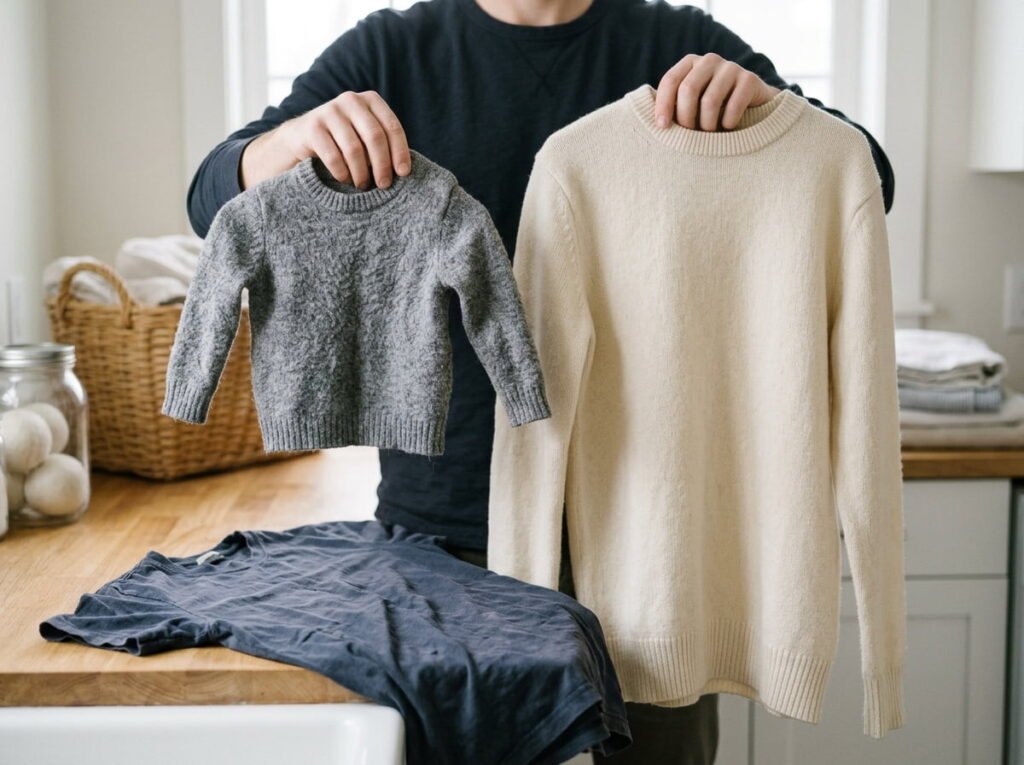
Most laundry disasters fall into three groups, and each one traces back to a symbol that got ignored.
Shrinking usually comes from heat, either a hot wash or a hot dryer on wool or cotton knits. Fading comes from strong detergent, hot water, or bleach on dyed fabric. Stretching comes from hanging heavy knits when the tag said dry flat. In every case, the tag had already given a warning in pictures.
Read the tag before the load goes in, not after it comes out.
⚠️ Watch Out
Heat is the usual culprit. Shrinking and fading often come from water or dryer settings that were hotter than the tag allowed. Choose the cooler setting when you are unsure.
17. Regional Differences: Why Tags From Different Countries Look Different
A tag on a shirt made overseas can look slightly different from one you are used to, and that is normal.
Care symbols follow a few related systems, and not every brand uses the same one. Some tags show only pictures, some add words, and some use numbers for water temperature where others use dots. The basic shapes stay familiar: tub, triangle, square, iron, and circle.
When a symbol looks unfamiliar, read it as a variation on a shape you already know, and match it with any words on the tag.
18. A Printable Style Quick Reference to Save and Pin

Here is the whole cheat sheet in one place. Screenshot it, pin it, and tape a copy inside your laundry cabinet.
Read each row from top to bottom: wash, bleach, dry, iron, dry clean. A cross always means do not, dots always mean heat, and extra lines mean a gentler touch.
The tag on the garment always has the final word.
Quick reference to save
Conclusion
A laundry symbols cheat sheet works best when you stop seeing the tag as a puzzle and start seeing it as five shapes with a few simple rules. The tub is for washing, the triangle is for bleach, the square is for drying, the iron is for pressing, and the circle is for the dry cleaner. Dots mean heat, lines mean gentleness, and a cross always means do not.
Start with one favorite garment this week. Find its tag, read it in order, and wash it the way it asks. That single habit will save more clothes than any detergent.
Save this cheat sheet for the next time a tag looks like a secret code, and come back to it whenever you are unsure.