The usual advice is to do one load a day. It sounds simple, and it works right up until a child gets sick, a meeting runs late, or a sports bag turns up with three days of damp socks inside.
After that, the basket fills, the pile grows, and the plan gets blamed. The real problem is rarely effort. Most families are using a schedule built for someone else’s house.
A laundry schedule for family life has to match your actual loads, your actual week, and the actual people who live there. This guide walks you through building one in 15 small steps, from counting loads to sharing the work to fixing it when it slips.
Grab a notebook and your calendar. By the end, you will have a plan you can follow on a tired Tuesday, not just a motivated Sunday.
1. Laundry Schedule for Family: Why the Pile Grows and How a System Stops It
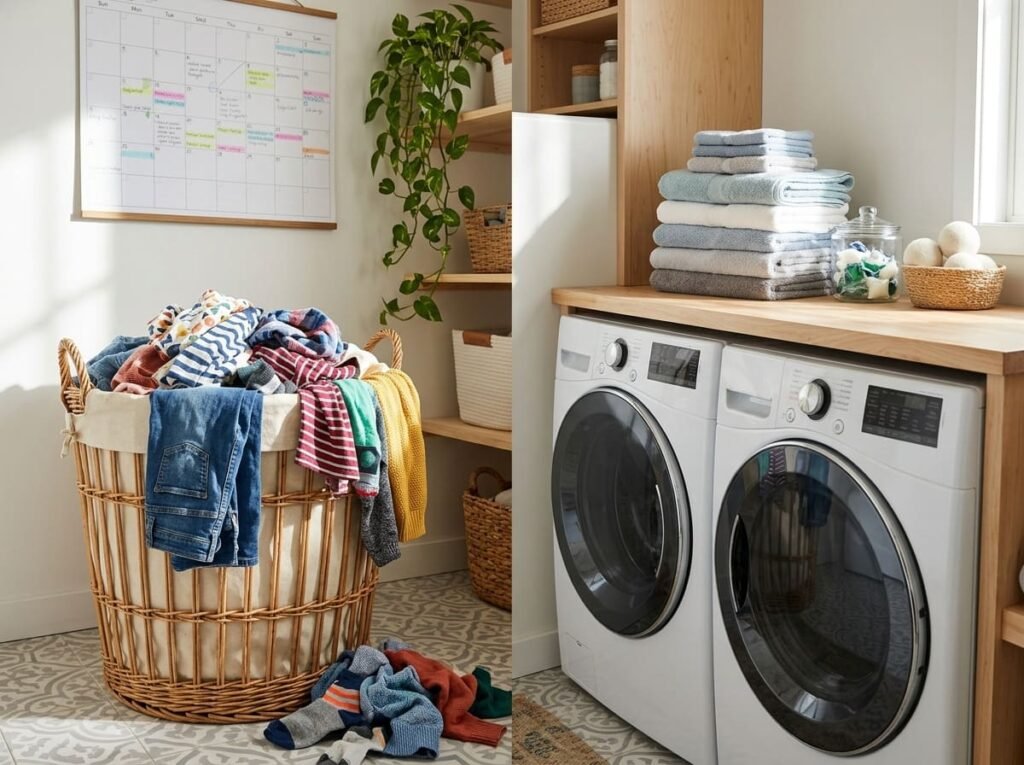
Laundry piles up for one reason: the steps get separated.
Clothes get washed but sit in the machine. They get dried but stay in the basket. They get folded but never reach the drawer. Every gap gives the pile room to grow. A good system closes those gaps by giving each step a time and a person.
- Wash, dry, fold, and put away are four separate jobs.
- Most piles live in the dry and fold gap.
- A schedule fixes it by naming who does what, and when.
You are not building a chore chart. You are building a flow.
Wash, dry, fold, put away. A schedule works when every step has a time and an owner.
2. Count Your Real Loads for Two Weeks Before You Plan Anything
Guessing how much laundry you have is how plans fail.
For two weeks, note each load you wash: what it was, who it belonged to, and which day. Do not change your habits yet. You are collecting a picture, not fixing anything. At the end, you will see patterns, like towels piling up on weekends or one child producing most of the loads.
Keep the tally on your phone or on a sheet taped near the machine.
Your own numbers beat any average you could look up.
What to write down for each load
3. Pick a Model: One Load a Day, Assigned Days, or One Big Day
Families tend to land on one of three models, and each fits a different kind of week.
One load a day spreads the work thin and keeps baskets low. Assigned days give each person or type of laundry its own day. One big day clears everything at once, which suits families with a long free weekend and enough machine capacity.
Pick the one that matches your two week tally, not the one that sounds most organized.
You can always switch later.
Evenings are short and you want small daily jobs.
Weekends are open and the machines can run for hours.
A daily load depends on one person who travels or works late.
A one big day plan meets a weekend full of activities.
4. Sort by Person, by Type, or by Color: Choose the Method That Fits

The way you sort decides how the whole week feels.
Sorting by person gives each family member their own basket and load, which makes folding and putting away quick. Sorting by type groups towels, bedding, and clothes, which suits families with lots of shared items. Sorting by color is the classic approach and protects fabrics, but it can split one person’s clothes across several loads.
Always check care tags, since delicates and heavy items belong in separate loads whatever method you choose.
| Sort by person | Sort by type or color |
|---|---|
| Easy to fold and put away | Better for fabric care and shared items |
| Can mean small, mixed loads | Makes fuller, more efficient loads |
| Lets kids own their own basket | Needs a sorting step before washing |
5. Set Up Sorting Stations So Dirty Clothes Land in the Right Place
A schedule can only work if the laundry arrives where you need it.
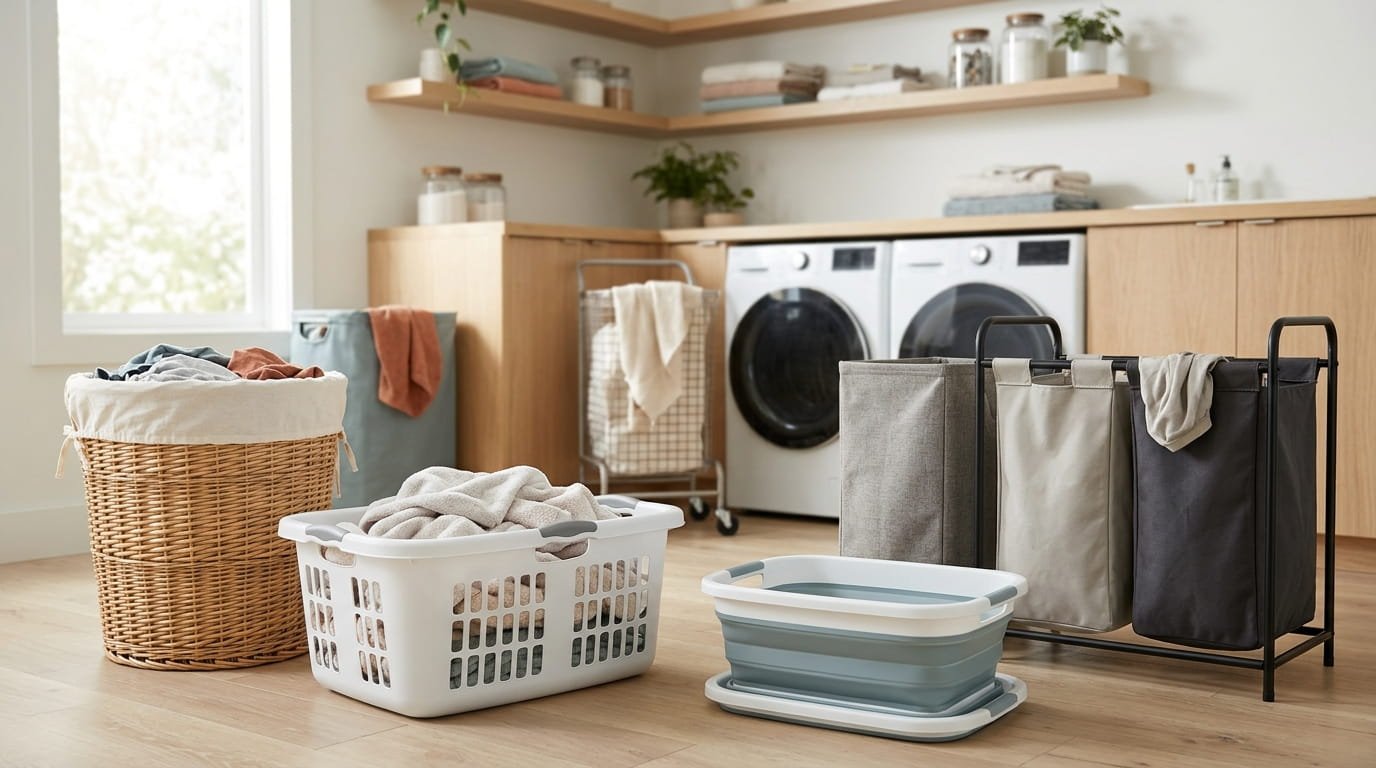
Put a basket or bin wherever clothes come off: bedrooms, the bathroom, and near the back door for muddy gear. Label them by person, type, or color to match your method. A divided hamper does the sorting for you before the clothes ever reach the machine.
Pick baskets that are easy for kids to use, with open tops and no lids to fight.
Start with one hamper per bedroom and add stations only where piles form.
6. Build a Weekly Calendar With One Job per Day
A calendar turns a vague plan into something you can follow while tired.
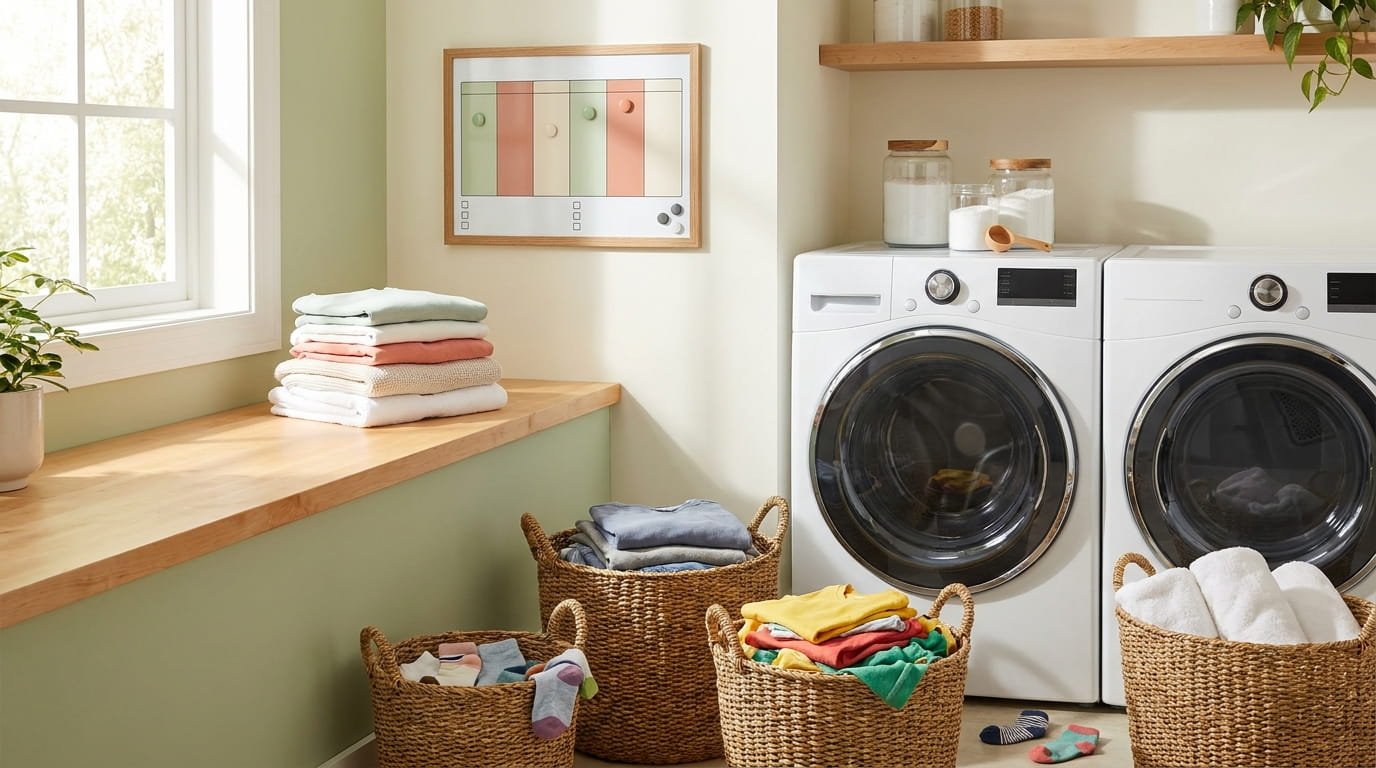
Pick the model from step three and write it on a simple weekly grid. Give each day one clear job, like towels on one day, bedding on another, and each person’s clothes on their own day. Leave one day open as a catch-up buffer, since something always slips.
Post the grid where everyone can see it, such as the fridge or the laundry room door.
A sample week, one job a day
Early week. Adult clothes and work wear.
Midweek. Kids’ clothes and school items, with towels or bedding on their own day.
Late week. Leave this day open as your catch-up buffer.
7. Stack the Steps: Wash, Dry, Fold, and Put Away Without Gaps

Most piles live between steps, so the fix is to chain them together.
Start a load, and set a timer for when it ends. Move it to the dryer right away, then start the next load. When the dryer stops, fold while the clothes are still warm, since they wrinkle less and take less effort. Put the folded stacks away before you do anything else.
Treat a load as finished only when it is back in a drawer.
8. Towels and Bedding Get Their Own Day
Bulky items clog a mixed schedule, so give them a day of their own.
Towels and sheets take up a whole machine, run longer in the dryer, and come out in loads that are quick to fold. Washing them together on a set day keeps them from crowding out clothes during the week. Strip all the beds on the same day so the sheets can run in a row.
Check the care tags, and wash heavy items separate from delicates.
💡 Quick Tip
Keep a spare set of sheets for each bed. You can remake the bed right away and wash the used set at your own pace.
9. Plan for School Uniforms, Sports Gear, and Work Clothes
Some clothes have deadlines, and they break a schedule if you ignore them.
Uniforms need to be clean by a certain morning. Sports gear needs washing soon after use. Work clothes may not repeat for days. Give these items a fast lane, such as a quick wash the evening before they are needed, rather than waiting for their regular day.
Keep a small stock of backups so a missed wash does not become a morning scramble.
10. Teach Kids to Own Part of the Process by Age

Children can do more than most parents expect, as long as the job fits their ability.
Start with the simplest step, getting dirty clothes into the hamper, and add steps as they grow. Always judge by the child, not the number. Keep little ones away from detergent pods and machines, and supervise any use of the washer or dryer.
Rough ideas to adjust to your own child:
- ▸Young children: carry clothes to the hamper and match socks.
- ▸Older children: fold towels and put away their own clothes.
- ▸Pre-teens: sort and start a wash with supervision.
- ▸Teens: run their own loads from start to finish.
11. Share the Load: Dividing Laundry Between Adults
One adult doing all the laundry is the fastest way to burn out a system.
Split the work by step or by day, not by “helping.” One person might own washing and drying, while the other owns folding and putting away. Or each adult could take specific days. Agree on the standard together first, so nobody refolds the other person’s towels in silence.
Write the split on the calendar so it does not rely on memory or good intentions.
Check in after two weeks and trade jobs if one feels heavier.
One adult tracks every basket, starts every load, and folds late at night while the other has no idea where things stand.
One adult owns wash and dry, the other owns fold and put away, and both can see the plan on the calendar.
12. Handle Sick Days and Accidents Without Breaking the Schedule
A stomach bug can bury a laundry plan in one night.
Treat these as emergencies outside the schedule. Keep a bucket or a lidded bin for soiled items, and wash them separately from everything else right away. Use the hottest water the care tag allows and wash your hands well afterward. Once the extra loads are done, return to the regular calendar without trying to catch up all at once.
Keep spare sheets and towels handy so the bed can be remade quickly.
⚠️ Watch Out
Wash soiled laundry separately and wash your hands afterward. If someone in the house is seriously ill, follow your doctor’s advice on handling and cleaning.
13. Fold Fast, or Skip Folding: Putting Clothes Away in Less Time
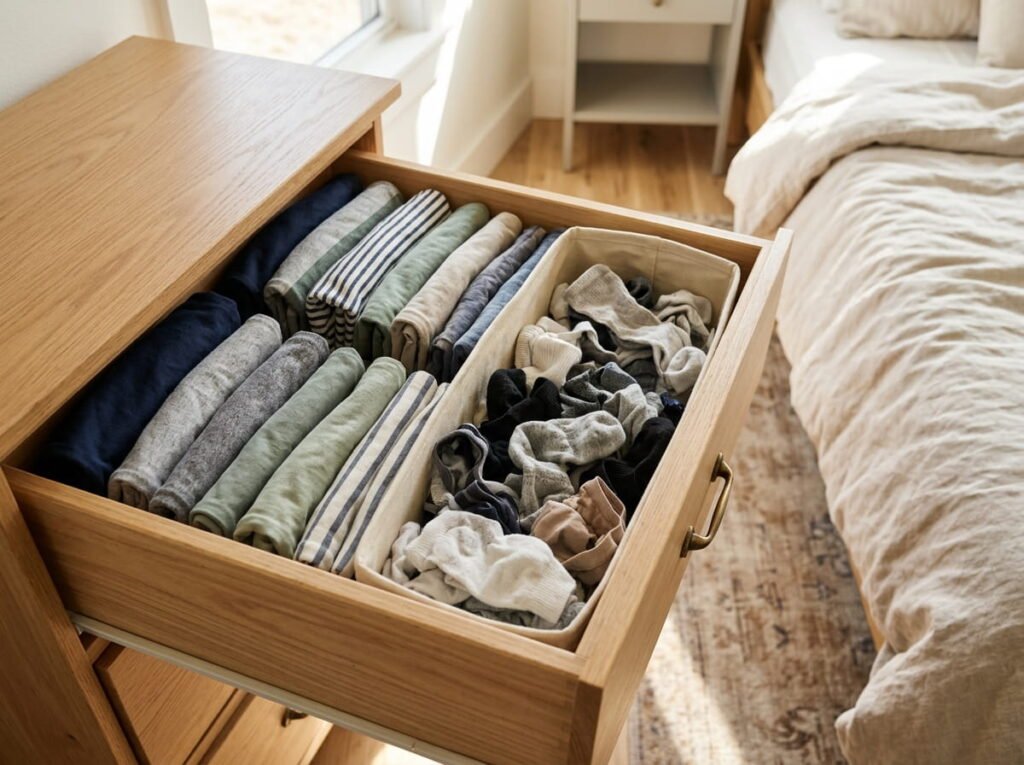
Folding is where many schedules quietly die.
Fold in one place, with a flat surface and a set stack for each person. Fold while the clothes are still warm from the dryer, since they smooth out easily. Then decide what truly needs folding. Socks, underwear, and play clothes can go straight into an open bin or drawer without anyone noticing the difference.
Hang what wrinkles, bin what does not.
Best for families who spend more time folding than wearing.
14. Quick Fixes for When the Schedule Falls Apart
Every schedule breaks at some point. What matters is how quickly you restart it.
Do not try to clear the whole backlog in one marathon. Pick one small step, like running a single load tonight, and let the rest return to the calendar. Lower the bar for a week if you need to. A plain, wearable week beats a perfect one you abandon.
Restart checklist
15. Review and Adjust Every Month So the System Keeps Working

A schedule is a draft, not a contract.
Once a month, sit down for ten minutes and ask what worked and what did not. Maybe towel day is too heavy, or a child has outgrown a chore, or a new activity changed the week. Change one thing at a time so you can tell what helped.
Small adjustments keep the system alive as your family changes.
Count your loads, assign each step, and review monthly. A schedule that bends will outlast one that breaks.
Conclusion
A laundry schedule for family life works when it fits your real loads, your real week, and the real people in your house. Count what you wash, pick a model, give every step a time and an owner, and leave room for the weeks that go sideways. The goal is a flow you can follow on a tired Tuesday, not a perfect plan you drop by Friday.
Start small this week. Count your loads, write one job on each day, and let the rest build from there.
Save this guide for the next time the basket overflows, and come back to it when your family’s week changes.