Most whole house cleaning lists tell you to start in the kitchen and finish it completely before moving to the next room. That’s usually the exact reason the project stalls out somewhere around the hallway on day one.
A deep clean by zone works differently. Instead of finishing one room before touching the next, you group tasks by type, the water spots, the dusty surfaces, the fabric, the clutter, and knock out that one job everywhere in the house in a single pass. It sounds like a small shift, but it changes how fast the whole thing actually moves.
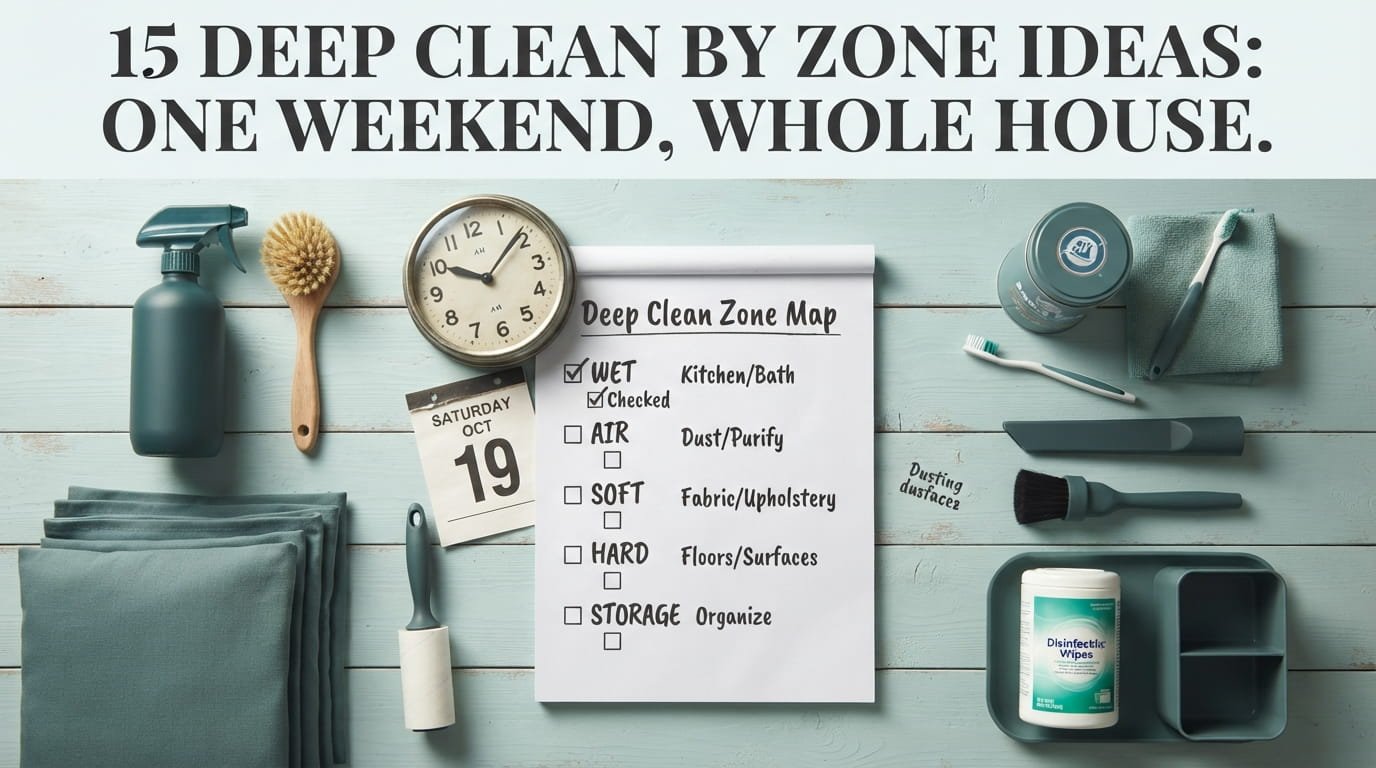
This list breaks a full deep clean into five zones you can work through over one weekend, or spread across a few evenings if that fits your schedule better. Each zone comes with specific tasks, not a vague reminder to clean more.
Pick a zone, work through it start to finish, and only move to the next one once it’s actually done. By the end, the whole house gets covered without any single day feeling impossible.
One House, Five Zones, One Weekend
Wet Zone
Sinks, tubs & drains
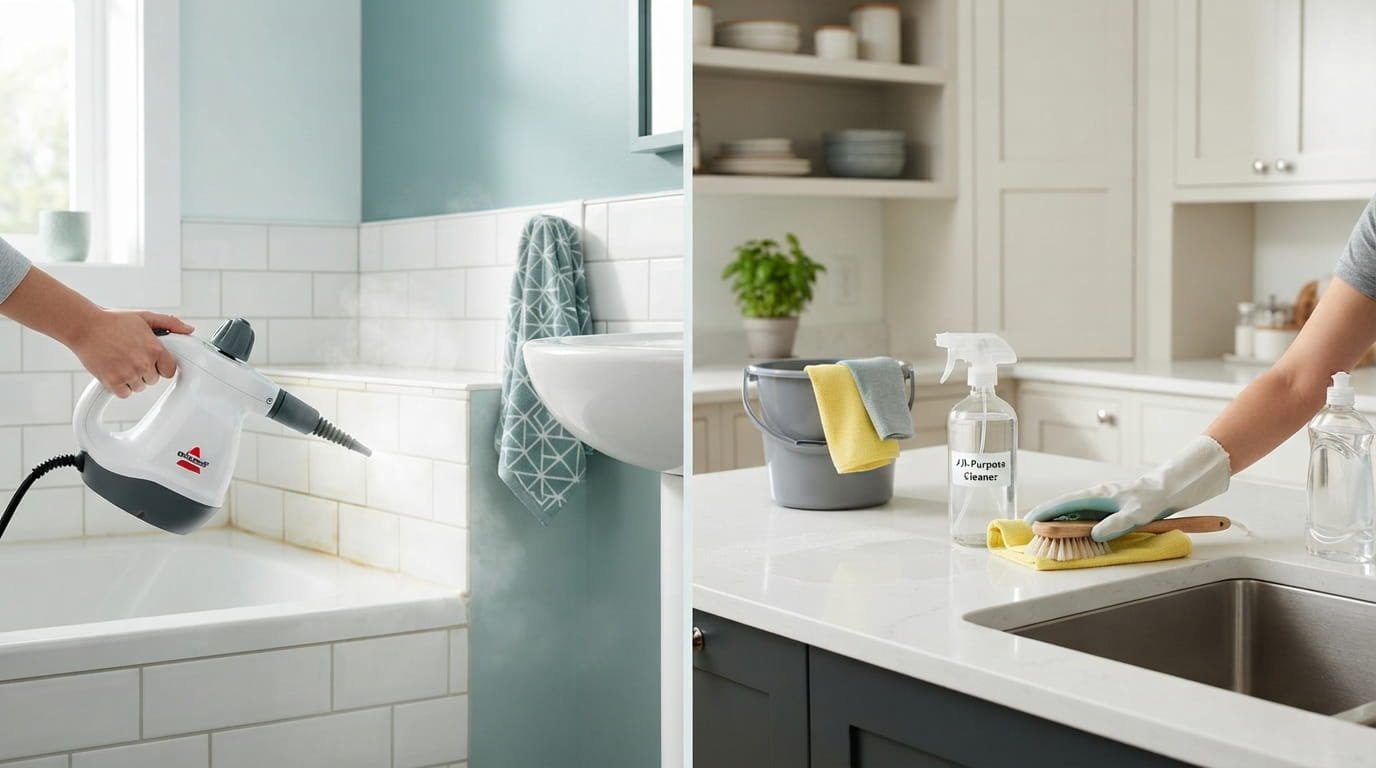
One pass handles every water surface in the house, kitchen and bathroom together.
Air Zone
Filters, vents & blinds
Swap or rinse every filter and vacuum every blind slat in the same sweep.
Soft Zone
Rugs, curtains & cushions
Strip every removable cover and run the whole zone through one wash load.
Hard Zone
Baseboards, grout & floors
Mix one batch of paste and carry it through every tiled surface in the house.
Storage Zone
Closets, drawers & entry
Sort one space at a time, from closets to the junk drawer to the door handles.
1. Map Your House Into Five Cleaning Zones Before You Touch a Single Thing
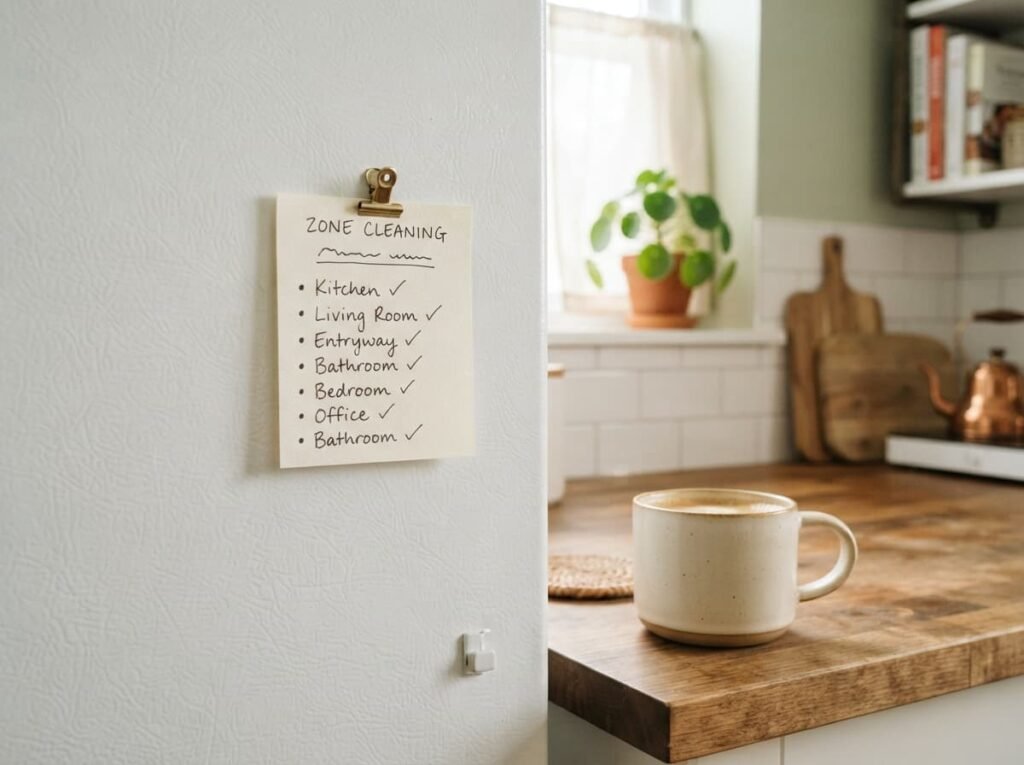
Skip the room by room list for a minute. Split your whole house into five zones instead, based on what actually needs attention, not which door happens to be nearest.
- Wet zones: kitchen and bathroom water surfaces
- Air zones: filters, vents, blinds, dusty corners
- Soft zones: rugs, curtains, cushions, throws
- Hard zones: baseboards, grout, tile, hardwood
- Storage and entry zones: closets, drawers, door handles
Write the five zones on a sticky note and check one off as you finish it. That single sheet becomes your whole weekend plan.
2. Zone One, Wet Areas: What to Grab Before You Attack Sinks, Tubs, and Drains
Here’s a simple rule for the whole wet zone. One cleaner rarely handles glass, metal, and grout equally well, so don’t grab a single bottle and expect it to work everywhere.
Gather everything before you start. Running back and forth between the cabinet and the sink under the counter is what makes this zone take twice as long as it needs to.
What to grab first
3. Descale the Kettle, Coffee Maker, and Anything Else Holding Water
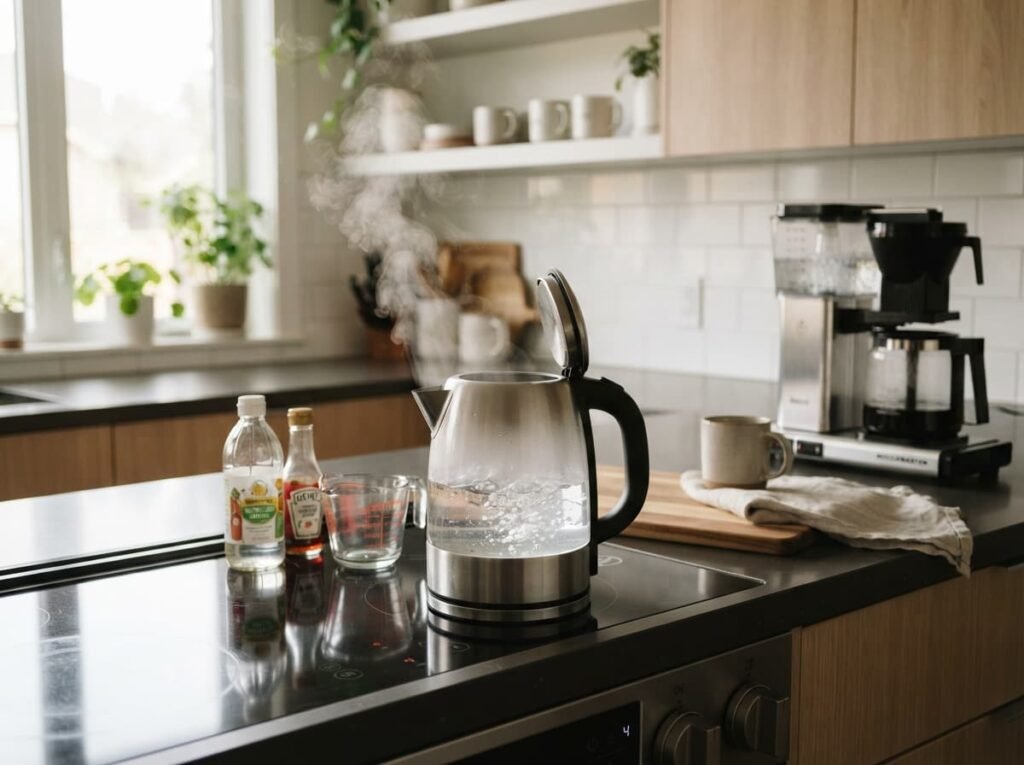
A lot of people descale the coffee maker and completely skip the kettle, the humidifier tank, and the fridge water dispenser, even though mineral buildup collects in all of them the same way.
Run equal parts water and white vinegar through each one, let it sit for fifteen minutes, then rinse twice before using again. For the kettle, boil the vinegar mixture, dump it, then boil plain water once to clear the taste.
4. Zone Two, Air and Dust: Swap or Rinse Every Filter in the House
Clean air makes the biggest difference in a house and gets noticed the least, which is exactly why filters get forgotten until allergy season hits.
Check the HVAC filter, the range hood filter, and the vacuum filter in the same pass. Rinse anything washable and swap anything disposable. A clogged filter doesn’t just circulate dirtier air, it also makes the whole system work harder than it needs to.
💡 Quick Tip
Write the last swap date on the filter frame with a marker. It saves you from guessing next time this zone comes around.
5. Vacuum the Blinds Slat by Slat Instead of Just Dusting Them
Run a finger along any blind slat that’s been dusted but never vacuumed and it still comes away gray. A feather duster just moves the dust around instead of lifting it off.
Close the blinds fully, then use the brush attachment to vacuum each slat top to bottom. Flip the tilt and repeat on the other side. Wipe stubborn spots with a barely damp microfiber cloth afterward.
Vacuum with the blinds fully closed.
Flip the tilt and vacuum the other side too.
Dusting with the blinds half open.
Only wiping the front and calling it done.
6. Zone Three, Soft Surfaces: Wash Every Removable Cover and Throw in One Load
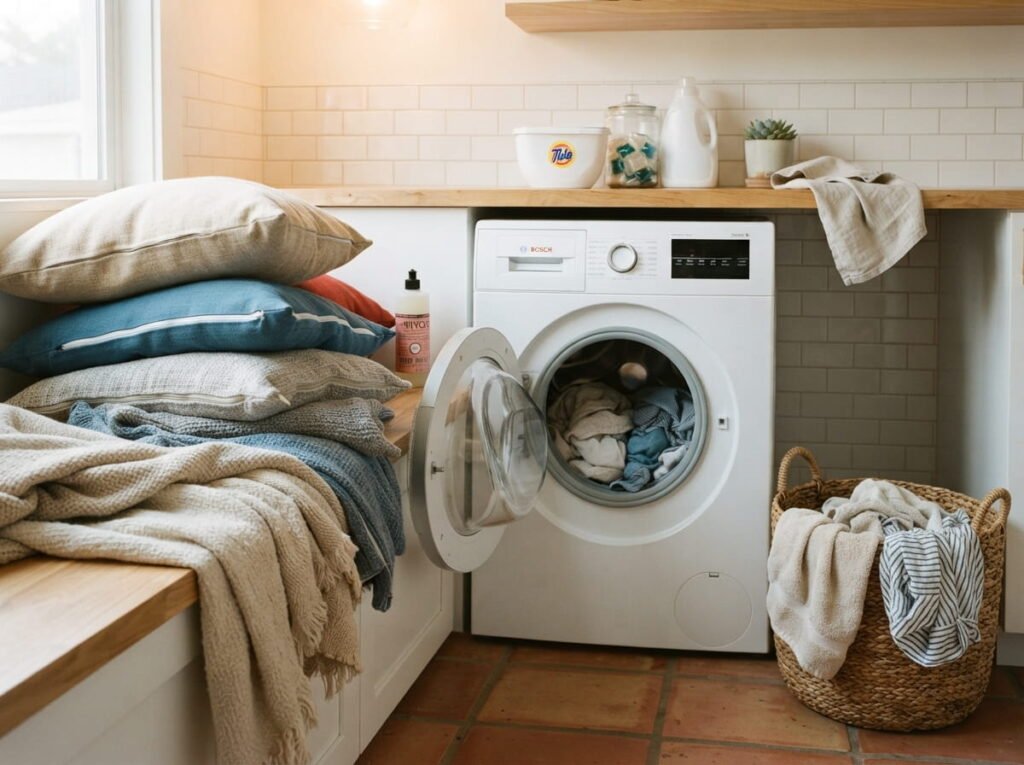
Anything with a zipper or a removable cover gets skipped constantly, mostly because pulling it off and washing it feels like extra effort compared to just fluffing a cushion back into place.
- Strip pillow covers, throw blankets, and any removable cushion covers
- Check care tags and sort into cold wash and dry clean piles
- Wash the cold pile together, then air dry anything with elastic or trim
- Fluff and reassemble once everything is fully dry
Doing this in one load means the whole zone gets refreshed in the time it takes to run one wash cycle.
Strip every removable cover before starting any other zone task.
Sort by care tag so nothing shrinks or gets damaged.
Air dry anything with elastic so it keeps its shape.
7. Steam or Shampoo the High Traffic Path Across Your Rug
There’s always one path across the rug that looks noticeably different from the rest, usually the route from the couch to the kitchen or the hallway to the front door.
A handheld steam cleaner lifts everyday grime without soaking the rug through, which makes it the faster option for a weekend zone push. Shampooing goes deeper but needs several hours of dry time before anyone can walk on it again, so plan that one for a day you’re not rushing back and forth over it.
A visibly darker, flattened path worn into the rug from daily foot traffic.
An even color across the whole rug with the fibers standing back up.
8. Zone Four, Hard Surfaces: Pick the Baseboard Method That Actually Works
People try three or four baseboard hacks before landing on one that doesn’t take forever, so here’s a straight comparison instead of a guess.
A dryer sheet works fast for light dust and even repels new dust for a few days, but it does nothing for scuffs or sticky buildup. A damp magic eraser handles scuffs and grime well, though it takes longer per foot of baseboard and can dull glossy paint if you scrub too hard.
| Dryer Sheet | Magic Eraser |
|---|---|
| Fast for light dust, repels new dust briefly | Slower, but lifts scuffs and sticky buildup |
| Does nothing for stains or marks | Can dull glossy paint if you scrub hard |
9. Deep Mop the Grout Lines Zone by Zone, Not Room by Room
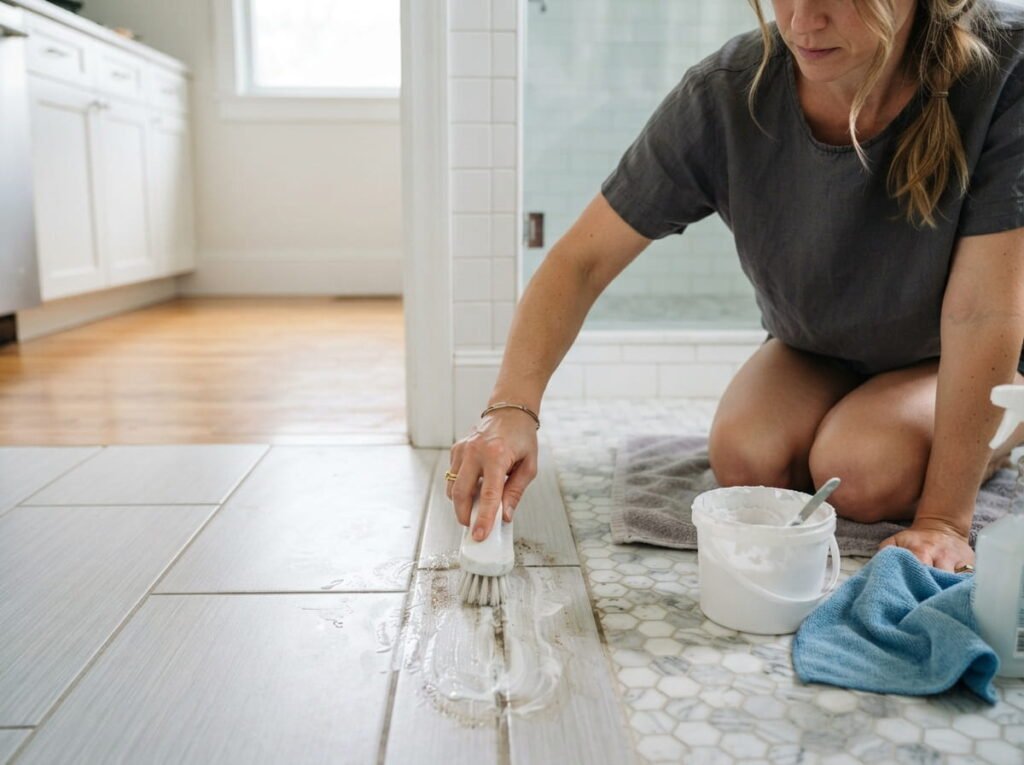
Grout in the kitchen, the bathroom, and the entryway usually gets treated as three separate jobs on three separate days, which means the paste and the tools come out three separate times too.
Mix one batch of baking soda paste and carry it through every tiled area in one pass while your gloves are already on and the brush is already wet.
One batch of paste, every tiled floor in the house, in a single pass. That’s the whole point of working by zone instead of by room.
10. Zone Five, Storage: Sort One Closet Completely Before You Open the Next
Opening a second closet before finishing the first is how a simple sort turns into three piles across the whole bedroom by lunchtime.
Empty one closet completely, sort into keep, donate, and toss, then wipe the shelves before anything goes back in. Only then move to the next one.
💡 Quick Tip
Set a timer for twenty minutes per closet. It keeps you moving instead of getting stuck deciding on one sentimental item.
11. Clear the Junk Drawer and Decide What Actually Earns a Spot Back In
Every house has one drawer that holds dead batteries, a single chopstick, and three pens that don’t write anymore. It’s easy to skip because it’s small, but small doesn’t mean quick once you actually dump it out.
- Loose batteries, both dead and unknown
- Takeout menus for places that closed years ago
- Rubber bands, twist ties, and stray screws with no matching part
Anything you can’t name a use for in the next thirty seconds goes straight in the toss pile.
12. Zone Six, Entry Points: Wipe Every Door Handle, Switch Plate, and Remote
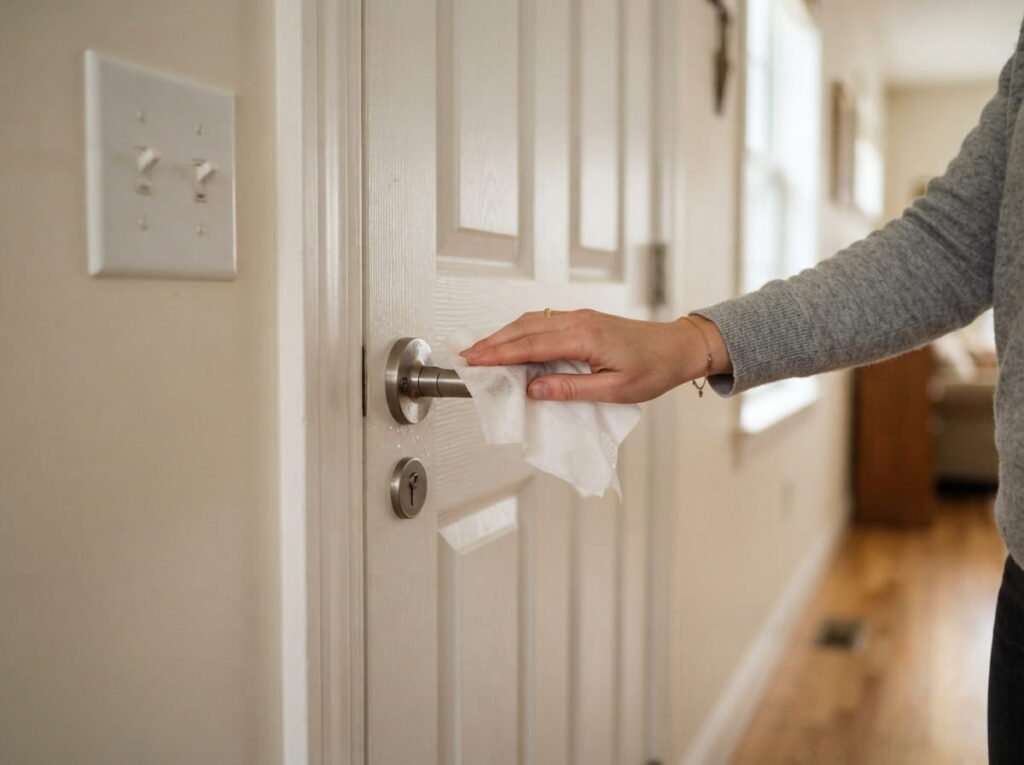
These are the spots every hand in the house touches daily, yet they almost never make it onto a normal cleaning list.
- Wipe every door handle and knob with a disinfecting wipe
- Go over light switch plates next, they hold more grime than most people expect
- Finish with remotes, cabinet pulls, and the fridge door handle
None of this takes more than ten minutes total, but it’s the zone that affects how the whole house actually feels to touch.
Start with door handles since they collect the most daily contact.
Switch plates get overlooked constantly despite heavy daily use.
Remotes and cabinet pulls finish the pass in just a few minutes.
13. Reset the Entryway So It Basically Cleans Itself Going Forward
The entryway gets dirty faster than any other zone because it’s the direct line between the outside world and the rest of the house.
A tray by the door catches keys and mail before they land on the counter. A boot brush outside the door pulls off mud before it ever crosses the threshold. Small setups like these mean this zone stays cleaner between deep cleans instead of resetting to zero every single week.
Shoes piled sideways, mail stacked on the counter, mud tracked past the mat.
A tray for keys, a spot for shoes, and mud stopped before it reaches the floor.
14. Batch Your Zones Into a Two Day Schedule That Won’t Burn You Out
Trying to finish all five zones in one day is how most weekend cleaning plans fall apart by early afternoon.
Split it across two days instead. Save Saturday for the physically demanding zones and Sunday for the ones that take patience more than effort.
A simple two day split
15. Turn Your Zone Map Into a Reusable Checklist for Every Season
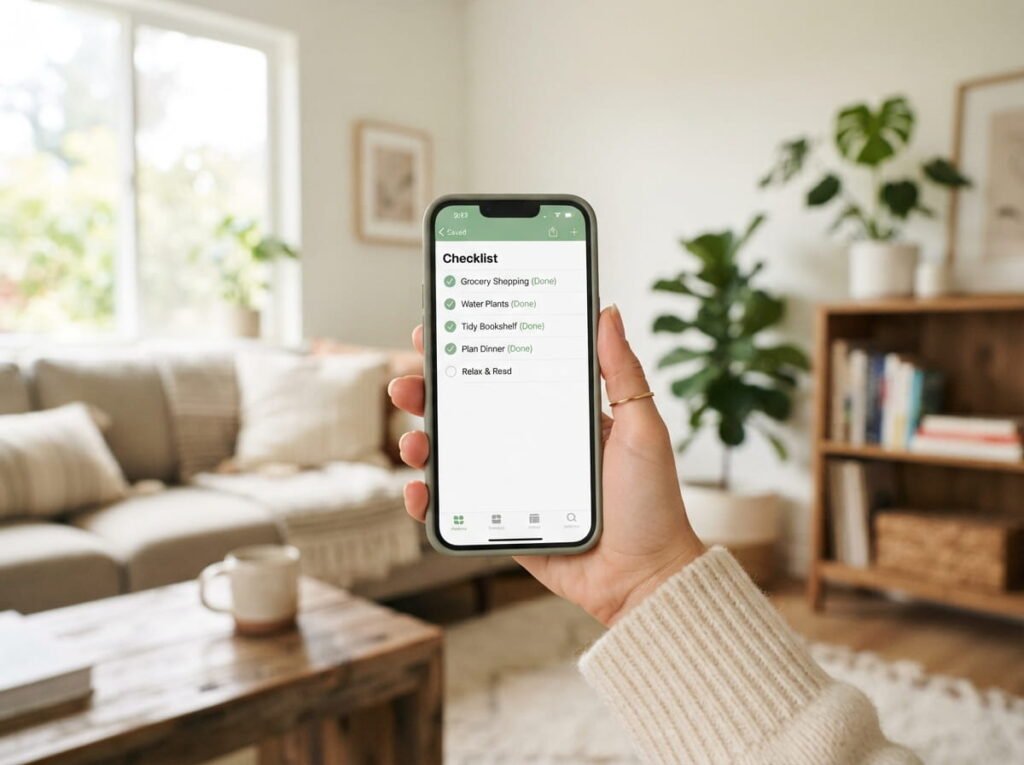
The zone map you built for this deep clean doesn’t have to be a one time thing. Save it, and the next round only takes a fraction of the planning.
Snap a photo of your sticky note or keep a simple copy in your phone’s notes app. Next season, you skip straight to doing the work instead of figuring out the plan all over again.
Build the zone map once. Reuse it every season and skip the planning step for good.
Conclusion
Cleaning by zone isn’t about doing more work, it’s about doing the work in an order that actually makes sense. Once you split the house into wet, air, soft, hard, and storage zones, you stop wasting time bouncing between rooms and start moving through tasks that build on each other.
You don’t need a full weekend to make this work, either. Two zones on a Tuesday evening and two more on Saturday gets you just as far.
Save this list so your next deep clean by zone takes half the planning it took the first time.