Most seasonal cleaning schedules fall apart by the second season, not because the person lost motivation, but because the system itself was never built to survive real life. A giant list dumped onto one weekend, no tracking, no flexibility for the season you had to skip because life got in the way.
A seasonal cleaning schedule that actually works isn’t about doing more tasks. It’s about building a structure that bends without collapsing, one that accounts for climate, energy, and the fact that some seasons will always go smoother than others. The families who keep a system running year after year usually aren’t more disciplined, they’ve just built one with enough give in it.
This list walks through the structural choices that make the real difference, from how you divide tasks to how you review what actually got done. Pick the pieces that fit how your year actually runs, not the version that looks tidy on paper.
1. Separate Tasks Into Three Tiers, Not One Long List
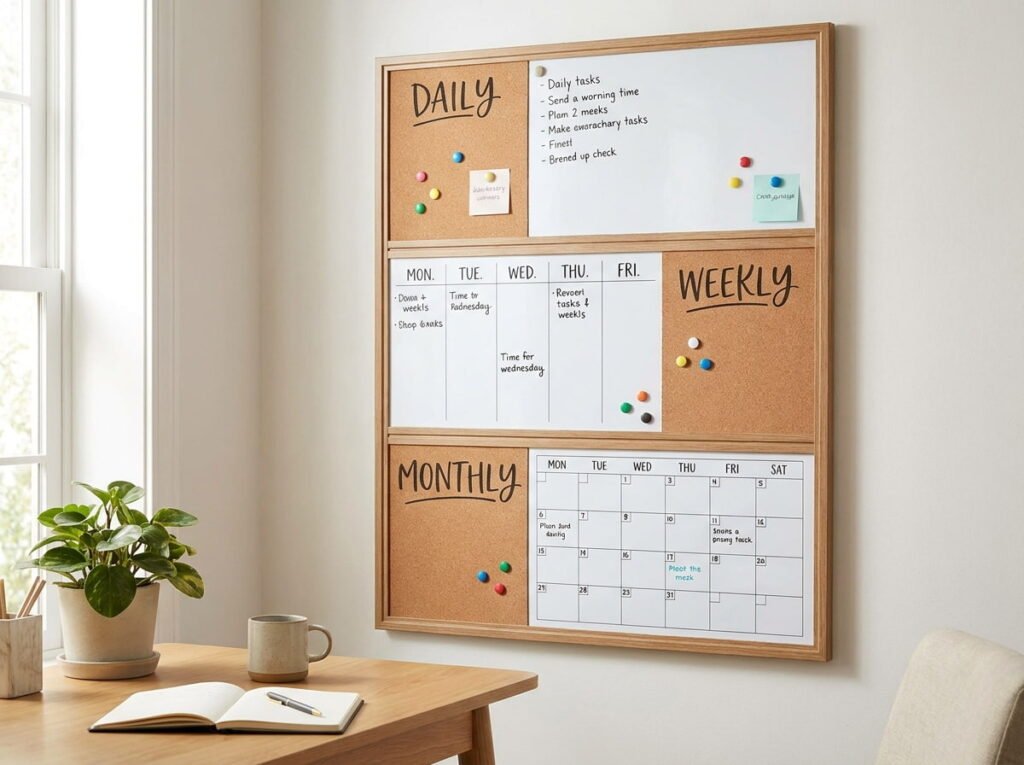
A single sprawling list mixing daily wipe downs with once a year deep cleans makes everything feel equally urgent, when none of it actually is.
Split into daily, monthly, and seasonal tiers.
Keep seasonal tasks visually separate from the rest.
Mixing a five minute task with a full day project on one list.
Treating every task as equally urgent.
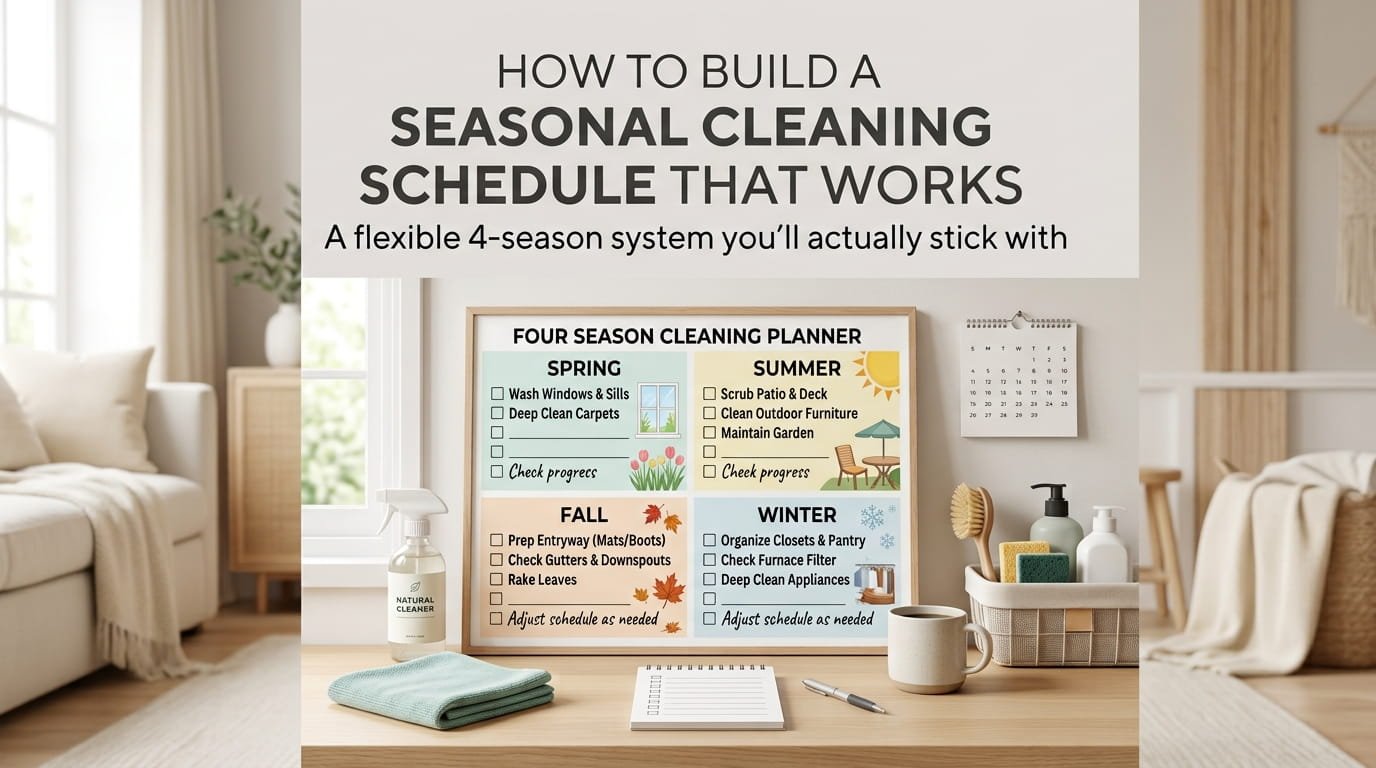
2. Assign Each Season One Theme Instead of a Random Task Dump
Spring gets a fresh start theme, summer gets outdoor maintenance, fall gets prep for closing things up, winter gets cozy and indoor focused. A theme gives the season’s tasks a reason to belong together.
- Pick one word or phrase that captures each season’s focus
- Sort existing tasks under whichever theme they actually fit
- Let the theme guide what gets added later, not just what’s already there
Pick one word or phrase that captures each season’s focus.
Sort existing tasks under whichever theme they actually fit.
Let the theme guide what gets added later, not just what’s already there.
3. Build Your List Around Your Climate, Not a Generic Template
A schedule built for someone in a snowy climate assumes a gutter clearing task that a warm climate household never needs, and vice versa with things like pool maintenance or AC filter swaps.
A generic template with tasks that don’t apply to your actual climate.
A schedule built entirely around the weather patterns you actually deal with.
4. Start Each Season With a Fifteen Minute Planning Session

Before diving into any actual tasks, a short planning session sets the tone for the whole season and catches anything that’s changed since the last one.
💡 Quick Tip
Do this planning session the same day each season starts, so it becomes a habit rather than something you remember to do sometimes.
5. Spread Seasonal Tasks Across Several Weekends Instead of One
Trying to knock out every seasonal task in a single weekend is exactly what burns people out and makes them dread the whole system by the second season.
6. Pair Each Seasonal Task With a Rough Time Estimate
Knowing a task takes twenty minutes versus a full afternoon changes how you actually schedule it, and a list without any time context makes every task feel like an open ended commitment.
| No Time Estimate | With Time Estimate |
|---|---|
| Every task feels like an open commitment. | You know exactly what you’re signing up for. |
| Hard to plan around a busy afternoon. | Easy to slot into whatever time you actually have. |
7. Build In Overlap Weeks Between Seasons
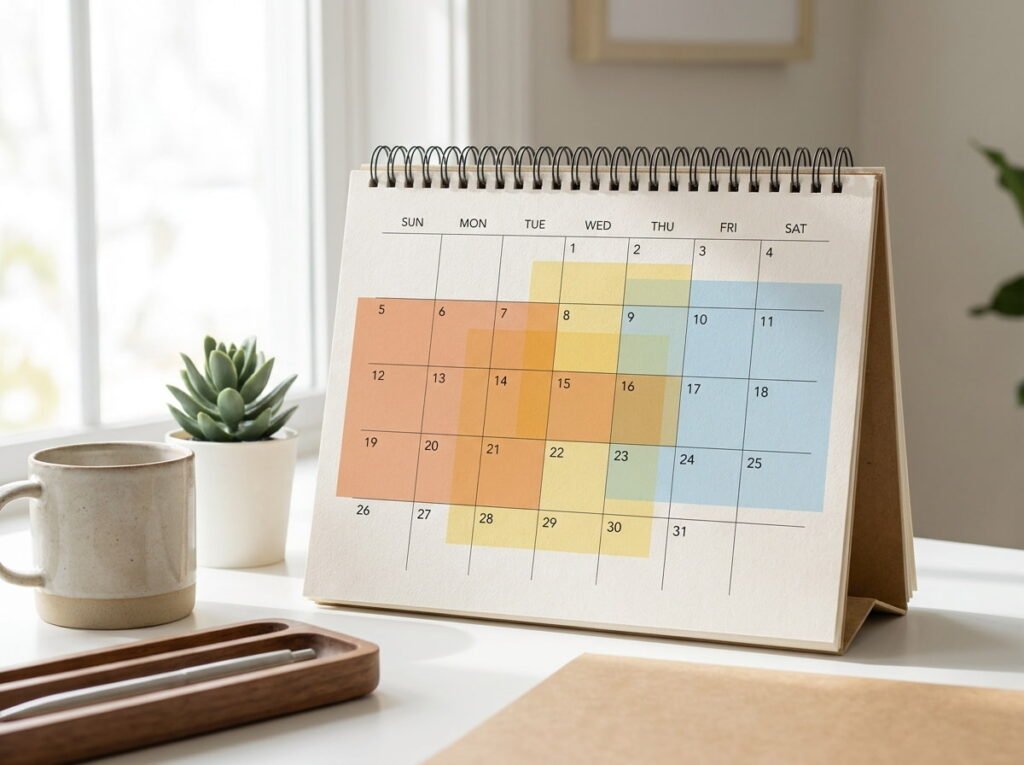
The shift from one season to the next rarely happens on a single clean date, and a schedule that assumes it does creates unnecessary pressure right when the transition is already messy.
Seasons overlap in real life. Your schedule should have room for that overlap too.
8. Track Completion Instead of Just Planning Tasks
A list of tasks without any way to mark progress tells you nothing about whether the system is actually working, and that’s the missing piece that separates a plan from a functioning system.
Set this up before your first season starts:
What to track
9. Separate Outdoor Tasks From Indoor Ones Within Each Season
A rainy weekend shouldn’t derail your whole seasonal plan just because the gutter cleaning and the closet swap were sitting on the same undivided list.
One rained out weekend stalls the entire seasonal list.
Indoor tasks keep progress moving even when the weather doesn’t cooperate.
10. Build a Rotating Deep Clean List Instead of Repeating the Same Big Tasks Every Season
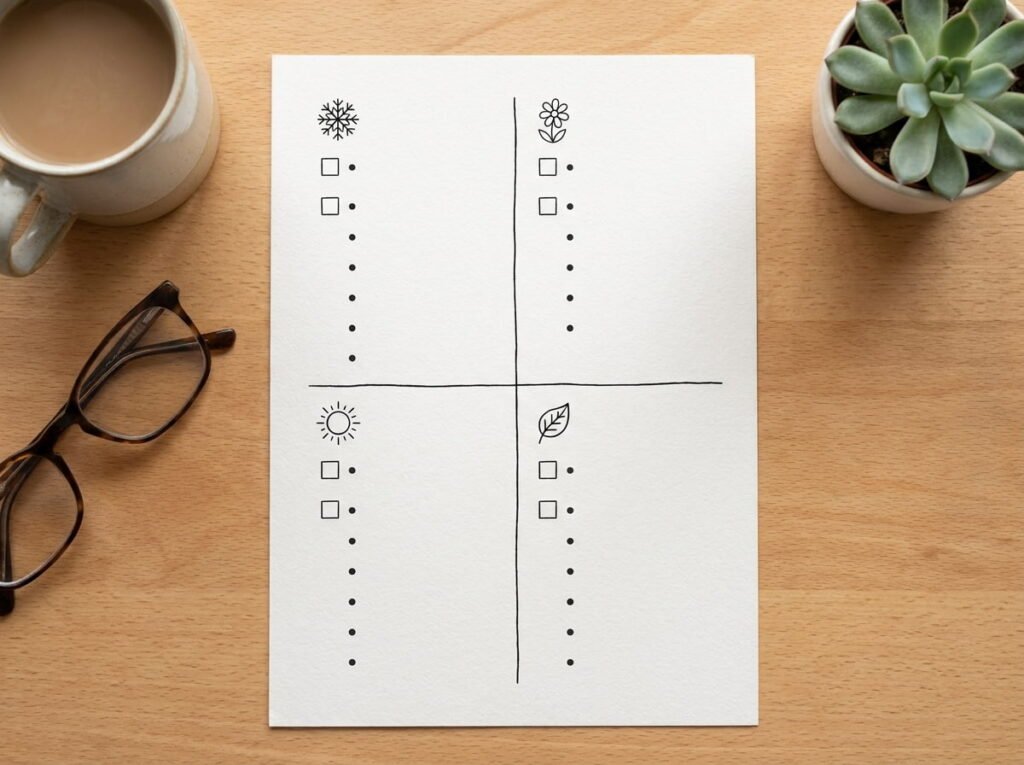
Cleaning the same closet or the same cabinet every single season means some spots get overattended while others never make the list at all.
- Make a master list of every deep clean spot in your home
- Divide that list across four seasons instead of repeating it fully each time
- Rotate which spots get attention so everything cycles through over the year
Make a master list of every deep clean spot in your home.
Divide that list across four seasons instead of repeating it fully each time.
Rotate which spots get attention so everything cycles through over the year.
11. Review Last Season’s List Before Building the Next One
What actually got done tells you far more about your real capacity than what you optimistically planned four months ago, before the season even started.
12. Assign a Specific Day of the Week for Seasonal Task Check Ins
Relying on memory to remember when you last worked on a seasonal task is exactly how weeks slip by without any real progress happening.
📌 Good To Know
Sunday evenings work well for a lot of people, since it’s a natural moment to look ahead at the coming week anyway.
13. Keep a Running List of Tasks That Don’t Fit Neatly Into Any Season

A repair that came up in March or a project you thought of in July doesn’t belong forced into whichever season happened to be active when you noticed it.
Keep a separate ongoing list just for these odd jobs.
Pull from it whenever a season has extra room.
Forcing a task into a season it doesn’t actually belong to.
Letting these tasks just live in your head instead of on paper.
14. Build Flexibility Into Your System for Skipped Seasons
Life happens, and an entire season occasionally getting skipped shouldn’t mean starting the whole system over from scratch the next time around.
Have a plan ready for exactly this situation:
What to do when a season slips
15. Use Color Coding to Separate Task Types at a Glance
A quick glance at a color coded schedule tells you more in two seconds than reading through a plain black and white list ever could.
16. Set a Full Year Review Once You’ve Gone Through All Four Seasons
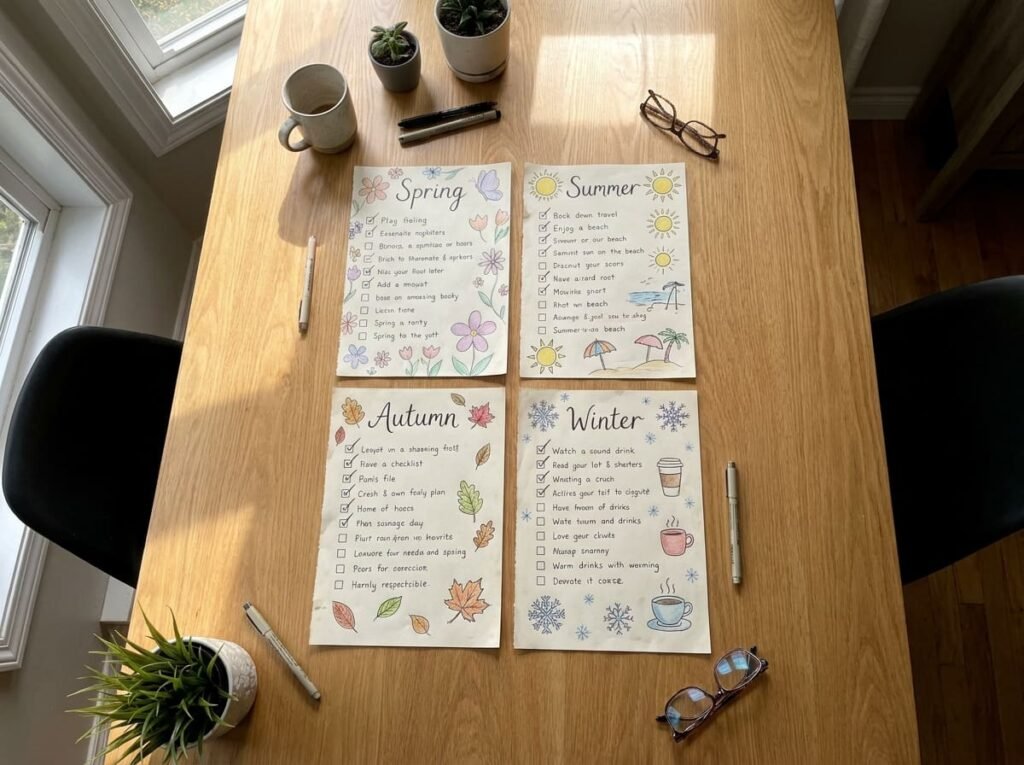
After a complete year, patterns start showing up that were invisible after just one or two seasons, like which tasks always get skipped or which months you’re consistently busier than others.
⚠️ Watch Out
Don’t skip this review just because the year felt uneven. That unevenness is exactly what the review is meant to catch.
17. Adjust Your Schedule Based on What You Skipped, Not What You Planned
Next year’s version of your schedule should be built around what your actual life looked like, not the idealized plan you made before the year even started.
A schedule that repeats the same skipped tasks year after year.
A schedule that finally reflects what your year actually looks like.
18. Keep the Whole System in One Place You’ll Actually Check
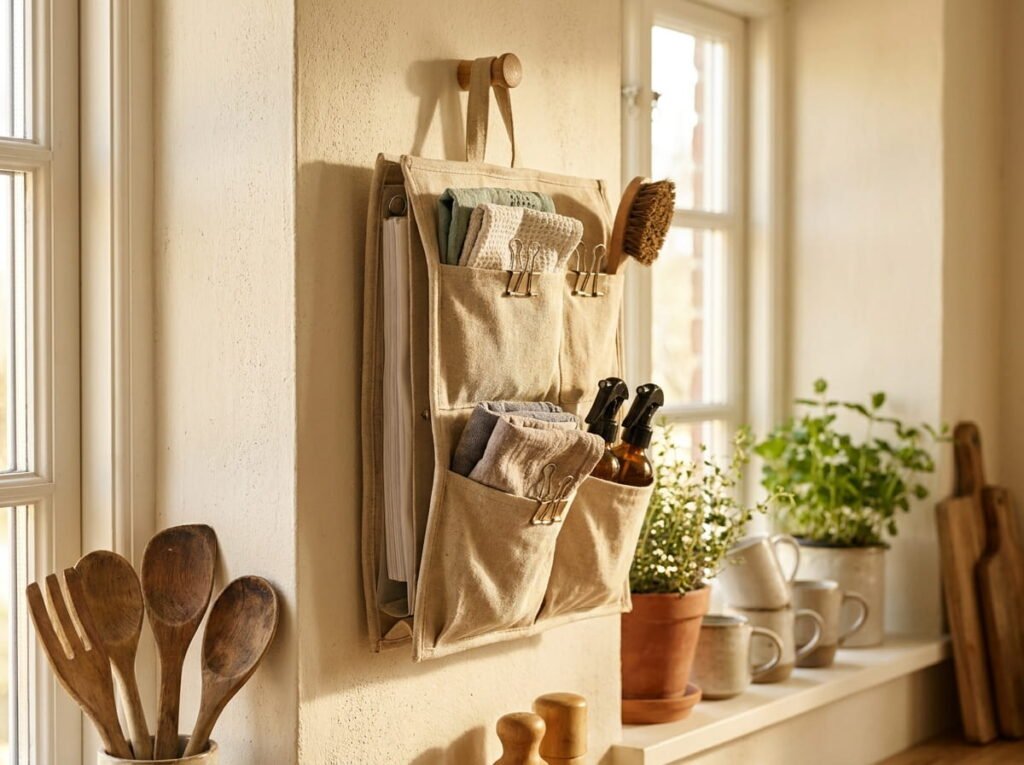
A brilliant seasonal schedule split across three different apps, a notebook, and a sticky note on the fridge is really no system at all, just scattered good intentions.
Conclusion
A seasonal cleaning schedule that survives past the first year isn’t built on discipline alone. It’s built on structure that bends, room for the seasons that don’t go as planned, and a habit of actually reviewing what worked instead of just planning what should.
None of these pieces require a complicated system or special tools. What matters is putting a few of them in place, tracking what actually happens, and adjusting based on real patterns instead of good intentions. A seasonal cleaning schedule built this way gets better every year instead of getting abandoned by the second one.
Save this list for whenever you’re ready to build a system that actually sticks around.