A clean house with kids in it doesn’t look like a clean house without them, and the sooner that sinks in, the less exhausting the whole thing becomes. Toys will be out. Something sticky will be on a counter somewhere. That’s not failure, that’s just what a lived in house with small people looks like.
Learning how to keep your house clean with kids isn’t about finding more hours in the day or more energy at the end of it. It’s about lowering the bar to something actually achievable, building in small habits that don’t require a burst of motivation, and accepting that some days the house simply won’t get there.
This list covers what actually works when you’re outnumbered and running on interrupted sleep. Some of these take five minutes. Others are just a shift in how you think about the mess in the first place. Pick what fits your household and skip what doesn’t.
1. Redefine What Clean Actually Means With Kids in the House
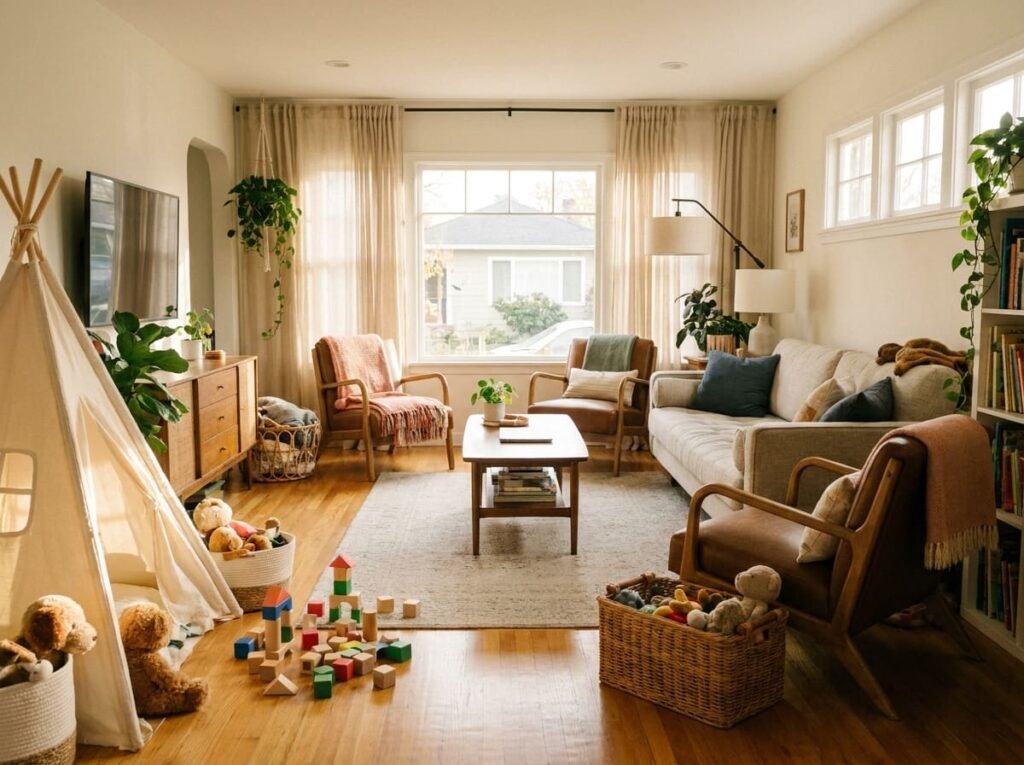
The standard you’re measuring against might be one you had before kids, or one you’re seeing online, and neither one was ever realistic for a house with small people actively living in it.
Aim for functional and safe, not magazine tidy.
Judge the day by whether the kitchen and floors are clear.
Comparing your house to one without kids in it.
Chasing a standard that was never realistic to begin with.
2. Do a Five Minute Reset Before Bed, Every Single Night
Waking up to a house that’s already somewhat in order changes the entire feel of the next day, even if nothing else got done the evening before.
- Clear surfaces of anything that accumulated during the day
- Load or start the dishwasher before heading to bed
- Do one quick pass through the main living space, nothing deep
Clear surfaces of anything that accumulated during the day.
Load or start the dishwasher before heading to bed.
Do one quick pass through the main living space, nothing deep.
3. Give Every Toy Category One Specific Home
A toddler can’t put things away if there’s no obvious place for them to go, and a system with one clear spot per category makes cleanup possible even for kids who can’t organize on their own.
Toys scattered with no obvious place to return anything.
One clear category per bin, so cleanup is a matching game, not a decision.
4. Use Bins Kids Can Actually Open and Close Themselves
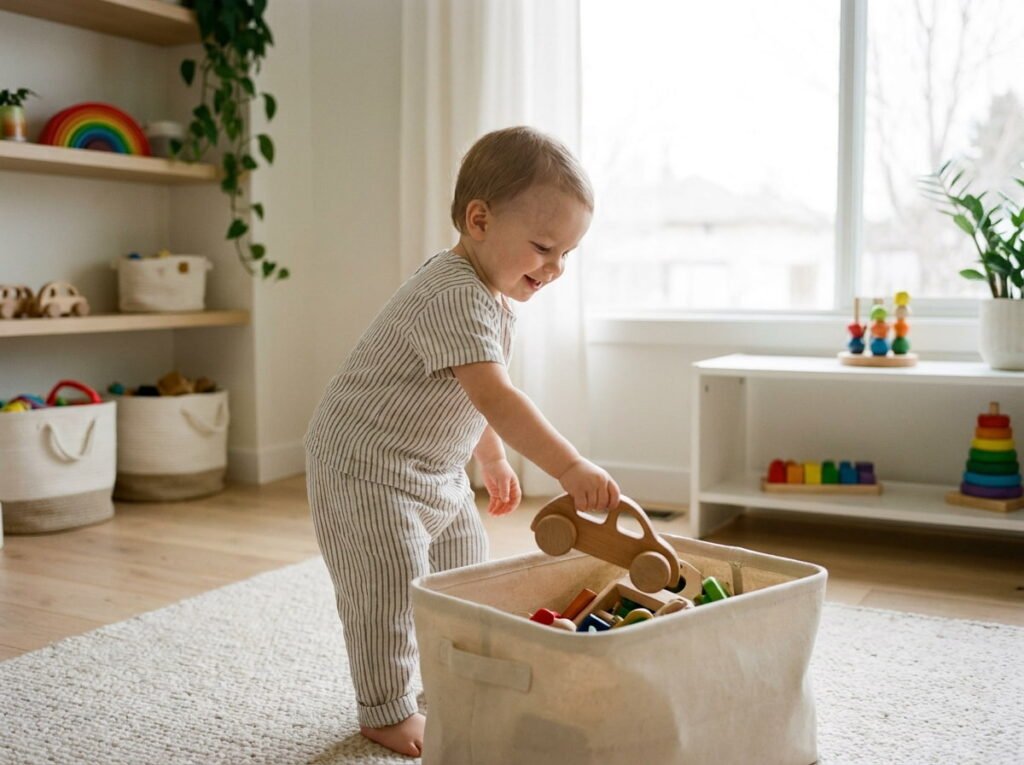
A bin with a tight lid or a heavy lever removes the whole point of independent cleanup, since a frustrated toddler just gives up and walks away.
💡 Quick Tip
Open top bins or baskets work better than anything with a lid for kids under five.
5. Limit Toys to What Actually Fits in the Space You Have
More toys doesn’t mean more play, it usually just means more mess and less actual engagement with any single thing.
6. Clean in Short Bursts Instead of Waiting for a Free Afternoon
A free afternoon with young kids rarely actually happens, and waiting for one means the cleaning just doesn’t get done at all.
| Waiting for Free Time | Short Bursts |
|---|---|
| Weeks can pass without a real opening. | Five minutes here and there adds up daily. |
| Mess builds up while you wait. | Nothing gets the chance to pile up as much. |
7. Make Cleanup Part of the Transition, Not a Separate Task
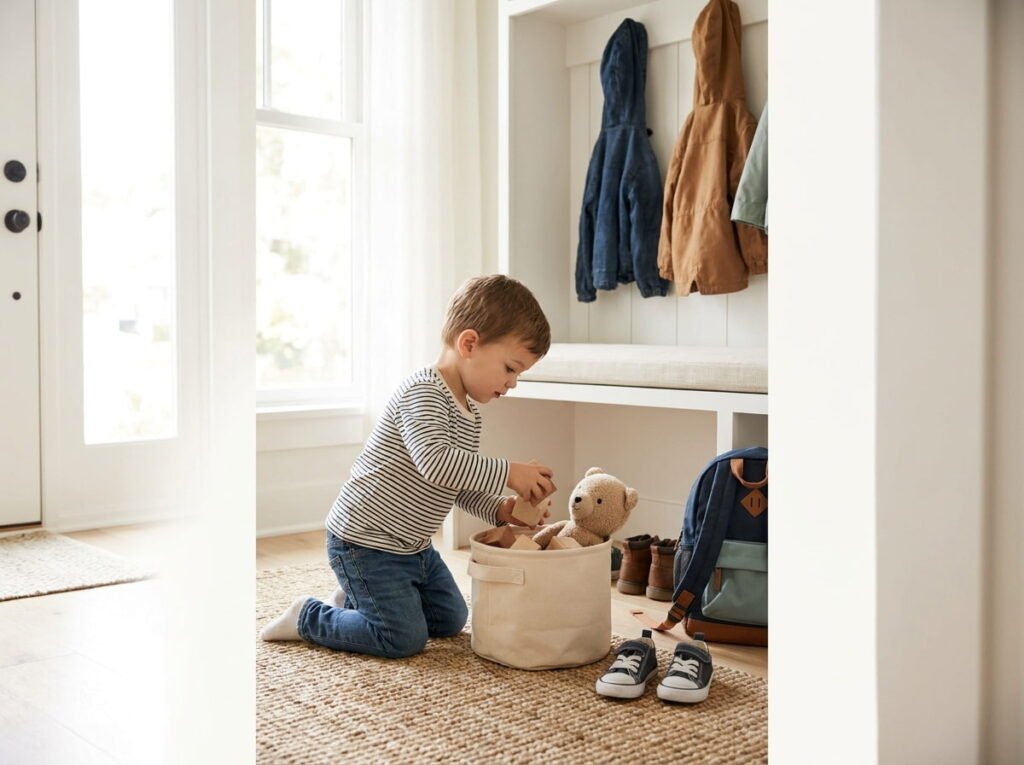
Attaching cleanup to the moment you’re already moving from one activity to the next, like before snack time or before leaving for an errand, makes it feel like part of the flow instead of an extra ask.
8. Give Each Kid One Age Appropriate Job, Not a Chore Chart With Everything
An overloaded chore chart with ten tasks per kid gets ignored fast, while one specific job actually gets done and gives them a real sense of contribution.
Age appropriate ideas
9. Keep a Designated Messy Zone and Let the Rest of the House Stay Calmer
One room or corner where mess is fully allowed takes the pressure off keeping every single space picked up at once, and it gives kids a spot to actually spread out.
Toys and clutter spreading into every single room of the house.
One contained zone for mess, while the rest of the house stays calmer.
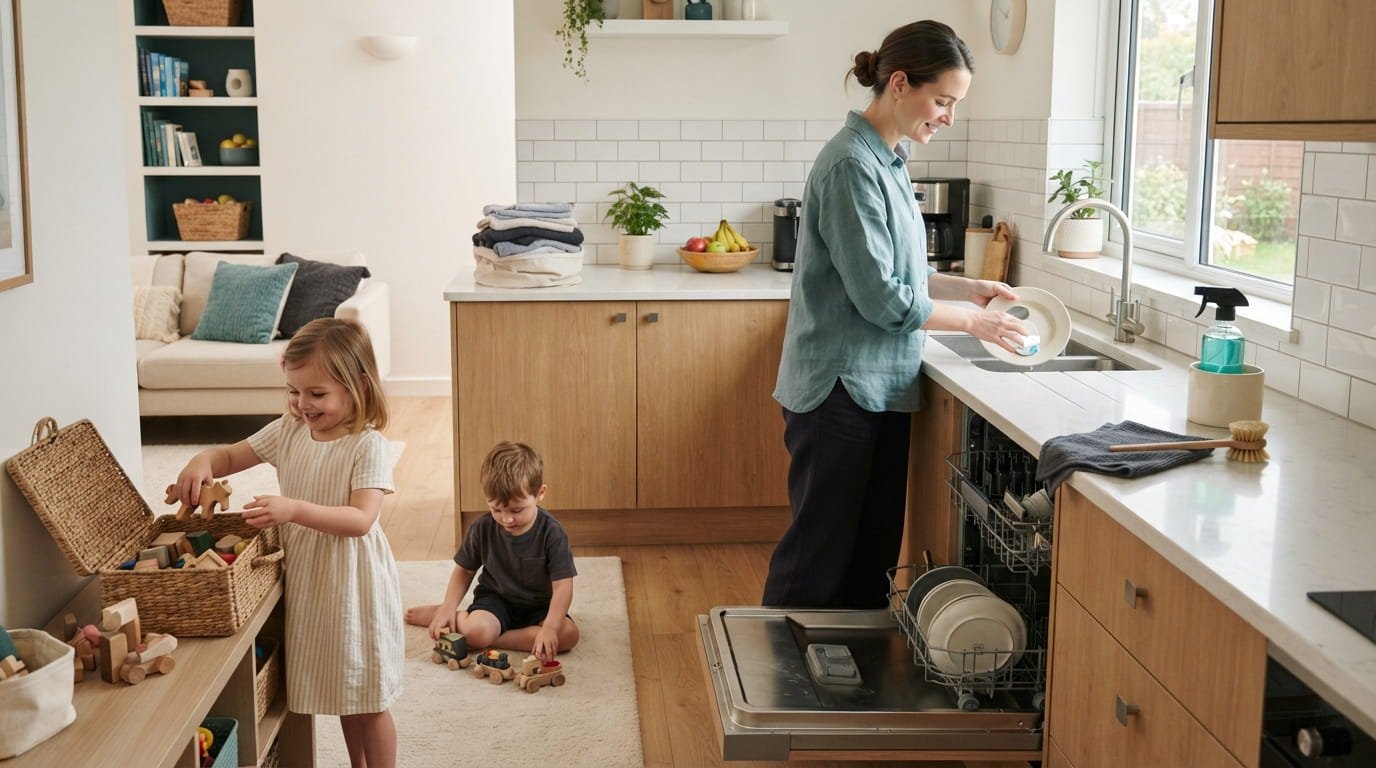
10. Do Dishes and Wipe Counters Right After Meals, Not Later
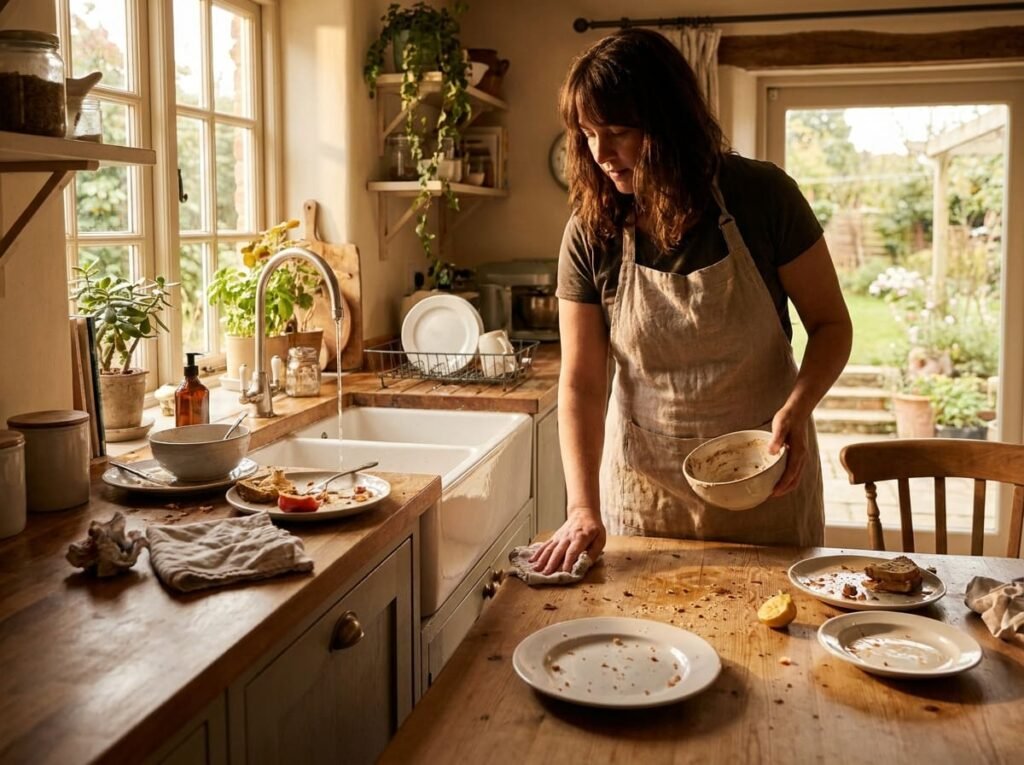
The kitchen spirals faster than almost any other room, since dishes and crumbs from three meals a day compound quickly if they’re left sitting even a few hours.
- Rinse or load plates immediately after everyone’s done eating
- Wipe counters and the table while the mess is still fresh
- Sweep up crumbs before they get tracked through the rest of the house
Rinse or load plates immediately after everyone’s done eating.
Wipe counters and the table while the mess is still fresh.
Sweep up crumbs before they get tracked through the rest of the house.
11. Keep Cleaning Supplies Safely Accessible So Cleanup Doesn’t Require You
If every cleaning task means walking to another room for supplies, you’re less likely to do the small task in the moment, and so is anyone else in the house.
Keep child safe wipes and a small cloth in every main room, out of reach but within easy grabbing distance for you.
12. Accept That Some Days the House Just Won’t Get Clean
A sick kid, a rough night of sleep, or just one of those days means the house stays messier than usual, and that’s not a personal failure, it’s just what the day actually allowed for.
⚠️ Watch Out
Guilt over a messy day burns more energy than the mess itself ever will. Let it go and reset tomorrow.
13. Do a Load of Laundry Every Day Instead of Saving It for the Weekend
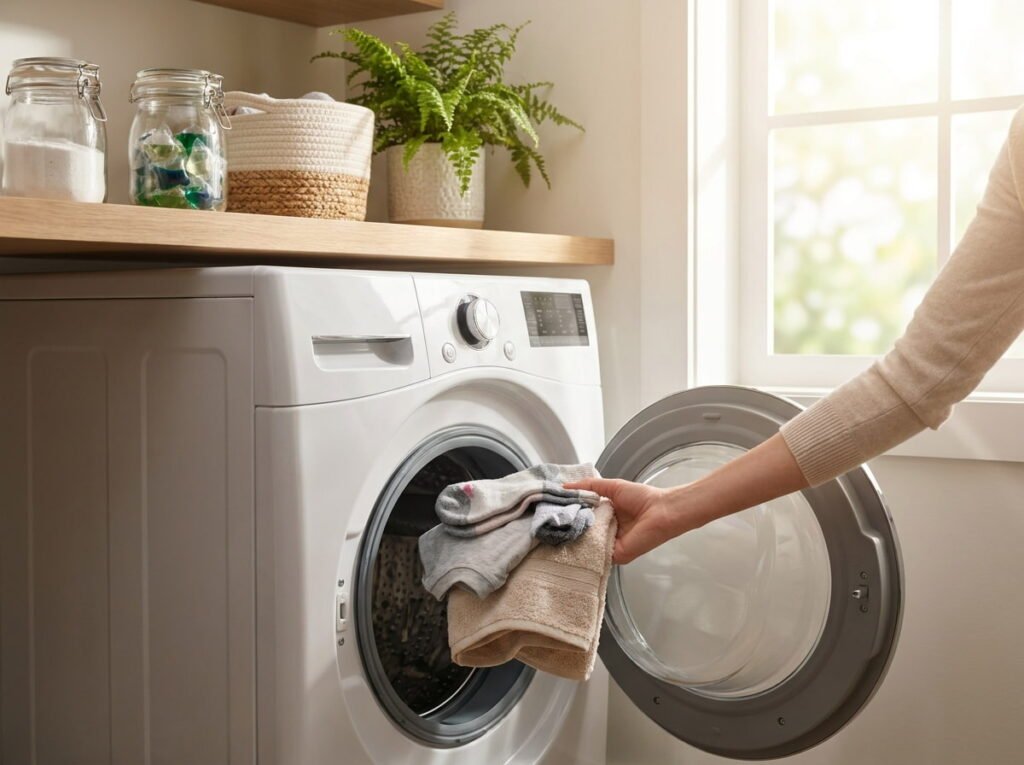
One overwhelming laundry mountain on Saturday is far harder to tackle than the same total amount spread across seven smaller loads through the week.
Start one load first thing every morning.
Fold or put away that same load before starting the next day’s.
Letting laundry pile up all week for one massive weekend session.
Trying to catch up on five loads in a single afternoon.
14. Let Go of Matching or Perfectly Folded Laundry
Kids’ clothes don’t need to be folded like a store display, and the time saved skipping that step is better spent somewhere the house actually needs it more.
Where your effort actually matters more:
Better places for that time
15. Clean While Kids Are Occupied With Something Else, Not Instead of Them
Trying to clean during the only twenty minutes of connection time you have with your kid isn’t a real win, but working during a screen show or independent play window absolutely is.
16. Involve Toddlers in Cleaning With Tasks That Feel Like Play
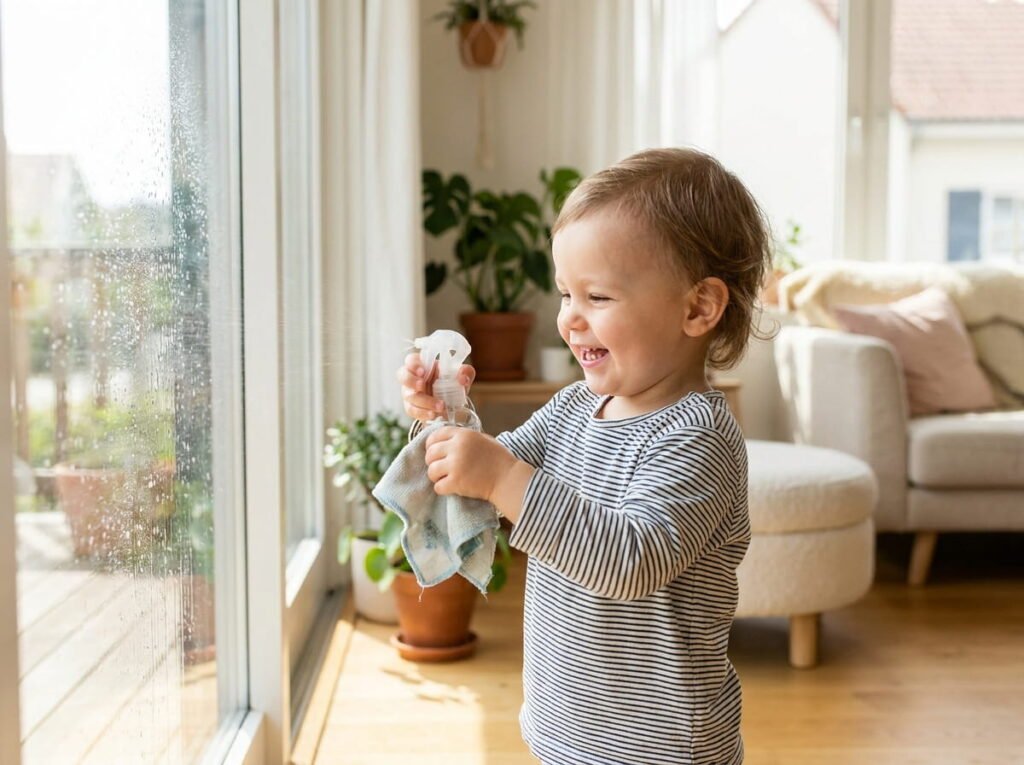
A toddler who thinks wiping is a fun game will actually do it, while one who feels forced into a chore will resist every single time.
📌 Good To Know
A spray bottle of plain water and a cloth turns window wiping into an activity most toddlers genuinely enjoy.
17. Do a Weekly Reset Instead of Chasing Daily Perfection
One bigger catch up session on a set day each week covers what the small daily resets naturally miss, without you needing to hit every corner perfectly every single day.
Trying to deep clean every corner every single day and burning out fast.
Small daily resets plus one weekly session that actually catches everything.
18. Give Yourself Permission to Lower the Bar During Hard Seasons

A newborn, an illness moving through the house, or a stretch of bad sleep all call for a different standard than an ordinary week, and that’s not something to apologize for.
Conclusion
Learning how to keep your house clean with kids isn’t about winning some daily battle against the mess. It’s about building small habits that don’t require a burst of energy you don’t have, and letting go of a standard that was never realistic in the first place.
The five minute reset, the toy limits, the one designated messy zone, none of it makes the house spotless, but together they keep things functional even on the harder days. Some days will still fall apart, and that’s fine. Tomorrow gets another five minute reset.
Save this list for the next time the mess feels like too much, and pick just one thing to try first.