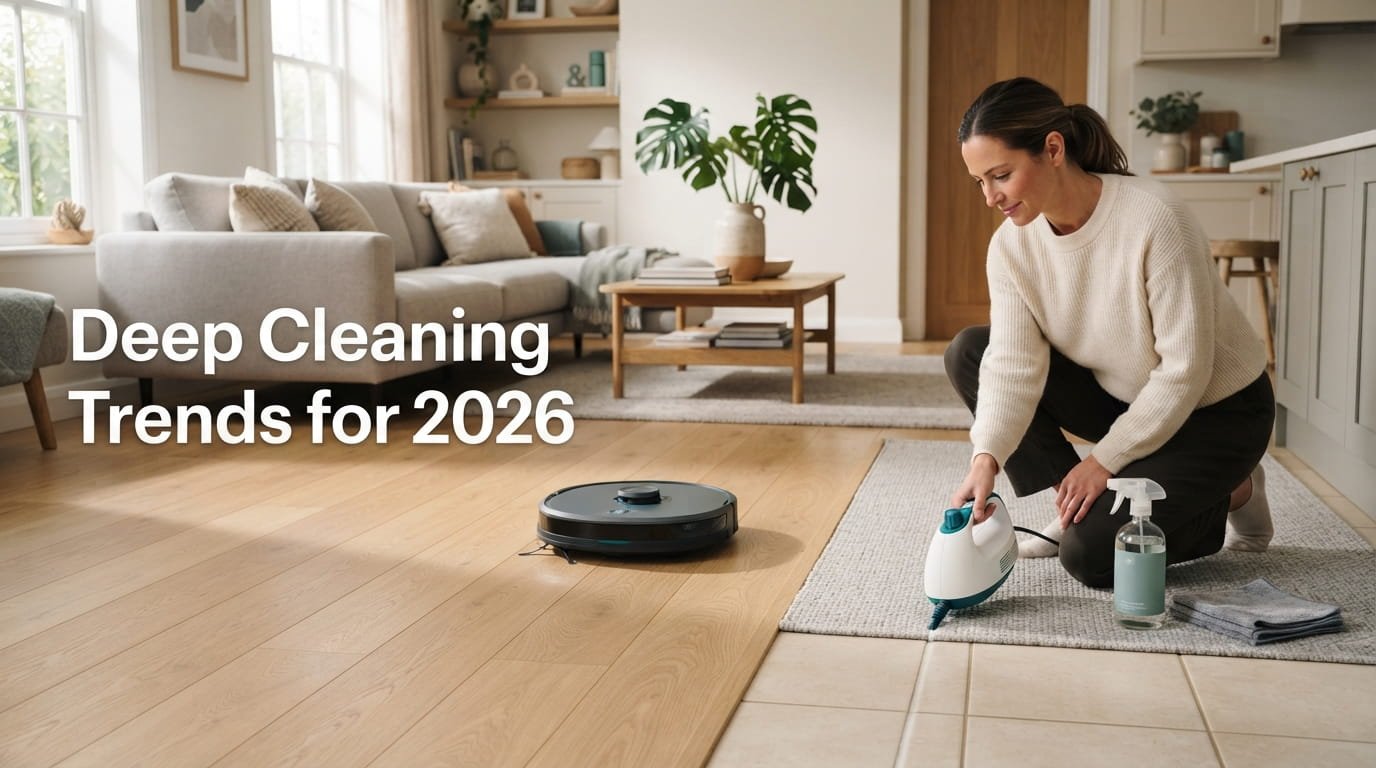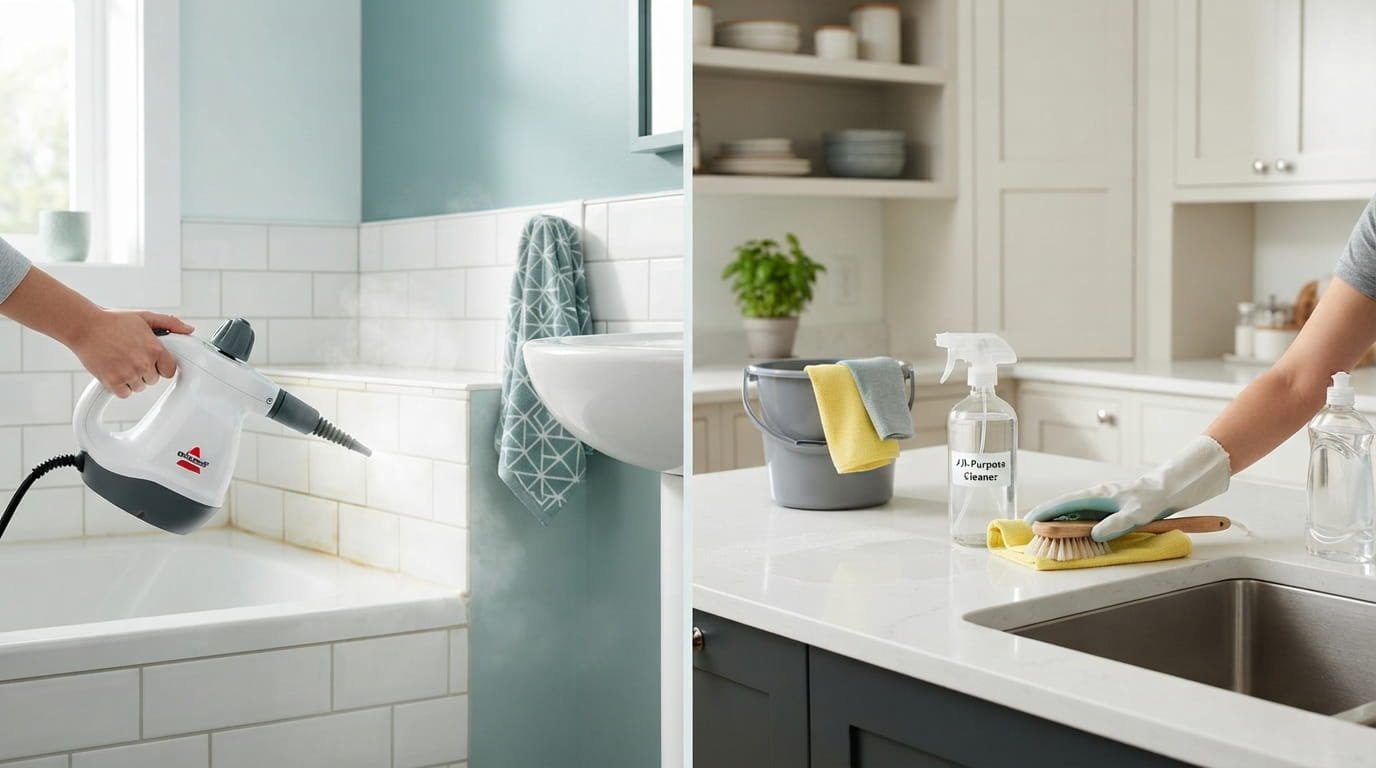
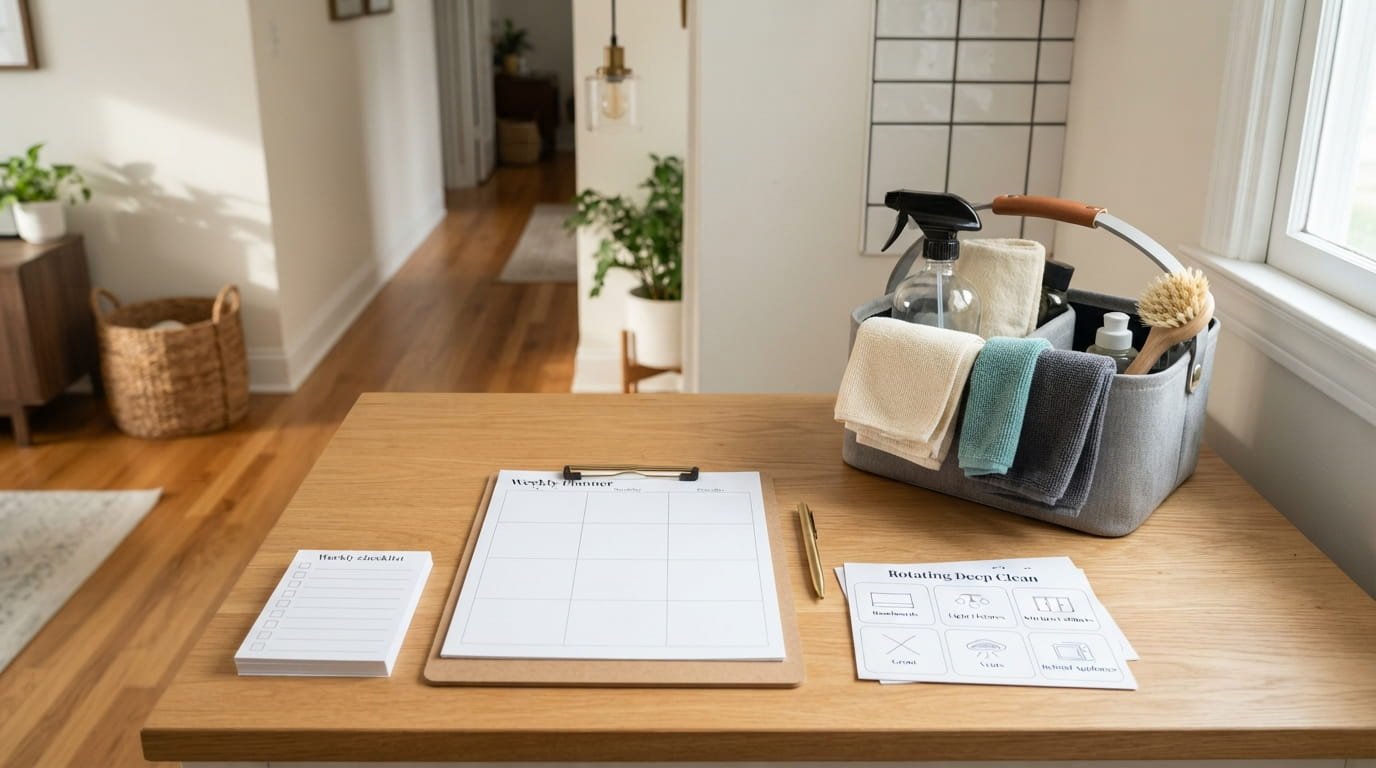
Deep cleaning tasks have a habit of either getting ignored completely or dumped all at once into one exhausting weekend. Neither approach actually works long term, and both come from the same root problem, treating deep cleaning as separate from your regular routine instead of something that can fold right into it.
Learning to rotate cleaning tasks weekly means spreading the bigger jobs, baseboards, light fixtures, behind the fridge, across a cycle instead of letting them pile up until they all feel urgent at once. One task a week is manageable in a way that four tasks in a single Saturday never is.
This list walks through exactly how to build that rotation, from making the initial list to keeping the whole system moving without you having to think too hard about it. By the end, deep cleaning stops being a dreaded event and becomes just another small part of an ordinary week.
1. Make a Master List of Every Deep Clean Task You Can Think Of
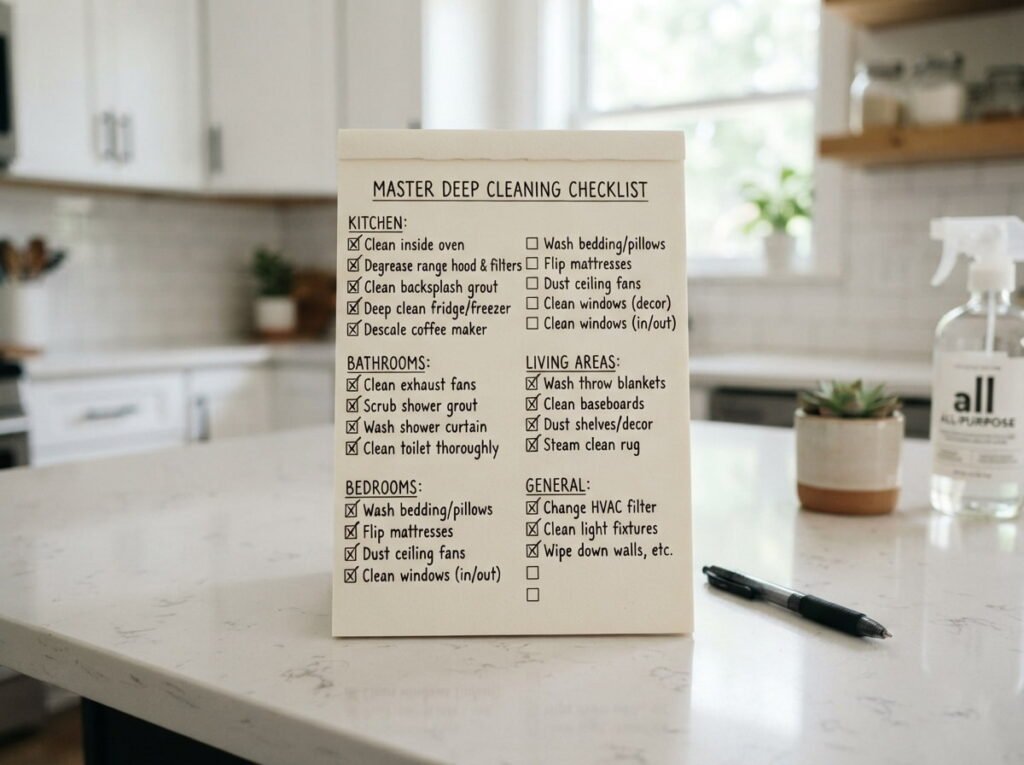
Before organizing anything, get the full picture down on paper. Walk through your home room by room and write down every task that doesn’t fit into your regular weekly cleaning.
2. Sort Tasks by How Often They Actually Need Doing
Not every deep task belongs on the same cycle. Cleaning the oven and washing the windows don’t need the same frequency, even though both count as deep cleaning.
| Every 4 to 6 Weeks | Every Few Months |
|---|---|
| Baseboards, light fixtures, ceiling fans. | Behind appliances, window tracks, vents. |
| Inside the microwave, cabinet fronts. | Mattress, closet reorganizing, deep carpet care. |
3. Assign One Deep Task Per Week Instead of Stacking Several
Spreading the load across separate weeks keeps each one manageable, rather than piling multiple big jobs into a single overwhelming day.
Four deep tasks crammed into one dreaded Saturday.
One task a week, each one finished in under an hour.
4. Pick a Consistent Day Each Week for the Rotating Task
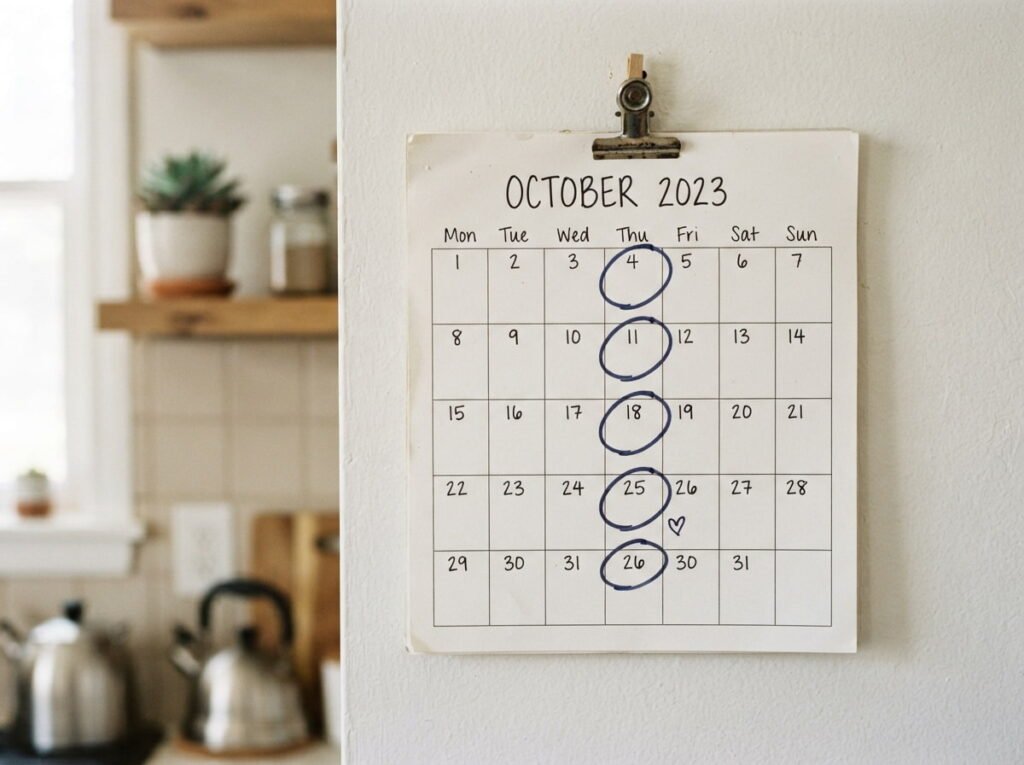
Anchoring the task to a predictable day, like every Wednesday evening, keeps it from becoming something you’re squeezing in randomly whenever you remember.
💡 Quick Tip
Pick a day that already has a little breathing room in your schedule, not your busiest one.
5. Group Tasks by Room So You’re Not Bouncing Around the House
A rotation that jumps from the kitchen to the bathroom to the garage every week feels scattered, while one grouped by room flows more naturally from task to task.
6. Build a Four to Six Week Cycle Instead of a Rigid Twelve Month One
A rotation stretched across an entire year is too long to actually keep track of, while a shorter cycle repeats often enough that you’ll remember where you left off.
- List out your deep tasks in the order you want to tackle them
- Divide that list across four to six weeks
- Let the cycle repeat once it reaches the end
List out your deep tasks in the order you want to tackle them.
Divide that list across four to six weeks.
Let the cycle repeat once it reaches the end.
7. Write the Rotation Down Somewhere You’ll Actually Check It
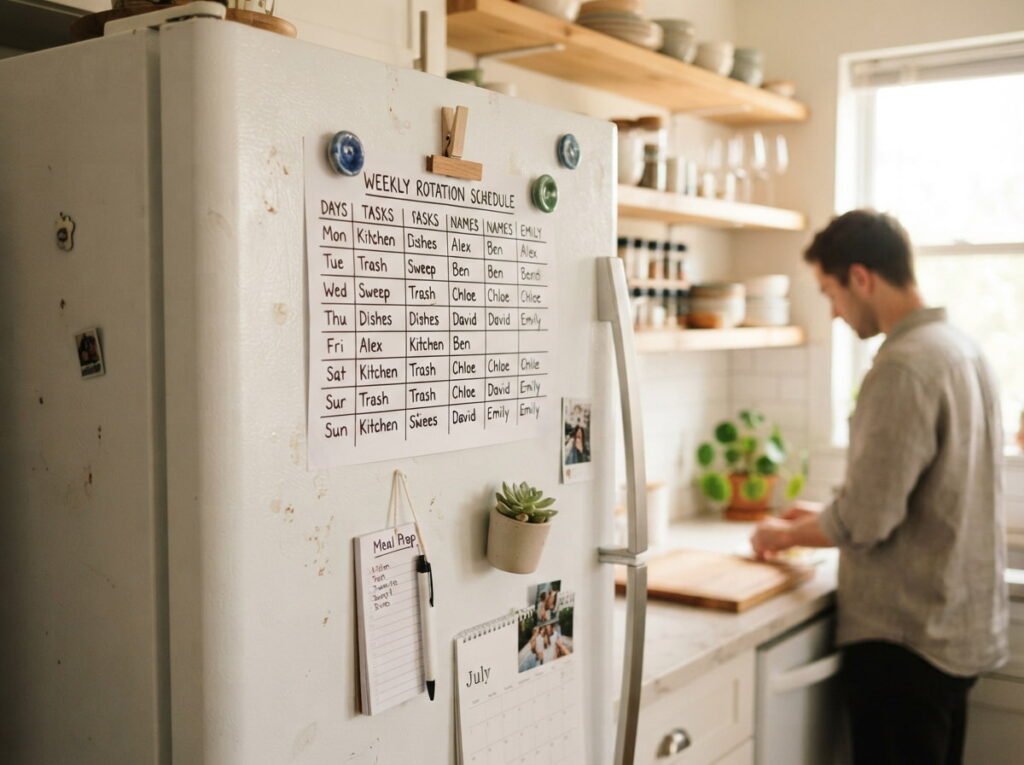
A plan that only exists in your head rarely survives a genuinely busy week, since it’s the first thing to slip when you’re tired and distracted.
A rotation you can’t see is a rotation you’ll forget the moment life gets busy.
8. Pair Each Rotating Task With Your Regular Weekly Cleaning
Attaching the deep task to a day you’re already cleaning anyway means you’re not adding a brand new appointment to your week, just extending one that’s already there.
Set this up before starting your first cycle:
What to pair together
9. Leave One Open Week in the Cycle for Catch Up
A rotation with zero flexibility means one missed week throws off every task after it, which is exactly the kind of rigidity that causes people to abandon the whole system.
Build one open week into every cycle, with no assigned task.
Use it for whatever slipped, or just skip it if nothing did.
Assigning a task to every single week with no breathing room.
Treating one missed week as a reason to abandon the rotation.
10. Adjust Task Frequency Based on Your Actual Household

A house with pets, allergy sufferers, or a lot of foot traffic needs certain tasks more often than a template built for a generic household would ever assume.
📌 Good To Know
Households with pets often need vents and floors on a shorter cycle than the rest of the rotation.
11. Track Which Week You’re On So You Don’t Lose Your Place
Without some way to mark progress, it’s easy to forget whether you’re on week two or week five, and that confusion is exactly what causes people to just guess or skip ahead.
12. Swap a Task’s Position if It’s Consistently Getting Skipped
A task that keeps landing on a busy week isn’t a task you’re bad at doing, it’s a task sitting in the wrong spot on the rotation.
- Notice a pattern where the same task keeps getting pushed off
- Move it to a week that’s historically less busy for you
- Leave the rest of the cycle in place and just adjust that one slot
Notice a pattern where the same task keeps getting pushed off.
Move it to a week that’s historically less busy for you.
Leave the rest of the cycle in place and just adjust that one slot.
13. Keep Seasonal Deep Tasks Separate From Your Weekly Rotation

Gutters, holiday decoration storage, and other truly seasonal jobs don’t belong mixed into a weekly cycle, since they only need attention a couple times a year at most.
Seasonal jobs mixed into the weekly rotation, throwing off the whole cycle.
Two separate systems, each running on the timeline that actually fits it.
14. Review the Full Rotation Every Few Months
A cycle built around your home six months ago might not still match how it’s actually being used now, especially after a move, a new pet, or a change in who’s living there.
⚠️ Watch Out
Don’t skip this review just because the rotation feels like it’s working fine. Small mismatches build up quietly over time.
15. Let the Rotation Restart Automatically Once the Cycle Ends
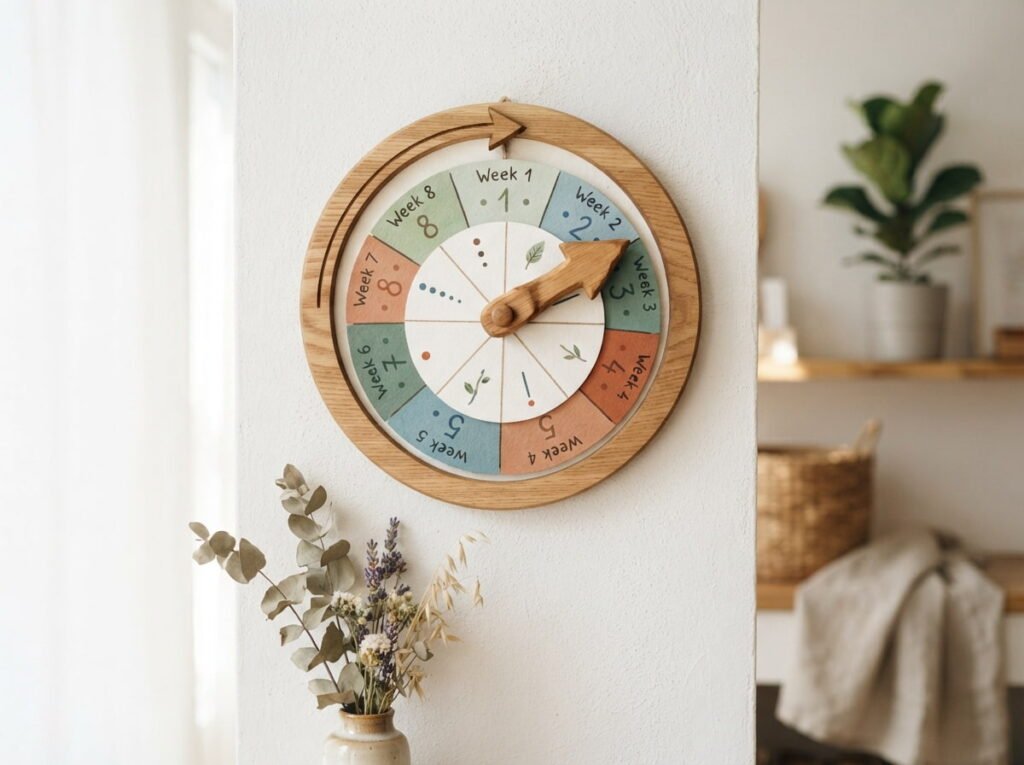
The final piece is what actually makes this a system instead of a one time plan, the cycle simply loops back to week one without you needing to rebuild anything.
Conclusion
A rotation this simple works because it never asks for more than one manageable task in a single week. The tasks that used to feel overwhelming stacked together become almost easy once they’re spread out and attached to a day you’re already cleaning anyway.
Learning to rotate cleaning tasks weekly means deep cleaning stops being a dreaded event you keep putting off. It becomes just another small part of an ordinary week, one that quietly keeps your whole home in better shape without ever asking for a full weekend to catch up.
Save this list for whenever your deep cleaning has piled up again, and use it to build a rotation that actually keeps moving.