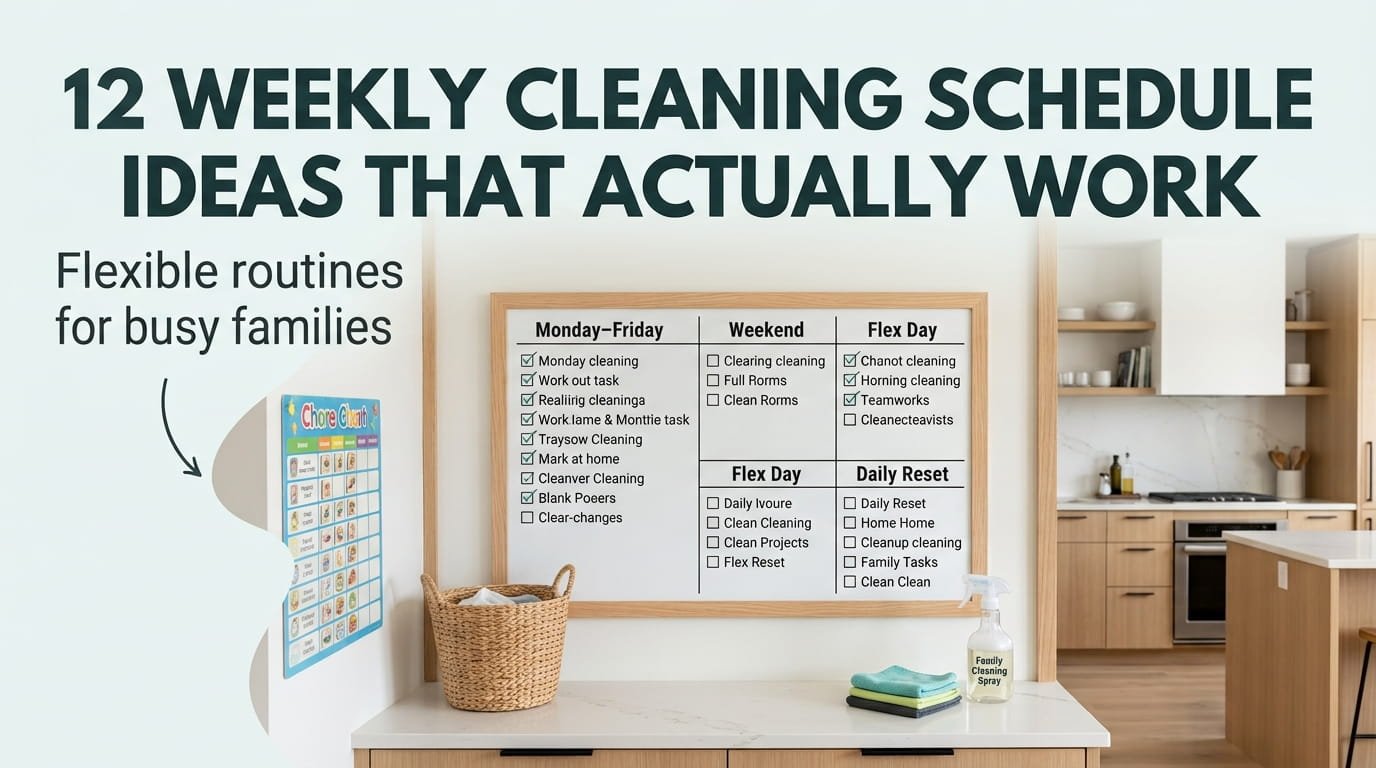
Most weekly cleaning schedules fall apart by week three, not because the family gave up, but because the schedule itself was built wrong from the start. A rigid day by day list looks great on paper until someone’s sick, a kid has practice, or the whole week just runs long, and suddenly the entire plan feels broken instead of just delayed.
A weekly cleaning schedule that actually holds up isn’t about doing more. It’s about building in enough flexibility that one missed day doesn’t sink the whole week. Families who stick with a system long term usually aren’t more disciplined, they’ve just built one that bends instead of breaks.
This list covers the structural choices that make the biggest difference, from how you divide tasks to how you handle the days that don’t go as planned. Pick a few that fit how your household actually runs, not the version of your week that looks good in theory.
1. Split Tasks by Zone Instead of by Day
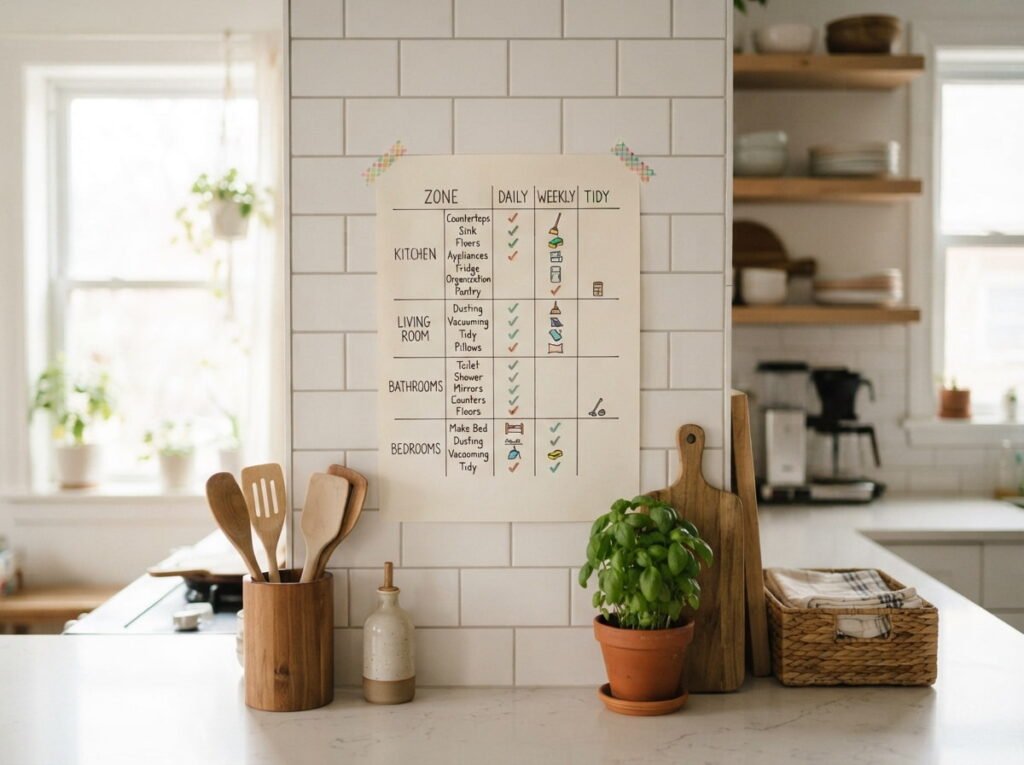
A schedule built entirely around specific days falls apart the moment one of those days gets disrupted. Monday’s tasks just sit there undone, and now Tuesday feels twice as heavy. Zones give you more room to shift.
Group tasks by zone, like kitchen, bathrooms, common areas.
Move a zone to the next open slot if the week gets busy.
Locking every task to one specific day with no flexibility.
Treating a missed day as a failed week.
2. Assign One Deep Task Per Weekday Instead of Stacking Them on Weekends
Weekends packed with every deep task from the week aren’t relaxing for anyone, and they’re the first thing to get skipped when plans change. Spreading them out keeps each day manageable.
- Pick one bigger task per weekday, like vacuuming or bathroom scrubbing
- Keep weekends for lighter upkeep or catching up on whatever slipped
- Rotate which task lands on which day if your week’s schedule shifts often
Pick one bigger task per weekday, like vacuuming or bathroom scrubbing.
Keep weekends for lighter upkeep or catching up on what slipped.
Rotate which task lands on which day if your week shifts often.
3. Build a Five Minute Daily Reset Instead of a Full Clean
A quick pass through the main living areas each evening keeps small messes from turning into a weekend project. This isn’t deep cleaning, it’s just enough to stop things from piling up.
4. Give Each Family Member One Recurring Task, Not a Rotating Chart

Rotating chore charts sound fair, but they mean nobody fully learns a task before it changes hands again. A fixed assignment lets each person get faster and more consistent at their own job.
💡 Quick Tip
Let people trade tasks occasionally if they want variety, but keep the default assignment fixed.
5. Pair a Chore With an Existing Habit
Wiping the bathroom counter right after brushing your teeth takes almost no extra thought, since you’re already standing there. That kind of pairing works better than trying to remember a separate task later.
A separate mental reminder for every small chore during the day.
Tasks that happen automatically because they’re tied to something you already do.
6. Batch Similar Tasks Across the Whole House
Wiping every surface in one pass, then vacuuming every room in another, saves more time than most people expect. Switching between task types room by room means constantly resetting your focus and gathering different supplies each time.
| Room by Room | Batched by Task |
|---|---|
| Switch tools constantly between rooms. | Use one tool for the whole house at once. |
| Mental reset needed for each new space. | Stay in one rhythm until the task type is done. |
7. Build in a Flex Day for Whatever Gets Missed
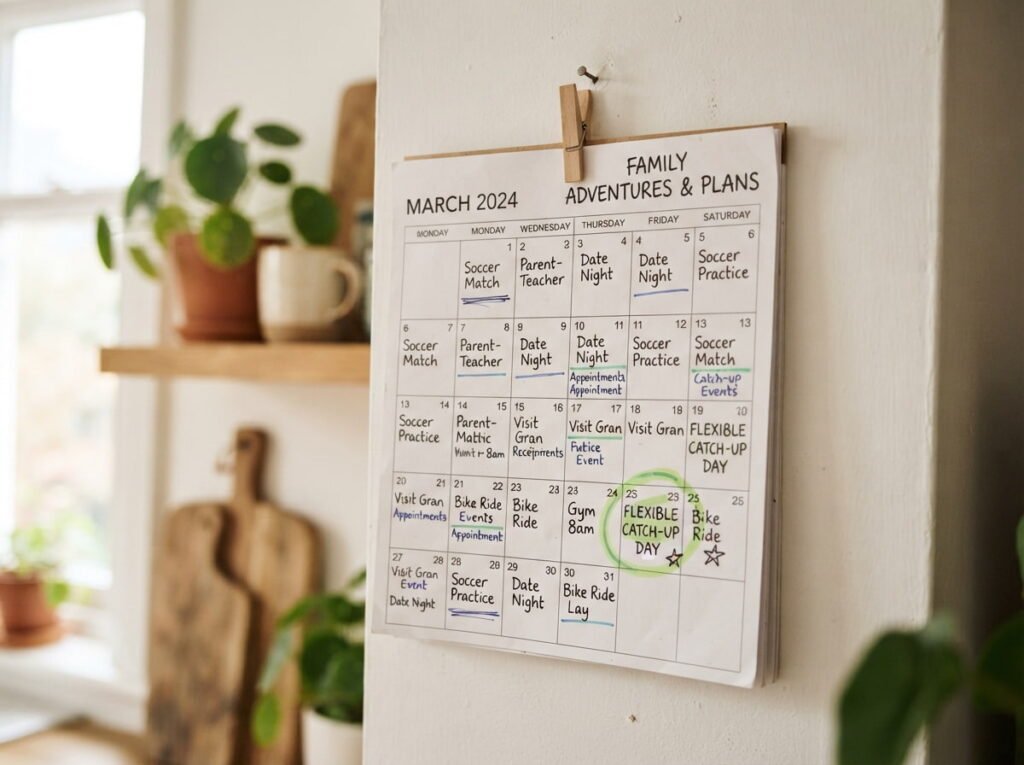
Every schedule needs one day with no assigned tasks of its own, set aside purely to catch up on anything that slipped earlier in the week. Without it, one bad day snowballs into a schedule that feels impossible to keep up with.
A schedule with no room for a missed day isn’t realistic. Build the flex day in from the start.
8. Keep a Weekend Task List Separate From Weekday Tasks
Weekday energy and weekend energy aren’t the same, and trying to force the same task types into both just sets people up to feel behind. Split the list so each set of days gets tasks that actually fit.
What belongs on weekends
9. Time Block Cleaning the Same Way You’d Block a Meeting
Cleaning tends to lose out to everything else on the calendar when it’s treated as something you’ll get to eventually. Giving it an actual time slot changes that, the same way a real appointment would.
10. Build a Simple Visual Chart for Young Kids
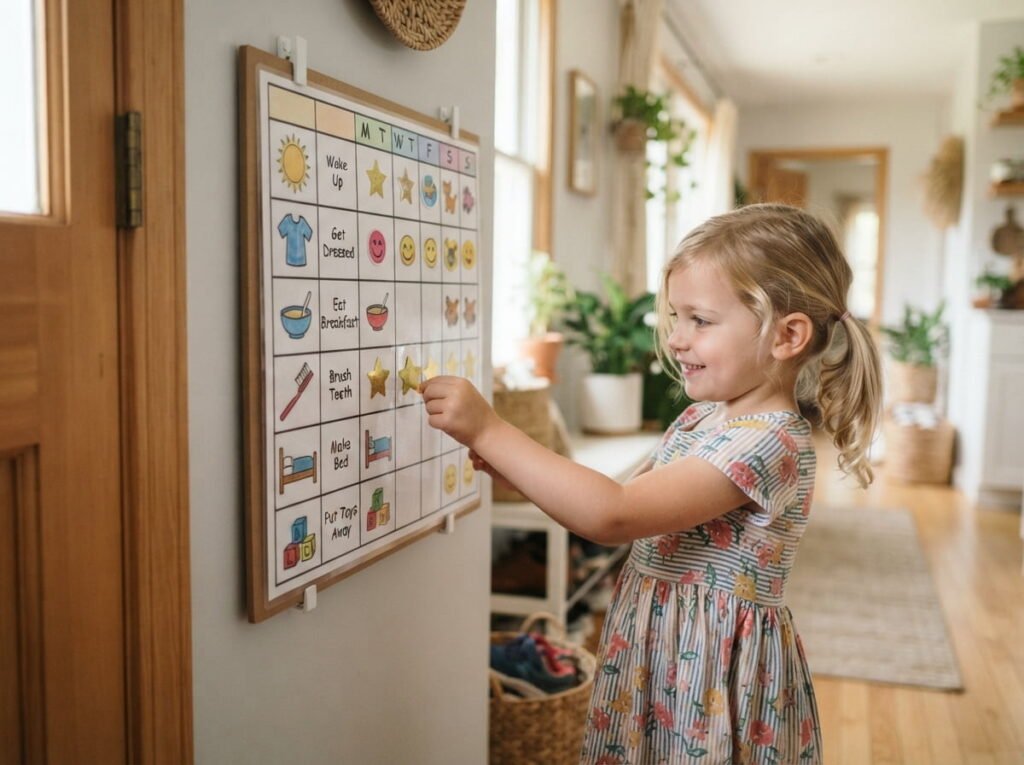
A child who can’t read a full checklist yet can still follow a chart built around pictures. That small shift is often the difference between a task getting done and getting ignored entirely.
- ▸Use simple icons instead of written task names.
- ▸Let them move a magnet or sticker when a task is done.
- ▸Keep the chart at their eye level, not yours.
11. Review and Adjust Your Schedule Every Few Months
A schedule built around your family’s routine six months ago might not fit anymore. New activities, a schedule change, or a kid old enough for more responsibility all quietly make parts of the plan outdated.
Set a recurring reminder to review the schedule every few months.
Ask the family what’s not working before changing anything.
Assuming a schedule that worked once will work forever.
Overhauling everything at once instead of small adjustments.
12. Keep One Master Copy Somewhere Everyone Can See It
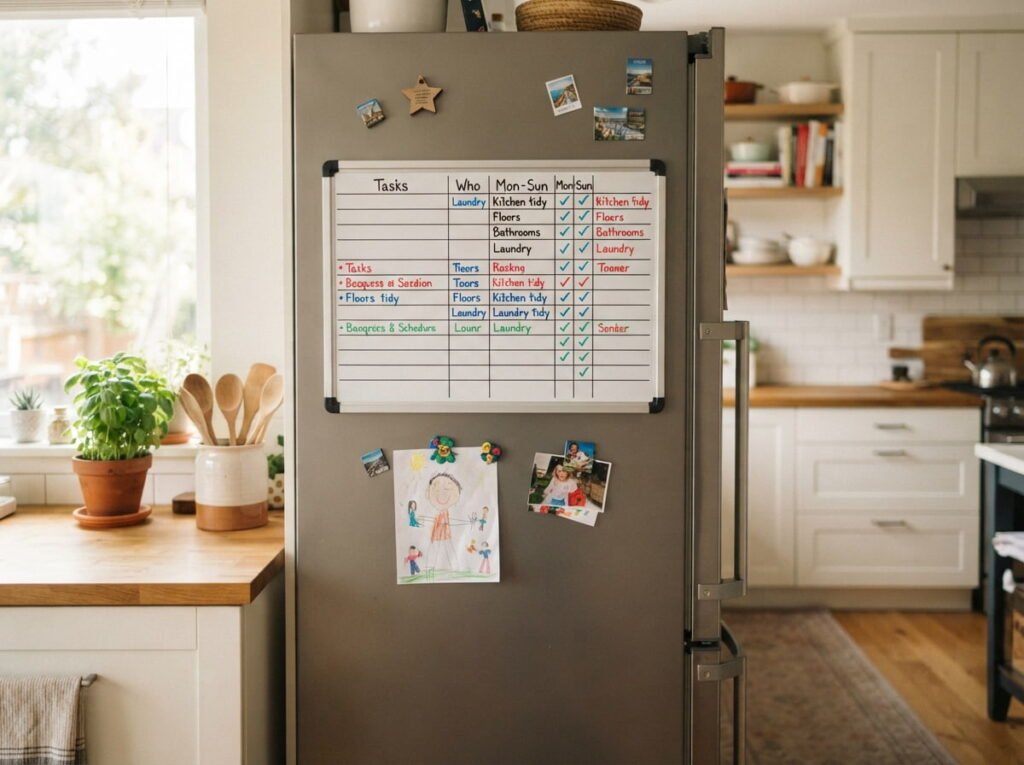
A schedule that only lives in one person’s head or phone isn’t really a shared system, it’s just a mental list one person is quietly managing for everyone else.
📌 Good To Know
A whiteboard on the fridge works just as well as an app, as long as everyone actually checks it.
Conclusion
A weekly cleaning schedule works when it bends instead of breaks. The families who stick with one long term usually aren’t more organized than everyone else, they’ve just built in enough flexibility that a missed day doesn’t collapse the whole plan.
Zones instead of rigid days, a flex day for whatever slips, tasks that actually match each person’s routine, all of it adds up to something you’ll keep using past the first few weeks. Pick a few ideas from this list that fit how your household actually runs and build from there.
Save this list for whenever your current system starts feeling like more trouble than it’s worth.