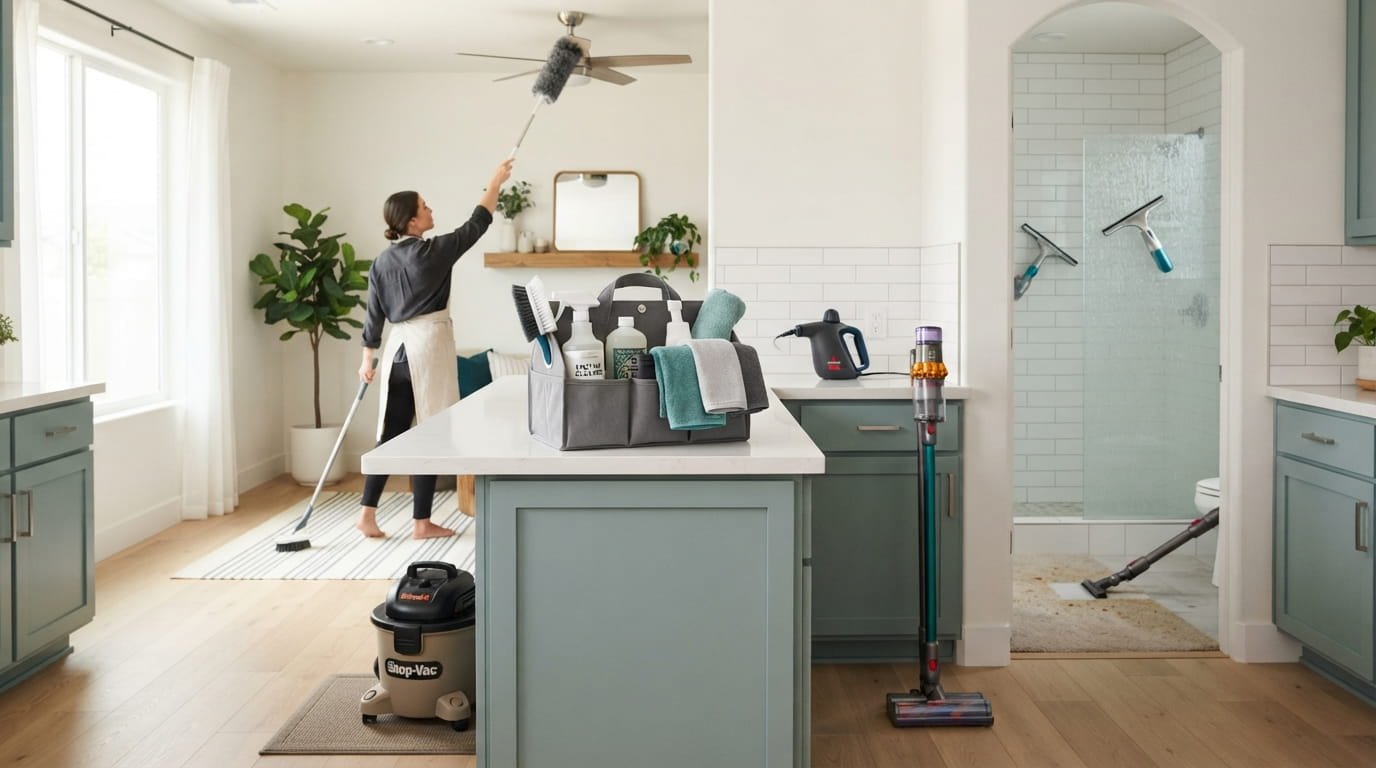
A closet full of cleaning products doesn’t do much if the tools behind them can’t reach the spots that actually need attention. Half the frustration with deep cleaning isn’t effort, it’s trying to tackle grout, ceiling fans, or pet stains with a general purpose sponge that was never built for the job.
The best deep cleaning tools aren’t flashy. Most of them are small, specific, and solve one exact problem better than anything multipurpose ever could. A stiff grout brush does what a sponge never will. A long handled scrub brush saves your knees on a task that’s already unpleasant enough.
This list covers the tools worth actually owning, the ones that turn a dreaded deep clean into something that goes faster and works better. You don’t need all fifteen. Pick the ones that solve the specific problems your house keeps handing you.
1. A Stiff Bristle Grout Brush
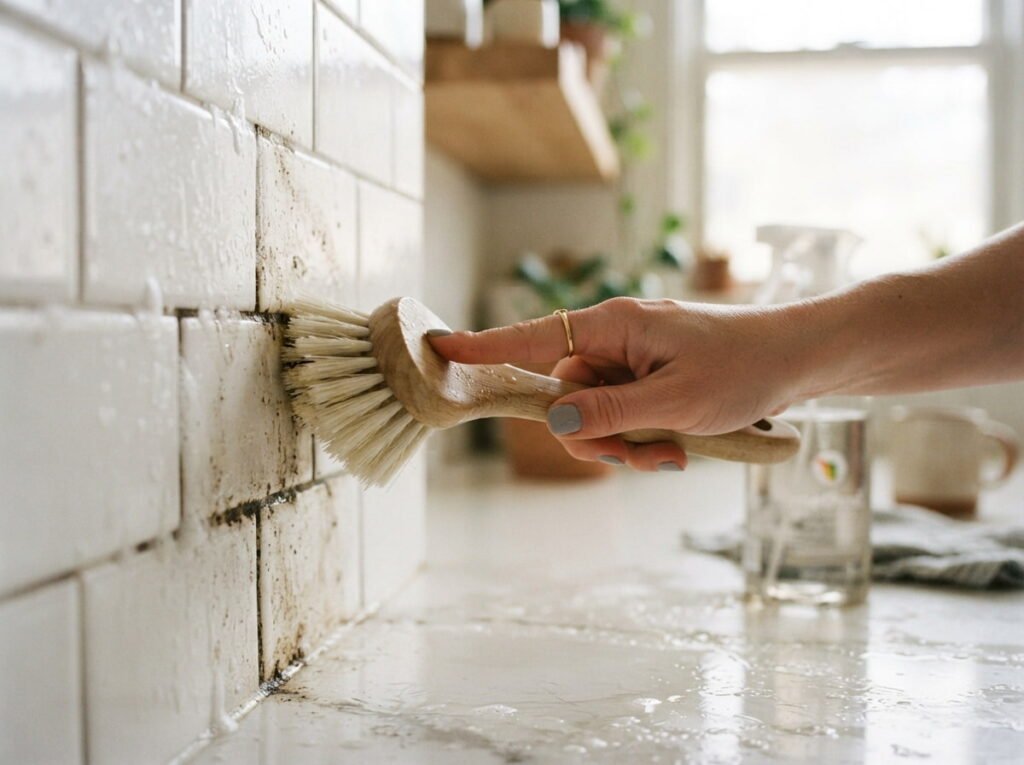
An all purpose cleaner can loosen surface grime on grout lines, but it can’t physically scrub embedded dirt out of a porous, textured surface the way a brush with real bristle stiffness can.
Look for one shaped specifically for grout lines rather than a generic scrub brush repurposed for the job.
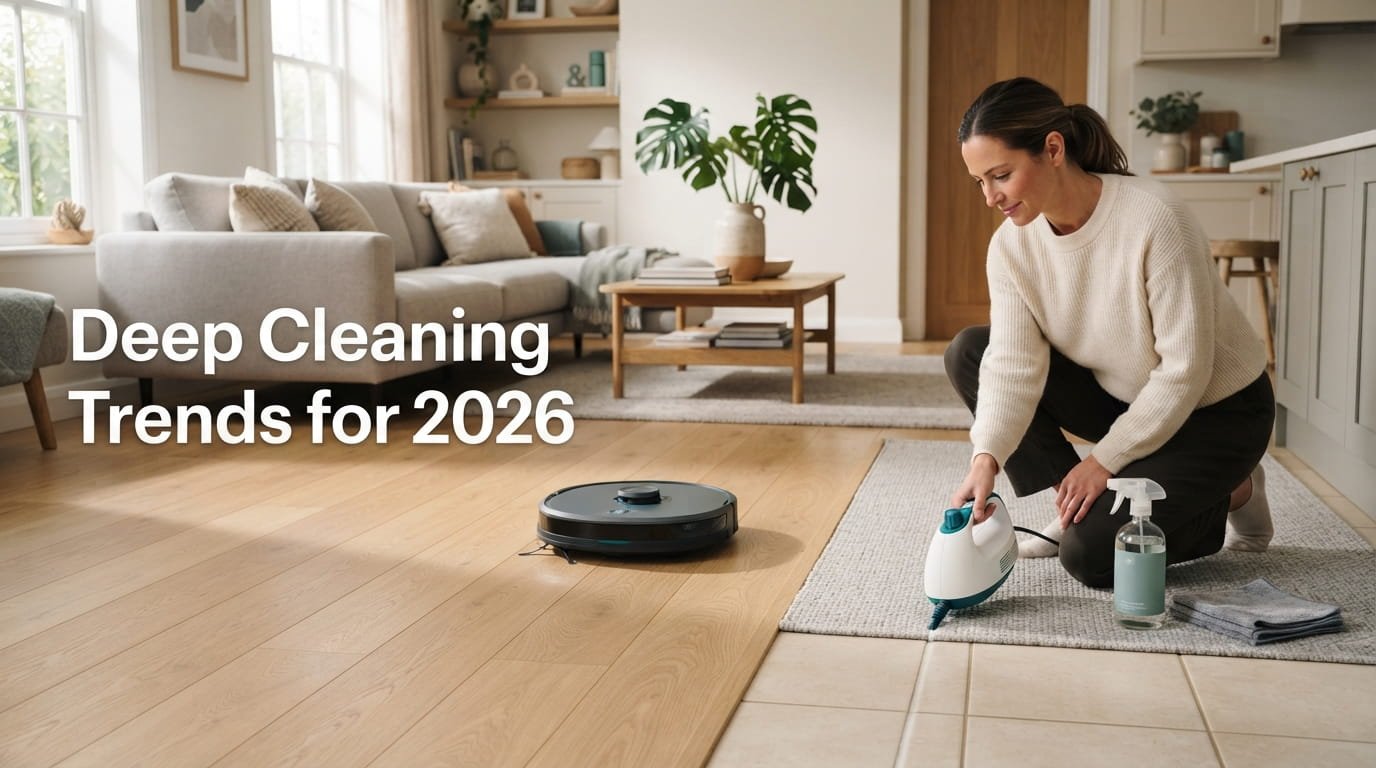
2. A Handheld Steam Cleaner
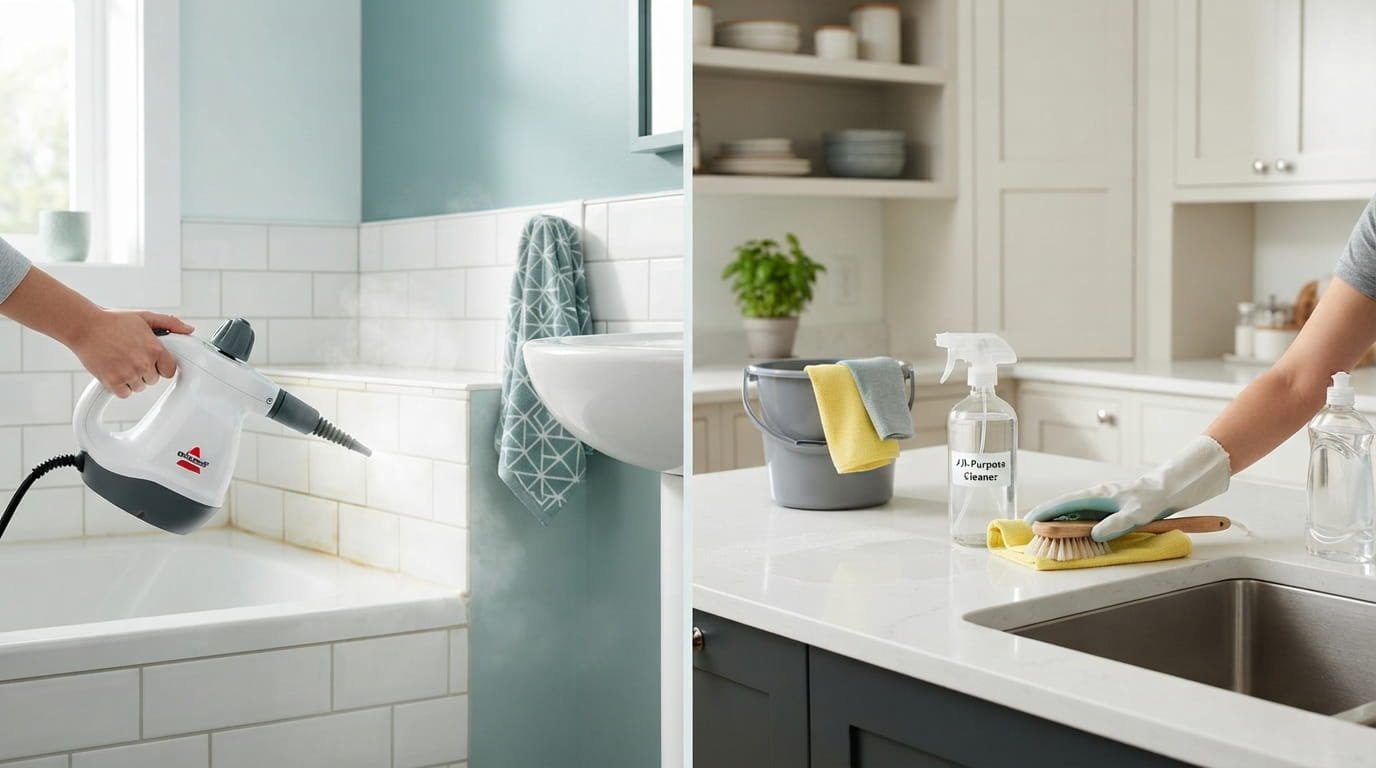
Steam cuts through grease and grime using heat and pressure alone, which means tile, grout, and even upholstery can get a real deep clean without a chemical spray in sight.
| Chemical Spray | Steam Cleaner |
|---|---|
| Leaves residue that needs rinsing. | Lifts grime with heat alone, no residue. |
| Not ideal around kids or pets. | Chemical free, safer for households with both. |
3. Microfiber Cloths in Bulk
A single premium microfiber cloth sounds appealing, but a stack of a dozen cheaper ones means you’re never reaching for a cloth that’s already dirty from the last room.
One good cloth, rewashed mid clean or reused when it’s already grimy.
A dozen on hand, always a fresh one for the next surface or room.
4. An Extendable Duster for Ceiling Fans and High Corners
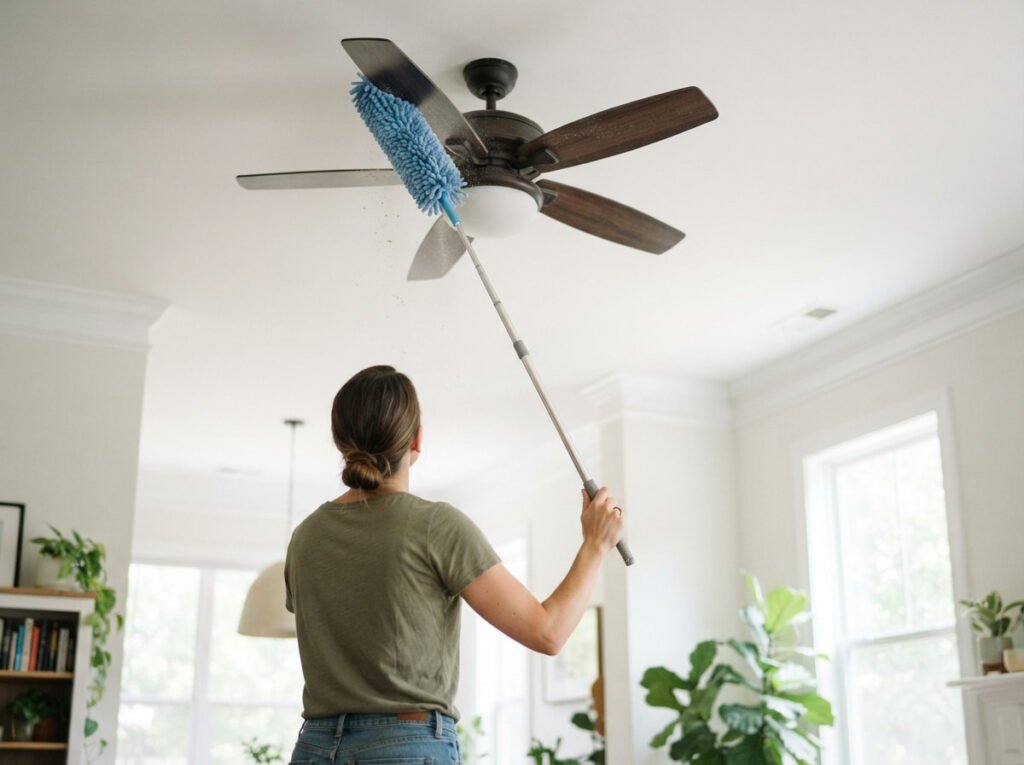
Ceiling fans and the tops of tall cabinets collect dust for years precisely because reaching them safely usually means dragging out a step stool nobody wants to bother with.
💡 Quick Tip
Look for a duster with a bendable head so it can angle onto fan blades instead of just the flat top.
5. A Wet Dry Shop Vacuum
Spilled liquids, flooded basements, and sawdust from a home project all need something a regular household vacuum simply isn’t built to handle.
6. A Squeegee for Glass and Shower Doors
Paper towels leave lint and streaks no matter how carefully you wipe, while a rubber blade pulls water and soap residue off in one clean pass.
- Start at the top corner and pull the squeegee down in one smooth motion
- Wipe the blade dry between passes so it doesn’t drag residue back across
- Overlap each stroke slightly to avoid leaving thin streaked lines
Start at the top corner and pull the squeegee down in one smooth motion.
Wipe the blade dry between passes so it doesn’t drag residue back across.
Overlap each stroke slightly to avoid leaving thin streaked lines.
7. An Enzyme Cleaner for Pet Stains and Odors
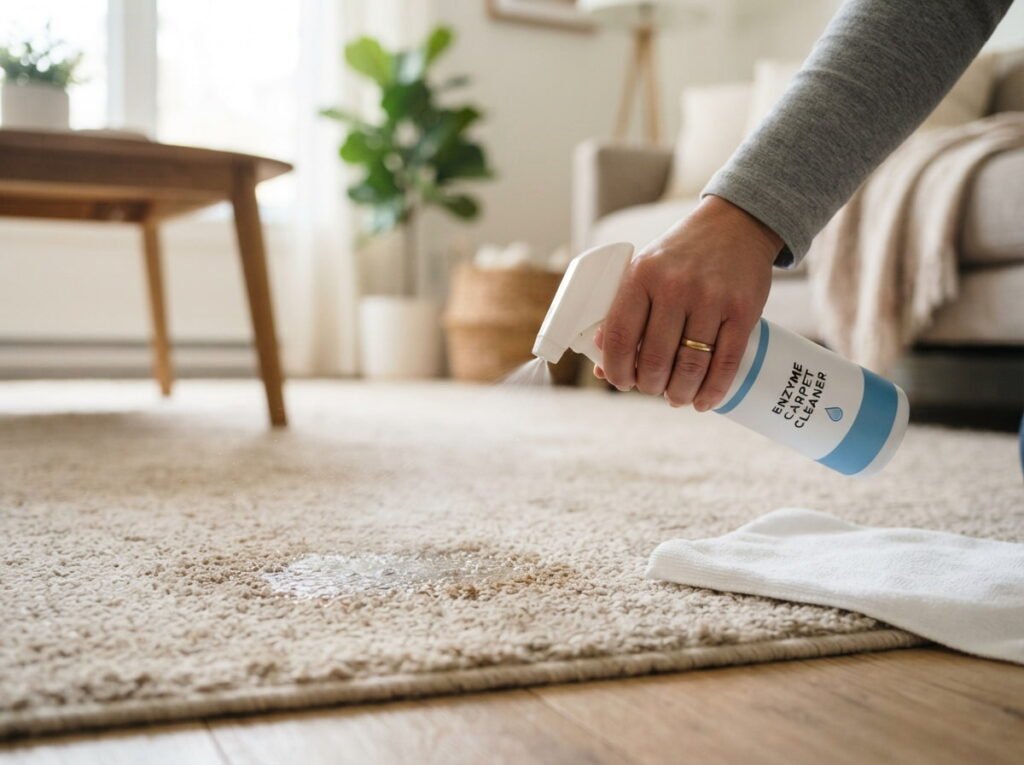
Regular cleaners mask a pet stain’s smell temporarily, while enzyme formulas actually break down the organic material causing the odor in the first place.
Saturate the full stain area, not just the visible surface spot.
Let it sit and air dry so the enzymes have time to work.
Scrubbing it dry right after applying, before it’s had time to work.
Using a regular carpet cleaner and expecting the smell to fully disappear.
8. A Narrow Crevice Vacuum Attachment
Crumbs and pet hair collect in the gaps between couch cushions, along baseboards, and around the edges of appliances, spots a standard vacuum head is simply too wide to reach.
Look for an attachment that fits:
Where it earns its keep
9. A Scrub Brush With a Long Handle for Tubs and Showers
Kneeling over a tub for twenty minutes with a small handheld brush wears out your knees and back on a task that’s already unpleasant to begin with.
Kneeling over the tub for twenty minutes with a small handheld brush.
Standing upright, reaching the full tub with far less strain.
10. A Magic Eraser Style Cleaning Pad
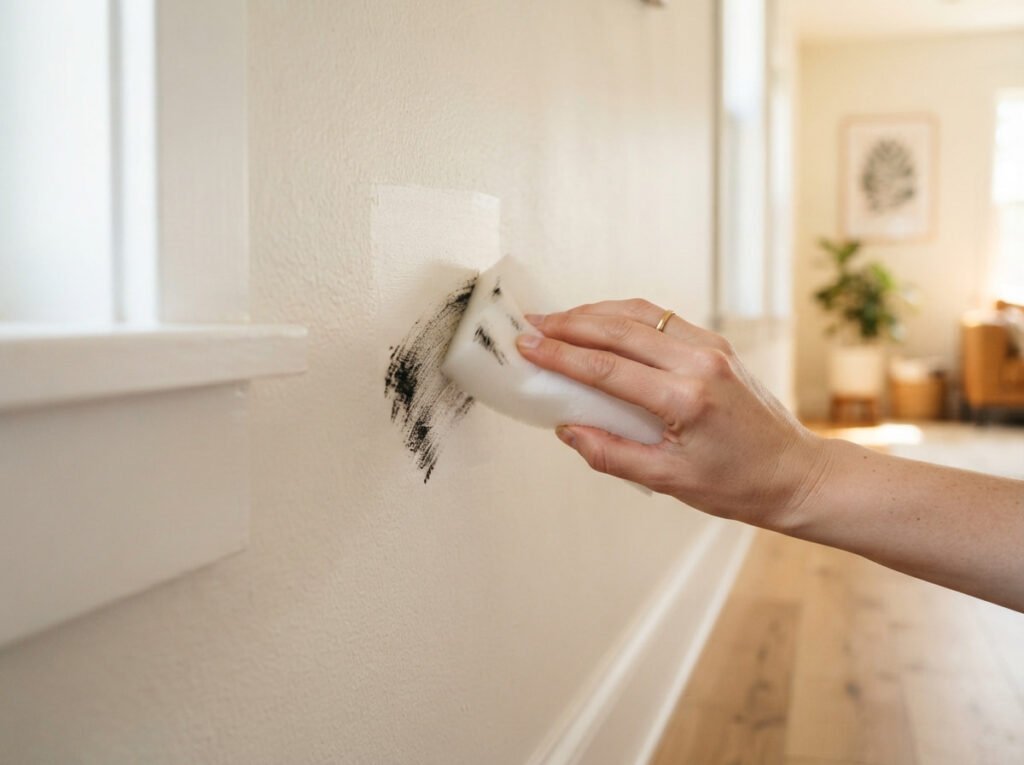
These simple foam pads lift scuffs off walls, baseboards, and painted surfaces that regular sprays and cloths can rub at for minutes without ever fully clearing.
📌 Good To Know
Test a small spot first on painted walls, since these pads can dull glossy finishes with heavy scrubbing.
11. A Dedicated Bathroom Cleaning Brush Set
Using one brush for the toilet, sink, and tub means cross contaminating surfaces that really shouldn’t share the same bristles, no matter how thoroughly you rinse between uses.
Separate brushes for the toilet, sink, and tub keep germs where they belong, not spread between surfaces.
12. A Dryer Vent Cleaning Kit
Most homes don’t own this until a dryer starts taking noticeably longer to dry a load, which is usually a sign the vent is already partially blocked.
⚠️ Watch Out
A clogged dryer vent isn’t just inefficient, it’s a genuine fire risk. This kit is worth owning before the problem starts, not after.
13. A Window Vacuum for Streak Free Glass
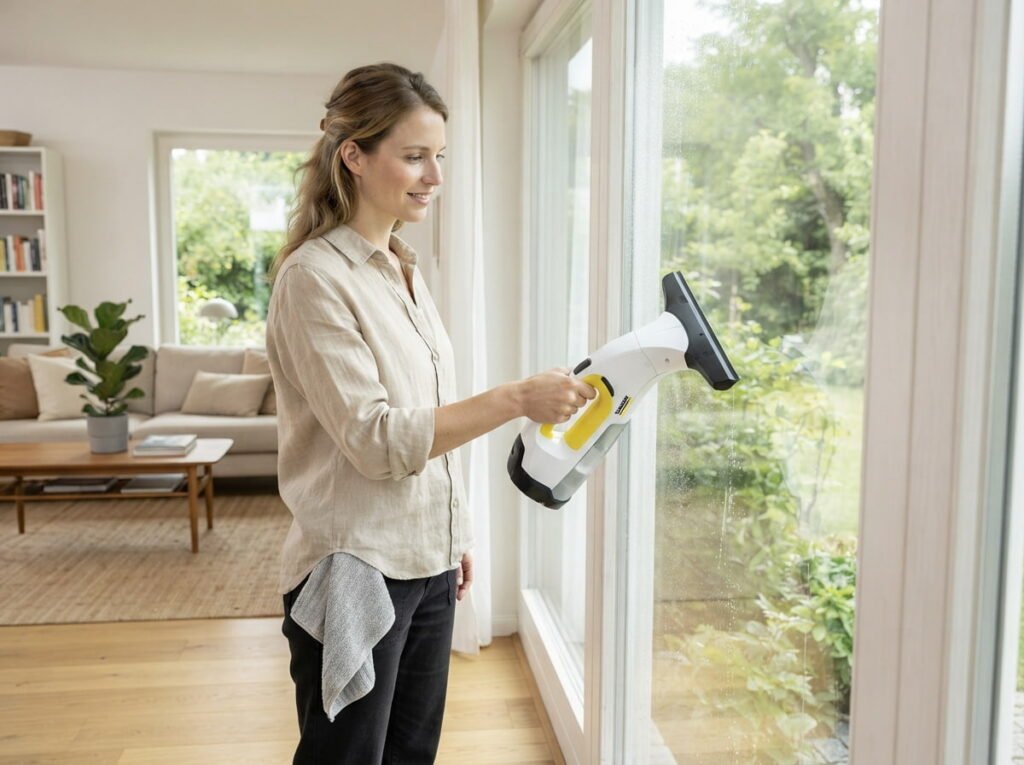
Anyone with a lot of windows knows the specific frustration of a squeegee dripping water down the wall or sill before you can catch it with a towel.
14. A Caddy or Tote to Keep Supplies Organized and Portable
This is the unglamorous tool that makes every other tool on this list easier to actually use, since hunting for scattered supplies wastes more time than the cleaning itself.
Fill it with the basics you reach for most:
What to keep in it
15. A HEPA Filter Vacuum for Allergy Sensitive Households
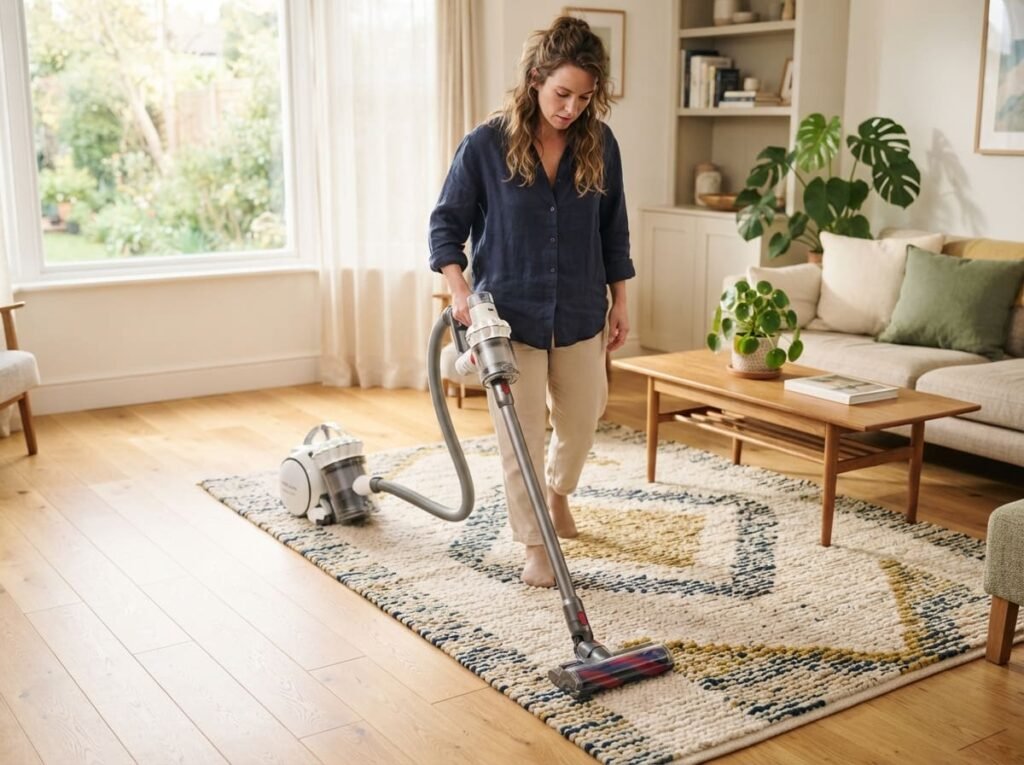
For anyone dealing with allergies or asthma in the house, the extra cost of a HEPA filtration vacuum actually pays off in fewer airborne particles being kicked back up during cleaning.
Conclusion
Most of the best deep cleaning tools aren’t expensive or complicated, they’re just specific. A grout brush shaped for grout, a squeegee built for glass, an enzyme cleaner made to actually break down what’s causing a smell instead of covering it up. None of it requires a full overhaul of your cleaning routine.
Pick the tools from this list that solve the problems your home actually has, rather than trying to own all fifteen at once. The best deep cleaning tools are the ones that get used, not the ones sitting unopened in a closet.
Save this list for the next time a specific mess has you reaching for the wrong tool and getting nowhere..