
Every overwhelmed home has a pile. Maybe it sits on a chair, maybe on the stairs, but everyone in the house knows to walk around it. When things get to that point, the idea of decluttering can feel heavier than the clutter itself, which is why advice like “just tackle one room” so often falls flat.
These decluttering tips for overwhelmed people start much smaller. There are no weekend marathons, no purging everything you own, and no pretending you have energy you don’t have.
Being overwhelmed is usually an energy problem as much as a stuff problem. So the steps here are short, forgiving, and built to be stopped halfway without guilt.
Some items cover how to sort. Others are about how to treat yourself kindly while you do it. Pick the one that feels doable today and let that be enough.
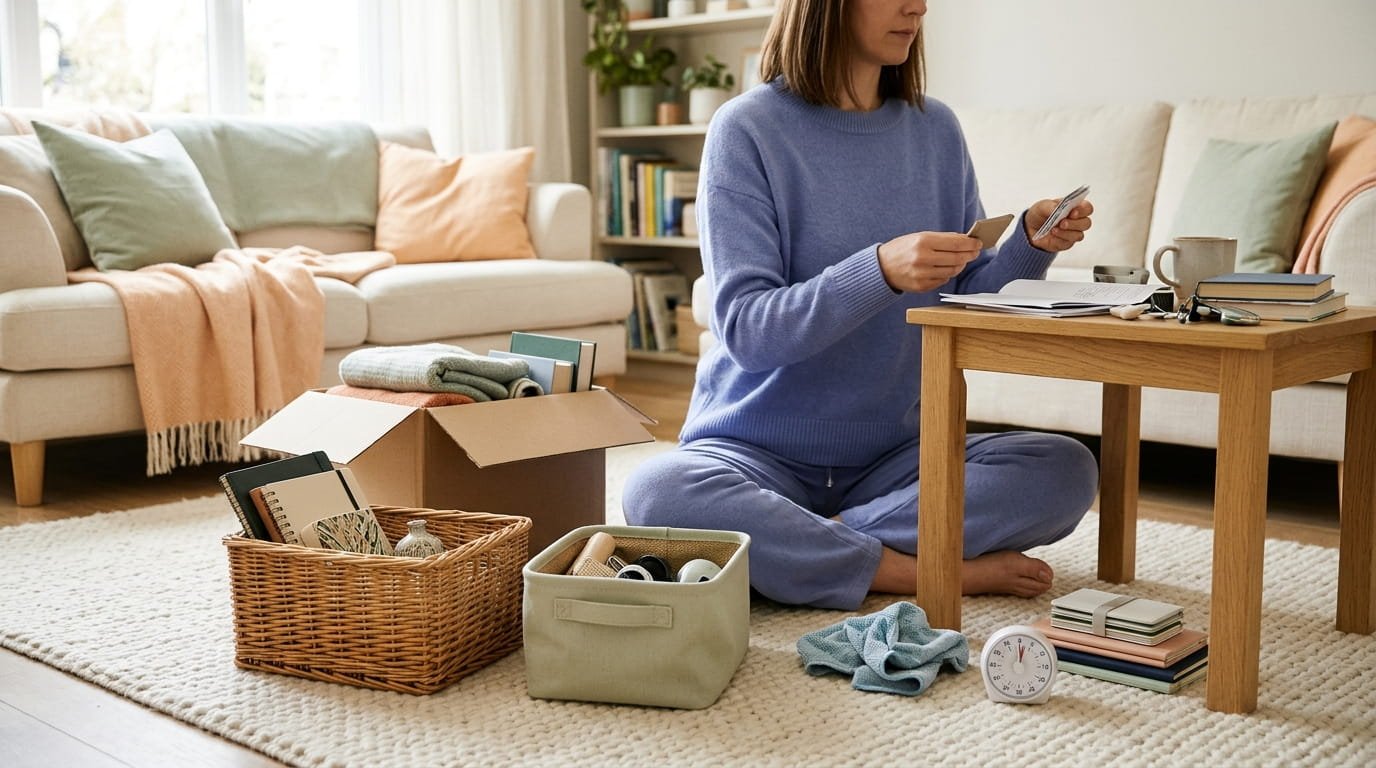
1. Start With a Five Minute Timer, Not a Whole Weekend
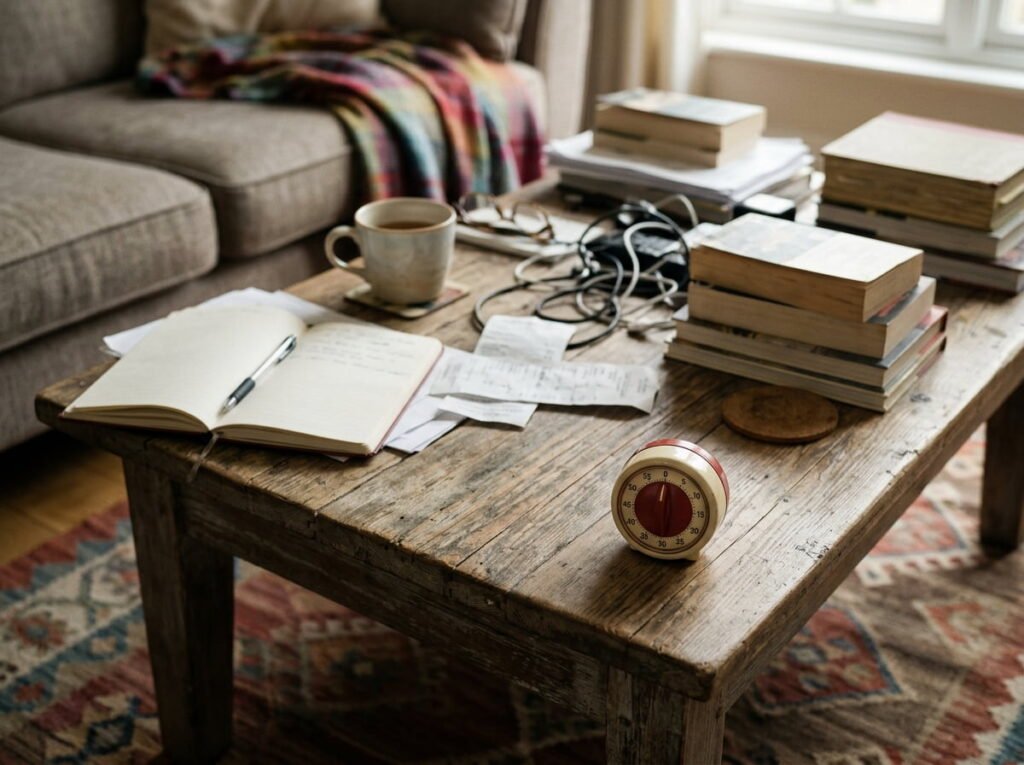
Set a timer for five minutes. When it rings, you’re allowed to stop. That permission is the whole trick, because overwhelm shrinks when a job has a clear edge.
Pick one small task for those five minutes:
- Collect only the obvious trash in a bag.
- Carry stray dishes back to the kitchen.
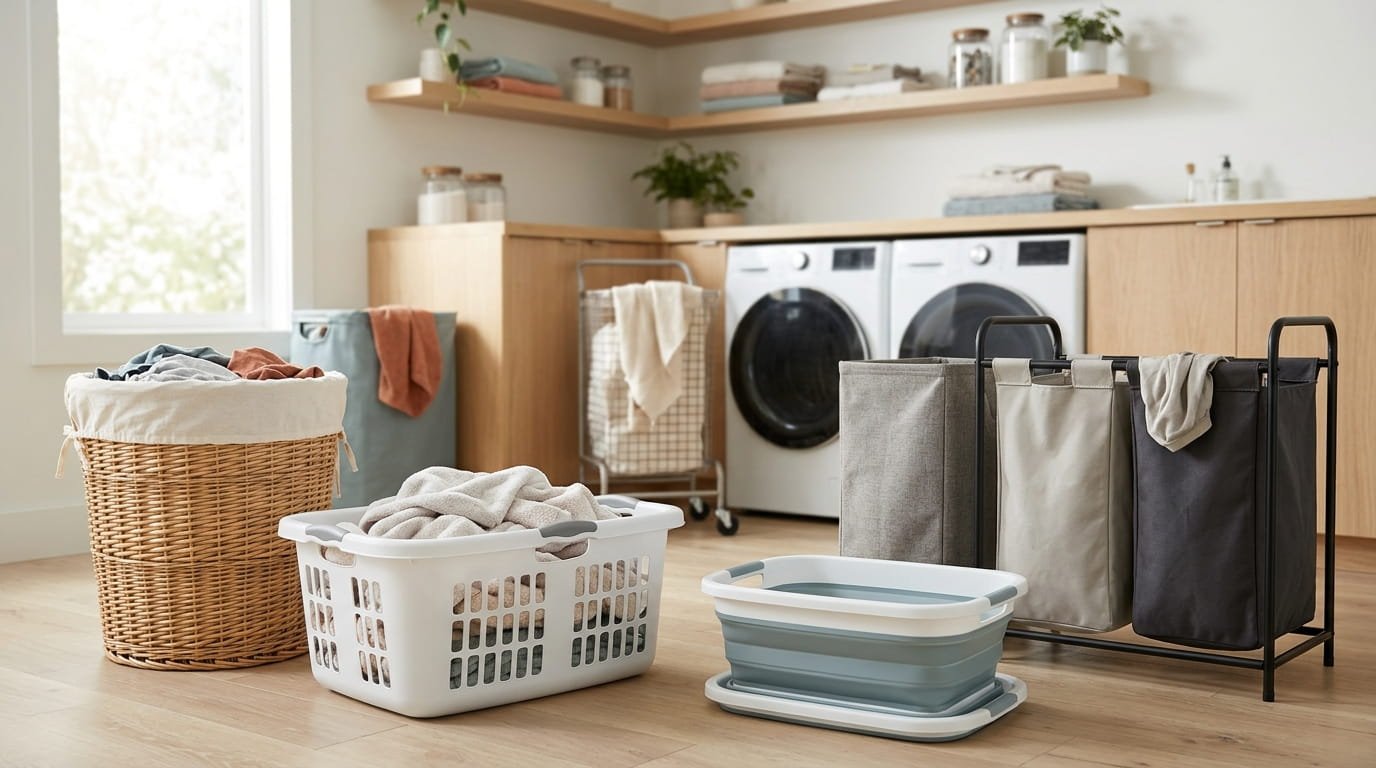
- Gather loose laundry into one basket.
Plenty of people keep going past five minutes, but stopping on time counts as a win too.
2. Pick One Surface, Not One Room
A whole room hides hundreds of tiny decisions. A single surface, like the kitchen table or the top of a dresser, holds maybe twenty. Choose one flat spot and clear only that.
💡 Quick Tip
Choose the surface you see first when you walk in or wake up. One clear spot in your daily line of sight gives your eyes a place to rest.
One cleared surface is proof the rest can change too, and that proof matters more than it sounds.
3. Why Feeling Guilty About Your Stuff Is Normal, and How to Work With It
Guilt shows up in a lot of cluttered rooms. The gift you never used, the craft supplies from a hobby that faded, the clothes from a different job or a different season of life. Feeling bad about them doesn’t make you lazy. It usually means you cared about the plan behind the object.
You can thank an item for what it meant and still let it go.
If the clutter feels tied to grief, burnout, or a low stretch you can’t seem to shake, it’s okay to ask a doctor or counselor for support alongside the tidying. A cleared shelf helps, but you deserve help too.
You can let something go without deciding it was a mistake to keep it.
4. The Three Box Method That Skips the Hard Decisions

Grab three boxes or bags and label them Keep, Donate, and Trash. Every item you touch gets one answer, and no fourth pile is allowed.
Pick up one item and ask only one question: is this trash?
If not, ask whether it already has a home here. If it does, it goes in Keep. If it doesn’t, it goes in Donate.
Put the Donate bag in the car trunk the same day so it actually leaves the house.
Donation bags left by the front door have a way of becoming the new pile.
5. The Mistake of Buying Organizers Before Clearing Anything Out
Bins are tempting when you’re overwhelmed because they feel like progress. But an organizer placed over clutter just gives the clutter a nicer container, and you end up with a bin full of things you never decided about.
Clear out first, then measure what’s left before buying storage.
Reuse boxes and baskets already in the house.
Buying a full set of bins before sorting a single drawer.
Matching your storage to a photo instead of your actual stuff.
Storage works best when it’s sized to what’s left, not to what you hope will fit.
6. Easy Wins First: Trash, Duplicates, and Expired Items
Some things don’t require a single feeling. Empty boxes, dried out pens, expired medicine, and the third can opener all fall into a category where the decision is already made for you. Starting here builds momentum without any emotional cost.
Easy wins to hunt for first
If you take out a full bag of obvious trash, the room already looks different, and that shift gives you something real to build on.
7. A Gentle Rule for Sentimental Items
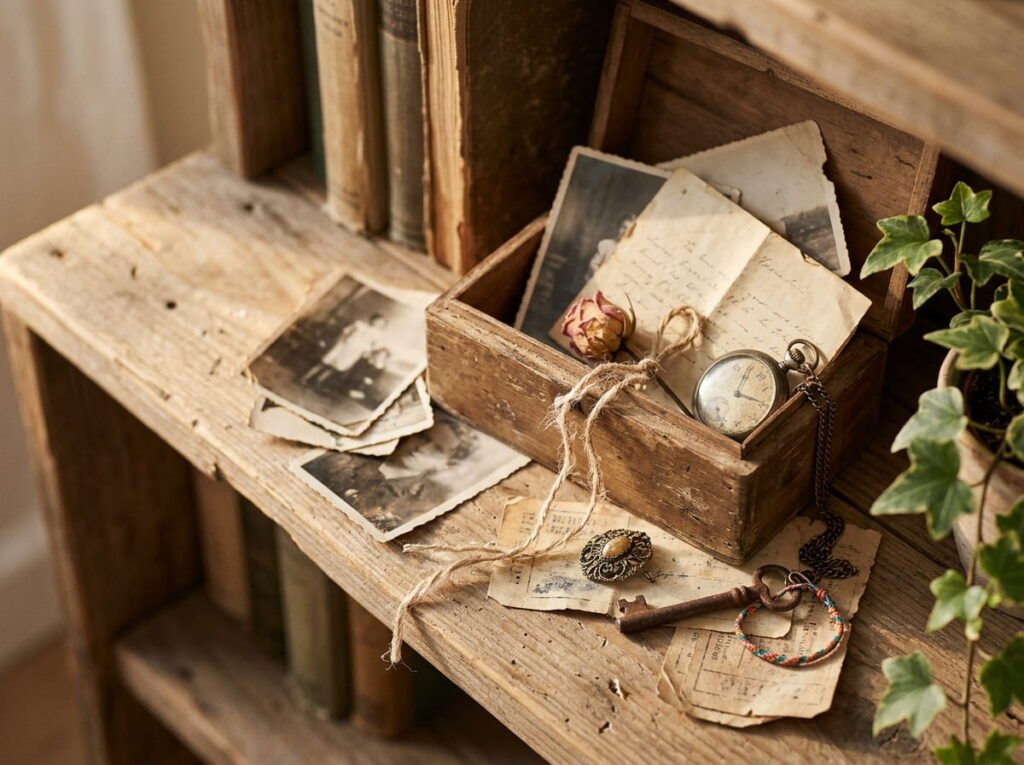
Sentimental things are the hardest because they carry people and time with them. So skip them at first, and when you’re ready, use a small rule: keep the best few and let the rest go with a photo.
Three boxes of cards, kids’ drawings, and keepsakes stacked in a closet.
One small memory box of favorites, with photos of the rest saved on your phone.
Give yourself permission to come back to this later. There’s no rule that says sentimental items have to go on the first day.
8. A Maybe Box With a Deadline Versus Deciding on the Spot
Some people freeze when asked to decide on every item. A maybe box takes the pressure off, but only if it has a date attached, since an open ended maybe box turns into another storage corner.
| Deciding on the Spot | Maybe Box With a Date |
|---|---|
| Faster, but can feel stressful or rushed. | Slower, but takes the pressure off in the moment. |
| Works well when most items are clear calls. | Works well when you freeze on every choice. |
Write a date on the box a month out. If you haven’t opened it by then, the contents have already answered the question for you.
9. Clearing a Walking Path First So the Room Feels Livable Fast
When a room is crowded, the first goal isn’t tidy, it’s passable. Clearing a clear lane from the door to the bed, the couch, or the window changes how the whole space feels, even if everything else stays put.
Everything you move off the path can sit in a laundry basket for now. Sorting it can wait for another day.
10. A Stop Rule for the Days Your Energy Runs Out
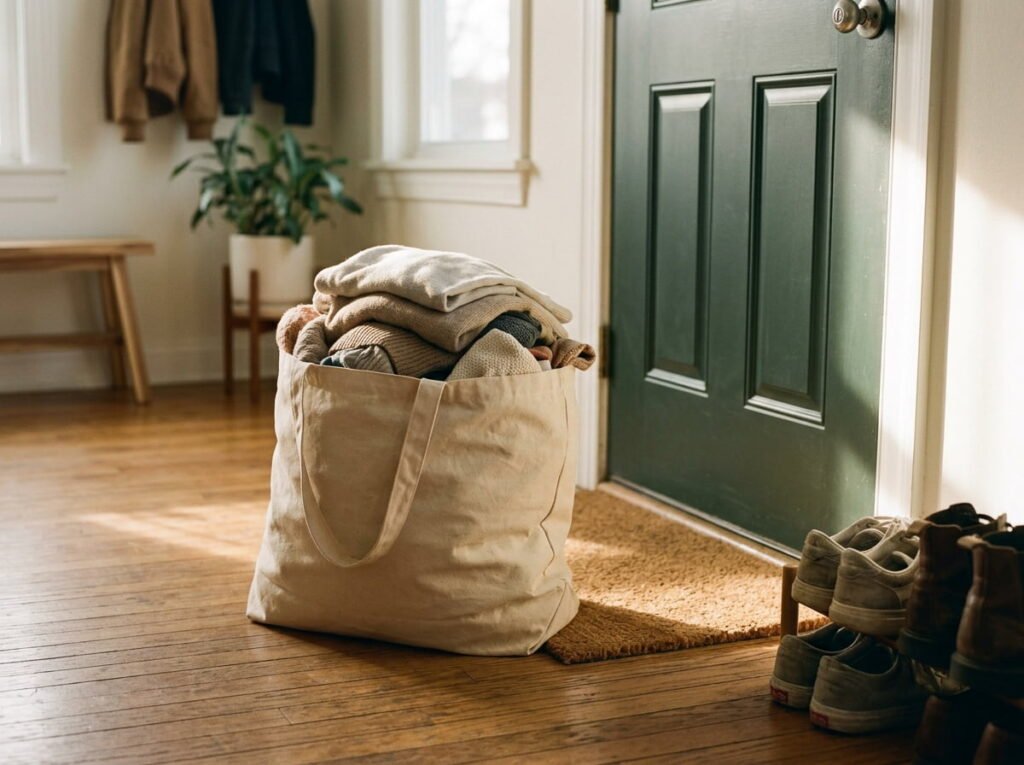
Pushing through exhaustion usually backfires, because the next day you’ll avoid the whole project. Decide in advance what a good stopping point looks like, so quitting doesn’t feel like failing.
💡 Quick Tip
End each session by putting every sorted item where it belongs, then leave one bag by the door for the next day. Stopping with a clean edge makes it easier to start again.
A tidy stopping point matters more than a long session, since it’s what keeps you coming back.
11. Asking a Friend to Sit With You Without Taking Over
Some people clear a space faster with company, but only if the friend knows the job. A good helper holds the bags, keeps you moving, and never decides for you. A bad one tosses things while you’re in the next room.
Tell your helper the rules before they arrive:
- You make every keep or toss call, no exceptions.
- They can ask questions, but not hold things up and wait for an answer.
- You’ll stop after an hour, even if the room isn’t done.
- ▸Choose someone who won’t judge the state of the room.
- ▸Give them a simple job, like holding the donate bag or carrying boxes out.
- ▸Plan something easy afterward, like tea or takeout, so the session ends warmly.
If no one is available, a podcast or favorite playlist can give you some of the same steady company.
12. A Gentle One In, One Out Rule
Once a space is clear, a small rule keeps it that way. When something new comes in, something similar goes out. No big overhaul, just a quiet balance.
Start with clothes and shoes, where the swap is easiest to see, and extend it to other categories only if you want to.
13. Handling the Paper Pile Without Reading Every Page
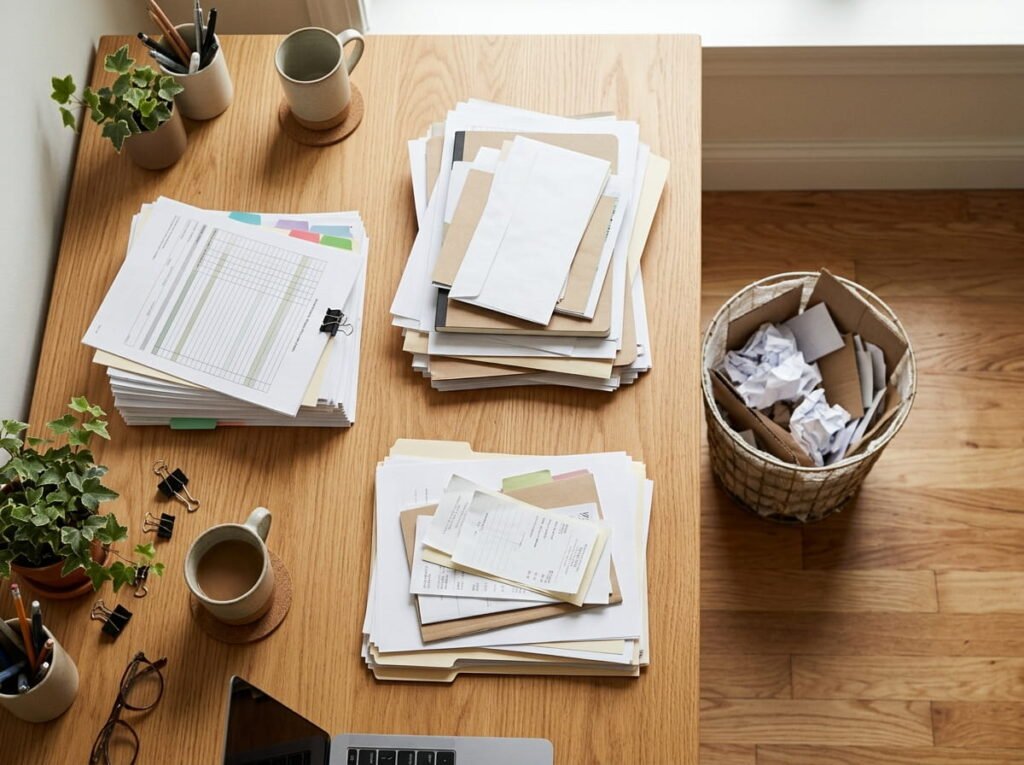
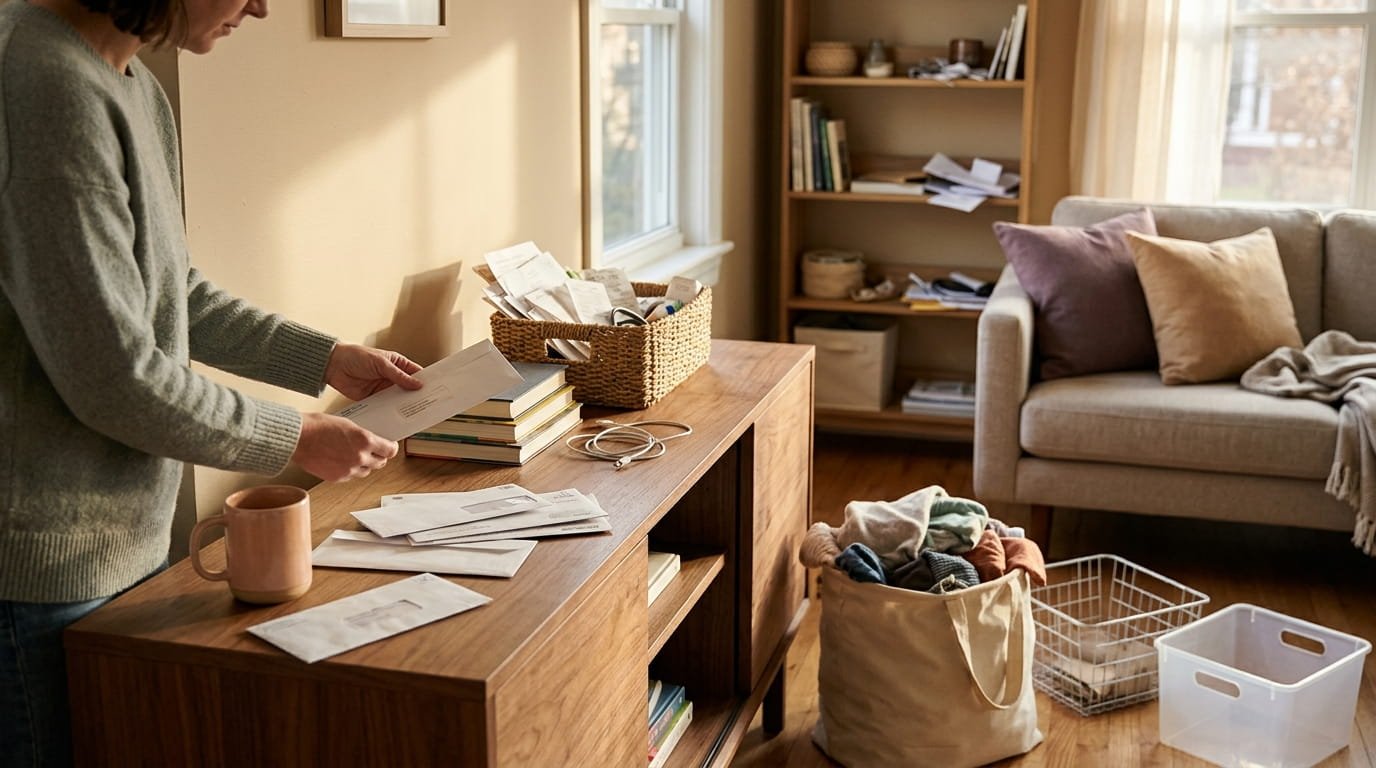
Paper is hard because each sheet looks like it might matter. The way through isn’t reading everything, it’s sorting by action. Make quick piles first, and look closely only at the one that needs it.
Quick paper sort
Rules about how long to keep documents vary, so check an official source for anything involving taxes or legal matters before shredding.
14. What to Do When Clutter Creeps Back Within a Week
Clutter returning doesn’t mean the effort was wasted. It usually means a few spots lacked a clear home, so things drifted there by habit.
Notice which spot filled back up first and give it a landing tray or hook.
Treat it as information, not a verdict on your effort.
Deciding you’re hopeless because a pile reappeared.
Starting over from scratch instead of fixing the one weak spot.
One hook by the door often stops the coat and bag pile for good, while a basket near the stairs catches the stuff that needs to go up.
15. A Tiny Daily Reset That Keeps the Calm Going
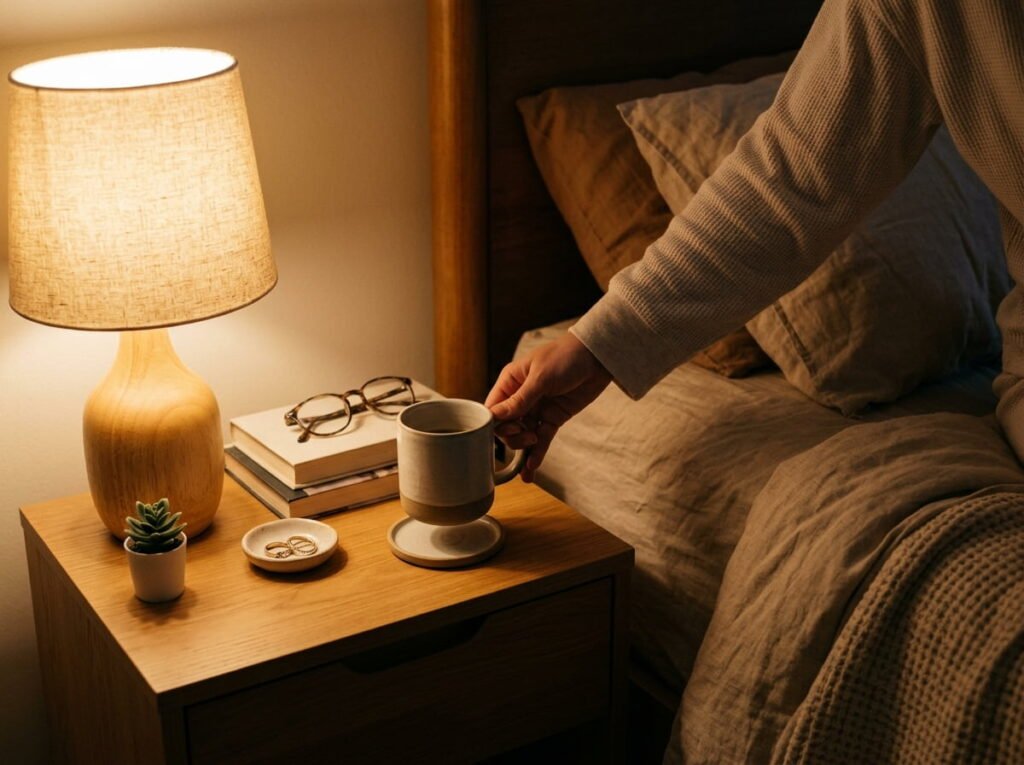
Maintenance works best when it’s smaller than your excuses. A two minute reset before bed or after dinner keeps the pile from forming again without turning into another big job.
Two minutes a day beats a three hour rescue every month.
Pick one anchor, like after brushing your teeth or while the coffee brews, and clear whatever surface sits in front of you. That’s the whole routine.
Conclusion
Decluttering tips for overwhelmed people really come down to making the job smaller and kinder. A five minute timer, a single surface, and a stop rule you decided on ahead of time are often enough to get things moving, and none of it requires a perfect plan or a free weekend.
Progress here doesn’t need to look dramatic. One cleared chair, one donate bag in the trunk, and one calm corner you can rest your eyes on all count. Come back whenever you have a little energy, and if the weight of it feels bigger than the stuff itself, reaching out for support is a good next step too.
Save this list of decluttering tips for the next time the pile feels loud, and start with whichever step feels easiest today.