Allergies rarely come from one dirty spot. They come from a handful of specific triggers scattered across the house, the mattress you sleep on, the vents pushing air around, the rug that traps everything walked in from outside. A regular tidy up misses most of it because dust, dander, and pollen settle into places a normal wipe down never reaches.
Deep cleaning for allergies works better when you stop thinking room by room and start thinking trigger by trigger. Dust mites live in fabric. Pet dander clings to upholstery and air currents. Mold needs moisture. Each one has a different fix, and going after the actual source beats a general cleaning pass every time.
This list breaks down fifteen specific moves organized by what’s actually causing the reaction, not which room it happens to sit in. Work through the ones that match your biggest triggers first, then circle back for the rest.
None of this replaces medical care if your symptoms are severe, but it can meaningfully cut down what you’re breathing in every day.
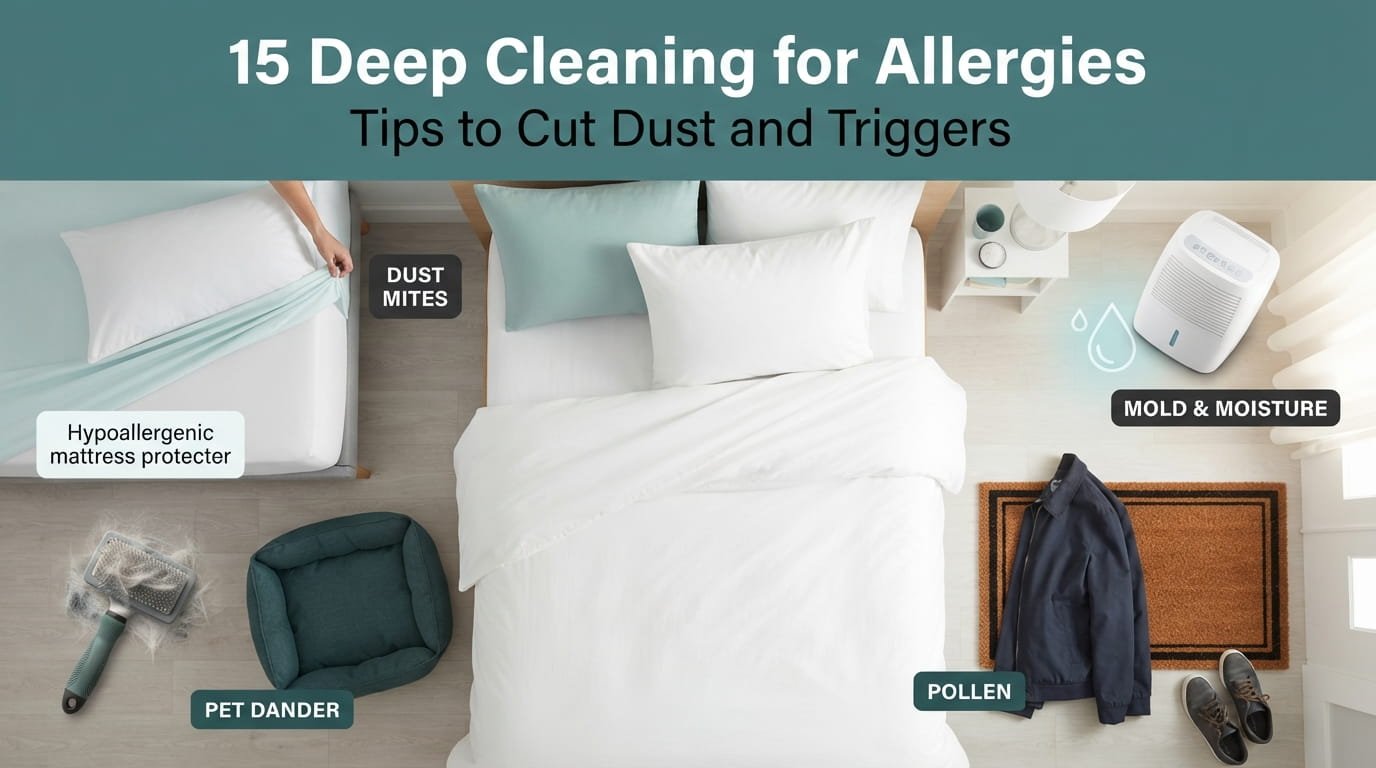
4 Allergy Triggers, 4 Different Fixes
Dust Mites
Hide in bedding & fabric
Hot water at 130°F or higher is the only wash that actually kills them.
Pet Dander
Travels through air & upholstery
Brushing outside on a schedule removes more than baths alone ever will.
Pollen
Rides in on hair, skin & clothes
A shower before bed during high pollen weeks keeps it off the pillow entirely.
Mold & Mildew
Needs moisture, not dirt
A dehumidifier in damp rooms does more than scrubbing ever can on its own.
1. Start With a Trigger List Instead of a Room List

Before touching a single surface, figure out what you’re actually reacting to. Someone with a dust mite issue and someone with a pet dander issue need to attack completely different spots first.
- Dust mites: bedding, mattresses, upholstered furniture
- Pet dander: fabric surfaces, air currents, carpets
- Pollen: entry points, laundry, open windows
- Mold and mildew: bathrooms, basements, anywhere damp
Circle your top two triggers before moving to the next section. That’s what decides where you start.
Know your triggers first
2. Encase Your Mattress and Pillows in Allergen-Proof Covers
A mattress collects dust mite waste for years without anyone noticing, since the mites themselves live inside the fabric where a vacuum never really reaches.
Allergen-proof covers zip completely around the mattress and pillows, sealing that layer off from the air you breathe all night. Wash the covers themselves every couple of months to keep them working the way they’re supposed to.
This is one of the few changes that keeps working every single night without any extra effort after the initial setup.
An exposed mattress collecting dust mite waste every night, invisible and untouched.
A sealed barrier between you and the mattress fabric, working while you sleep.
3. Wash Bedding in Hot Water Every Week, Not Every Season
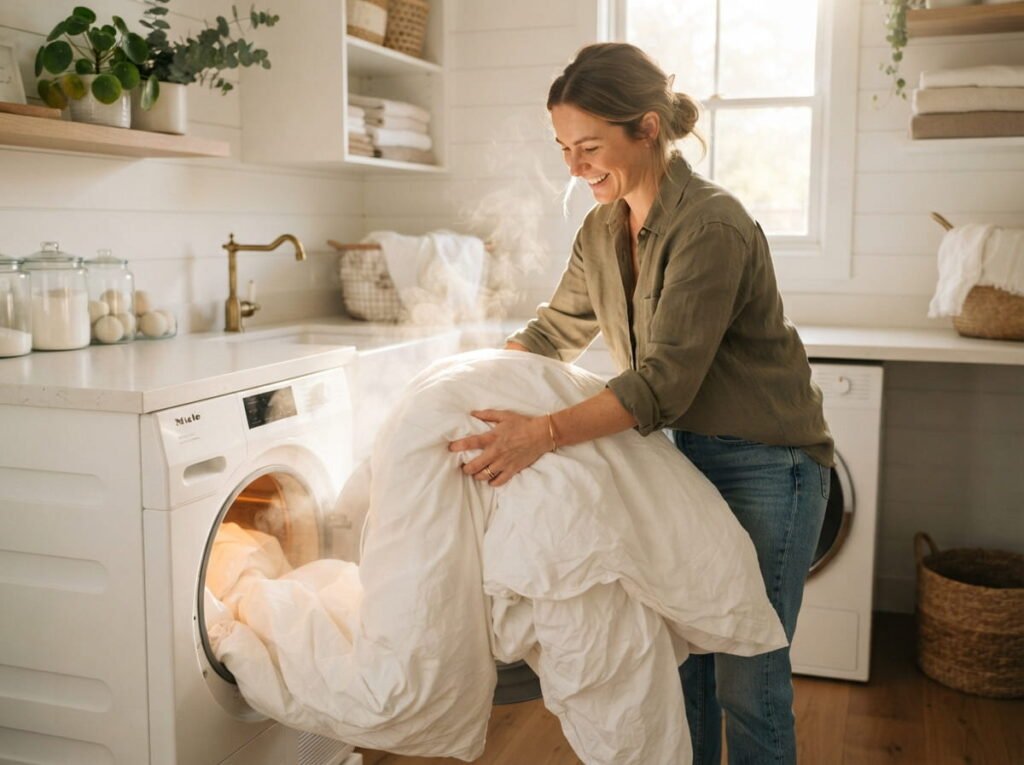
Dust mites don’t survive a hot water wash, but they do survive a cold one, which is the part most laundry routines get wrong without realizing it.
Wash sheets, pillowcases, and any blanket that touches your face weekly in water at least 130 degrees Fahrenheit. Dry on high heat too, since the heat matters more than the detergent here.
💡 Quick Tip
If a fabric can’t handle hot water, run it through the dryer on high heat for at least twenty minutes instead. Heat does the real work either way.
4. Vacuum With a HEPA Filter, or the Dust Just Goes Right Back Into the Air
A regular vacuum without a HEPA filter can make allergies worse, not better, because the smallest dust particles pass straight through the filter and back into the room you just cleaned.
A HEPA filter traps particles too small to see, keeping them in the canister instead of recirculating through the air you breathe right after vacuuming.
Check for a true HEPA filter before buying or using a vacuum.
Empty the canister outside, not indoors.
Using a bagless vacuum with no filter rating listed.
Vacuuming with windows closed and no ventilation.
5. Brush and Bathe Pets on a Schedule That Actually Cuts Dander
Dander isn’t fur, it’s flakes of dead skin, which means brushing your pet outside can remove a real amount of it before it ever settles on your couch.
- Brush outside two to three times a week with a dander-reducing brush
- Bathe every four to six weeks using a pet-safe shampoo
- Wipe paws and coat with a damp cloth after time outdoors
Skipping the brushing step and relying on baths alone leaves most of the loose dander right where it started.
Brush outside so loose dander doesn’t just transfer to your floor.
Bathe on a set schedule instead of only when it seems needed.
Wipe down after outdoor time to catch pollen too, not just dander.
6. Keep Pets Off Fabric Furniture, or Cover What They Touch

Fabric couches trap dander the same way carpets do, holding onto it far longer than a hard surface ever would.
A washable throw over the pet’s favorite spot gives them somewhere to be without dander working straight into the couch fibers. Wash it weekly in hot water, same as bedding.
7. Change Clothes and Shower After Time Outside During Pollen Season
Pollen doesn’t stay outside once you walk back in. It rides in on hair, skin, and clothing, then slowly transfers to pillows and furniture over the course of an evening.
- Change clothes as soon as you’re back inside
- Rinse hands and face at minimum
- A full shower before bed keeps pollen off the pillow entirely
Skipping this step is one of the quiet reasons symptoms often feel worse specifically at night.
- ▸Change clothes right at the door if you can.
- ▸Rinse exposed skin even on a quick trip outside.
- ▸Shower before bed during high pollen weeks specifically.
8. Keep Windows Shut and Let Filtered Air Do the Work Instead
Fresh air feels like the healthy choice, but during pollen season an open window lets in exactly what you’re trying to avoid.
During high pollen weeks, a closed window and a good air filter beats a fresh breeze every time.
Run the air conditioning or an air purifier instead, and check the filter rating to make sure it’s actually built to catch small particles rather than just dust.
9. Run a Dehumidifier in Any Room That Stays Damp
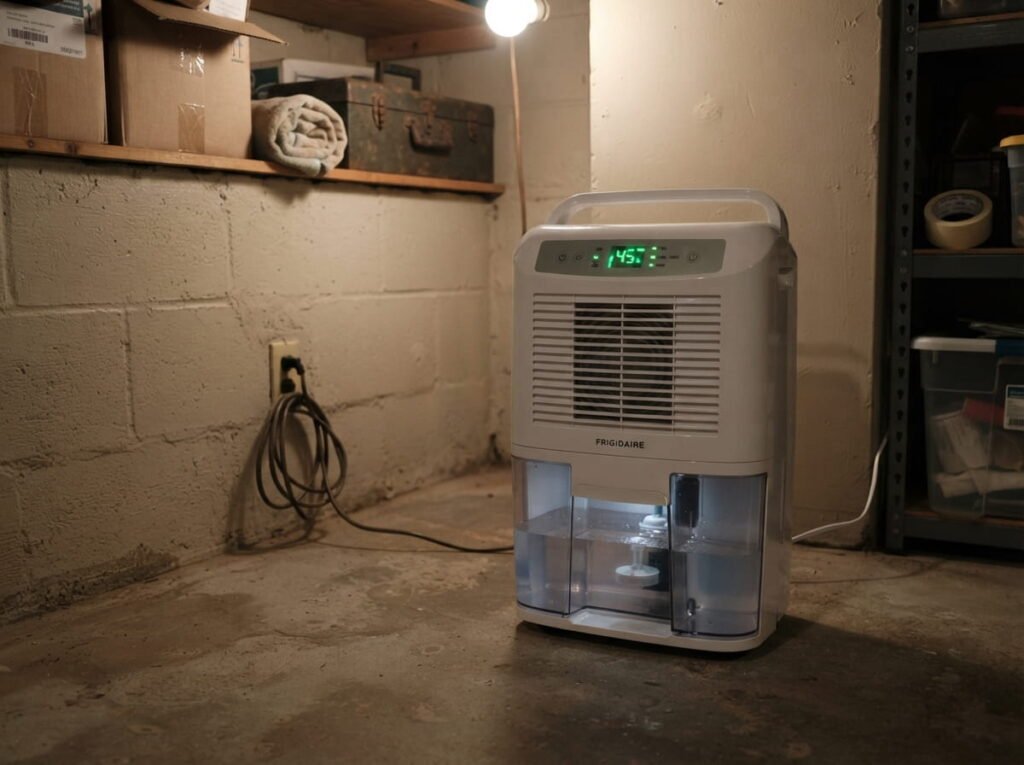
Mold needs moisture to grow, so the fastest way to slow it down has nothing to do with scrubbing and everything to do with the air itself.
| Damp Room | Dehumidified Room |
|---|---|
| Musty smell that never fully airs out | Air feels noticeably lighter and fresher |
| Condensation on windows and mirrors | Surfaces stay dry throughout the day |
Empty and clean the dehumidifier tank weekly. A neglected tank can grow its own mold, which defeats the entire purpose of running it.
10. Scrub Visible Mold the Moment You Spot It, Don’t Wait
A small patch of mold in the shower corner looks minor, which is exactly why it usually gets ignored until it spreads across the whole grout line.
- Bathroom caulk and grout, especially near the tub
- Windowsills, where condensation collects overnight
- Under sinks, behind anything that’s ever leaked
11. Swap Heavy Curtains for Washable Blinds or Shades
Heavy fabric curtains trap dust in a way that’s easy to forget about, mostly because they hang out of reach and rarely get pulled down for a real wash.
- Look for blinds or shades labeled machine washable or wipe clean
- Faux wood and vinyl options handle a damp cloth well
- If you love the look of curtains, choose a lightweight fabric you’ll actually wash monthly
Whatever you choose, the test is simple. Can you clean it without pulling it off the rod.
What to look for
12. Choose an Air Purifier Placement That Actually Works
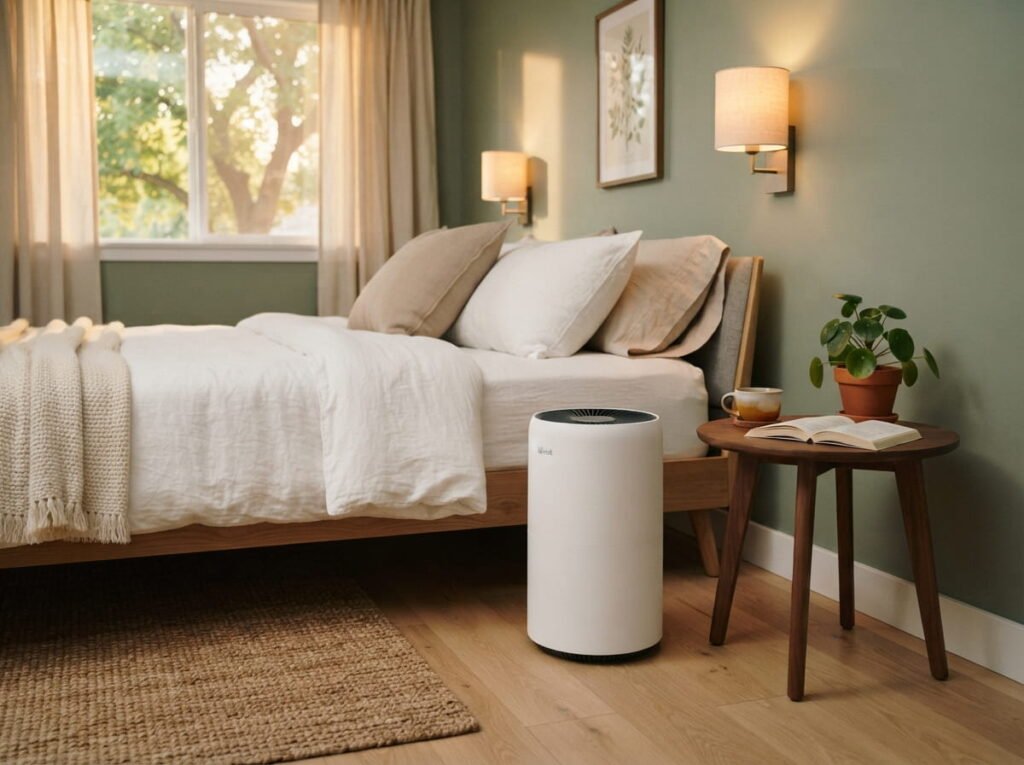
Most air purifiers get pushed into a corner behind furniture, which quietly cuts how much air actually moves through the filter.
Placement changes performance more than most people expect. A unit boxed in by a couch or a wall pulls in far less air than one with open space around it.
Pushed into a corner, boxed in by furniture on two sides.
A few feet of open space on every side, near where you actually sit or sleep.
13. Declutter Surfaces So Dust Has Fewer Places to Land
Every extra item on a shelf or dresser is another surface dust settles onto, and clutter usually means those surfaces get wiped far less often than open ones.
- Clear one surface completely and wipe it down
- Sort what was on it into keep, relocate, or toss
- Only put back what you’ll actually use or genuinely want displayed
Fewer objects means fewer edges and corners for dust to collect in between cleanings.
Clear the surface fully before deciding what stays.
Sort honestly instead of putting everything right back.
Keep only what earns its spot on a surface you’ll dust weekly.
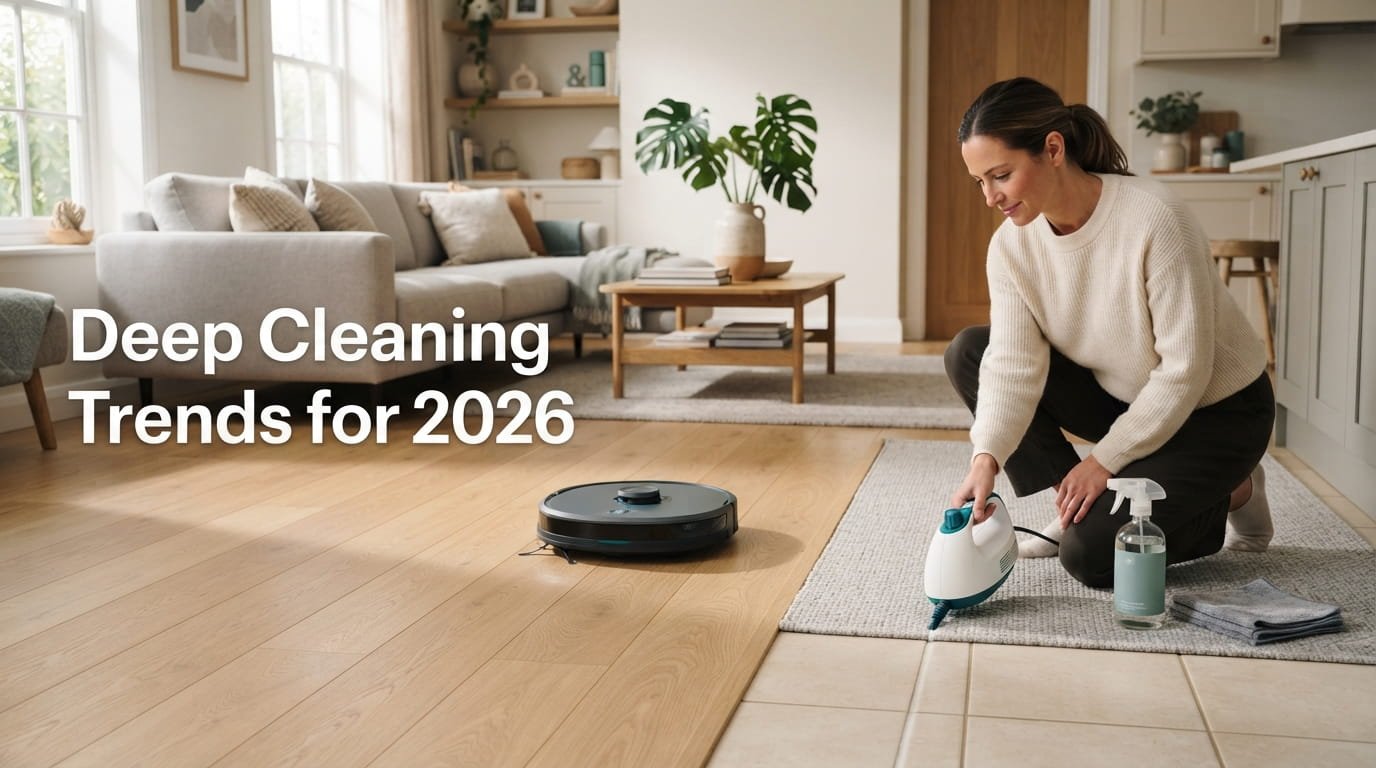
14. Steam Clean Carpets and Rugs on a Real Schedule
Carpet holds onto dust mites, dander, and pollen more than any other surface in the house, mostly because vacuuming alone only lifts what’s sitting near the top.
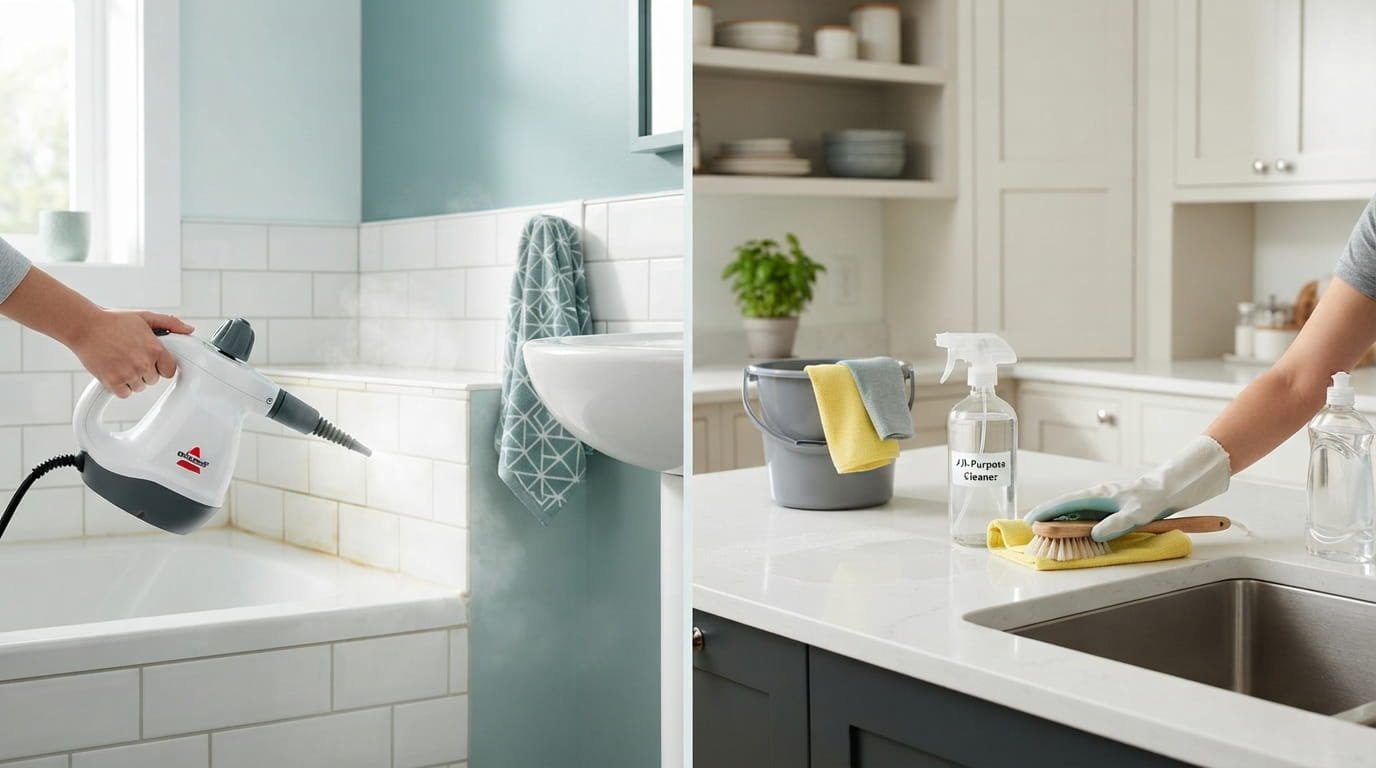
Steam reaches down into the fibers where vacuuming alone can’t, and higher heat helps knock back what’s built up there over time.
15. Build a Weekly Five Minute Reset So Allergens Don’t Rebuild

None of this stays fixed forever. Dust and dander rebuild constantly, which is why a single deep clean fades within a few weeks if nothing follows it.
Pick one small task and do it every week without fail, whether that’s washing bedding, wiping the air purifier filter, or vacuuming the pet’s favorite spot. A tiny weekly habit protects everything the bigger deep clean already fixed.
💡 Quick Tip
Put the reset on the same day every week, like Sunday laundry. A fixed day keeps it from quietly slipping for months at a time.
Conclusion
Cutting down allergens in a home comes down to knowing what you’re actually fighting. Dust mites need heat to die off, dander needs regular brushing and washing, pollen needs a shower before bed, and mold needs dry air more than it needs scrubbing. Deep cleaning for allergies works best when each fix targets the real cause instead of just tidying the surface.
Start with your top two triggers and build from there. The small weekly habit matters just as much as the big deep clean.
Save this list for the next time your allergies flare up and you’re not sure where to start.