Your kitchen looks clean until you pull out the trash can and see what’s underneath it. That gap between looking clean and being clean is where most deep cleaning checklists fall apart. They tell you to wipe the counters and mop the floor, then call it done, while the washing machine drum, the vent covers, and the mattress you sleep on every night go untouched for years.
This isn’t about scrubbing harder. It’s about knowing which spots actually collect grime, oil, and bacteria while staying invisible during a normal cleaning day. A solid deep cleaning checklist covers those blind spots on purpose, not by accident.
Below are 15 tasks that get skipped in almost every home, even ones that look spotless. Some take five minutes. Others need an afternoon. None of them require anything you don’t already own. Save this list, because chances are you’ll want to come back to task 9 after you check your own trash can.
5 Places Grime Hides in a “Clean” Home
The smell is in the can
A fresh liner just hides it — rinse the trash can itself with hot, soapy water.
Appliances don’t clean themselves
Washing machines and dishwashers trap residue deep inside — give them a monthly reset cycle.
Dust hides in plain sight
Fridge coils, vents, and ceiling fans quietly recirculate dust for months at a time.
Touched daily, cleaned never
Light switches, door handles, and remotes carry more germs than the surfaces you actually scrub.
Under and behind matters most
Furniture, rugs, and window tracks trap moisture and grit that never gets fresh air.
Tap a card to pause
1. The washing machine drum and gasket that’s actually making your clothes smell
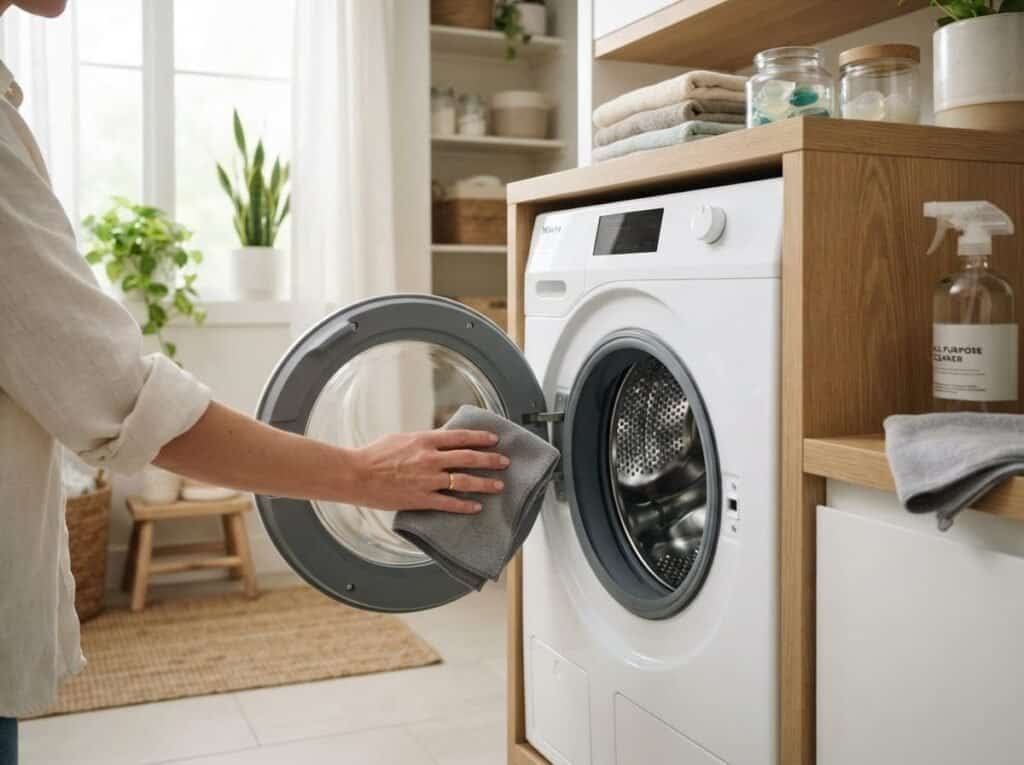
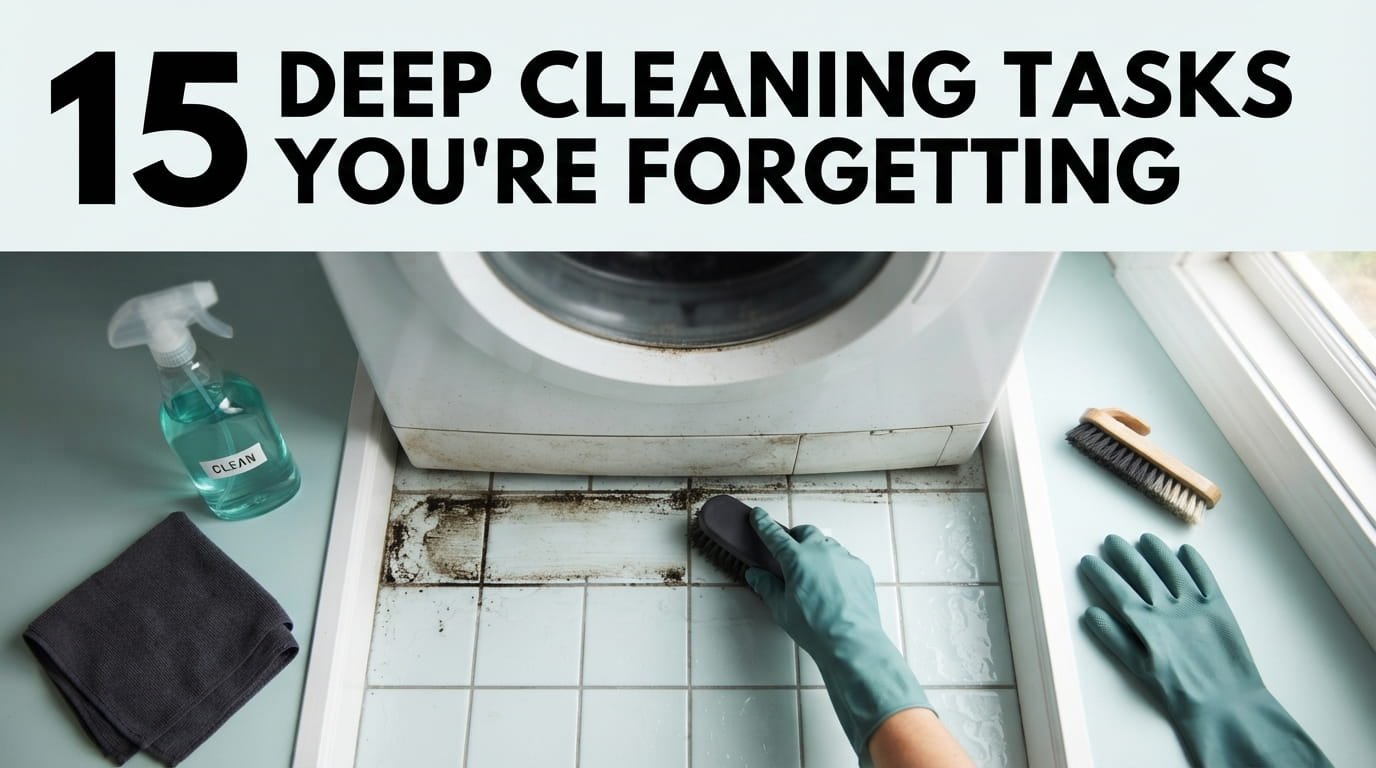
Your washing machine cleans everything except itself. Detergent residue, fabric softener film, and trapped moisture build up in the drum and rubber gasket, especially on front loaders, until your “clean” laundry comes out smelling faintly sour.
Run an empty hot cycle with a cup of white vinegar once a month, then wipe the rubber gasket dry after every wash. Leave the door cracked open between loads so it can actually dry out instead of sitting damp for days.
2. The dishwasher filter almost no one has ever removed
Most dishwashers have a removable filter sitting at the bottom of the tub, usually a twist off cylinder or a flat mesh screen. Food particles, grease, and small bits of glass or bone can pack into it over months, which is why dishes sometimes come out cloudy or still smell off even on the sanitize setting.
Twist it out, rinse it under hot water, and scrub it with an old toothbrush if buildup has hardened. Check your manual for the exact release mechanism since it varies by brand.
💡 Quick Tip
If the filter has hardened grease stuck to it, soak it in hot water with a splash of dish soap for 15 minutes before scrubbing.
3. Behind and under the fridge, where the real dust lives
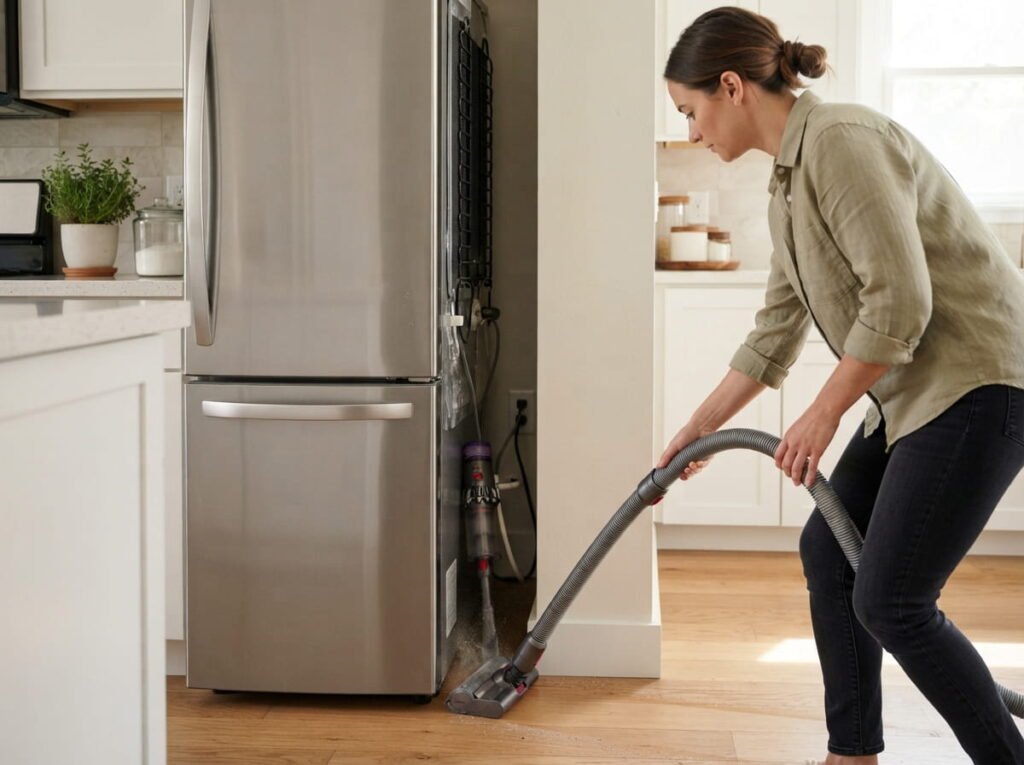
Pull your fridge away from the wall and you’ll usually find a layer of dust thick enough to see from across the room, tangled around the condenser coils on the back. That dust blocks airflow, which makes the compressor work harder and can quietly raise your energy bill.
Vacuum the coils and the floor underneath twice a year, and wipe down the side panels while you’re back there, since spills tend to run and dry in that gap.
Matted dust across the coils, a compressor working overtime, and a fine layer of grime on the floor underneath.
Clear coils, easier airflow, and a fridge that isn’t quietly straining to keep your food cold.
4. Ceiling fan blades and the vents you walk under every day
One rule for ceiling fans: if you can see dust on top of the blades, it’s already been falling into the room below for weeks. Turn the fan off first, then work through it in order so dust doesn’t scatter across a room you already cleaned.
Slide an old pillowcase over each blade and pull it back, so dust falls inside instead of onto the floor.
Wipe down the vent covers with a damp cloth, then vacuum the grooves with a brush attachment.
Mop or vacuum the floor underneath last, once everything above has already settled.
5. Your mattress needs its own cleaning day, not just fresh sheets
Washing your sheets every week doesn’t clean your mattress, it just changes what’s sitting on top of it. Dust mites, sweat, and skin cells work their way through the fabric over months, which is why mattresses benefit from their own routine a few times a year, separate from laundry day. This one is worth doing before allergy season hits, not after.
Sprinkle baking soda across the surface, let it sit an hour, then vacuum it up.
Flip or rotate the mattress twice a year if it isn’t a one sided design.
Soaking it with water or heavy cleaners, which can trap moisture inside.
Ignoring the mattress protector until it’s stained through.
6. Baseboards and door trim collecting a season’s worth of grime
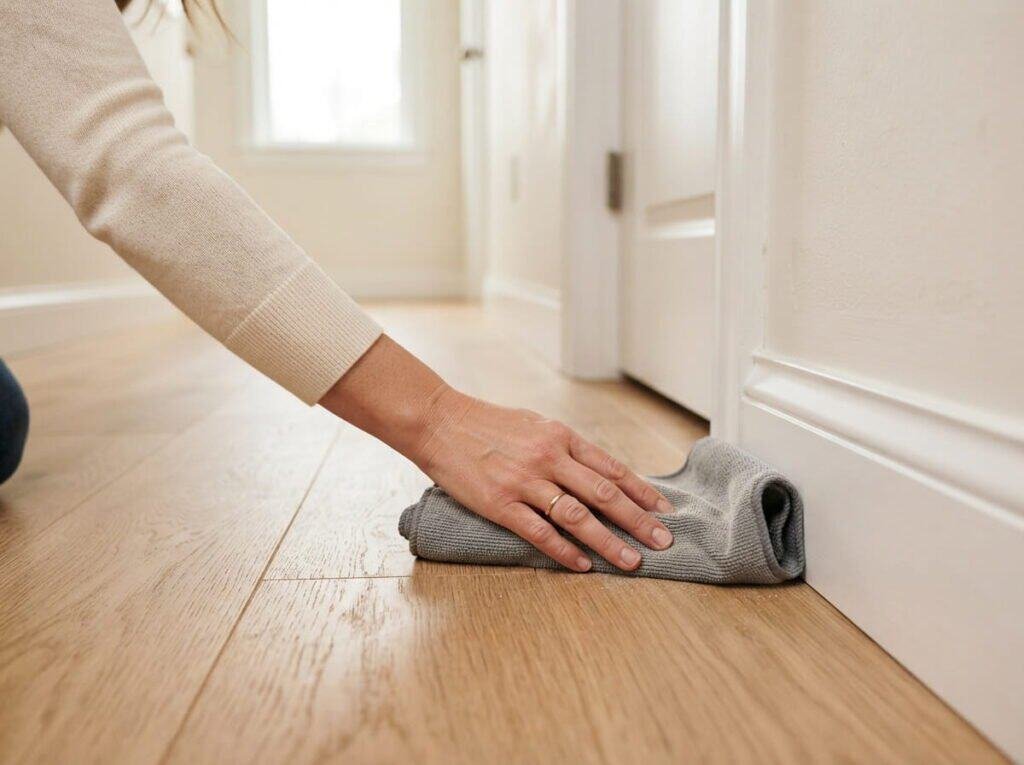
Baseboards sit at the exact height a vacuum skips and a mop never reaches, so dust, pet hair, and floor splatter build up in a thin gray line most people stop noticing after a while. It’s one of the first things guests see at eye level near the floor, even if the rest of the room looks great.
A few things make this go faster:
- A microfiber cloth wrapped around a butter knife for corners and grooves
- A magic eraser for scuff marks near doorways
- A dry brush pass before the wet wipe down, so you’re not just smearing dust into paste
What to grab first
7. Light switches and door handles: the germiest spots you never wipe
Nobody wipes down a light switch during a regular cleaning pass, yet it’s touched by every hand that walks through the room, often right after someone’s been cooking, gardening, or handling the trash. Door handles carry the same problem. They’re used constantly and cleaned almost never.
A disinfecting wipe run over every switch plate and handle in the house takes less time than most people expect.
8. Shower curtain liner and bath mat, the mildew nobody checks
Bathmats and shower liners stay damp for hours after every shower, which makes them two of the fastest places in the house to grow mildew. Most people replace them when they look bad instead of cleaning them on a schedule, by which point they’ve usually been holding onto that smell for months.
| Liner | Mat |
|---|---|
| Toss in the wash with towels and a cup of vinegar | Wash on hot, then air dry fully before returning it |
| Replace every six months if it won’t come clean | Replace if the rubber backing starts to peel |
| Shower Liner | Bath Mat |
|---|---|
| Wash with towels and a cup of vinegar | Wash on hot, air dry fully |
| Replace every six months if it won’t come clean | Replace once the rubber backing peels |
9. What’s actually growing inside your kitchen and bathroom trash cans
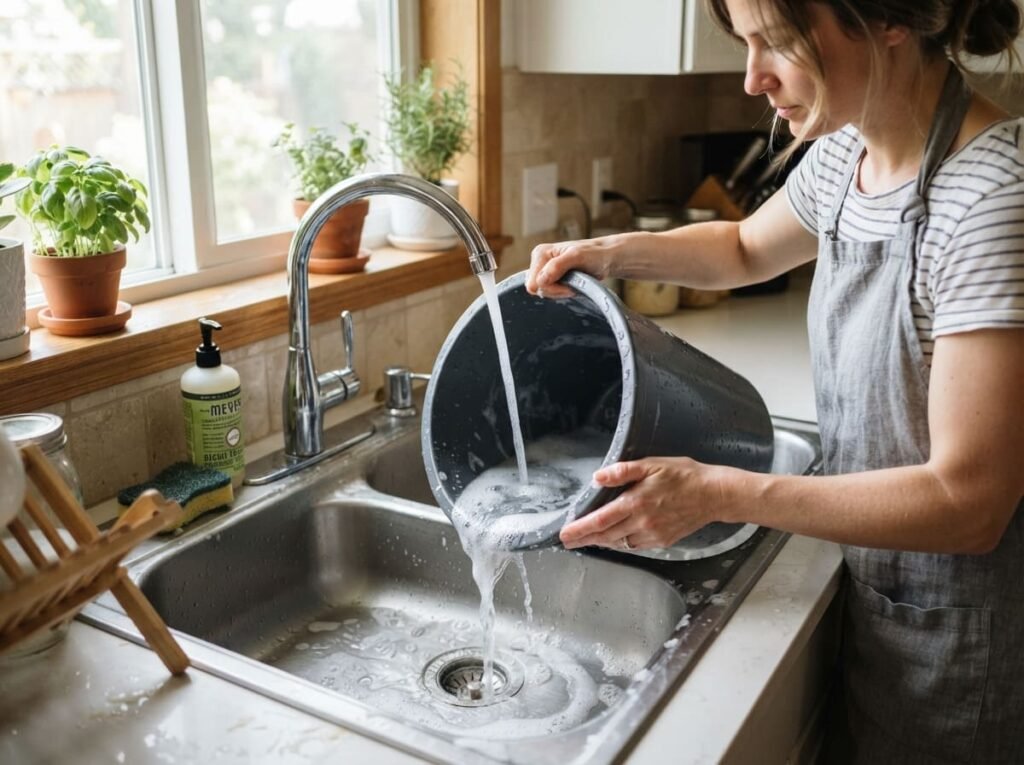
Take the bag out and look at the bottom of the can itself. That’s usually where the smell is actually coming from, not the bag. Spilled liquids and food residue settle into the bottom and sides long after the trash is gone, and a fresh bag on top just hides it for another week.
Rinse the can with hot soapy water, let it dry completely before adding a new liner, and drop a piece of newspaper in the bottom to catch future leaks.
The smell is coming from the can, not the bag. Rinse the can itself, not just the liner inside it.
10. Vent covers and air returns quietly recirculating dust
Simple rule: whatever’s stuck to your air return is what’s been circulating through your lungs. Vent covers pull in dust constantly, and the return in particular can build up a visible layer of gray fuzz within a few months in a busy house.
💡 Quick Tip
Remove the cover, vacuum both sides, then wipe with a damp cloth before screwing it back on. Check it monthly if you have pets.
11. Under the furniture, where the rug pad hides more than dust
Move a couch or an area rug that hasn’t shifted in a year and you’ll usually find a shape pressed into the carpet, along with dust, crumbs, and sometimes a faint mildew smell if the rug pad has trapped moisture underneath. It’s one of the few spots in a house that almost never gets natural airflow.
A pressed-in dent in the carpet, trapped crumbs, and a rug pad that’s been sitting on damp flooring for months.
Fresh airflow under the rug, a vacuumed floor, and one less spot quietly holding onto moisture.
12. Reusable grocery bags: washed less often than you’d think
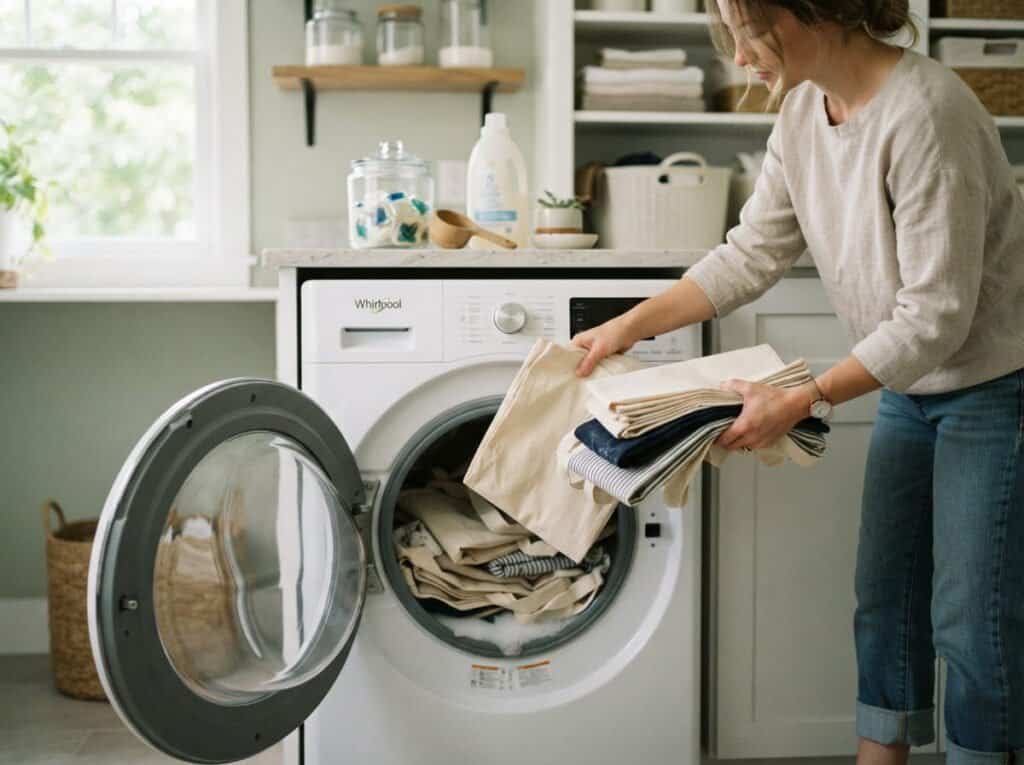
Raw meat packaging, spilled produce juice, and torn bags of flour all ride home in the same tote most people never wash. Bacteria can linger in the fabric fibers for days, and that bag goes right back on the kitchen counter next trip.
Machine wash cloth bags on cold and air dry, or hand wash insulated ones with warm soapy water.
Wipe down plastic or vinyl totes with disinfecting spray and let them air dry fully.
Keep one bag set aside just for raw meat so the rest stay cleaner longer.
13. Makeup brushes and beauty tools sitting closer to your face than anything else
Old makeup residue, dead skin cells, and oil build up in brush bristles fast, and a dirty brush drags all of that back across your face every time you use it, which is part of why breakouts sometimes show up out of nowhere.
14. Remotes, keyboards, and phone cases: the forgotten touch points
Crumbs, dust, and hand oils settle into every groove of a remote or keyboard, and most people only notice when a button starts sticking. Phone cases pick up just as much grime from pockets and countertops, then sit pressed against your face on every call.
- Cotton swabs dipped in rubbing alcohol for tight grooves
- A can of compressed air for keyboard crumbs
- A disinfecting wipe for the phone case, front and back
What to grab first
15. Window tracks and sills holding a season of grit
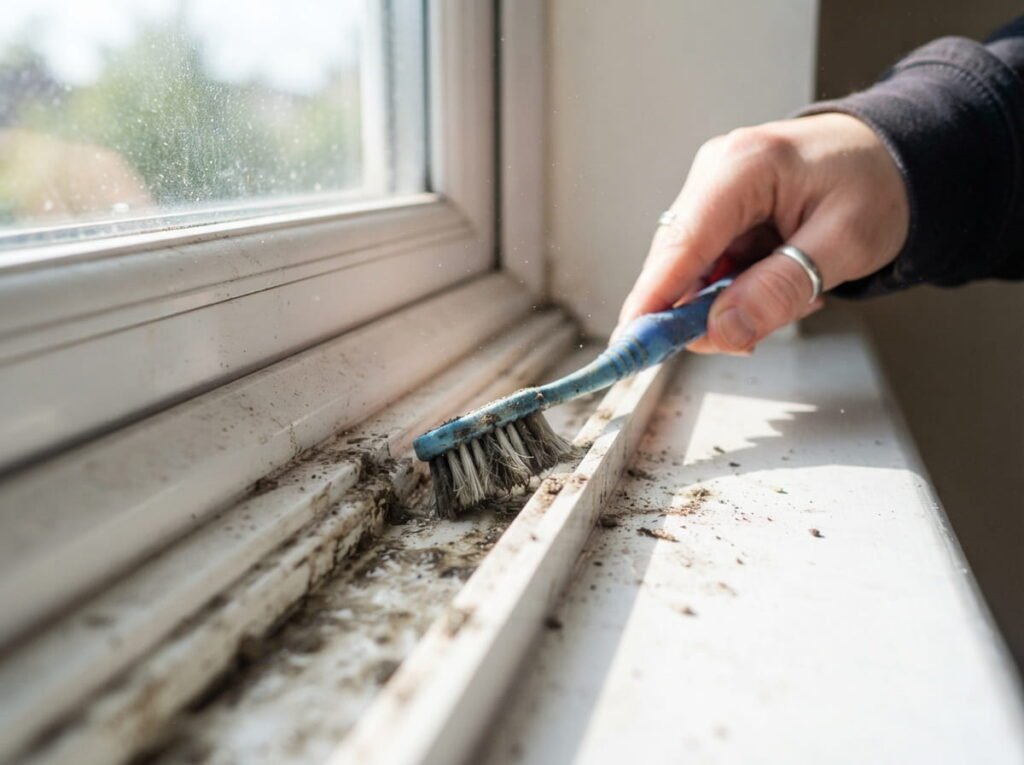
Watch out for the tracks specifically, not just the glass. Dead bugs, dirt, and condensation collect in that narrow groove and turn into a gritty paste that most window cleaning routines skip entirely because it’s hidden below eye level.
Conclusion
Most homes aren’t dirty, they’re just missed in the same handful of spots every time. The washing machine gasket, the trash can itself, the rug pad nobody lifts. None of these tasks are hard. They just aren’t part of a normal cleaning routine, which is exactly why they pile up quietly for months.
Pick two or three from this deep cleaning checklist to knock out this weekend instead of trying to do all fifteen at once. The house will feel different in a way regular cleaning never quite gets to, because you’re finally reaching the spots that actually needed it.
Save this list for the next time you’re doing a deeper clean and can’t remember what you’re forgetting.
Save this for your next deep clean