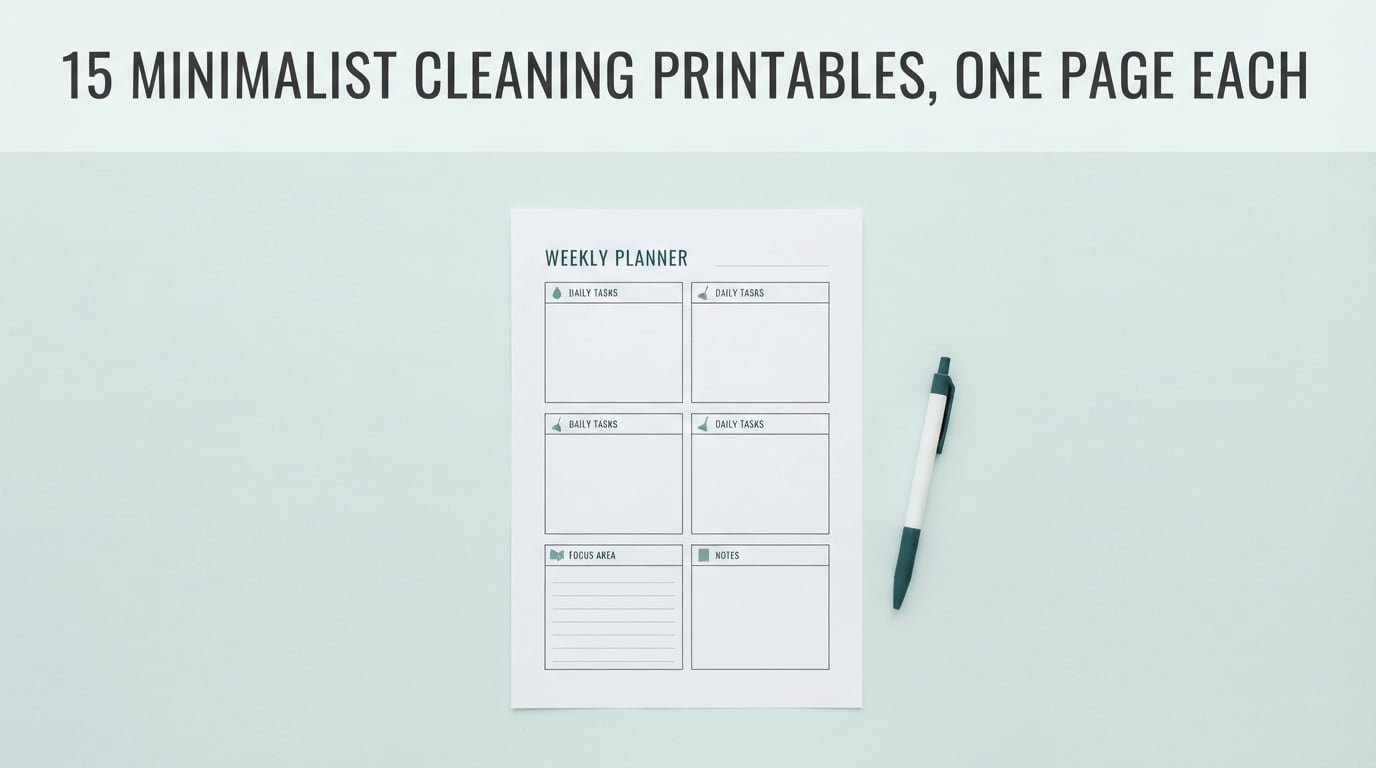
Most cleaning printables try to do everything at once, one page for the kitchen, another for laundry, a third for the schedule, until the fridge looks like a bulletin board instead of an actual system. That’s not organization anymore. That’s just more paper to manage.
A minimalist cleaning printable works the opposite way. Instead of adding more pages, it cuts down to the fewest possible pieces that still get the job done, one clean sheet instead of five, a symbol instead of a paragraph, whitespace instead of borders. Less isn’t a style choice here. It’s the whole point.
This list covers fifteen specific ways to strip a cleaning system down to what actually matters, built for anyone who wants a home command center that looks calm instead of cluttered. Every idea here removes something instead of adding it.
Print less. Track more clearly. Start with whichever one feels like the biggest relief.
Watch a Cluttered System Become One Page
Typically Included
What Actually Stays
One Page
Replaces five separate trackers with a single weekly grid.
One Symbol Key
A droplet, a broom, a folded shape instead of full sentences.
One Accent Color
Everything else stays black, white, and open space.
1. Replace Five Separate Trackers With One Page That Does Everything
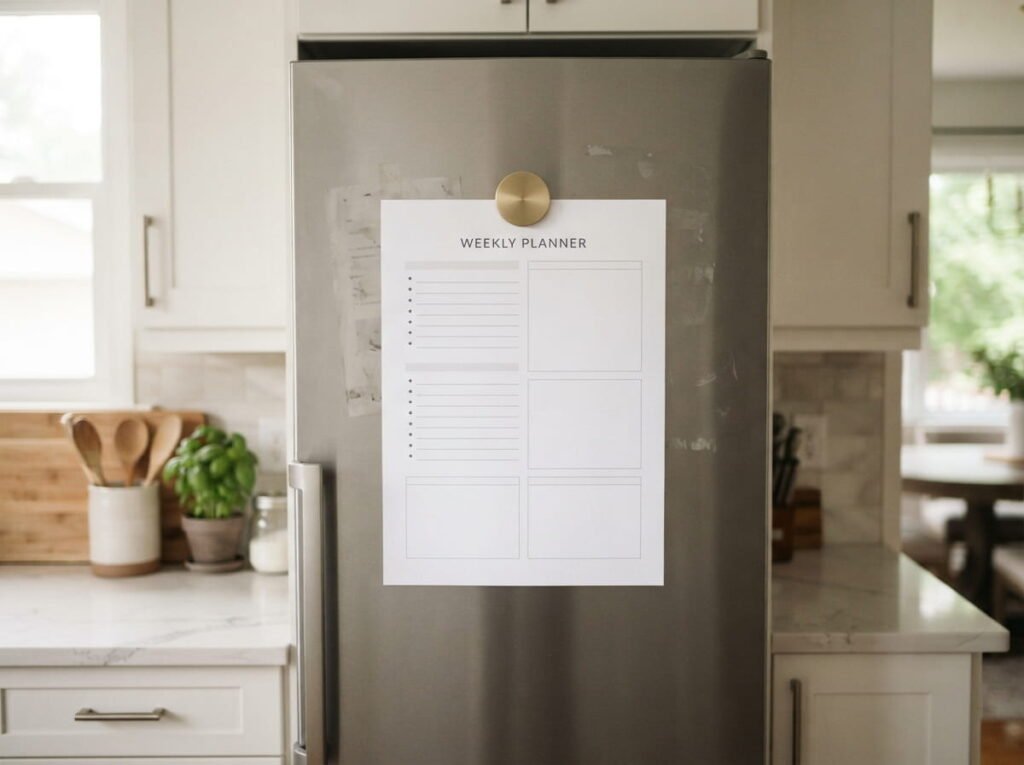
Five different printables scattered across a fridge stop working the moment nobody remembers which one has today’s task on it.
- One weekly grid instead of a daily sheet
- One column for tasks instead of five separate categories
- One glance instead of flipping through a stack
Consolidating into a single page means there’s only ever one place to look, which is half the reason a system actually gets used.
Five separate sheets taped up, each one only half filled out.
One page, checked consistently, because there’s nowhere else to look.
2. Swap Written Task Names for a Simple Symbol System
Reading a full task description every time you glance at the fridge slows down the exact moment a system is supposed to speed up.
A small icon key replaces the wording entirely. A droplet for wiping, a broom for sweeping, a folded shape for laundry. Once you know the four or five symbols, you stop reading altogether and just glance.
A simple symbol key
3. Let Whitespace Organize the Page Instead of Color Coding
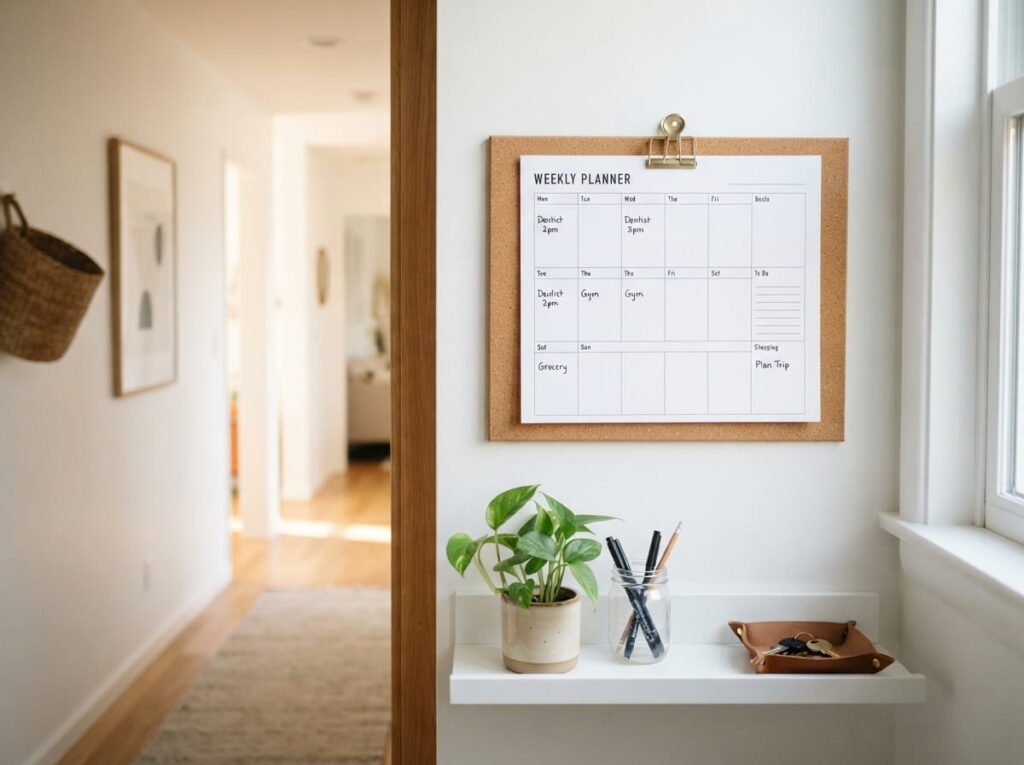
Color coding feels organized until the page has six colors fighting for attention and none of them actually mean anything at a glance anymore.
Use generous spacing between sections.
Let one accent color do all the work.
Assigning a different color to every category.
Cramming sections edge to edge with no breathing room.
Space does the separating that color used to do, and it does it without the visual noise.
4. Use One Weekly Grid Instead of a Box for Every Single Day
A daily checklist sounds thorough, but it means printing and filling out the same format seven separate times a week for tasks that barely change.
| Daily Boxes | Weekly Grid |
|---|---|
| Seven separate boxes to fill out | One grid, checked as the week goes |
| Feels repetitive by Wednesday | Shows the whole week’s progress at once |
A single grid shows the whole week’s progress in one glance instead of scattered across seven pages.
5. Cut Every Instruction Down to a Single Word
Long task descriptions look helpful on paper, but nobody actually reads a full sentence every time they glance at a checklist mid-task.
“Counters” instead of “wipe down all kitchen counters and appliance fronts.” You already know what the task means. The word is just a trigger, not an explanation.
6. Pick One Neutral Font and Never Introduce a Second
Mixing three or four fonts across one printable is one of the fastest ways to make a clean page look cluttered without adding a single extra word.
A single readable font, used consistently for headers and body text alike, keeps the whole page feeling like one cohesive object instead of a collage of clip art and font experiments.
💡 Quick Tip
Use size and weight to create hierarchy instead of switching fonts. A bold heading and a lighter body text do the same job with half the visual noise.
7. Design One Page That Works for Every Room, Not Fifteen Separate Ones

Fifteen room specific checklists sound thorough, but most rooms actually share the same handful of core tasks with only small variations.
A folder of fifteen nearly identical checklists, most only half used.
One universal page with a blank line to write in whichever room you’re tackling.
A blank room name line at the top lets one template cover the whole house instead of printing a new version for every single space.
8. Trade the Sticker Sheet for a Plain Checkmark
Stickers are fun, but they also add clutter, cost, and one more thing to keep stocked and organized alongside the actual printable.
- ▸A simple checkmark works just as well as a sticker.
- ▸No sheets to buy, replace, or run out of.
- ▸The page stays visually calm instead of colorful and busy.
9. Print in Black and White and Let the Paper Do the Work
Color printing costs more, runs out at the worst time, and often adds visual noise a simple checklist never actually needed.
Good spacing and clear type do more for readability than color ever will. Save the ink for something that actually needs it.
A black and white page also photographs cleaner for Pinterest, since there’s nothing competing with the layout itself.
10. Give the Page Just Two Columns, Task and Frequency
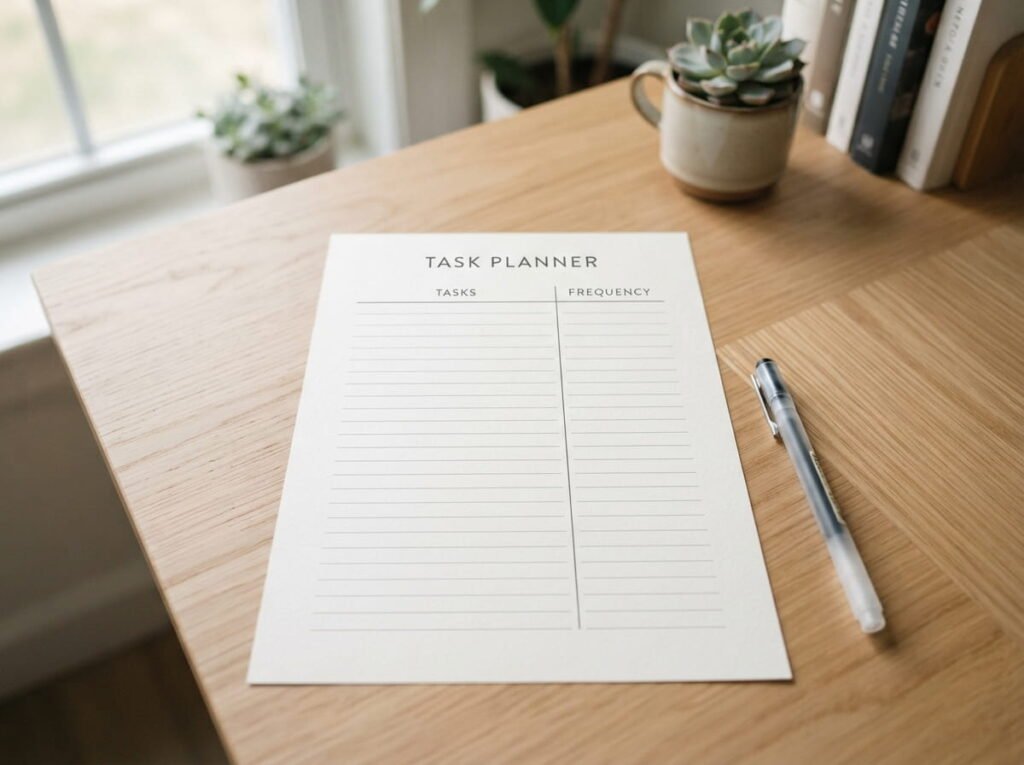
More columns feel like more information, but most of them end up half filled or ignored entirely once the novelty wears off.
- Task, written in as few words as possible
- Frequency, daily, weekly, or monthly, nothing more specific than that
- Nothing else. No notes column, no priority rating, no extra boxes
Two columns force every task to earn its place on the page instead of padding it out with fields nobody fills in.
Just two columns
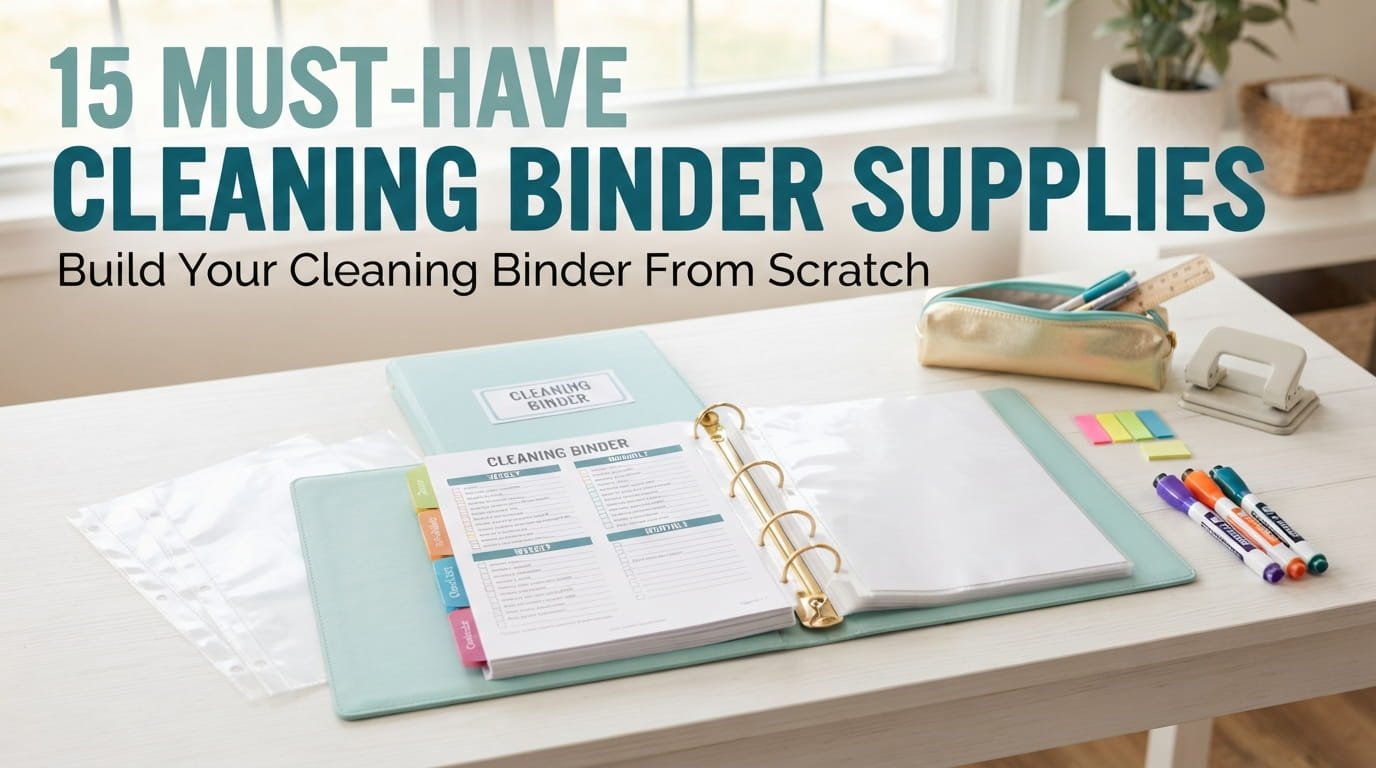
11. Replace the Whole Binder With One Laminated Sheet
A full binder with tabs and sleeves works, but it’s also a project in itself, and most people never finish building one the way they pictured it.
Laminate one page and wipe it clean weekly.
Keep it somewhere visible, not filed away.
Buying tabs and sleeves before testing if you’ll use them.
Building sections for tasks you don’t actually track.
One laminated sheet with a dry erase marker does the same job as a full binder for anyone who just needs the basics visible and reusable.
12. Use Space Instead of Borders to Separate Sections
Boxes and borders around every section can make a single page look like a form to fill out instead of something simple to glance at.
- Group related tasks close together
- Leave extra room between each group
- Skip the box outline entirely and let the gap do the separating
The eye reads gaps as boundaries just as easily as it reads lines, without adding any visual weight to the page.
Cluster related tasks so they read as one group.
Widen the gap between groups more than feels necessary at first.
Trust the white space instead of boxing everything in.
13. Track the Habit, Not the Task, With a Single Line
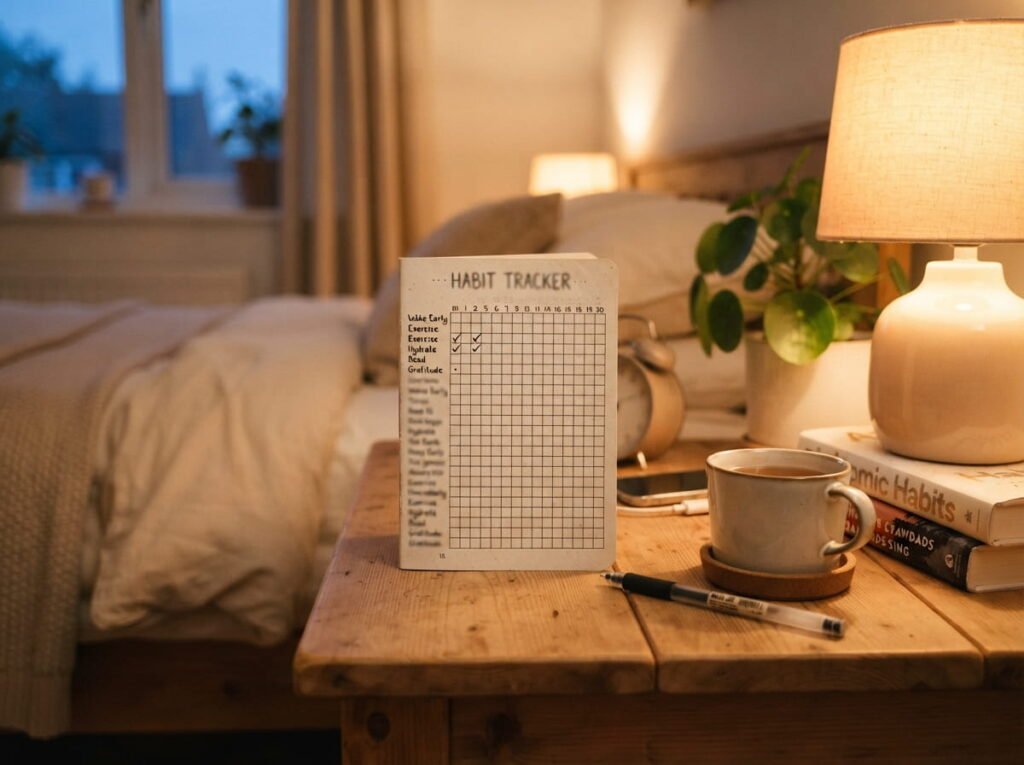
Tracking every individual task adds up to a lot of boxes fast, when really only a couple of habits actually need consistent tracking.
- One line for “made the bed”
- One line for “wiped counters before bed”
- One line for whatever habit you’re actually trying to build right now
Everything else can stay off the page entirely until it becomes a habit worth tracking too.
14. Choose One Accent Color and Build Everything Around It
A page with one consistent accent color reads as intentional. A page with four competing colors reads as unfinished, even when the content is exactly the same.
Pick a single shade you actually like looking at and use it everywhere, checkmarks, headers, dividers, so the whole page feels like one cohesive piece instead of a patchwork of decisions made at different times.
💡 Quick Tip
If you’re printing in black and white most weeks, pick an accent that still reads well in grayscale. Test a print before committing to the final design.
15. Combine Every Room Into a Single Reset Page
The whole point of a minimalist cleaning printable is one page that covers the actual house, not fifteen pages that each cover one small piece of it.
A single reset page with five or six universal tasks, cleared surfaces, floors, trash, dishes, entryway, covers most of what a home actually needs on a normal day, no matter which room needs it most.
One page, five or six tasks, every room covered. That’s a minimalist cleaning printable doing exactly what it’s supposed to.
Conclusion
A minimalist cleaning printable doesn’t do less because it’s lazy. It does less because most of what a typical printable includes never actually gets used, the extra columns, the color coding, the fifteen room specific pages. Strip that away and what’s left is a system that’s easier to keep up, not just easier to look at.
Start with one change, not all fifteen. Cut a tracker down to one page, or drop the color coding, and see how much lighter the whole thing feels.
Save this list for the next time your cleaning system starts feeling like more work than the cleaning itself.