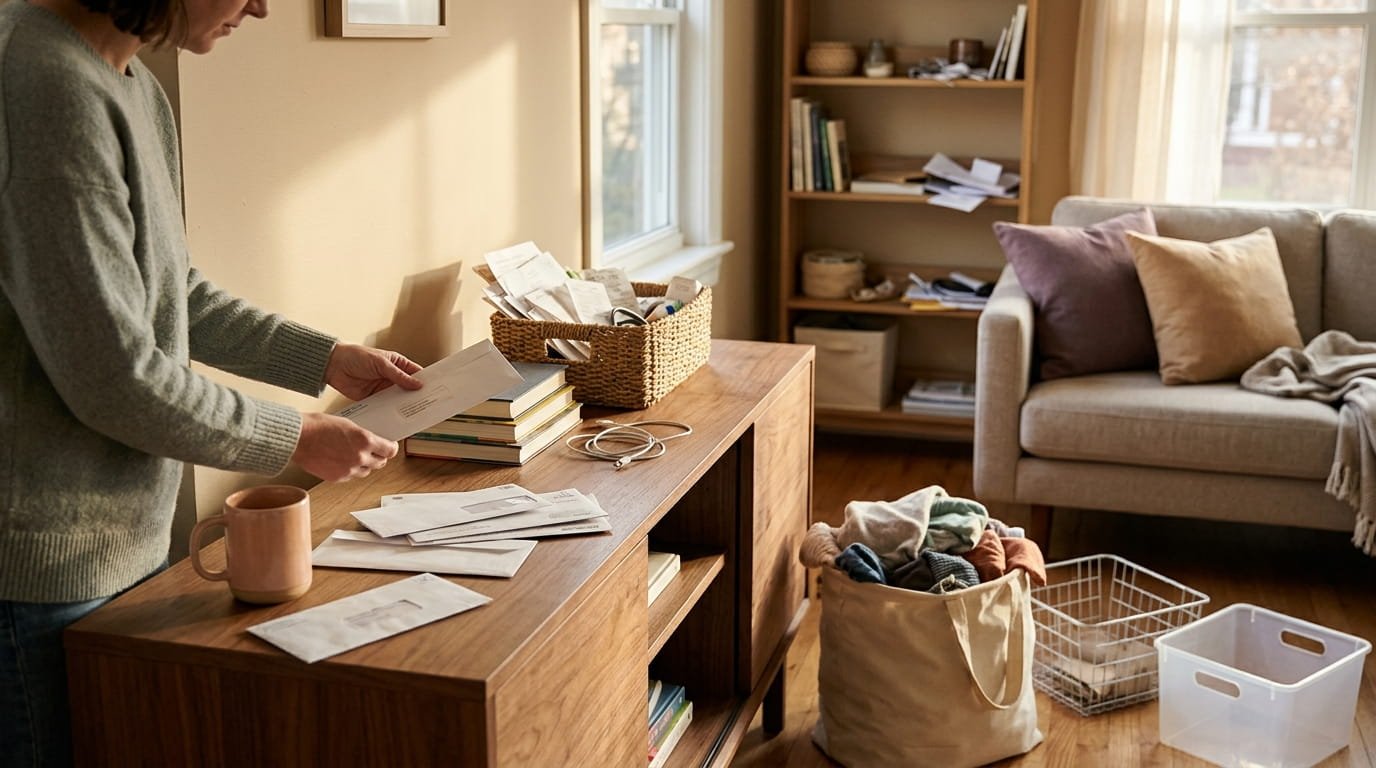

Paper has a sneaky way of multiplying. A few envelopes on the counter turn into a stack, then a pile, then a drawer you’re afraid to open. Most people who try to declutter paper clutter start by sorting the pile, and then the pile comes back within a month.
The reason is simple. Paper keeps arriving, and most homes have no system for where it goes next. Sorting once clears the surface, but only a routine keeps it clear.
This list covers both halves of the job. Some ideas help you tackle the stack you already have, like a four pile sort and a plan for the scary backlog box. Others stop new paper from piling up in the first place, from a landing spot by the door to going paperless.
You don’t need fancy folders or a free weekend. Pick one idea, try it this week, and build from there.
1. Stop Paper at the Door With a Landing Spot for Incoming Mail
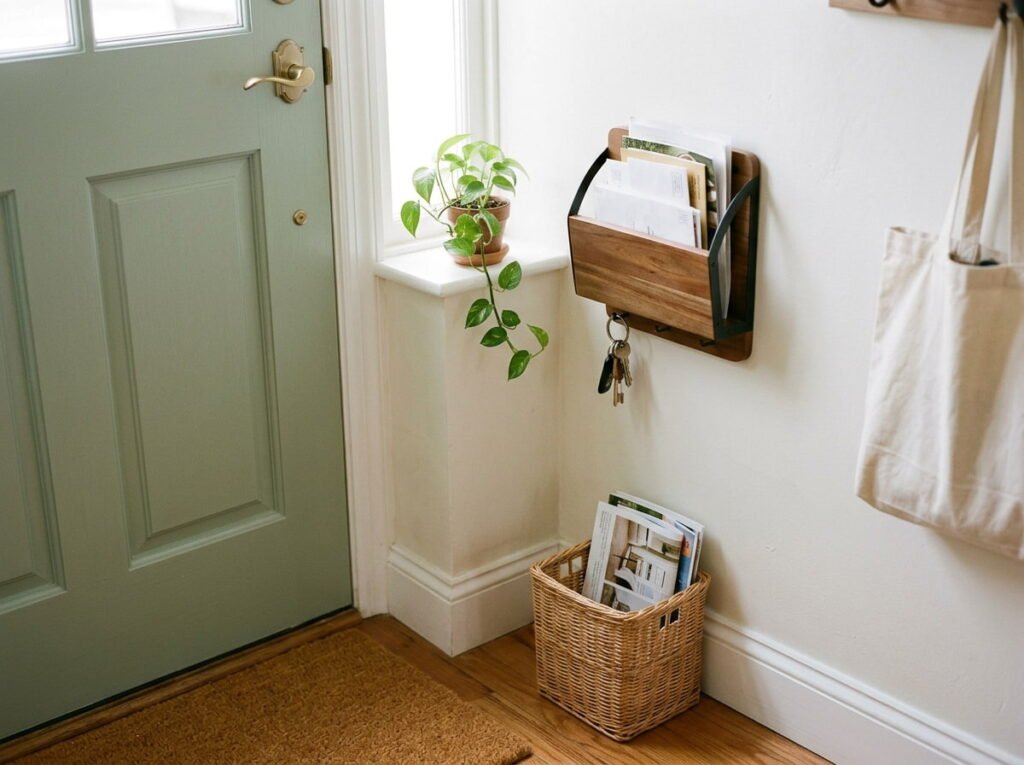
Paper clutter usually starts at the front door. Mail comes in, gets set down on the nearest flat surface, and stays there. A designated landing spot gives it somewhere to go before it spreads.
Use a small tray, a wall pocket, or a basket near where you walk in. Everything incoming goes there first, and nothing else lives there.
Put a small recycling bin right beside it, so junk mail never makes it past the entryway.
2. The Four Pile Sort: Act, File, Shred, Recycle
When you face a big stack, one question per sheet keeps things moving: what does this need? Four piles cover almost everything.
Act: bills, forms, and anything with a deadline go in one folder you check weekly.
File: papers you truly need to keep go in the pile for your filing system.
Shred or recycle: anything with personal details gets shredded, everything else goes in the recycling.
If a sheet fits two piles, pick the one that gets it out of your hands faster.
3. Why Opening Mail Right Away Beats Letting It Pile Up
Unopened mail feels like a small, ongoing decision. Each envelope asks to be dealt with, and the pile of undecided choices gets heavier than the mail itself.
💡 Quick Tip
Open mail standing over the recycling bin. Toss the envelope and any junk inserts immediately, and carry only the pieces you need to the landing spot.
It takes about two minutes a day, and it stops the pile before it starts.
4. Cutting Down Junk Mail at the Source
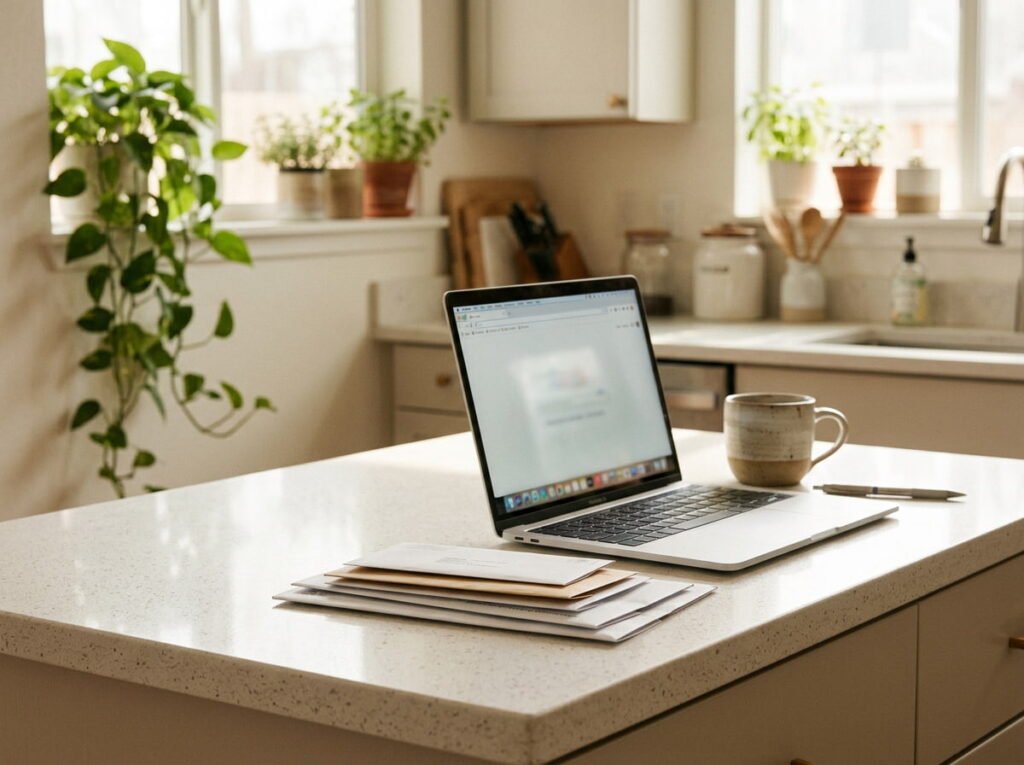
Sorting junk mail forever is a losing game. It’s easier to reduce how much arrives. Many countries and regions have official opt-out services for unsolicited mail, and many catalog and credit offer senders let you unsubscribe by contacting them directly.
A daily handful of catalogs, flyers, and offers you never asked for.
A much thinner stack, with mostly real mail left to sort.
Search for your country’s official mail preference service rather than clicking an ad, since some lookalike sites collect personal information.
5. The Mistake of Filing Everything “Just in Case”
Keeping every piece of paper feels safe, but it quietly creates a bigger problem. A drawer packed with unneeded documents makes it harder to find the few that matter.
Ask whether you could easily get a copy online if you needed it.
Keep the original only for papers that are hard or impossible to replace.
Filing every receipt, flyer, and manual out of habit.
Tossing important papers without checking how long you’re expected to keep them.
For tax, legal, and medical papers, check your tax authority or an advisor for how long to keep them, since the rules differ by place.
6. A Simple Home Filing System With Only a Few Folders
A filing system with forty categories falls apart quickly, because nobody wants to decide between “Insurance Misc” and “Insurance Other.” A handful of broad folders is easier to keep up.
Here’s a starter set that covers most households:
A starter set of folders
A small portable file box or accordion folder works fine, and it’s easy to grab if you ever need to leave in a hurry.
7. Scanning Documents Versus Keeping Paper Copies

Scanning sounds like a magic fix, but it only helps if you can find the files later and keep them backed up. Paper and digital each have a place.
| Keep on Paper | Scan and Recycle |
|---|---|
| Documents that may need the original, like birth certificates or property papers. | Manuals, receipts, and routine statements you only need to look up. |
| Anything a rule or advisor says to keep in original form. | Papers you want to search quickly by name or date. |
If you scan, name files clearly and back them up in a second place, since a single copy on one device can disappear.
8. How to Tell What’s Worth Keeping Without Memorizing Rules
Instead of memorizing a long list, ask a few quick questions about each paper. Most decisions get easier once you have a mental checklist.
When you can’t tell, put the paper in a “ask later” folder with a date, and check it against an official source before shredding.
9. A Safe Way to Dispose of Papers With Personal Information
Bank statements, medical bills, and pre approved offers carry details you don’t want in the open trash. Shredding is the safest habit, and it doesn’t need to be fancy.
⚠️ Watch Out
Shred anything showing account numbers, full names with addresses, or medical details. A cross cut home shredder works, and many communities offer shred days or low cost shredding services.
Collect shred-bound papers in a single envelope so you can batch the job once a month instead of feeding the machine one sheet at a time.
10. Taming Kids’ School Papers Before They Spread
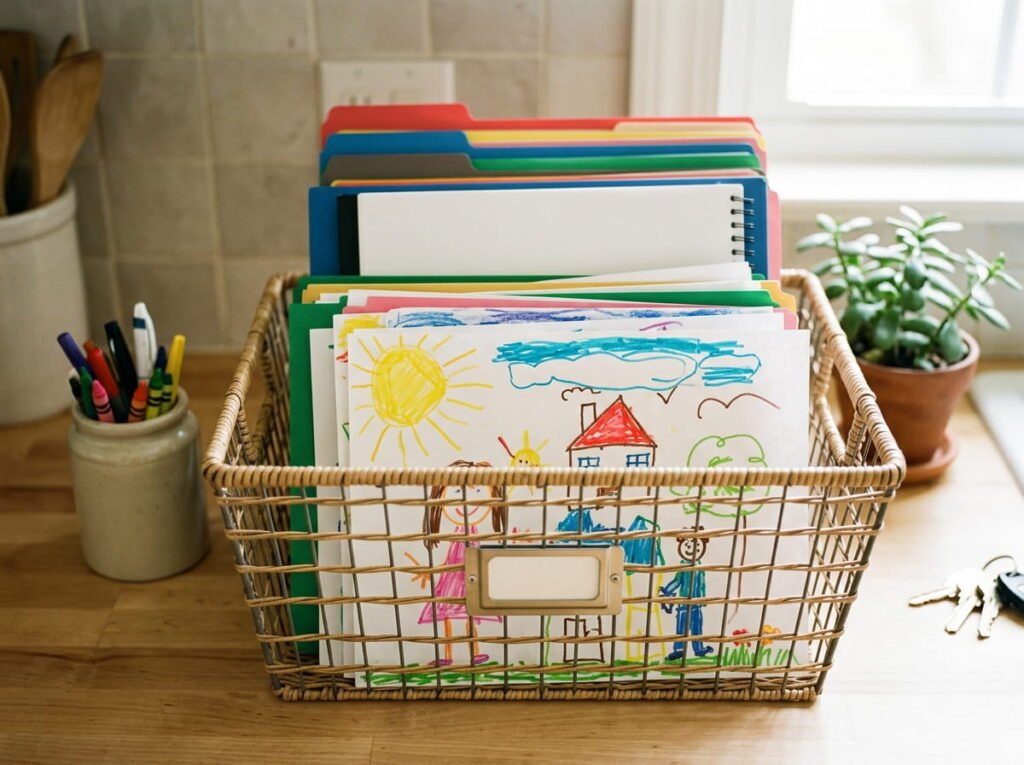
School papers arrive daily and look important. Without a plan, they drift across the kitchen counter and eventually fill a drawer.
Give school papers one inbox, one weekly sort, and a keepsake limit, so they never take over the counter.
Sort the inbox on a set day, take a photo of anything you want to remember, and put forms you need to sign straight into your Act folder.
11. Recipes, Clippings, and Inspiration Pages You Meant to Use
Torn out recipes and magazine pages feel like future plans, which makes them hard to throw away. But a stack of “someday” paper rarely turns into dinner.
- Pick the five recipes you’d honestly cook this month and keep only those.
- Photograph the rest and save them in a phone album called Someday Recipes.
- Recycle the original pages once the photo is safely backed up.
- ▸Tape the keepers into a small notebook or slip them into plastic sleeves in a binder.
- ▸Pages you haven’t opened in a year probably aren’t coming back to life.
- ▸Magazines can usually be recycled once you’ve torn out the one article you wanted.
12. Switching Bills and Statements to Paperless
Every statement you stop receiving is one less thing to sort. Many banks, utilities, and insurers offer an online option, and switching often takes only a few minutes per account.
Set a calendar reminder for due dates when you go paperless, since a mailed reminder won’t be there to nudge you anymore.
13. A Monthly Ten Minute Paper Reset
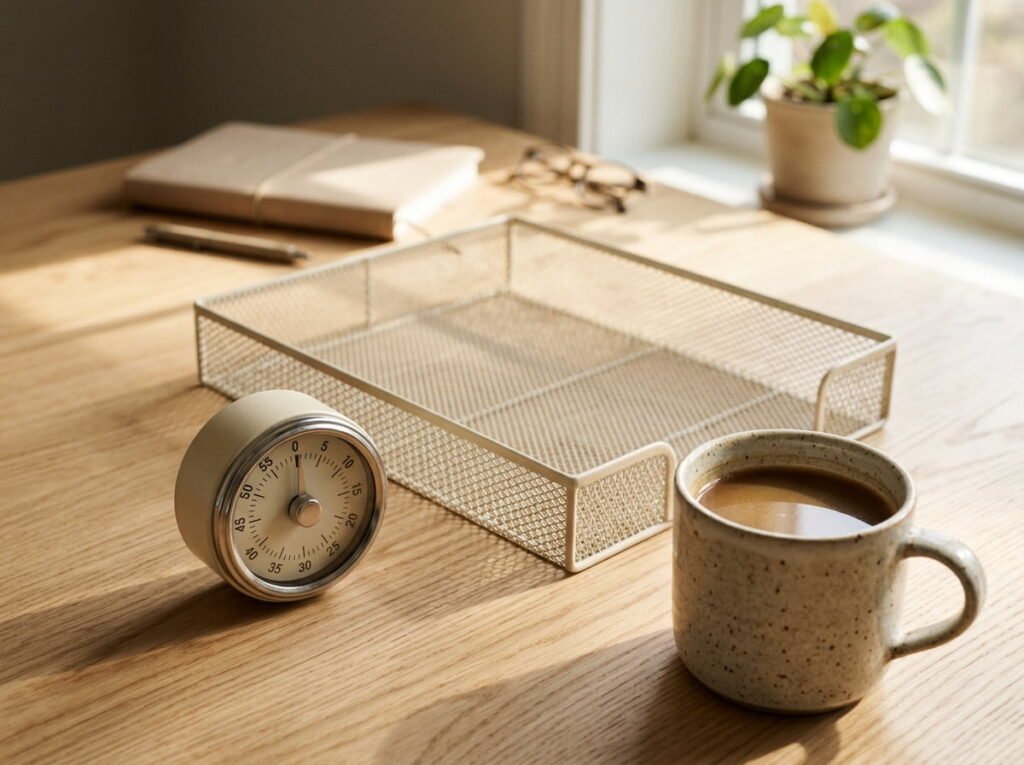
A short, regular reset does more than a rare big clean up. Pick a day, like the first of the month, and give the paper stash ten minutes.
Empty the landing spot and the Act folder, finishing what’s due.
File anything worth keeping and shred the personal papers you’ve collected.
Wipe the tray, set a ten minute timer for next month, and stop when it rings.
Pair it with something you enjoy, like music or a coffee, so the routine feels like a small ritual, not a chore.
14. Handling the Backlog Pile Without Reading Every Page
A backlog box can feel impossible, mostly because it looks like hours of reading. You don’t have to read it all. You only need to sort by what each paper is.
A overflowing box you avoid because it feels like a huge reading project.
A sorted set of piles, mostly recycled, with a small folder of what needs action.
Work in twenty minute chunks and stop when the timer rings. Look first for envelopes from government offices, banks, and medical providers, since those are the ones most likely to need action.
15. Keeping Your System Going With One Small Daily Habit
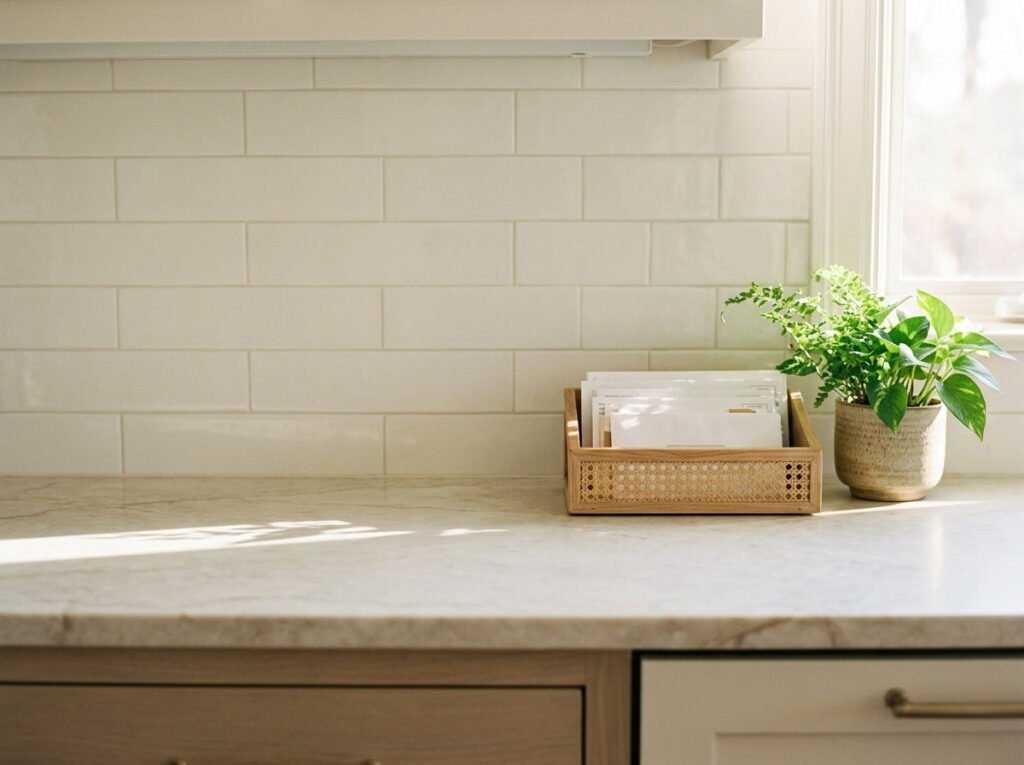
A system lasts when it fits into a day you already have. The simplest habit is also the strongest: handle paper the moment it arrives, and never let it become “later.”
Touch each piece of paper once: decide, then act, file, shred, or recycle it.
If a pile starts to grow anyway, treat it as a signal about where the system needs a bigger tray or a better home, not as proof you’ve failed.
Conclusion
To declutter paper clutter for good, sorting the pile is only half the job. The other half is a simple system that catches paper at the door, gives it somewhere to go, and keeps new stacks from forming. A landing spot, a four pile sort, and a short monthly reset can do most of the work without taking over your weekend.
Start with whichever idea feels smallest, whether that’s a tray by the door or switching one bill to paperless. When it comes to tax, legal, or medical papers, check an official source or an advisor before shredding, since the rules differ from place to place.
Save this list for the next time the counter fills up, and let a little routine do the heavy lifting.