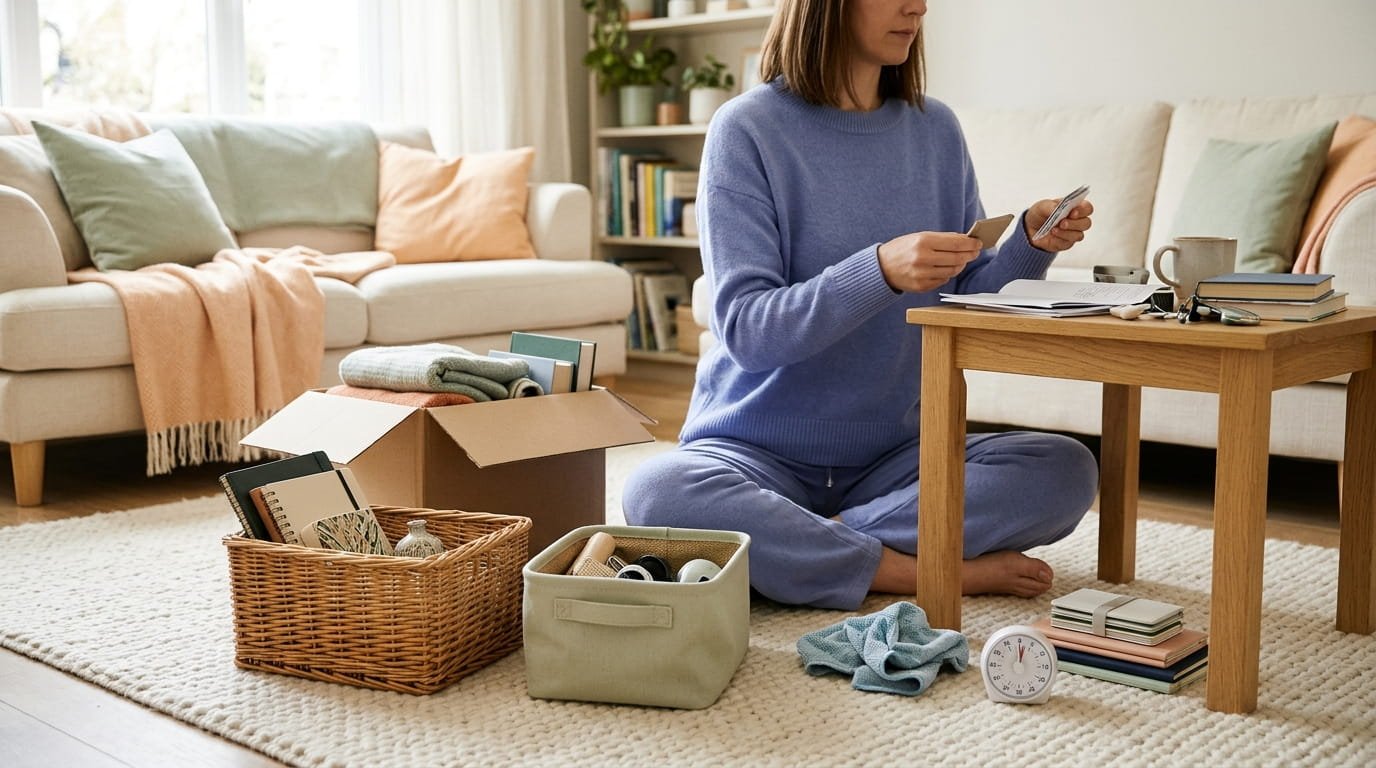

A box of birthday cards can stop a tidying session cold. So can a wedding dress, a child’s first shoes, or a mug that still smells faintly like someone’s kitchen. Sentimental things don’t behave like regular clutter, and the usual advice to just toss what you don’t use misses what these objects are actually doing for you.
If you want to declutter sentimental items without feeling like you’re betraying anyone, the pace has to change. The goal isn’t an empty shelf. It’s keeping what truly carries the memory and letting go of what only carries the weight.
This list moves slowly on purpose. Some ideas help you decide what stays. Others are about making the goodbye feel respectful instead of rushed. None of them ask you to be ready before you are.
Read through and pick one that fits where you are today. Skipping the rest is completely fine.
1. Why Sentimental Clutter Feels So Much Heavier Than Other Clutter
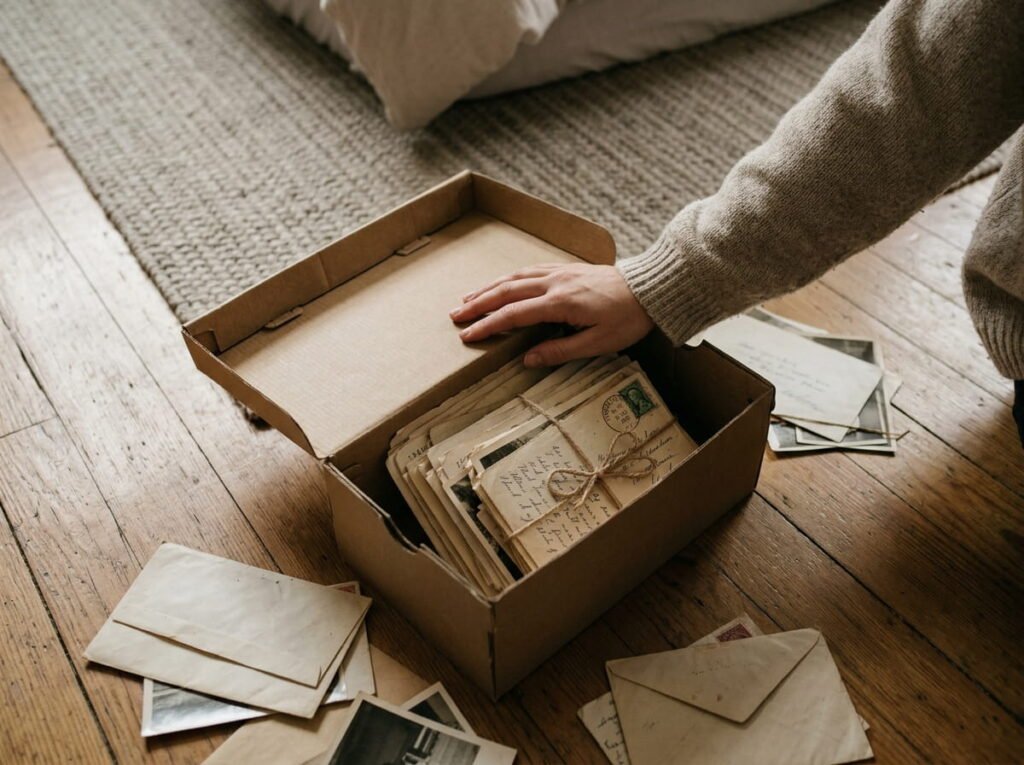
A stack of old magazines is just paper. A stack of old letters is a person, a year, a version of your life. That’s why the same decluttering method can feel easy in the garage and impossible in the hall closet.
Knowing that makes the struggle less confusing. You aren’t being dramatic or disorganized. You’re making a choice about memory, and that takes more energy than a choice about a spatula.
Sentimental items are slow to sort because they hold feelings, not just space.
Expect these sessions to be shorter and more tiring than other tidying, and plan your day around that.
2. Waiting Until You’re Ready, and How to Tell When That Is
There’s no rule that says everything has to go this month. If an item brings a lump to your throat the moment you pick it up, that’s useful information. It can wait.
Readiness usually shows up as a small shift. You can look at the object and think about the person or time without feeling flattened. Or you notice the item sitting in a box and feel nothing either way.
💡 Quick Tip
Pick an item up and hold it for one slow breath. If you can set it down without a heavy feeling, that item may be ready for a decision. If not, put it back and try another day.
Coming back to a box in three months is progress too, not a failure to finish.
3. Separating the Memory From the Object
Most of us treat an object and a memory as the same thing, so letting go of one feels like losing the other. They aren’t the same. The memory lives in you, and the object is only one reminder of it.
Try saying the memory out loud before you decide. Tell the story of the item to a friend, write two sentences about it, or just say it quietly to yourself. Often the story is what you were afraid of losing, and it’s already safe.
“If I let go of this scarf, I’ll lose the memory of that trip.”
“The trip stays with me. The scarf was one way I remembered it.”
Not every item will pass this test, and that’s fine. Some things you simply want to keep.
4. Starting With the Least Emotional Category First
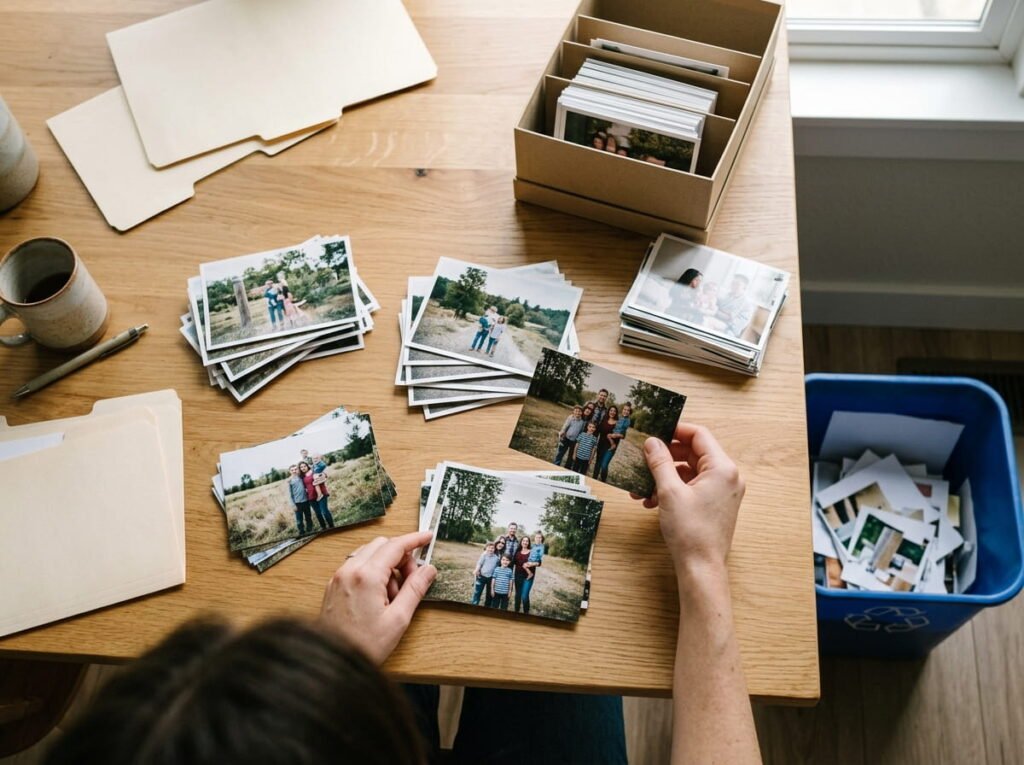
Begin where the feelings are quiet. That builds your decision muscle before you reach the hard stuff, so you aren’t practicing on your grandmother’s recipe cards.
Start with duplicates and doubles, like three copies of the same photo.
Move to items that are damaged, like cracked frames or stained keepsakes.
Save the deeply personal pieces, like letters and heirlooms, for last.
By the time you reach the hard boxes, you’ll have a few real wins behind you.
5. Keeping the Best Few Instead of Everything
Twenty-five baby outfits can fade into a blur. Three favorites tend to get remembered, looked at, and loved. Choosing the best few often honors the memory better than keeping everything in a bin nobody opens.
If you can’t pick a single favorite, choose one from each of these three and see how it feels.
6. Photographing Items Before You Let Them Go
A photo keeps what the object looked like, and often that is enough. It also gives you a way to say goodbye without feeling like you erased something.
Before you take the picture, a little care goes a long way:
A simple photo routine
Back the folder up somewhere besides your phone, since a lost phone can take a lot of memories with it.
7. Inherited Items You Feel Obligated to Keep
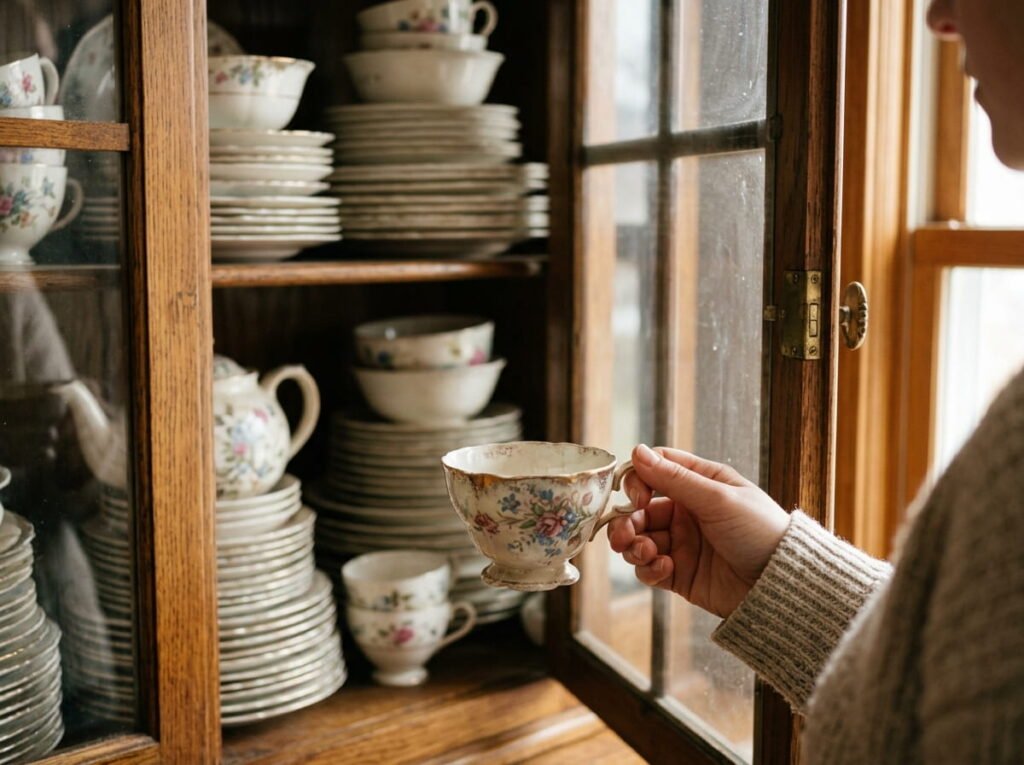
Being handed something by a relative can feel like being handed a duty. You might not like the china set, but it belonged to your grandmother, so it sits in a cabinet and quietly bothers you.
Keeping something out of duty and keeping something out of love are two different things. Both are allowed. But only one tends to feel good over time.
Ask yourself whether you’d choose this item today if it weren’t inherited.
Offer it to another relative who might truly want it.
Keeping every inherited piece just to avoid a hard conversation.
Giving things away quietly before checking whether family wants them.
Keeping one meaningful piece from a set often satisfies the sense of duty without filling a whole cabinet.
8. Kids’ Artwork and School Papers Without a Closet Takeover
Children make an astonishing amount of paper. Keeping all of it isn’t realistic, and treating every drawing as precious can wear a parent down quickly.
| Keep the Original | Photograph and Release |
|---|---|
| A few standout pieces each year, stored flat in one folder. | Everyday drawings and worksheets that were fun in the moment. |
| Pieces with handwriting or a story that shows who they were. | Bulky crafts that are hard to store and easy to damage. |
Letting your child help choose the keepers makes it a shared moment, not a secret purge.
9. Passing Items to Someone Who Will Actually Use Them
Some things are easier to release when you know where they’re going. A coat that kept someone warm can warm someone else. A set of books can find a new reader.
Telling the new owner a little about the item’s story can turn the handoff into something warm.
10. Clothing With Memories Attached, and Ways to Keep a Piece of It
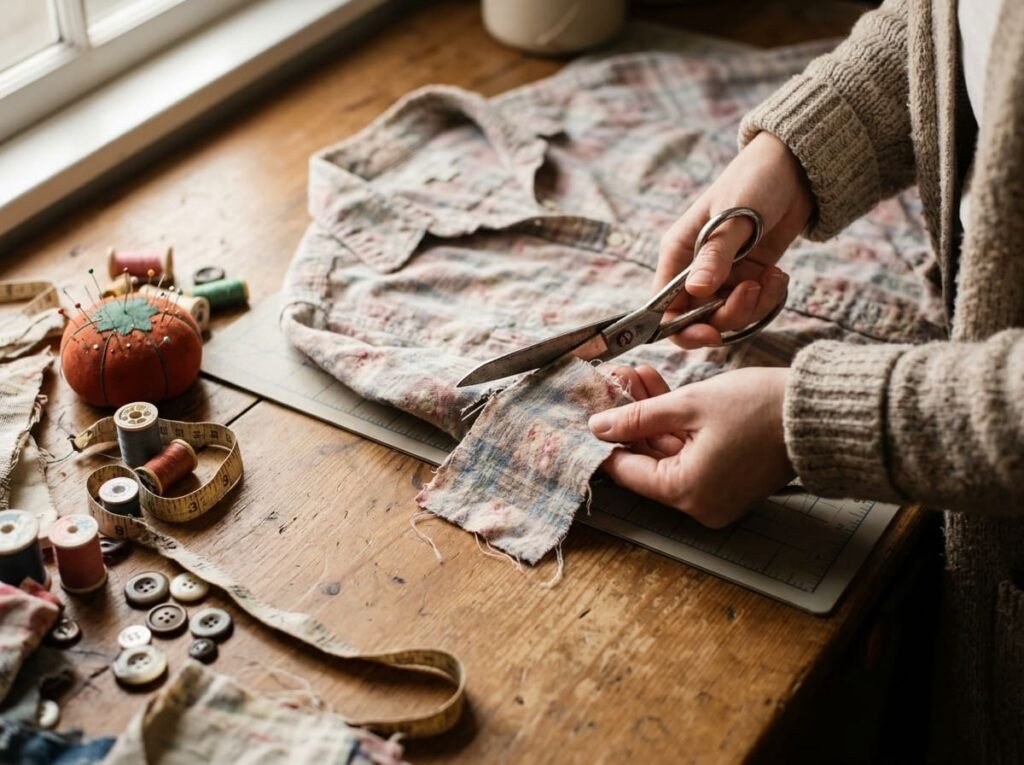
Clothes hold a surprising amount of memory because they were worn during real moments. But a closet full of outfits you’ll never wear again can start to feel like a museum no one visits.
- Keep one piece that best represents the time and let the rest go.
- Cut a small square from a favorite fabric to tuck into a memory box or frame.
- Turn a few meaningful shirts into a quilt or pillow if you or a friend sews.
- ▸A quilt or pillow only makes sense if you’ll really use it, so skip this if the project would just become another pile.
- ▸Small fabric squares take almost no space and still feel personal.
- ▸A photo of you wearing the outfit often says more than the outfit itself.
11. A Memory Box With Clear Limits
One box for keepsakes gives sentimental things a safe home, and its size does the deciding for you. When the box is full, something has to leave before something new arrives.
Keepsakes scattered across closets, drawers, and the garage, none of it easy to find.
One labeled box on a closet shelf, with room to browse whenever you want to.
Pick a sturdy box with a lid, acid free if you’re storing paper or photos, and let its size be the final word.
12. When the Item Belonged to Someone Who Has Died
Sorting the belongings of someone you loved is one of the hardest kinds of decluttering. There’s no timeline you’re supposed to follow, and no rule says you have to do it soon.
📌 Good To Know
If sorting their things leaves you stuck, exhausted, or sad for days, that’s a reason to slow down. Talking with a friend, a grief support group, or a counselor can help, and you don’t have to carry this alone.
You might keep their handwriting, a favorite sweater, or an everyday object that still feels like them. Those small, ordinary things often matter most.
13. Gifts You Never Liked but Feel Guilty About
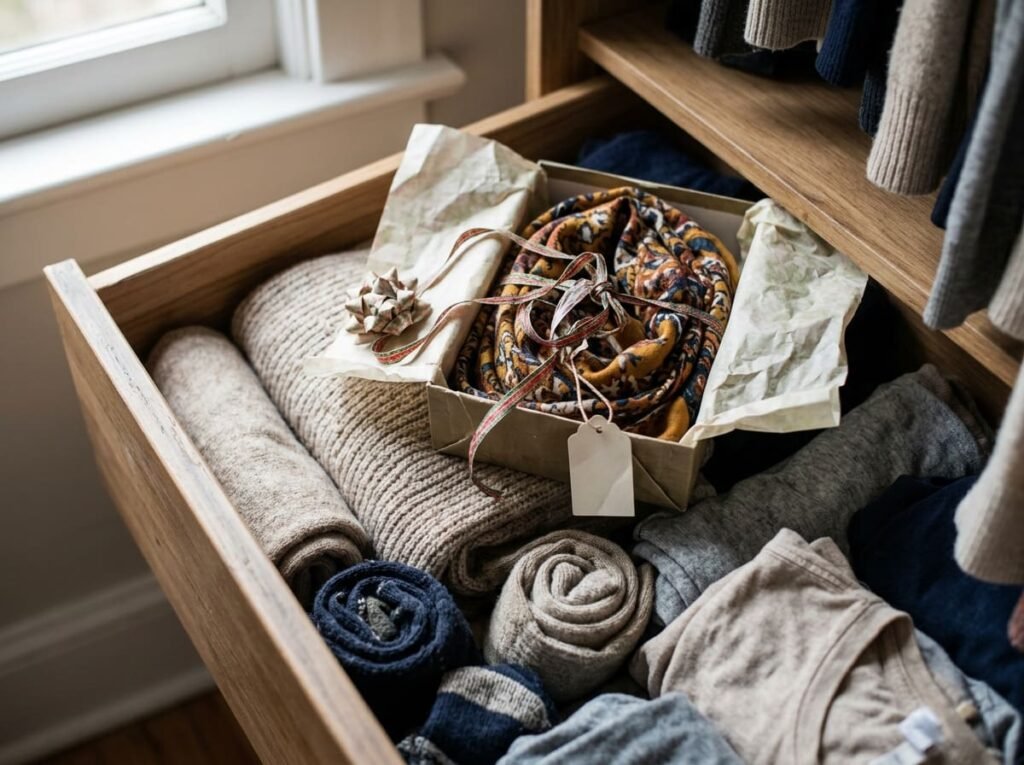
A gift carries the giver’s care, even when the object itself isn’t your style. That care is the real gift. The scarf you’ll never wear has already done its work the moment you were thought of.
Thank the item silently for the thought behind it, then release it.
Pass it to someone who’ll enjoy it, so it keeps doing good.
Keeping it in a closet for years out of fear of being found out.
Treating the giver’s feelings as tied to the object’s survival.
Most givers would rather see you comfortable than see their gift gathering dust.
14. Letting Go of Things Tied to a Past Version of You
Old trophies, hobby gear, work clothes, and outfits from a different body or season of life can feel like proof of who you were. Keeping some of it is fine. But keeping all of it can quietly crowd out who you are now.
A shelf full of reminders of who you used to be, with little room for who you are.
One or two proud keepsakes on display, and space for what’s happening now.
That earlier version of you did real things. Letting go of the gear doesn’t erase them.
15. A Small Goodbye Ritual That Makes Letting Go Feel Respectful
Some people feel better when a goodbye has a moment to it. A short ritual turns “getting rid of stuff” into something closer to thanking it.
Hold the item and say out loud, or in your head, what it meant to you.
Take a photo if you’d like, then say a simple thank you.
Place it in the donation bag or bin right away, then take a slow breath.
Do something small afterward, like making tea or stepping outside, so the moment has a soft landing.
16. Talking to Family First So No One Gets Surprised
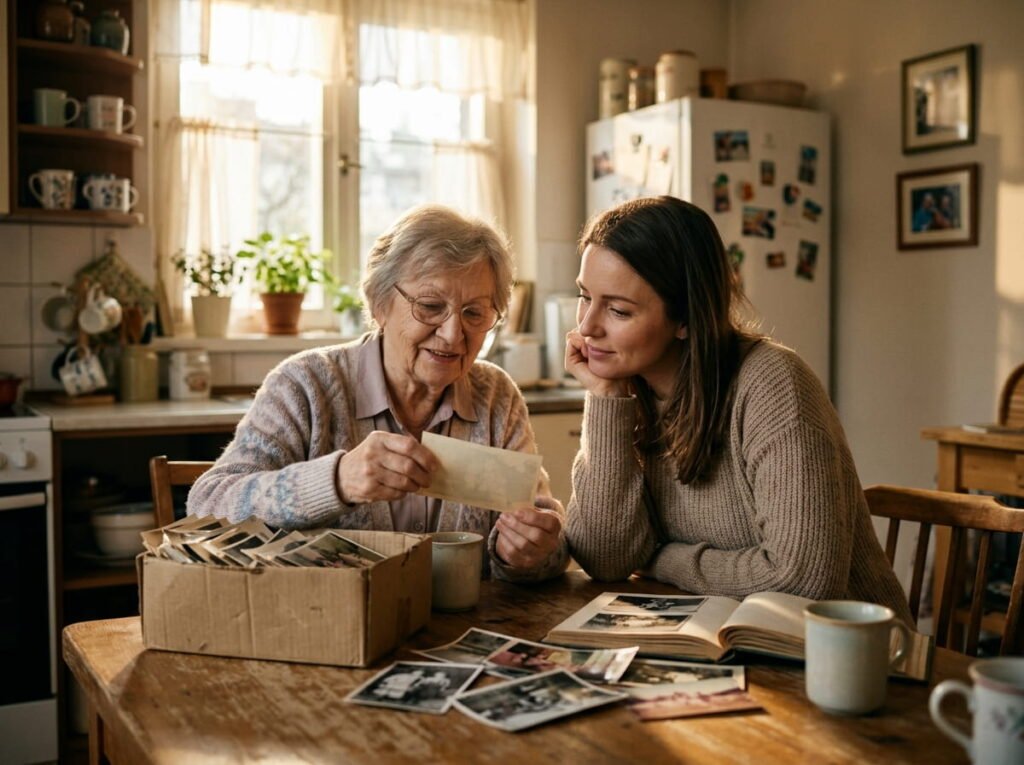
Few things hurt more than a relative asking “wait, where did that go?” after the donation truck has already left. A short conversation first can prevent a long rift later.
Before you let go of shared memories
You aren’t asking permission to live in your own home, only giving people a fair chance to speak up.
17. Displaying a Few Items Instead of Boxing All of Them
A keepsake in a closed box is easy to forget. One on a shelf can brighten an ordinary day. Choosing a few to display lets sentimental things do what they were meant to do, which is remind you.
Keep the display modest. A crowded shelf can bring the heavy feeling right back.
18. Being Kind to Yourself About What You Chose to Keep

Not everything has to go. Some people keep more than a minimalist would, and that’s a valid choice. A home can hold meaningful things without being cluttered, as long as those things are kept on purpose.
The test isn’t how much you own. It’s how you feel living around it. If an item brings warmth, keep it without apology. If it brings dread, that’s worth listening to.
A kept item is a choice, not a failure to finish decluttering.
Come back to these decisions in a year if you like. You’re allowed to change your mind in either direction.
Conclusion
Learning to declutter sentimental items is less about getting rid of things and more about deciding what deserves a place in your life now. A memory doesn’t live in the object. It lives in you, and that’s why you can keep the best pieces, photograph the rest, and still feel connected to everything that mattered.
Go at the pace your heart sets, not the one a checklist suggests. Some boxes will be easy, and others may wait a year. If the weight of it ever feels bigger than the stuff itself, reaching out to a friend or counselor is a kind thing to do for yourself.
Save this list of ways to declutter sentimental items for the day you feel ready to open one more box.