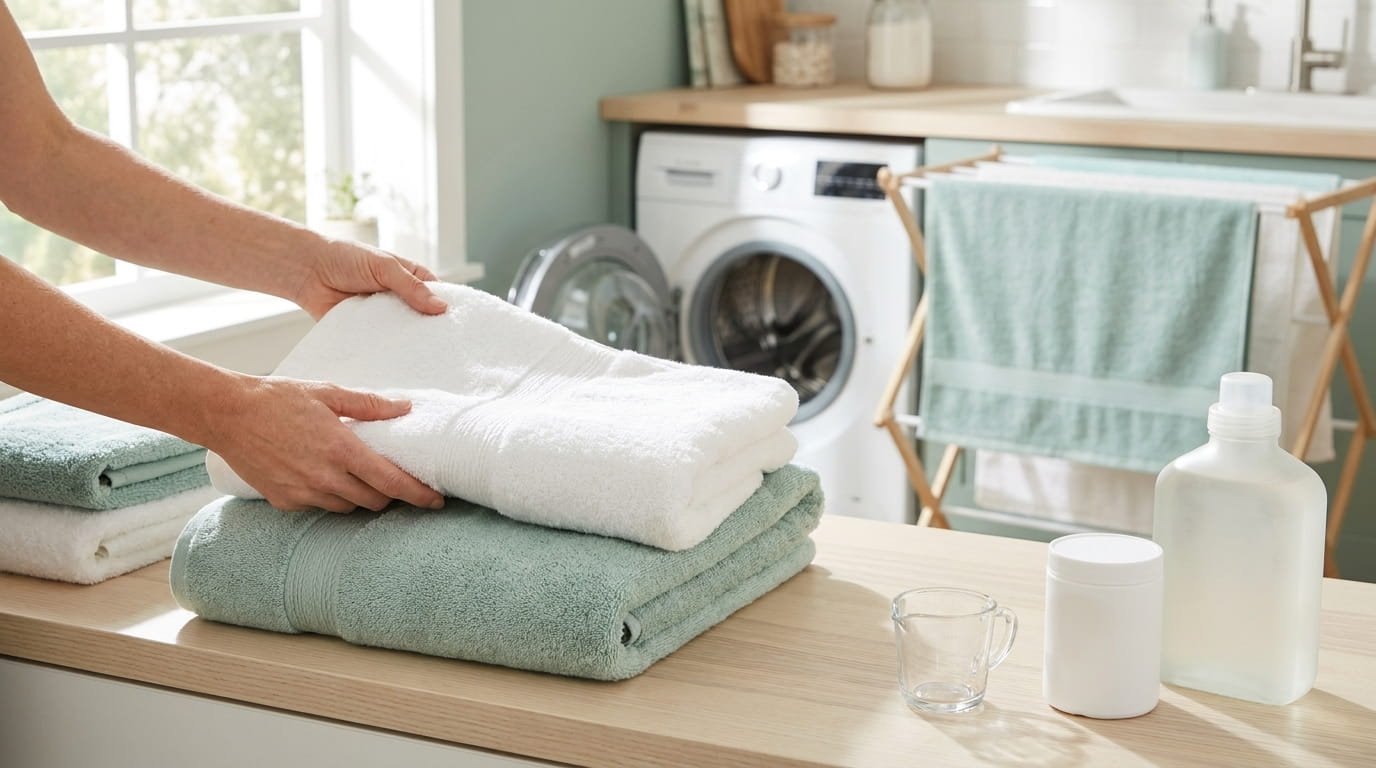
You pull a towel off the rack, dry your face, and catch it: that sour, damp smell. The towel is clean, or at least it went through the wash yesterday.
Most people respond with more detergent, hotter water, or a stronger scent. That usually makes it worse, because the smell is rarely about dirt. It comes from damp cotton, trapped soap, and a washer that never fully dries.
Fixing the musty smell out of towels means finding which of those three is the cause, then breaking the cycle. Some fixes take one extra wash, and a few are habits that cost nothing.
Below are 18 steps, each with a clear method and a quick reference you can screenshot. Check your care labels and washer manual as you go, since fabrics and machines differ.
1. Find Out Why Towels Get a Musty Smell Even When They Look Clean

A towel can look spotless and still smell, because the problem sits deep in the loops.
Cotton holds water for a long time. When it stays damp, bacteria and mildew multiply and release that sour odor. Leftover detergent and softener add food for them. A dirty washer can pass the smell back to every load.
- Damp cotton is the usual starting point
- Soap and softener buildup feeds the smell
- A smelly washer re-infects clean towels
Sniff a freshly dried towel and a damp one. If only the damp one smells, drying is your main culprit.
2. Check the Washer First, Because a Dirty Drum Can Re-Smell Every Load
A fresh load in a smelly machine comes out smelling like the machine.
Open the door and sniff the drum and the rubber seal. Look for slime, black spots, or a sour smell. Front loaders are the worst for this, since water pools in the gasket. If the washer smells, fix it before you re-wash a single towel.
Leave the door ajar between loads so the drum can dry.
💡 Quick Tip
Wipe the gasket with a dry cloth after your last load of the day. Standing water in its folds is where the smell starts.
3. Stop Leaving Wet Towels in a Pile, Hamper, or Gym Bag
A damp towel balled up overnight is the fastest way to start the smell.
Mildew needs moisture and time. Shake out used towels, hang them to dry, and only then put them in the hamper. Skip closed hampers for wet items, and unpack gym bags the moment you get home.
Wet towels left in the washer after a cycle do the same damage, so move them to the dryer or line within a few hours.
Hang used towels open until fully dry.
Unload the washer soon after the cycle ends.
Balling up a wet towel in the hamper.
Leaving a gym bag zipped for days.
4. Strip Wash Smelly Towels With Hot Water and a Simple Reset Soak
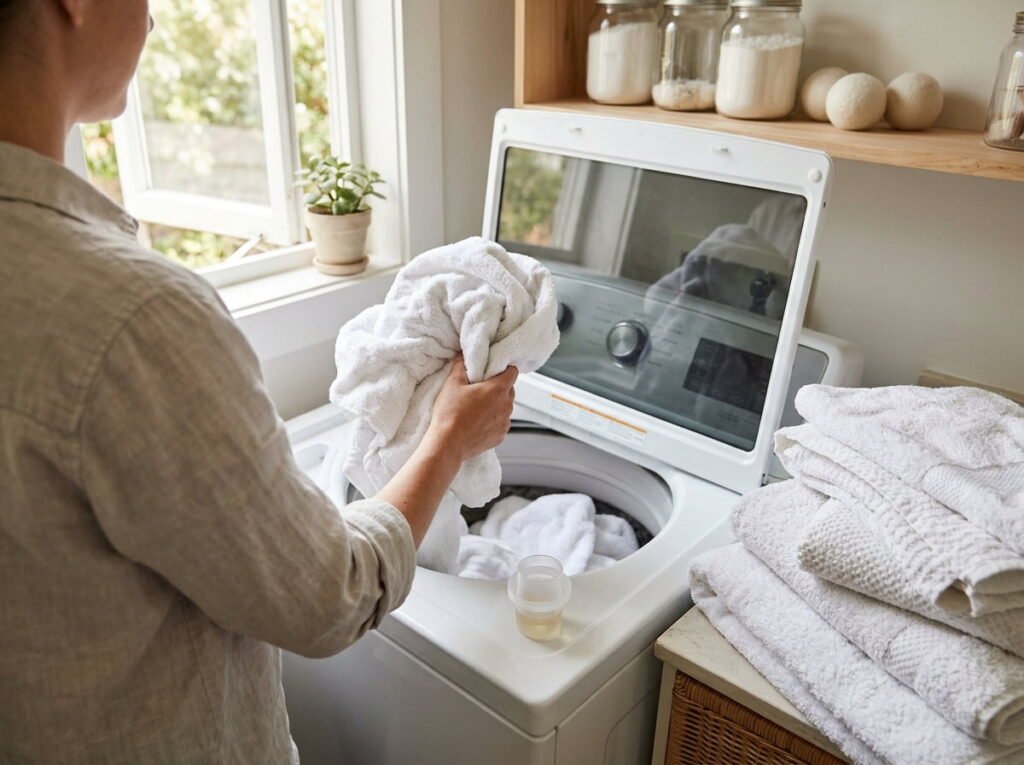
A reset wash clears the buildup that normal cycles leave behind.
Check the care label for the hottest safe temperature. Wash the towels alone, with no softener, on a hot cycle with a small amount of detergent. Run them through a second cycle with plain water and an extra rinse. Wash dark and light towels separately, since hot water can fade dyes.
Open a window and keep the room ventilated while the washer runs.
Wash towels alone on the hottest cycle the label allows, with a small amount of detergent.
Run a second cycle with no detergent and an extra rinse to clear the loosened residue.
Dry completely right away, then sniff test one towel before folding the rest.
5. Use White Vinegar and Baking Soda in Separate Cycles, Never Mixed
Both help with odor, but they work best apart, and neither belongs with bleach.
Run one cycle with a cup of white vinegar in the drum or softener slot and no detergent. Run a second cycle with half a cup of baking soda added to the drum. Do not pour them together, since they cancel each other out. Never add vinegar to a load that also has bleach or an ammonia product, since the fumes are dangerous.
Skip vinegar if your manual warns against it.
6. Know When Oxygen Bleach Helps and When to Skip It
Oxygen bleach is a milder option than chlorine bleach, but it is not right for every towel.
Check the care label first. White and colorfast cotton towels usually handle it well, while dark or dyed towels may fade. Follow the package directions for the amount and soak time, and use only one product at a time. Rinse thoroughly afterward, and keep the room ventilated.
Skip it on towels with rubber backing or special finishes.
Test a small hidden corner first if you are unsure.
| Good fit | Skip it |
|---|---|
| White and colorfast cotton towels. | Dark or brightly dyed towels that may fade. |
| Towels that stay dull after a reset wash. | Towels with a care label that warns against bleach. |
| A soak followed by a full rinse. | Mixing it with vinegar or any other cleaner. |
7. Use Less Detergent, Since Buildup Traps Odor in the Fibers
Towels do not need much soap, and extra stays behind as a film.
Many people pour in a full cap for every load. Towels are only lightly soiled, so a smaller amount rinses out better. Leftover soap makes fibers stiff, dull, and a magnet for bacteria. Try half your usual amount, and adjust from there.
Measure each time. A guess usually runs high.
A full cap of detergent every wash, with stiff towels and a sour smell that returns within a day.
A measured, smaller dose that rinses clear, leaving softer fibers and a neutral smell.
8. Give Towels Room in the Drum So Water and Soap Can Rinse Out
A crammed washer cannot rinse anything properly.
Towels soak up a lot of water and swell as they wash. When the drum is packed, soap stays trapped and the towels stay damp at the center. Fill the drum about two thirds full, and wash towels with other towels, not heavy jeans or sheets.
Loading checklist
9. Run an Extra Rinse Cycle to Clear Soap and Softener Residue
One more rinse is the cheapest fix on this list.
Most machines have an extra rinse option or a deep rinse setting. Use it on every towel load for a few weeks. It pushes out soap and softener that normal cycles leave behind. If your washer lacks the setting, run the towels through a second plain water cycle.
If towels smell fine out of the dryer but sour after use, residue is likely the culprit. Rinse more, use less soap.
10. Skip Fabric Softener, Which Coats Towels and Locks In Smells

Softener makes towels feel soft by coating the fibers, and the coating is the problem.
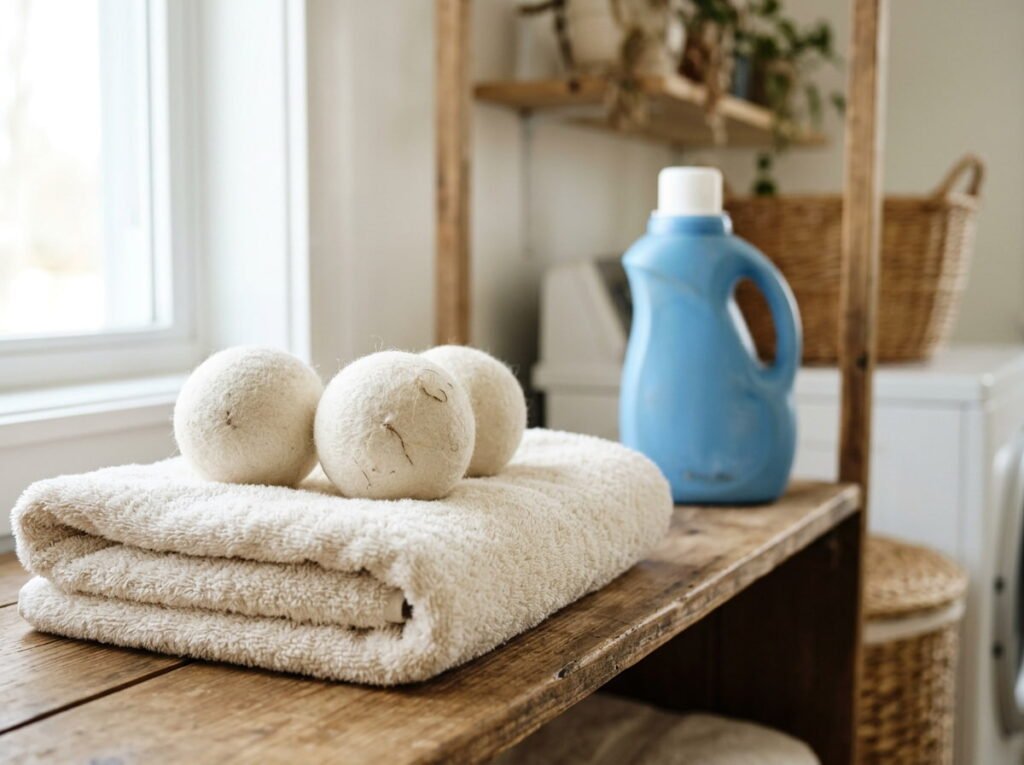
That film reduces absorbency and traps odor. Towels dry people less well, stay damp longer, and smell worse. Skip softener on towels entirely. If you want softness, try a dry cycle with a few wool dryer balls or a splash of white vinegar in a rinse with no bleach present.
- Skip liquid softener and dryer sheets on towels
- Try wool dryer balls instead
- Give the change a few washes to show results
- ▸Softener leaves a waxy film that blocks water from soaking in.
- ▸Dryer sheets build up the same way, and on the dryer lint screen too.
- ▸Fluff towels with a quick shake before folding instead.
11. Dry Towels Fully and Fast, Because Damp Cotton Grows Odor Overnight
Towels that go into a cupboard a little damp come out smelling like a basement.
Cotton can feel dry on the surface and stay wet at the seams and hems. Run the dryer until the thickest part, usually the hem, feels fully dry and not just warm. Add a second short cycle if you are unsure. Clean the lint screen every load, since a clogged one slows drying.
Fold only when the towels have cooled completely.
Leave the dryer door open afterward so the drum can air out.
12. Choose Sun, Line, or Dryer Based on Your Weather and Space
Every drying method works, but each has a catch that can bring the smell back.
Sunlight and fresh air are gentle on odors, but slow in damp or cold weather. A dryer is fast and reliable, though lint buildup can slow it. Indoor racks suit small spaces, but need airflow. Pick the method you can do consistently, not the one that sounds best.
| Line or sun | Dryer |
|---|---|
| Fresh smell and gentle on fibers. | Fast, and works in any weather. |
| Slow in damp or cold air. | Needs a clean lint screen and vent. |
| Can leave towels a little stiff. | Leaves towels soft and fluffy. |
13. Fix Towels Dried in a Humid Bathroom With a Smarter Hanging Routine
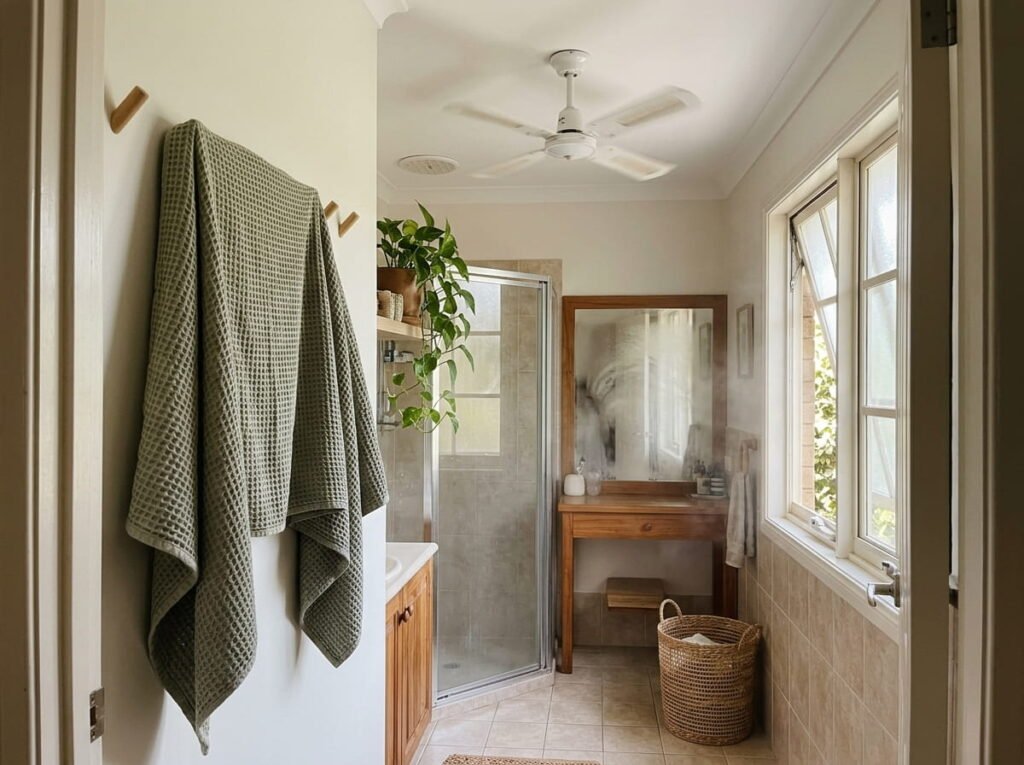
A bathroom that stays steamy keeps towels damp for hours.
Run the exhaust fan during showers and for twenty minutes after. Crack a window if you can. Hang towels fully open, not folded over a bar. If the room never dries out, move towels to a bedroom hook after use.
14. Rotate Towels on a Schedule and Wash Them Before They Turn
A towel is easiest to keep fresh when it never gets the chance to sour.
Give each person a towel and swap it for a clean one every few days. Wash bath towels often, and wash hand and kitchen towels more often, since they stay damp and pick up more. Keep extras so a towel can dry fully between uses.
Give each person two towels so one can dry while the other is in use.
Swap in a fresh bath towel every few days, and wash hand towels more often.
Wash any towel at the first hint of a smell, before it settles in.
15. Treat Stubborn Towels With a Repeat Reset, Then Know When to Replace Them
Some towels are past saving, and keeping them wastes time.
Repeat the reset wash once or twice, using one method at a time. If the smell returns within a day or two, the fibers are likely saturated with residue or worn out. Towels that are thin, stiff, or permanently dull are due for retirement. Cut them into cleaning rags rather than keeping them in rotation.
Repeat the reset once or twice, one method at a time.
Retire towels that smell again within days.
Stacking bleach, vinegar, and other cleaners together.
Keeping worn towels that never smell fresh.
16. Clean the Washer Gasket, Detergent Drawer, and Drain Filter

A smelly washer hands its smell to every towel, so it needs a regular clean.
Wipe the rubber gasket with a cloth and a little warm soapy water, folding it back to reach the slime that hides in the creases. Pull out the detergent drawer, rinse it, and scrub the cavity with an old toothbrush. Check your manual for the drain filter, which often sits behind a small panel near the bottom. Place a towel and a shallow pan under it, since water can spill out.
Run an empty hot cycle afterward, using a washer cleaner if your manual allows it.
Never mix bleach with vinegar or any other cleaner.
Washer clean checklist
17. Hang a Towel Right: Spacing, Hooks, and Airflow in a Small Bathroom
How a towel hangs decides how fast it dries.
A towel folded over a bar stays wet in the middle for hours. Hang it spread wide on a hook or a bar with space around it, away from the shower spray. In a small bathroom, add a second hook, a door hook, or an over the door rack so towels do not overlap.
Two towels folded and stacked on one bar, damp in the middle by bedtime.
Each towel on its own hook, spread wide, drying fully with air on both sides.
18. Build a Simple Weekly Routine That Keeps Towels Fresh for Good

Fresh towels come from a few small habits, not a big fix.
Pick a weekly laundry day for towels. Wash with a measured, small amount of detergent, no softener, and an extra rinse. Dry fully, and check the hem. Once a month, wipe the washer gasket and drawer. Hang towels open after every use.
If a smell comes back, go back to step one and find which of the three causes is at work.
📌 Good To Know
Weekly: wash, extra rinse, dry fully. Monthly: wipe the gasket and drawer. Daily: hang towels open. Check your care labels and washer manual, since machines and fabrics differ.
Conclusion
A musty towel is rarely a dirt problem. It is damp cotton, leftover soap, or a tired washer, and each one has a simple fix once you know which is to blame.
Use less detergent, skip the softener, and give towels room to rinse. Dry them fully, hang them open, and wipe the washer gasket now and then. With these habits, getting the musty smell out of towels stops being a battle and becomes a routine. If a towel still smells after a repeat reset, it may simply be time to retire it.
Save this list for the next time a towel smells off, so the fixes are ready before you reach for more detergent.