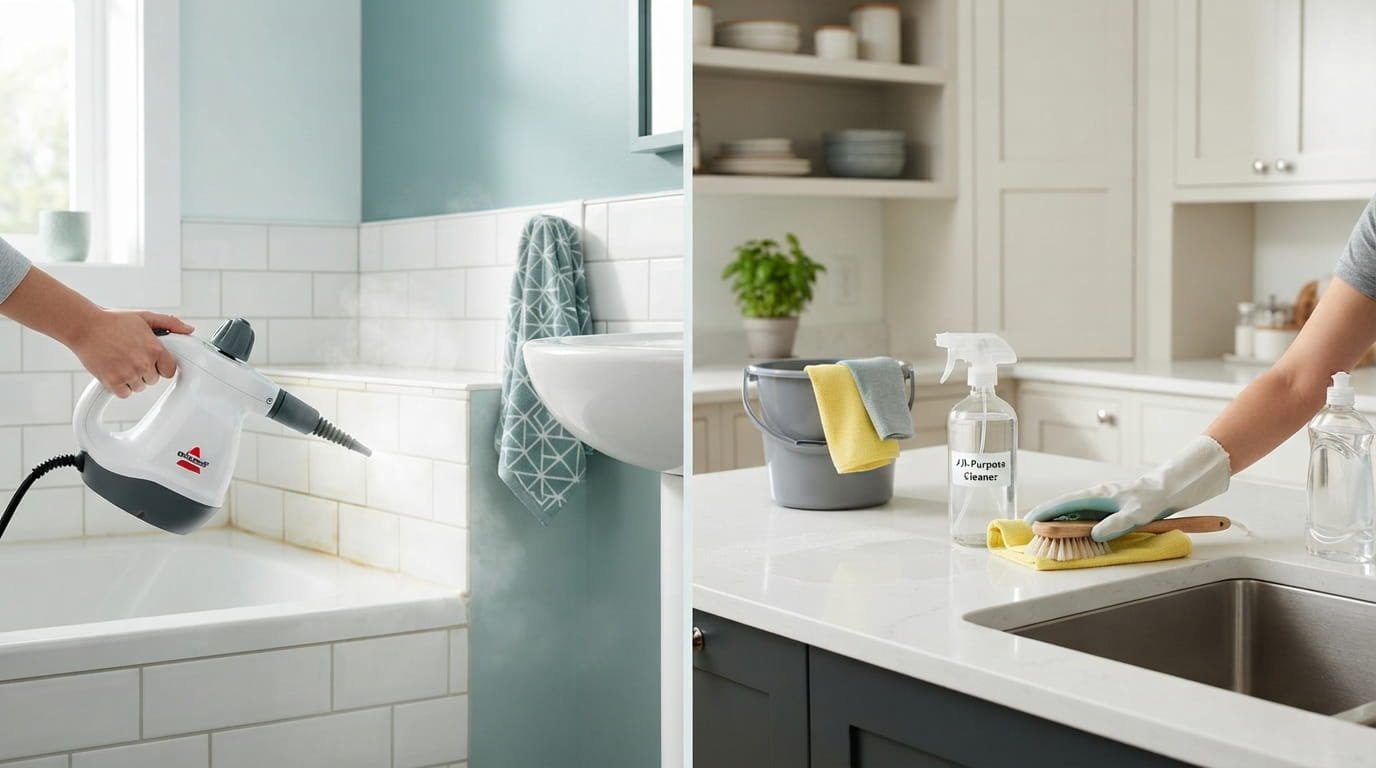
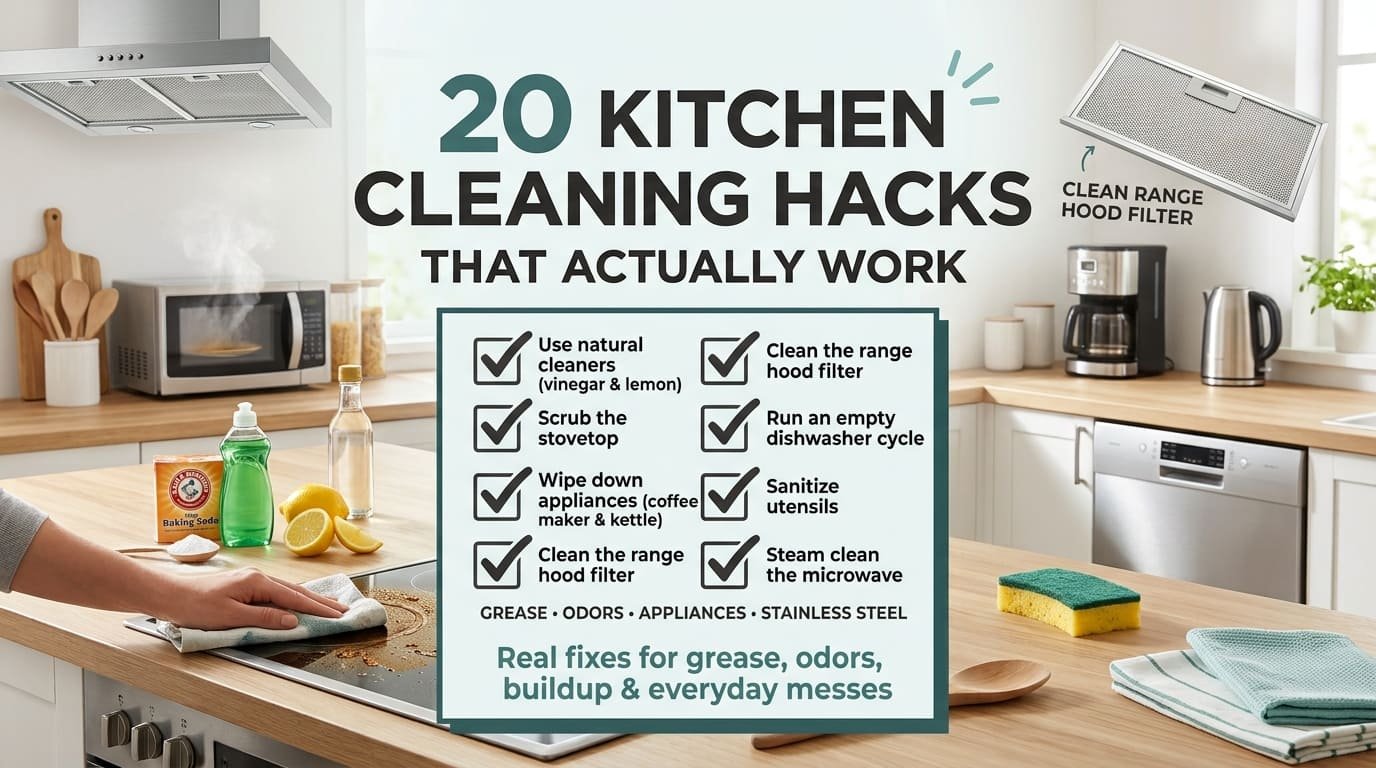
Half the kitchen cleaning tips floating around online sound good until you actually try them and end up with streaky counters or a microwave that’s somehow worse than before. The gap between a cute idea and something that actually works is bigger than most people expect.
These kitchen cleaning hacks are the ones that hold up past the first try. No fifteen ingredient concoctions, no waiting three days for results. Just specific fixes for the messes that show up in every kitchen, from baked on grease to a garbage disposal that’s started to smell.
Some of these take two minutes. Others need to sit overnight. All of them use things you probably already have in a cabinet somewhere, not a specialty cleaner you’d have to special order. Skip the ones that don’t apply to your kitchen and keep the rest handy for the next time something needs more than a quick wipe.
1. The Dish Soap and Baking Soda Paste That Cuts Through Baked On Grease

Baked on grease laughs at regular dish soap, especially the stuff that’s been building up on a stovetop or oven rack for months.
Mix dish soap and baking soda into a thick paste, spread it over the grease, and let it sit before scrubbing.
Works on stovetops, oven racks, and range hood surfaces without needing a scouring pad that scratches the finish.
2. Why Running Your Sponge Through the Dishwasher Actually Works
A sponge that smells even after rinsing isn’t actually clean, it’s just wet. Bacteria live deep in those little pockets that a quick rinse never reaches.
💡 Quick Tip
Toss your sponge in the top rack of the dishwasher on a hot cycle once a week. The heat does what rinsing alone can’t.
Still replace the sponge every couple weeks regardless. This just stretches how long each one stays actually usable.
3. Cleaning the Microwave With Steam Instead of Scrubbing at Dried Food
Scraping dried sauce off the inside of a microwave with a fingernail is nobody’s idea of a good time, and it usually doesn’t even work that well.
Steam loosens everything first, so scrubbing becomes almost unnecessary.
Microwave a bowl of water with a splash of lemon juice for three minutes.
Leave the door closed for five more minutes so the steam keeps working.
Wipe the inside with a cloth, no scrubbing required at this point.
The lemon juice cuts the smell too, which matters if the microwave’s been holding onto last week’s fish leftovers.
4. The Vinegar Trick That Descales a Coffee Maker Without Buying a Cleaner
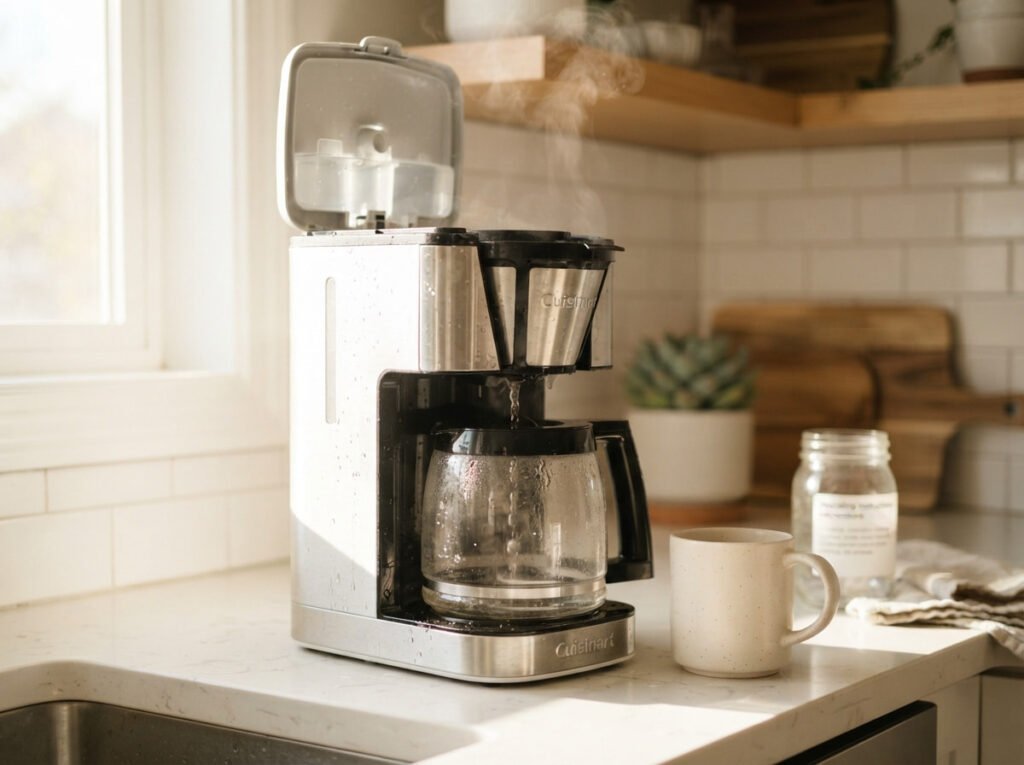
A coffee maker running slower than usual, or coffee that tastes slightly off, is usually mineral buildup talking, not a machine that’s actually failing.
Do this every month or two, more often if your water is especially hard where you live.
5. Why Your Cutting Board Needs Salt and a Lemon, Not Just Soap
Soap and water clean the surface, but they don’t do much for the stains and smells that soak into wood or plastic over time, especially after cutting garlic or onions.
📌 Good To Know
Sprinkle coarse salt over the board, scrub with half a lemon, then rinse. The salt lifts stains while the lemon cuts odor.
This works especially well on wooden boards, which absorb smells more than plastic ones do.
6. Getting Grease Off Cabinet Fronts Without Leaving Streaks Behind
Kitchen cabinets near the stove collect a thin film of grease that most people don’t notice until it’s caught the light just right, and by then it’s sticky enough to attract dust too.
Wipe with a mix of warm water and a few drops of dish soap.
Dry immediately with a separate clean cloth.
Don’t spray cleaner directly onto the cabinet, it pools in the seams.
Don’t let the cabinet air dry, that’s what causes the streaks.
The drying step matters more than the cleaning step here. Skipping it is the whole reason streaks show up.
7. The Dishwasher Trick That Cleans Itself While You Do Something Else
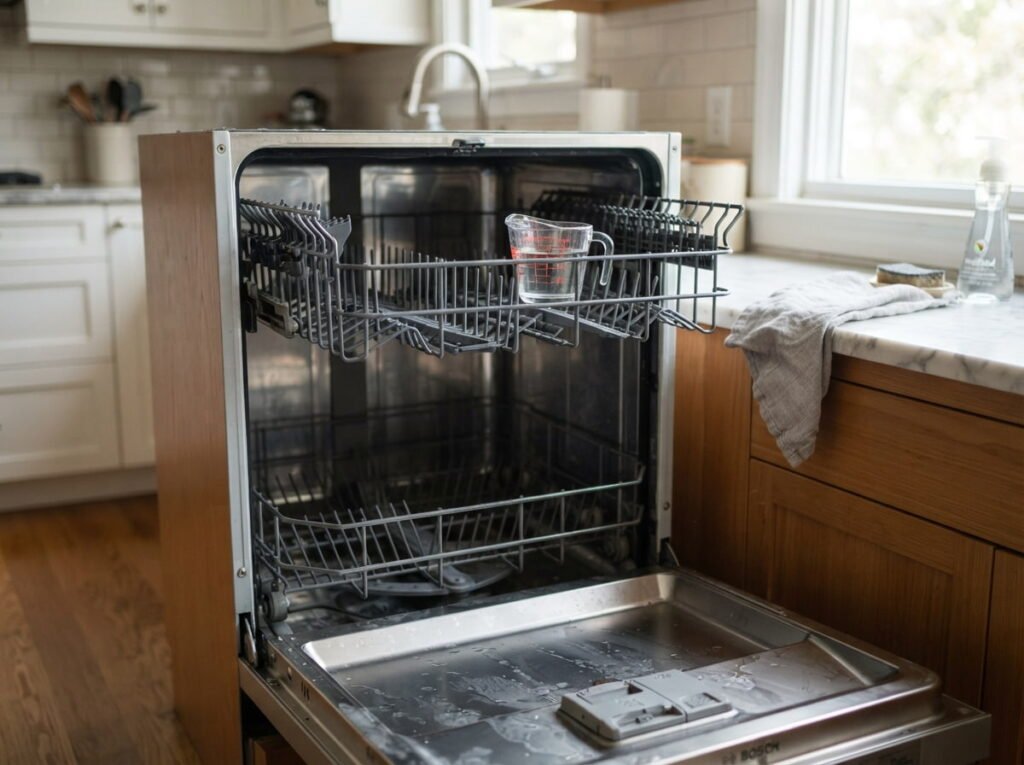
A dishwasher that smells musty or leaves dishes cloudy usually needs its own cleaning cycle, something most people never think to do since it’s the appliance that cleans everything else.
Self clean dishwasher checklist
Do this once a month and the machine keeps smelling clean without any scrubbing on your part.
8. Wiping Down the Fridge Shelves With a Solution That Actually Kills Odor
A fridge that smells off even after tossing expired food usually has odor trapped in the shelves themselves, not just floating around in the air.
The open box left in the back absorbs whatever smell tries to build up between deeper cleanings.
9. Why the Garbage Disposal Needs Ice and Citrus, Not Just Water
Running plain water through the disposal rinses the surface but leaves the blades and rubber gasket coated in whatever’s been ground up over the past few weeks.
⚠️ Watch Out
Never put your hand near the disposal while it’s running, even to check if it’s clean. Turn it off at the switch first.
Drop in a handful of ice cubes with citrus peels, run cold water, and turn on the disposal. The ice scrubs the blades while the citrus cuts the smell.
10. Cleaning Stovetop Burner Grates Without Scrubbing for Twenty Minutes
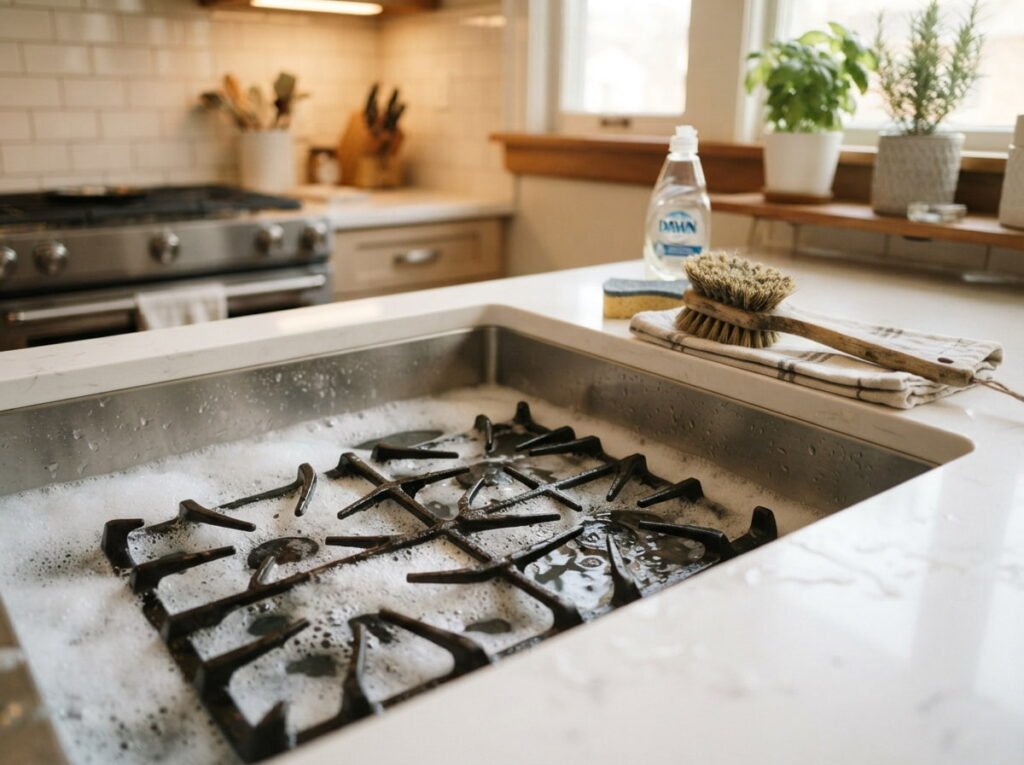
Cast iron and metal burner grates trap grease in every crevice, and scrubbing them dry usually just moves the grime around instead of actually removing it.
Grates crusted with baked on grease that won’t budge with a scrub brush.
Grime lifts off easily after soaking, with barely any scrubbing needed.
Soak the grates in hot water with dish soap for twenty minutes before touching them with a brush. The soak does most of the actual work.
11. The Trick for Getting Water Spots Off Stainless Steel for Good
Water spots on a stainless steel sink or appliance come back almost immediately after wiping unless you address them the right way from the start.
- Dry the surface completely right after use, don’t let water sit and evaporate on its own
- Wipe in the direction of the grain, not against it, to avoid dulling the finish
- Use a few drops of mineral oil on a soft cloth for a finish that resists new spots
- ▸Dry the surface completely, don’t let water evaporate on its own.
- ▸Wipe with the grain, not against it, to avoid dulling the finish.
- ▸Finish with a few drops of mineral oil on a soft cloth.
The mineral oil step feels unnecessary the first time, but it’s the difference between spots reappearing in an hour versus a full week.
12. Why a Dryer Sheet Works Surprisingly Well on Baked On Stovetop Grime
A used dryer sheet still has enough fabric softener left on it to help loosen grease, which makes it an unlikely but effective tool for the kitchen.
It won’t replace a real degreaser on the worst spots, but for daily grime it’s a surprisingly good stand in.
13. Cleaning Your Oven Door Glass Without a Single Harsh Chemical
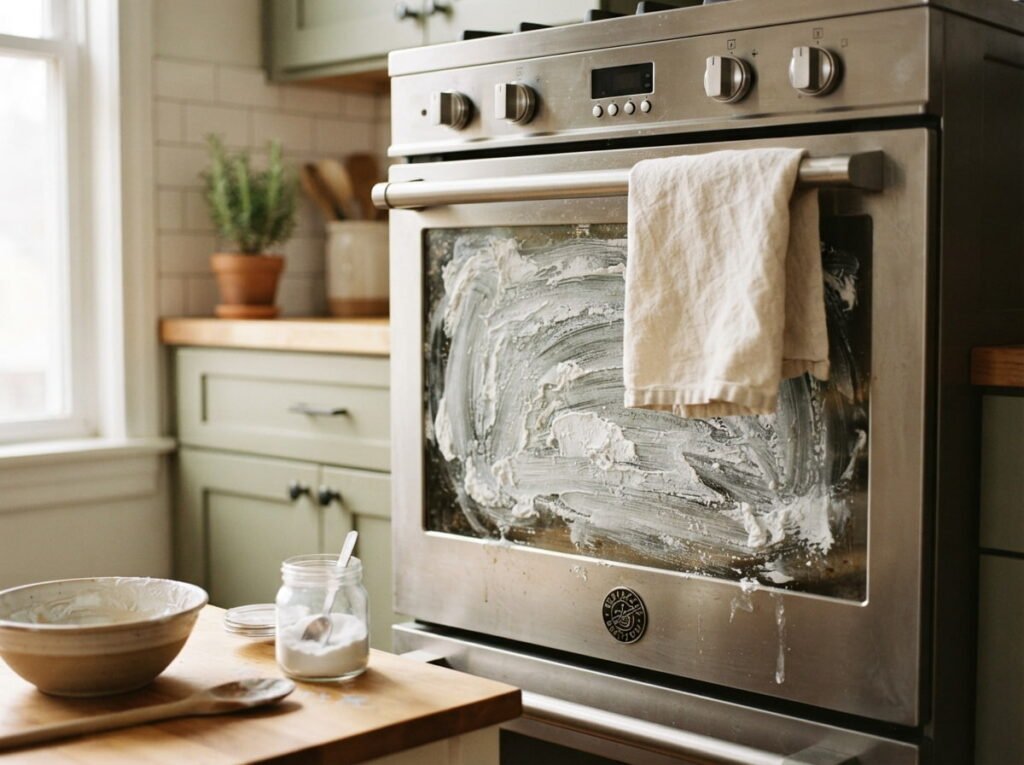
The window on an oven door builds up a hazy film over time that regular glass cleaner barely touches, since it’s baked on grease rather than simple fingerprints.
Spread a paste of baking soda and water over the glass.
Let it sit for fifteen minutes so it can break down the film.
Wipe away with a damp cloth, going over it twice if needed.
No fumes, no strong smell left behind, and it’s safe to do even with kids nearby in the kitchen.
14. The Simple Trick That Keeps Your Trash Can From Smelling Between Bag Changes
A trash can that smells even with a fresh bag inside usually has residue built up on the bottom or sides that the bag itself never touches.
💡 Quick Tip
Sprinkle a thin layer of baking soda in the bottom of the can before adding a new bag. It absorbs smells without needing to be wiped out constantly.
Every few weeks, still give the can a real wash with soap and water, since baking soda helps but doesn’t replace an actual clean.
15. Store Bought Degreaser vs a Homemade Dish Soap Spray, Which Wins
Store bought degreasers are built for tough, stubborn grease, but that strength comes with a smell and a price tag that isn’t always necessary for everyday messes.
| Store Bought Degreaser | Homemade Dish Soap Spray |
|---|---|
| Stronger on heavy, baked on buildup | Gentle enough for daily wipe downs |
| Comes with a stronger chemical smell | Costs pennies using dish soap and water |
Save the store bought version for the deep cleans and let the homemade spray handle everything in between.
16. Why Cleaning the Range Hood Filter Matters More Than People Think
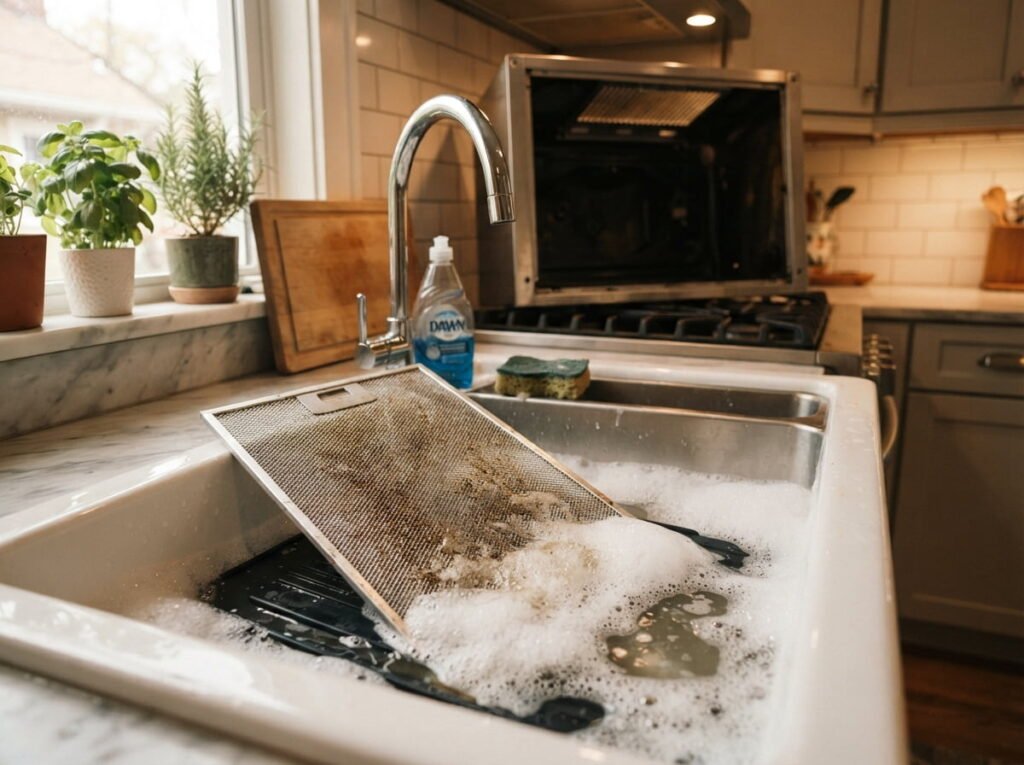
A greasy range hood filter doesn’t just look bad, it actually works less effectively at pulling smoke and grease out of the air the dirtier it gets.
Soak the filter in hot water with dish soap and baking soda.
Clean it once a month if you cook often, less if you don’t.
Don’t ignore it just because it’s out of sight above the stove.
Don’t scrub with anything abrasive that can damage the mesh.
A clean filter also cuts down on the greasy film that ends up settling on nearby cabinets over time.
17. The Right Way to Clean a Wooden Spoon So It Doesn’t Hold Onto Smells
A wooden spoon used for everything from garlic to curry starts holding onto every smell it’s ever touched, even after a regular wash.
A spoon that smells faintly of every meal it’s stirred, even freshly washed.
A neutral smelling spoon after a proper soak in salt and lemon water.
Soak it in warm water with salt and lemon juice for ten minutes, then let it air dry fully before storing it away.
18. Descaling Your Kettle With Something Already Sitting in Your Pantry
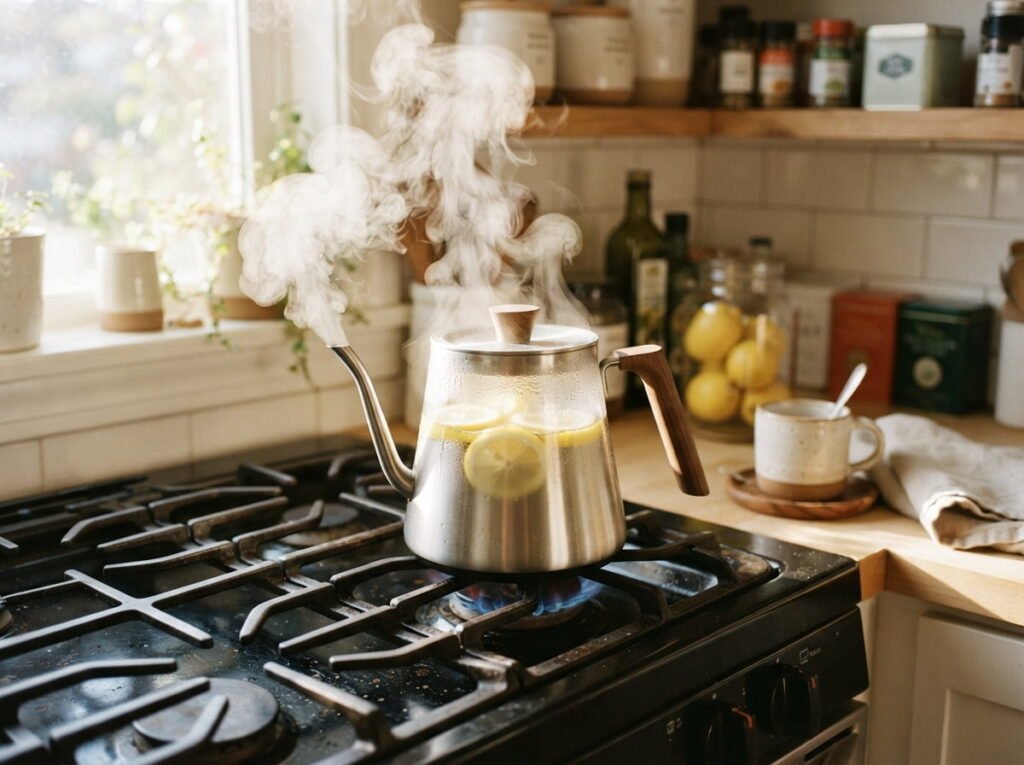
White flecks floating in your tea or a kettle that takes longer to boil are both signs of mineral buildup, and it’s an easy fix without buying anything special.
Do this monthly if your area has hard water, or every couple months if you’re not sure how hard yours actually is.
19. Why Wiping Counters With the Same Cloth All Week Undoes Your Effort
A dish cloth used all week without washing spreads bacteria around more than it actually removes, no matter how often you rinse it under the faucet.
Cloth rotation basics
Having a few clean cloths on hand makes swapping easy enough that it actually becomes a habit instead of an afterthought.
20. The Two Minute Reset That Keeps a Clean Kitchen From Sliding Back
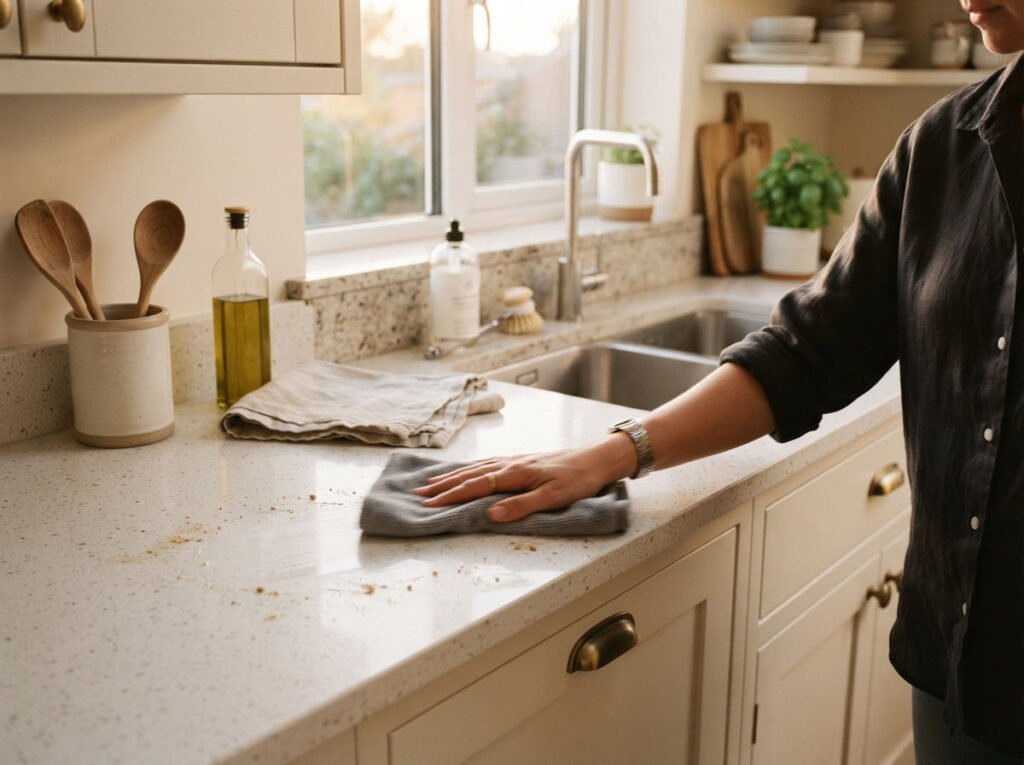
A kitchen that’s been deep cleaned still slides back into clutter fast if nothing’s done to catch small messes before they pile up.
A two minute wipe down after each meal keeps a deep cleaned kitchen from undoing itself within a week.
Wipe the counters, rinse the sink, and put away anything left out. It’s small enough to actually stick as a habit.
Conclusion
The best kitchen cleaning hacks aren’t complicated. They use what’s already in your pantry and solve the specific messes that actually show up, baked on grease, a smelly disposal, water spots that keep coming back. None of it requires a cabinet full of specialty cleaners or hours of scrubbing.
Try a few of these the next time something in your kitchen needs more than a quick wipe. Some will become habits without you even noticing, like the two minute reset after dinner or tossing the sponge in the dishwasher once a week.
Save this list for the next time your kitchen needs a little extra help.