Sticky notes on the fridge work for about a week before they curl up, fall behind the toaster, or just get ignored entirely once the novelty wears off. Reminders scattered across your phone, a notebook, and random scraps of paper mean nobody in the house actually knows what needs to happen today, let alone this month.
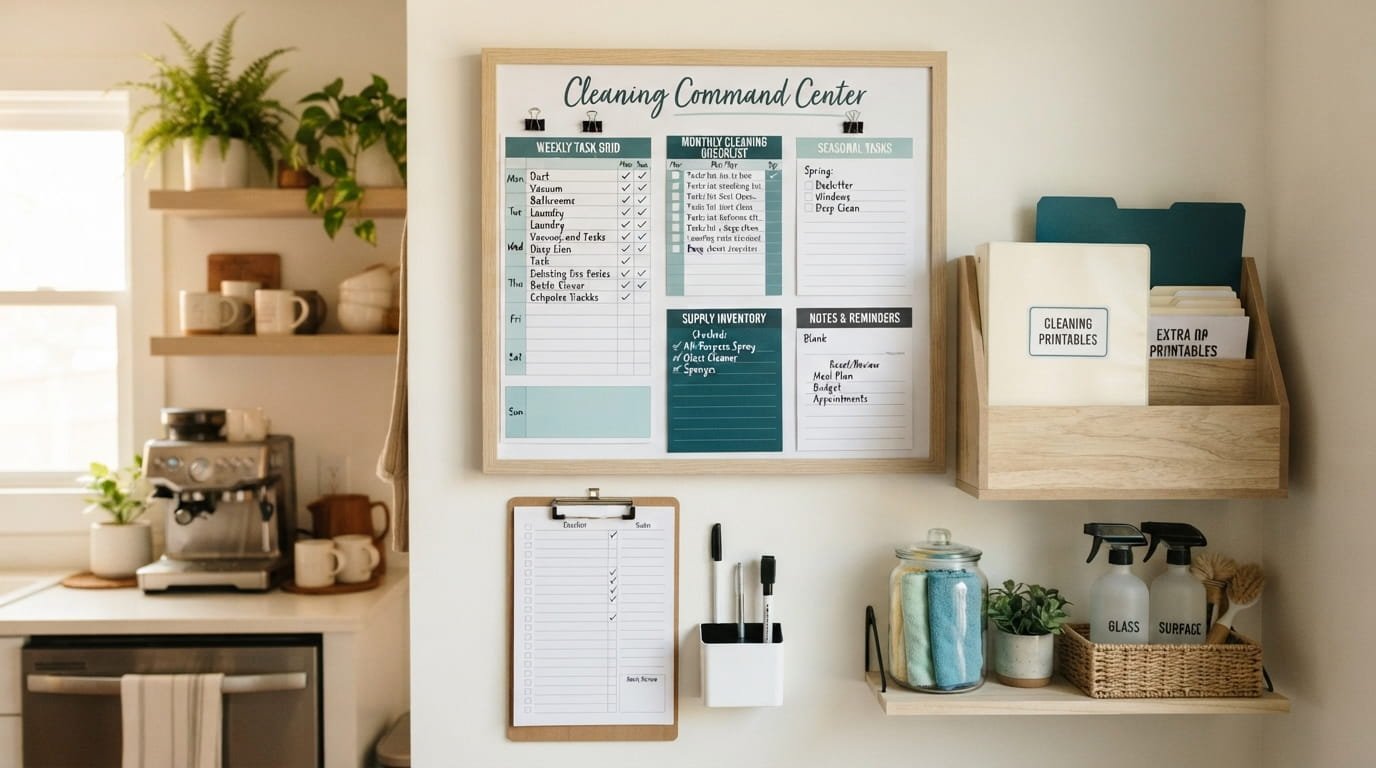
A cleaning command center fixes that by giving every task, every zone, and every family member one single place to look. It’s not about fancy decor or a Pinterest perfect wall display. It’s a working system that answers “what needs to get done” without you having to remember it all yourself.
This guide walks through the printables and setup choices that make a command center something people actually use, not something that gets decorated once and forgotten within a month. Some pieces matter more than others, so build gradually and skip whatever doesn’t fit your household.
1. Why a Cleaning Command Center Beats Sticky Notes and Random Reminders
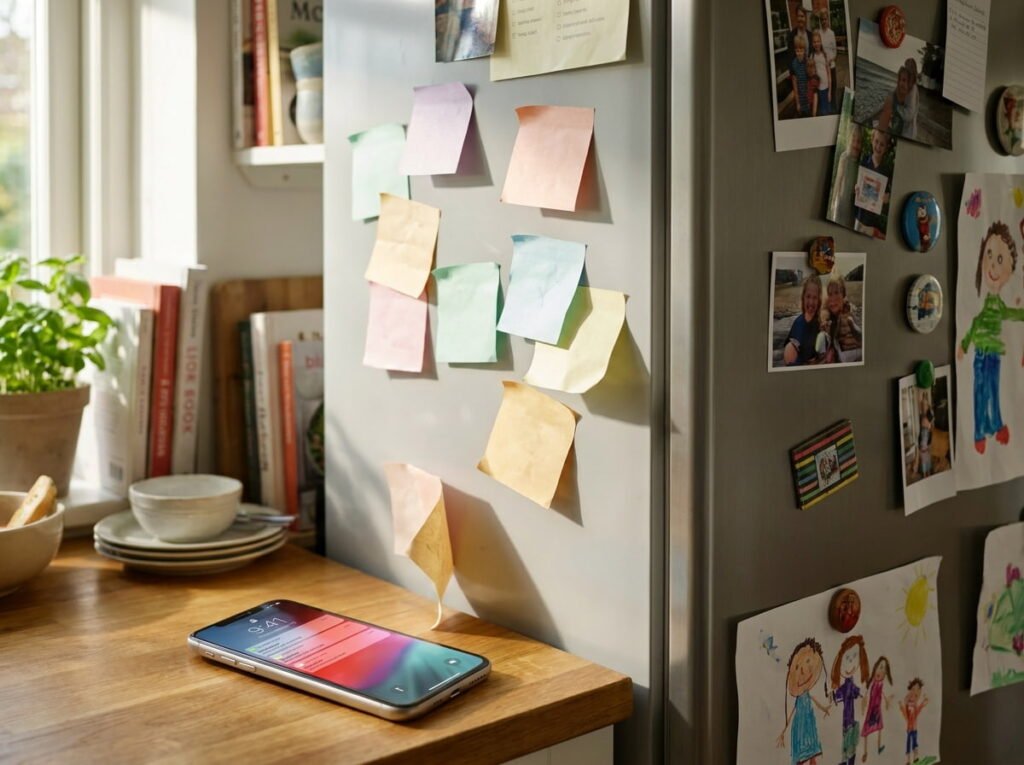
Sticky notes work for exactly one task before they fall off, get buried, or simply get ignored once something more urgent shows up.
One consistent spot for every task beats a dozen scattered reminders nobody actually checks.
Everything else in this list builds toward that one central spot, so nothing has to live only in your head anymore.
2. Picking the Right Wall or Cabinet Spot Before You Print a Single Thing
Printables mounted somewhere nobody walks past get ignored just as easily as the sticky notes they were meant to replace.
💡 Quick Tip
Pick a spot you pass daily without trying, like the inside of a pantry door or a wall near the coffee maker. Visibility matters more than looks here.
Choose the location before printing anything, since the size of your space determines how many printables actually fit without feeling crowded.
3. The Core Printables Every Command Center Actually Needs to Start
Starting with too many printables at once usually means half of them get ignored before you’ve even used the board for a week.
Starter printable set
Add more printables later once these three are actually being used consistently, not before.
4. Building a Weekly Task Grid That Shows the Whole House at a Glance
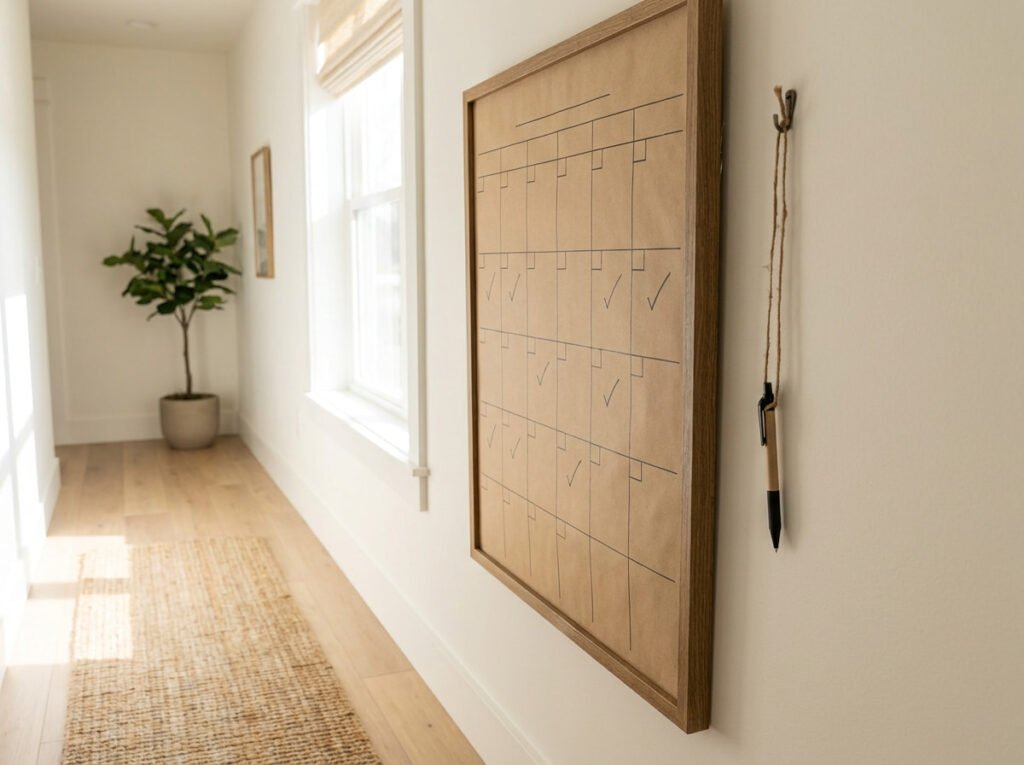
A weekly grid works because it turns “clean the house” into something specific enough to actually act on the moment you glance at it.
Keep it to five or six tasks a week. A grid crammed with every possible chore becomes just as easy to ignore as no grid at all.
5. Why a Monthly Deep Clean Printable Belongs Right Next to the Weekly One
Deep tasks like baseboards or the oven interior get forgotten entirely when they’re not written down somewhere separate from the daily grind.
List four to six deep tasks that only need monthly attention.
Assign one task per week so nothing gets crammed into one day.
Check off tasks as they’re finished, then reset the sheet next month.
Placing this printable right beside the weekly grid keeps both timeframes visible without having to flip through separate pages.
6. Assigning Zones by Room So the Board Doesn’t Turn Into One Long List
A single unbroken list of every task in the house is overwhelming to look at, even when the actual amount of work is completely manageable.
Group tasks under clear headers like kitchen, bathrooms, and common areas.
Keep each zone’s list short enough to read in one glance.
Don’t list every task in one long unbroken column.
Don’t mix daily and monthly tasks under the same zone header.
Zones make the board readable at a glance, which matters more than most people expect when everyone’s rushing past it on a busy morning.
7. Adding a Supply Inventory Sheet So You Know What’s Running Low
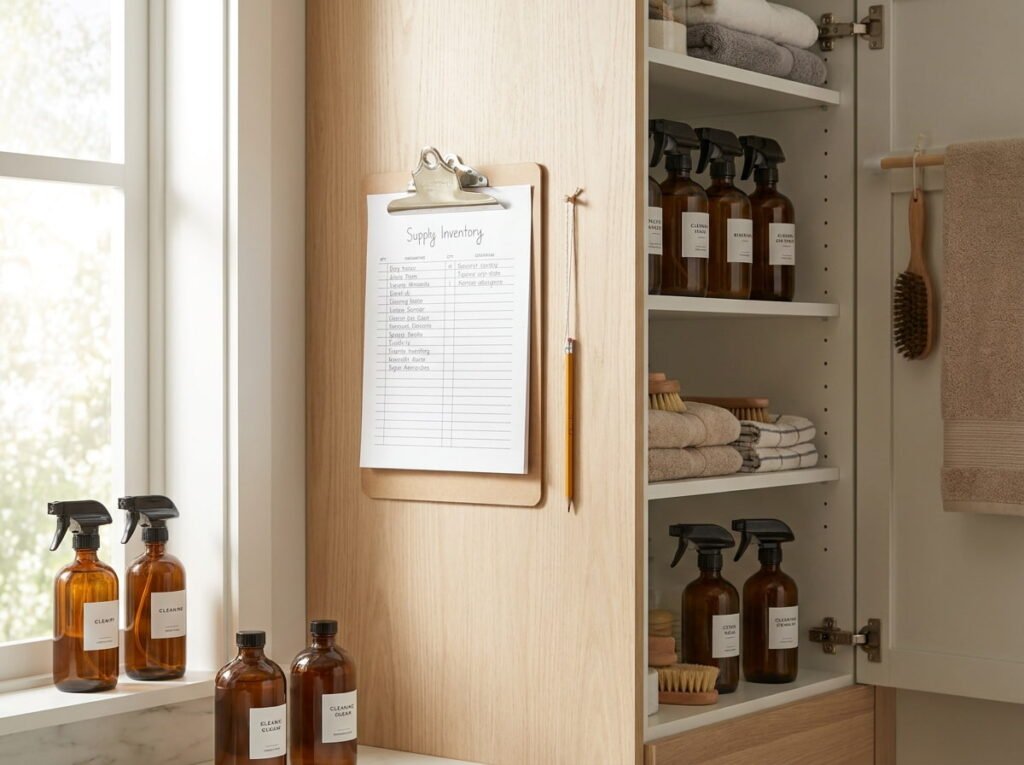
Running out of dish soap mid clean, or realizing there’s no more all purpose spray, wastes time that a simple checklist could have prevented entirely.
📌 Good To Know
Keep a running list of cleaning supplies with a small box to check when something’s low. Glance at it before your next grocery trip.
A pencil hanging right next to this sheet makes checking off low supplies as easy as noticing they’re running out.
8. The Laminating Trick That Turns Printables Into Reusable Checklists
A paper printable gets marked up once and then needs reprinting, which quietly adds up in both cost and effort over a full year.
One laminated sheet reused every week beats printing a fresh one over and over, both for your printer ink and your patience.
9. Color Coding Tasks by Family Member So Everyone Knows Their Section
A board without color coding means everyone has to read every line to figure out what’s actually theirs, which slows down a system meant to save time.
A basic set of highlighters is all this takes, no special printer settings or extra printables required.
10. Why a Seasonal Task Printable Keeps the Board From Feeling Repetitive
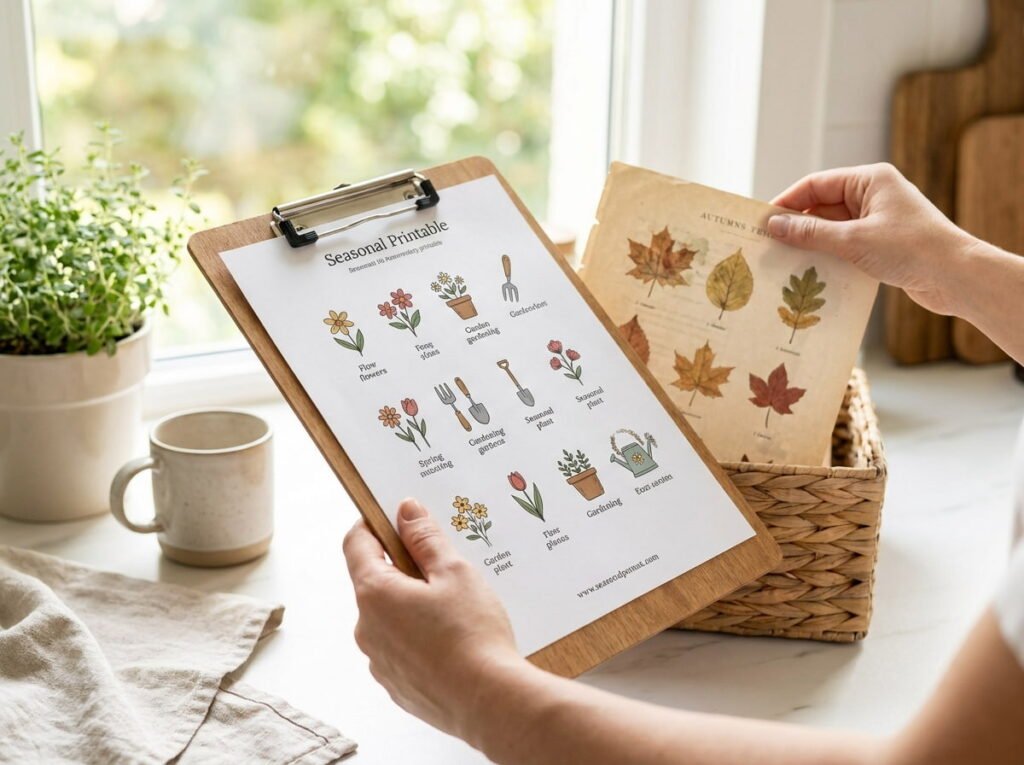
A board that only ever shows the same weekly tasks starts to feel stale after a few months, even if the system itself is still working fine.
⚠️ Watch Out
A stale board people stop reading is just decoration at that point. Swapping in a seasonal sheet keeps it feeling current and worth checking.
Swap the seasonal printable at the start of each new season, so there’s always something fresh alongside the steady weekly and monthly routines.
11. Choosing Between a Binder, a Clipboard, or a Wall Mounted Board
Not every household has room for a full wall display, and the right format depends more on your space than any particular style trend.
| Binder or Clipboard | Wall Mounted Board |
|---|---|
| Easy to move around or tuck away | Always visible without pulling it out |
| Good for small apartments with less wall space | Better for households with several people to check it |
A clipboard hung on a single hook works surprisingly well as a middle ground between the two, if neither option feels quite right.
12. The Command Center Mistake of Adding Too Many Printables at Once
A brand new command center covered in ten different printables looks impressive on day one and gets ignored entirely by day ten.
Start with two or three printables and use them for a full month.
Add a new printable only once the current ones feel automatic.
Don’t set up every printable idea you’ve found all at once.
Don’t judge the system after one week, give it real time first.
A slower start with fewer moving parts is far more likely to still be working six months from now.
13. Setting Up a Simple Key or Legend So Symbols Make Sense to Everyone

Color codes and small icons on a busy board mean nothing if only the person who made it actually knows what they stand for.
- A small legend card explaining each color and symbol used
- Placed somewhere visible, not tucked behind other printables
- Updated any time a new color or symbol gets added to the system
- ▸A small legend explaining each color and symbol used.
- ▸Placed somewhere visible, not tucked behind other printables.
- ▸Updated any time a new color or symbol gets added.
Even a five minute conversation explaining the legend to everyone in the house saves confusion down the line.
14. Why a Blank Notes Section Matters as Much as the Structured Printables
A board with only rigid checklists leaves nowhere to jot down a one time task, like a repair reminder or a note about a guest arriving.
A rigid board with no room for anything outside the structured checklists.
One open notes space that catches whatever the checklists don’t cover.
A single blank sheet with a pencil attached is enough. It doesn’t need its own structure to be useful.
15. Printing in Black and White vs Color, Which Actually Holds Up Better
Color printables look appealing on a screen, but they cost more in ink and don’t necessarily function any better once they’re actually hanging up.
| Color Printing | Black and White |
|---|---|
| Visually appealing but costs more ink | Cheaper and just as functional |
| Colors can fade unevenly over time | Text stays sharp and easy to read for longer |
Save color printing for anything relying on the color coding itself, and print the rest in black and white to keep costs down.
16. Building in a Reset Day Printable So the Board Gets Reviewed Weekly

A board nobody reviews slowly drifts out of date, still showing last month’s seasonal tasks or a supply list that’s no longer accurate.
Pick one day a week to reset the board, wiping checkmarks and swapping anything that’s outdated.
Sunday evening works well for most households, right before the new week’s tasks actually begin.
17. Where to Store Extra Printables So You’re Not Reprinting Every Month
Printing a fresh batch of sheets every single month wastes both paper and time when a little organization solves the problem entirely.
Printable storage basics
A folder within arm’s reach of the board itself means swapping a sheet takes seconds instead of a trip to find the printer file again.
18. Why Involving Kids in Designing Their Section Makes Them Actually Use It

A section of the board designed entirely by a parent, with no input from the kids expected to use it, often gets ignored the same way any imposed rule tends to.
A kids section designed entirely by a parent, largely ignored within days.
A section kids helped design and choose colors for, actually checked daily.
Let kids pick their own color, choose stickers for finished tasks, or decide which chores go on their list within reason.
19. The Command Center Layout That Works for Small Apartments Too
A full wall display isn’t realistic in a small apartment, but that doesn’t mean the whole idea has to be abandoned entirely.
A single laminated sheet combining the weekly grid and notes section covers most of what a small household actually needs.
20. Keeping the Board From Turning Into Clutter Itself Over Time
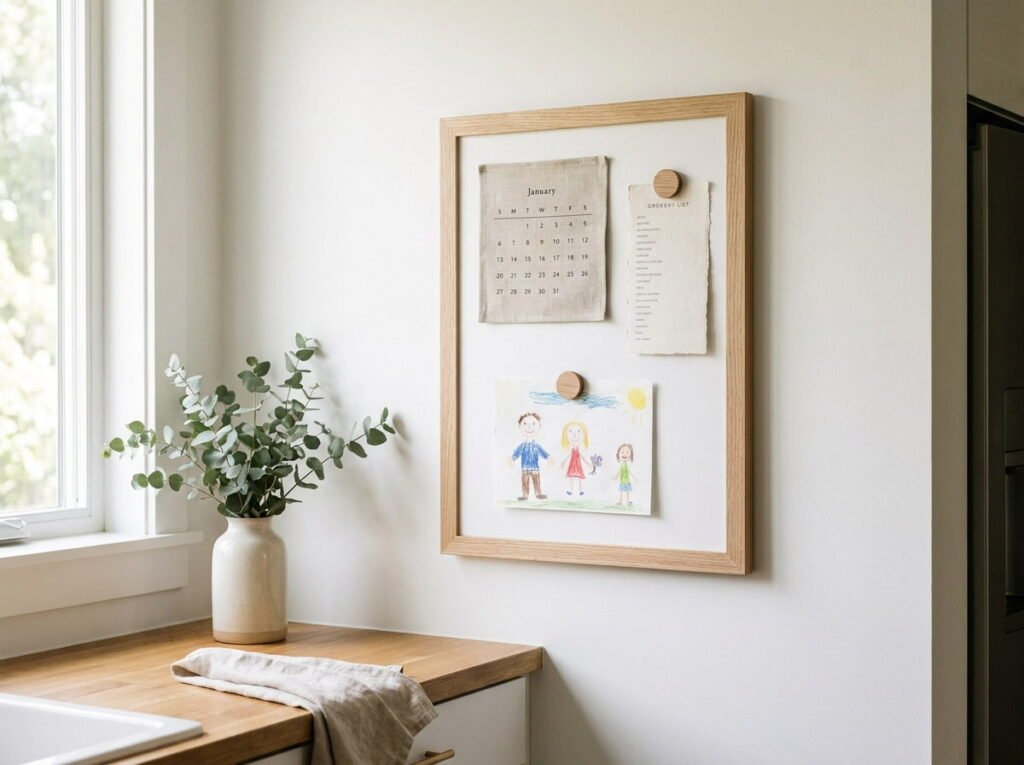
A command center that keeps growing without ever getting edited eventually becomes exactly the kind of clutter it was meant to help prevent.
Every few months, remove any printable nobody’s actually been using.
Keep the total number of sheets to what actually fits without crowding.
Ask the household what’s actually useful before adding anything new.
A lean board that everyone actually uses beats a full one that’s become background noise nobody looks at anymore.
Conclusion
A working cleaning command center isn’t about how it looks. It’s about whether the people in your house actually check it, use it, and keep it updated without you having to remind them every time. Start small with a weekly grid and a notes section, add printables gradually, and give kids a real say in their own part of the board.
The families who stick with this system aren’t the ones with the most elaborate setup. They’re the ones who reviewed it weekly, trimmed what wasn’t working, and let the board grow only as fast as it was actually being used.
Save this list for the next time your household needs a real system instead of another sticky note.