Most decluttering advice tells you to clean out your whole house in a weekend, which sounds motivating until you’re three hours in and staring at a pile you don’t know what to do with. That kind of burnout is exactly why so many decluttering attempts stall halfway through and never actually finish.
These decluttering ideas by room work differently. Each space gets its own approach, since a junk drawer and a closet don’t really need the same method, and a kid’s toy pile calls for something completely different than a stack of old paperwork. Breaking it down room by room means you can tackle one space in an afternoon instead of trying to conquer the whole house at once.
Nothing here requires buying a set of matching bins or spending a fortune on organizing products. Most of it just needs an hour, a trash bag, and a clear idea of what actually belongs in that space. Pick the room bothering you most right now and start there.
1. Why Decluttering by Room Beats Trying to Tackle the Whole House at Once

Whole house decluttering sounds efficient on paper, but it usually means starting strong and losing steam somewhere around hour four, with three rooms still untouched.
One finished room beats five rooms started and abandoned halfway through.
The rest of this list treats each room as its own smaller project, so progress actually sticks instead of fizzling out by dinner time.
2. The Entryway Drop Zone That Turns Into a Pile Without This One Habit
Shoes, mail, and bags pile up by the front door faster than almost anywhere else in the house, mostly because it’s the first flat surface everyone reaches.
💡 Quick Tip
Sort the mail standing at the recycling bin, not on the counter. Whatever doesn’t get tossed there rarely gets tossed at all.
A hook for keys and a designated shoe spot near the door stop most of the pile before it even starts.
3. Clearing Out the Kitchen Junk Drawer for Good, Not Just Until Next Month
A junk drawer that gets sorted once and refills within weeks usually has the same problem every time, nothing has a real home once it’s pulled out.
Dump the whole drawer onto the counter so you can see everything at once.
Toss dead batteries, dried out pens, and anything you can’t identify.
Use a small tray or divider so what’s left stays separated by type.
The divider is the part most people skip, and it’s the actual reason the drawer stays organized past the first week.
4. What to Let Go of in the Pantry Before It Becomes an Expired Food Graveyard
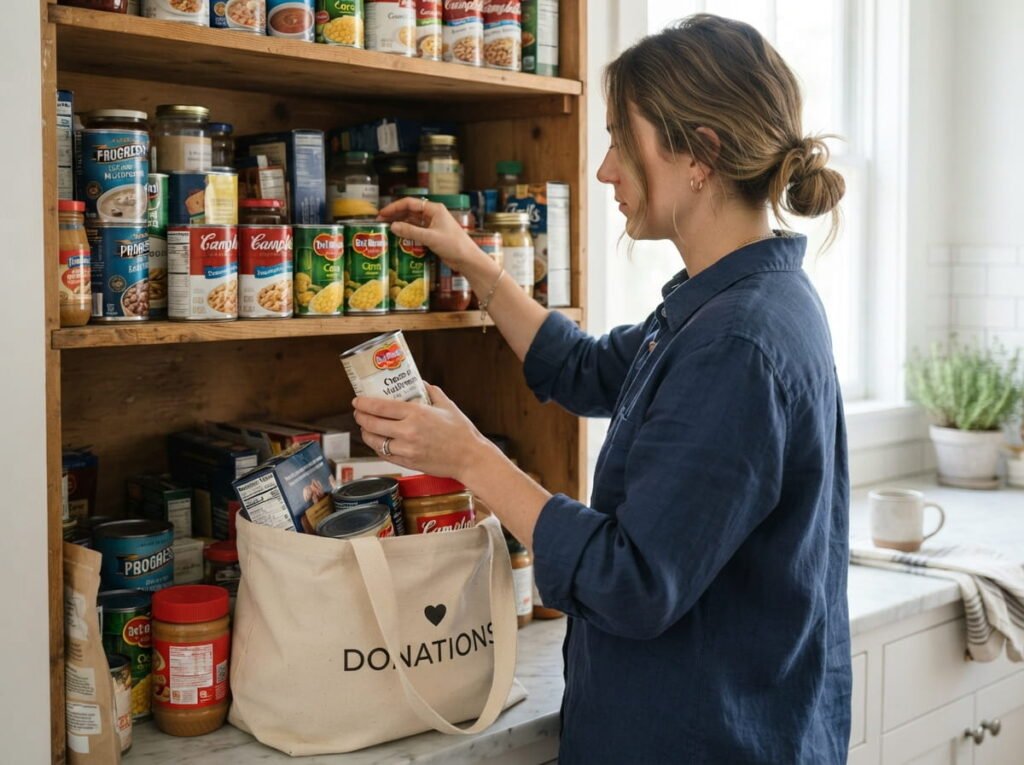
A pantry stuffed with half used bags and expired cans makes it hard to see what you actually have, which usually means buying duplicates you didn’t need.
Unopened items you know you’ll never use can go to a local food bank instead of sitting there until they expire anyway.
5. The Living Room Surfaces That Collect Clutter Without Anyone Noticing
Coffee tables and side tables become landing spots for remotes, mail, and half read books, and it happens so gradually that nobody notices until the surface disappears completely.
Clear surfaces completely once, then only allow a few chosen items back.
Give remotes and chargers one designated basket or tray.
Don’t let mail or paperwork land on these surfaces at all.
Don’t add decorative items back before the functional ones have a spot.
A living room with clear surfaces feels bigger and calmer almost immediately, even before anything else in the room changes.
6. Decluttering a Closet Using the Hanger Trick That Shows What You Actually Wear
Most people think they wear more of their closet than they actually do, and guessing which clothes to keep usually means keeping too much.
The hanger trick
No guessing involved. The hangers show you exactly what you actually reach for, not what you think you wear.
7. What Belongs in the Bathroom Cabinet and What’s Just Taking Up Space
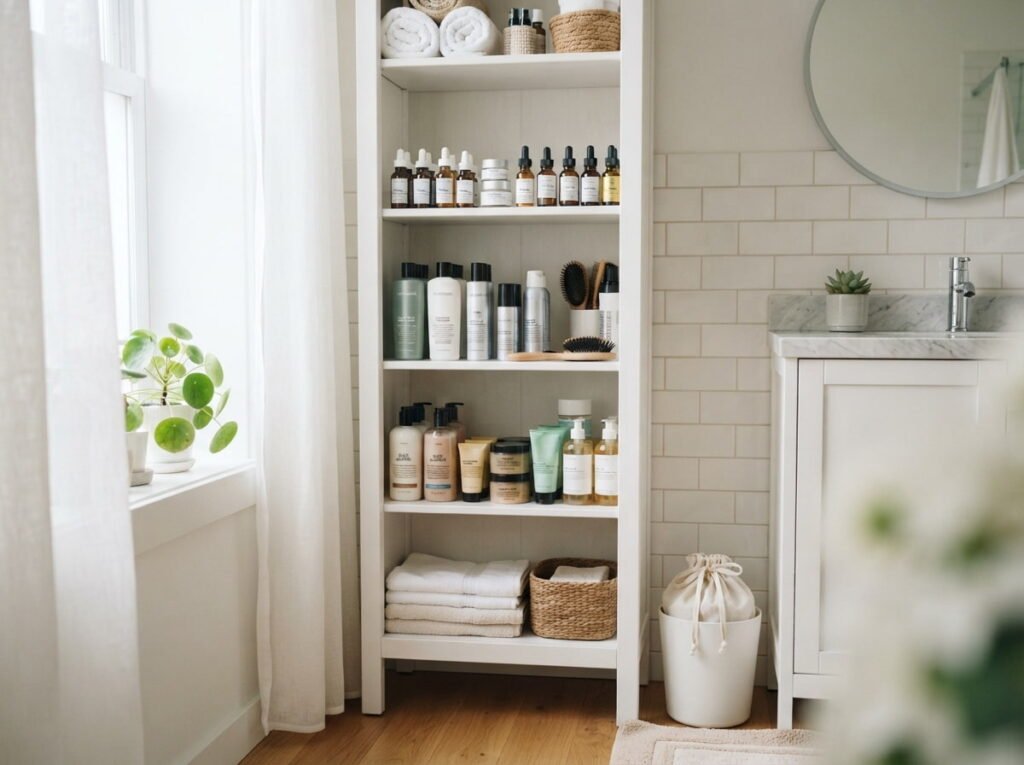
Bathroom cabinets fill up with half used products, samples from years ago, and things bought for a trend that passed a while back.
Pull everything out and group it by type, skincare, hair, first aid.
Toss anything expired, dried out, or that you haven’t touched in a year.
Group what’s left back in so like items stay together going forward.
Samples from years ago rarely get used no matter how long they sit there. That’s usually the first thing to go.
8. The Bedroom Nightstand Reset That Takes Ten Minutes and Changes the Whole Room
A nightstand piled with books, chargers, and half empty water glasses is easy to ignore since it’s small, but it’s often the first thing you see when you wake up.
A stack of unread books, tangled cords, and yesterday’s water glass.
One book, a lamp, and a charger tucked neatly out of view.
Keep only what you actually use before bed. Everything else has a better home somewhere else in the house.
9. Sorting Through Kids Toys Without a Meltdown From Anyone in the House
Doing a toy purge while kids are watching almost guarantees a fight over something they haven’t touched in months but suddenly can’t live without.
📌 Good To Know
Sort while kids are at school or asleep, then let a few weeks pass before donating. If nobody’s asked about an item, it’s safe to let go.
Broken toys and things with missing pieces are the easiest starting point, since there’s rarely an argument to be had over those.
10. Clearing the Home Office Desk of Paper That’s Been There Since Last Year
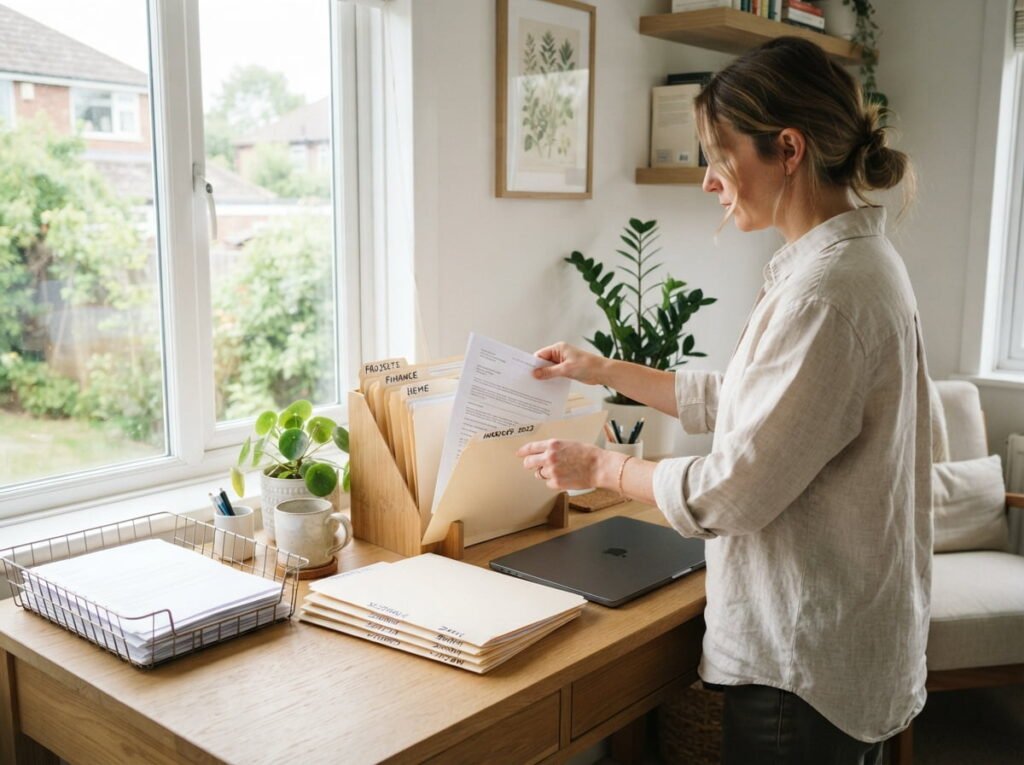
A desk buried in paper makes even simple tasks feel harder, since finding anything means digging through stacks that have been building for months.
Most paper sitting on a desk for over a month has either already been handled or never actually needed action in the first place.
11. The Garage Zones That Deserve Boundaries So Clutter Stops Spreading Everywhere
A garage without clear zones lets everything mix together, tools ending up near holiday decorations, sports gear tangled with yard equipment, until nothing has an obvious home.
| No Zones | Zoned Garage |
|---|---|
| Everything mixes together over time | Tools, seasonal gear, and sports items stay separate |
| Hard to find anything without digging | Easy to spot what belongs where at a glance |
Even painter’s tape on the floor marking rough zones is enough to keep new clutter from spreading into the wrong section.
12. Decluttering the Linen Closet by Counting What You Actually Need
Most homes have far more towels and sheets stuffed into the linen closet than anyone actually uses, and counting forces an honest look at what’s really necessary.
- Two sets of sheets per bed is plenty, one on and one in the wash
- Keep enough towels for each household member plus a couple spares
- Anything beyond that count is likely just taking up shelf space
- ▸Two sheet sets per bed is plenty, one on and one in the wash.
- ▸Keep enough towels for each person plus a couple spares.
- ▸Anything beyond that count is likely just taking up shelf space.
Worn out towels make good rags before they head to the donation pile, so nothing has to go straight in the trash.
13. What to Do With the Basement Boxes You Haven’t Opened in Years
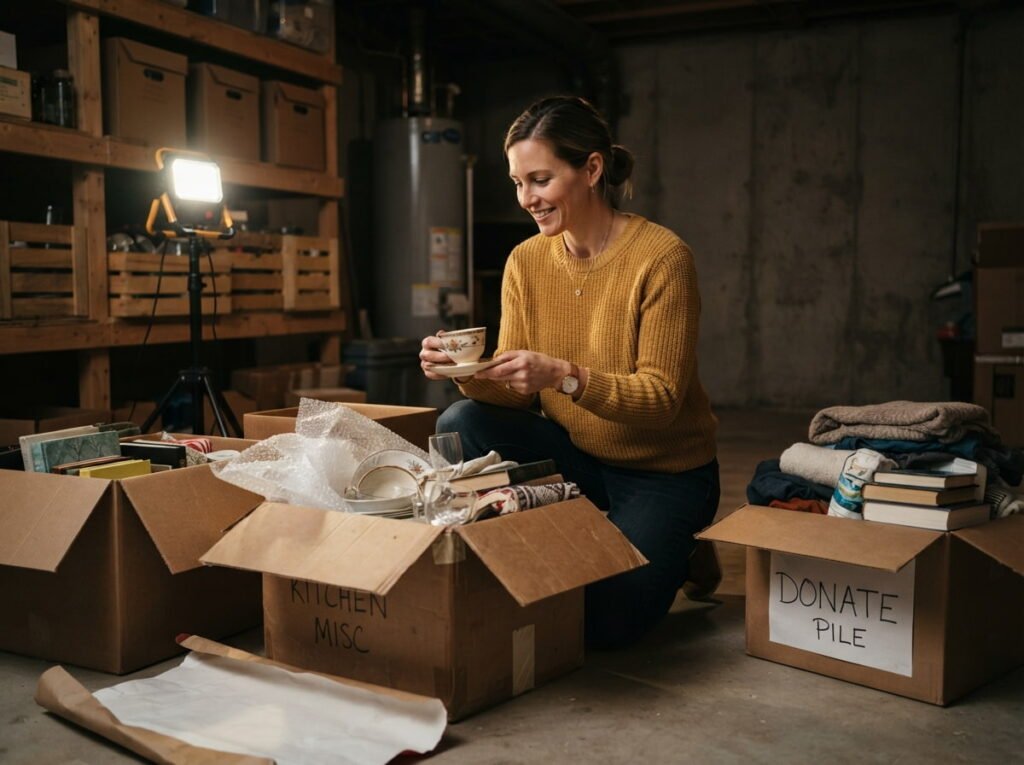
A stack of unopened boxes in the basement usually means whatever’s inside hasn’t been needed in a long time, even if the idea of tossing it unopened feels uncomfortable.
Open every box and actually look through what’s inside.
Keep only what still has real use or meaning today.
Don’t re-tape a box shut without opening it first.
Don’t assume old means valuable without actually checking.
If a box has sat unopened for over two years, that’s usually the clearest sign of all that it’s safe to let go.
14. Clearing Out the Medicine Cabinet of Expired and Half Used Products
Medicine cabinets fill up with expired pills, half used ointments, and prescriptions from illnesses that ended years ago, quietly taking up space nobody thinks to check.
Most pharmacies accept old medications for safe disposal, so it never has to end up loose in a regular trash bag.
15. The Garage or Mudroom Shoe Pile That Needs a System, Not Just a Bin
Tossing shoes into one big bin creates its own kind of clutter, since finding a matching pair means digging through a jumble every single time.
⚠️ Watch Out
A shoe bin that isn’t sorted by person or type usually gets abandoned within a few weeks, turning back into a random pile on the floor.
A shallow shelf with one row per person beats a deep bin every time, since shoes stay visible instead of buried underneath others.
16. Decluttering Digital Clutter Like Photos and Files That Pile Up Just Like Physical Stuff
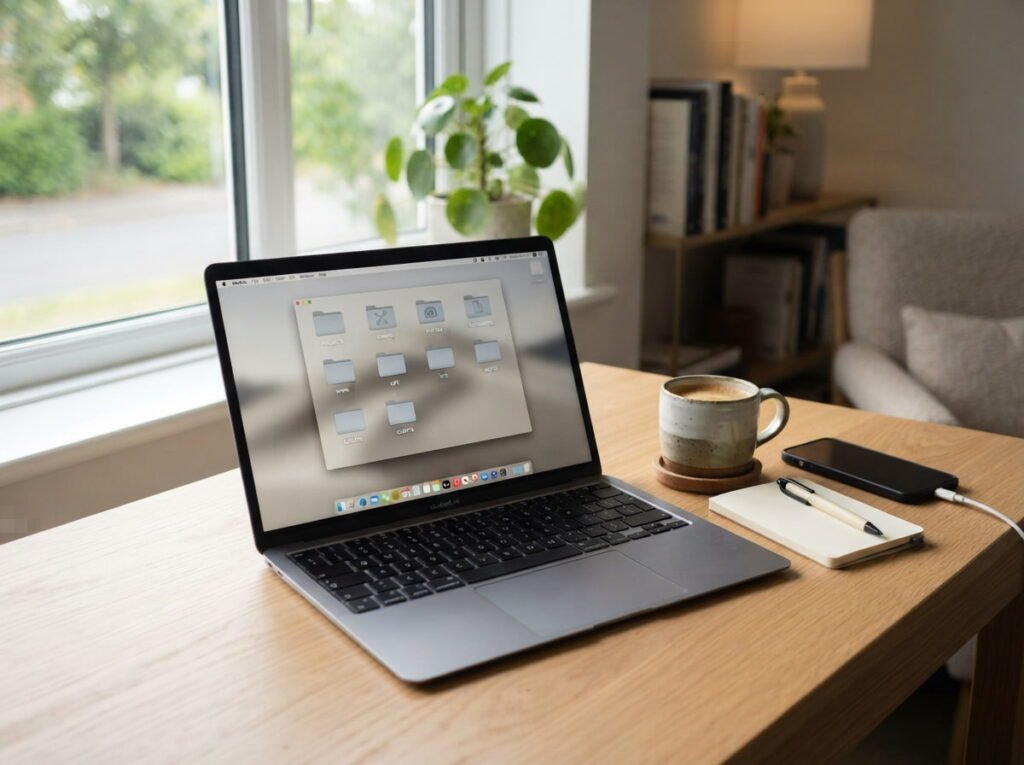
A phone with ten thousand photos or a desktop covered in randomly named files creates the same overwhelmed feeling as a cluttered room, just on a screen instead of a shelf.
Digital declutter basics
Twenty minutes a week clearing digital clutter adds up faster than trying to tackle years of it all at once.
17. What to Keep and What to Toss From a Child’s Old School Papers
Every school year brings home a stack of worksheets and art projects, and keeping everything means the pile only grows without anything actually feeling special anymore.
A growing box of every worksheet and drawing from the entire school year.
One small keepsake box holding only the pieces that actually mean something.
Take a quick photo of the rest before letting it go. You keep the memory without keeping every physical page.
18. The Attic or Storage Space That Needs a Yearly Check Before It Overflows
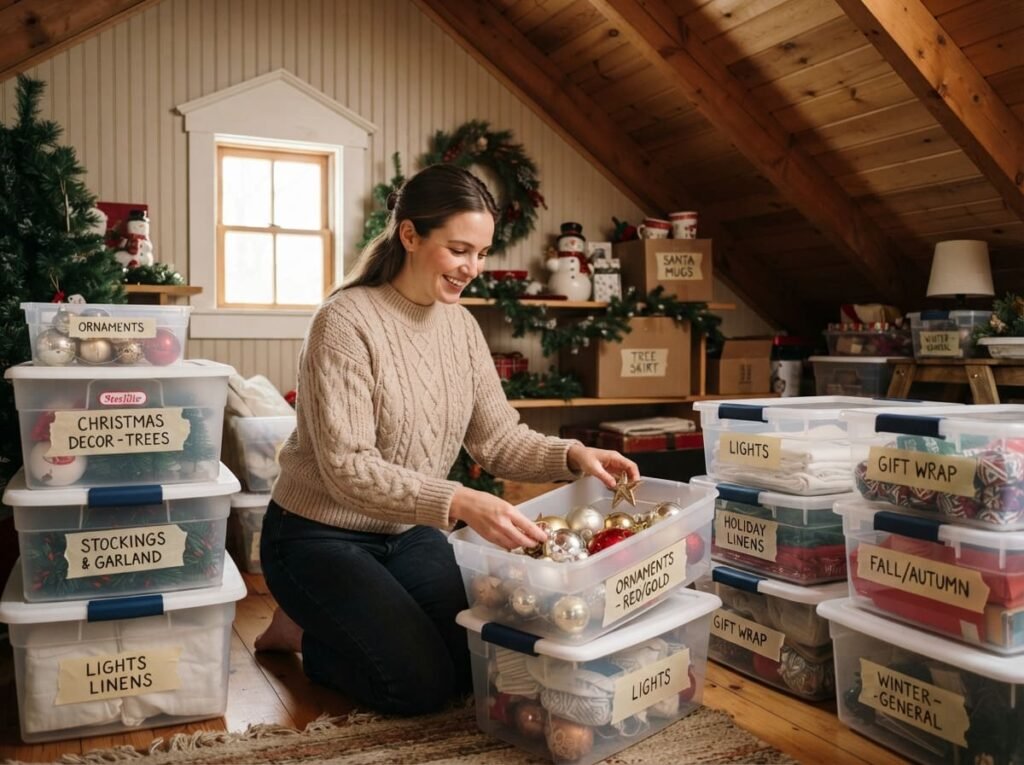
Storage spaces are easy to ignore since nothing about them is visible day to day, which is exactly why they quietly fill up until there’s no room left for anything new.
Set one yearly date to check the attic or storage space before it fills up completely.
Fall works well for most households, right before holiday decorations need to go back up there anyway.
19. Sentimental Items vs Everyday Clutter, Knowing the Difference While Decluttering
Not everything that’s hard to part with is actually sentimental. Sometimes it’s just an old item that’s been kept out of guilt rather than genuine attachment.
| Everyday Clutter | Truly Sentimental |
|---|---|
| Kept because it feels wasteful to toss | Kept because it holds a real memory or story |
| Rarely thought about between cleanings | Something you’d genuinely be upset to lose |
If you forgot the item existed until you found it while cleaning, it probably belongs in the first column, not the second.
20. The One Box Rule That Keeps Any Room From Sliding Back Into Clutter
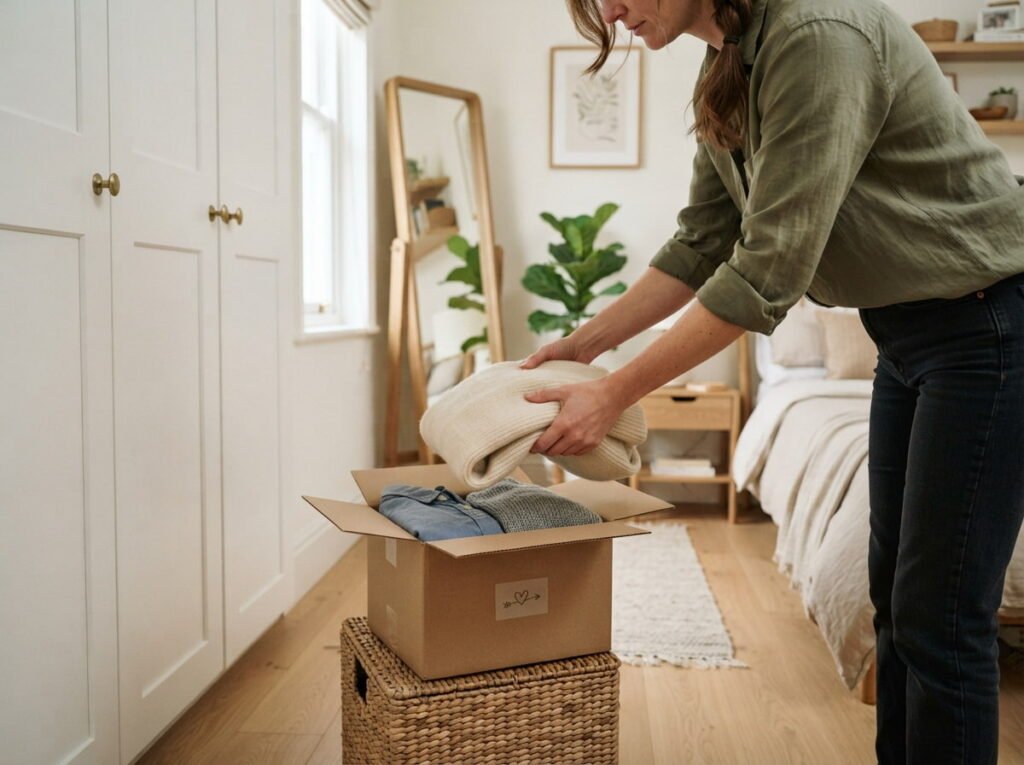
Even a freshly decluttered room slides back into old habits within weeks if nothing’s in place to catch new clutter before it settles in.
Keep one box in a closet or corner of each main room, and drop in anything you no longer want the moment you notice it.
Conclusion
Good decluttering ideas by room work because they respect that a kitchen drawer and a closet full of clothes need completely different approaches. One box at a time, one room at a time, and the whole house eventually gets covered without a single overwhelming weekend required.
Start with whatever’s bothering you most, whether that’s a junk drawer that never stays organized or an attic that hasn’t been checked in years. The goal isn’t a perfectly empty house. It’s a home where everything left actually has a place and a reason to be there.
Save this list for the next time a room in your house needs some breathing room.