
January has a way of making the whole house feel like it needs a fresh start, even if nothing dramatic actually happened over the holidays. A new year deep clean is less about scrubbing every surface in one exhausting weekend and more about resetting the spaces that quietly built up clutter and grime while everyone was busy with everything else.
This isn’t the kind of clean you do once a week. It’s the kind that clears out what’s been sitting untouched since last spring, gives you a real starting point, and makes the regular cleaning that follows actually feel manageable again.
This list walks through fifteen steps, room by room and habit by habit, that together add up to a real reset. Some are quick wins. Others take a bit more time but pay off for months afterward. None of them require doing everything in a single day.
Pick a starting point that feels the least overwhelming, and let the momentum carry you through the rest.
1. Start With One Room Instead of the Whole House at Once

Trying to deep clean every room over one weekend usually ends with half-finished spaces and a lot of frustration. Picking a single room to fully finish first gives you an actual sense of progress instead of a house that looks partially done everywhere.
💡 Quick Tip
Choose the room you use most, since finishing it first gives you the biggest daily payoff right away.
One fully finished room does more for motivation than five rooms half-cleaned.
2. Purge Before You Clean, Not After
Wiping down surfaces that are still covered in stuff you don’t need just means cleaning around clutter instead of actually clearing it. Purging first makes every step after it faster and more thorough.
Wiping around items, missing spots underneath and behind them.
Full access to clean every inch, corners included.
Set a simple rule before you start. If you haven’t touched it in a year, it’s probably safe to let go of.
3. Deep Clean the Refrigerator and Toss Expired Holiday Leftovers
Holiday leftovers and half-used condiments tend to pile up in the fridge without anyone really noticing until January rolls around. This is one of the most satisfying resets on the whole list, since the difference is immediate.
Empty every shelf and drawer, checking expiration dates as you go.
Wipe down shelves and drawers with warm soapy water.
Restock only what you actually plan to use in the next week or two.
A fridge that’s actually organized makes weeknight cooking easier for the rest of the month, not just January first.
4. Reset Your Closet for the New Season

Holiday gifts and winter shopping usually mean new clothes coming in without anything old going out, which leaves closets more crowded than they were a month ago. A real seasonal reset means something actually leaves for every new item that stays.
Set aside anything unworn for the entire past year.
Donate or store off-season items that are actually keepers.
Keeping everything just in case it comes back into rotation.
Adding new items without removing anything old.
A closet that’s actually navigable saves time every single morning, not just on cleaning day.
5. Wash Bedding, Pillows, and Mattress Covers, Not Just Sheets
Sheets get washed regularly, but pillows, mattress covers, and duvet inserts often go untouched for months, quietly collecting dust and skin oils the whole time. A full bedding refresh covers what a normal wash cycle usually skips.
| Sheets Only | Full Bedding Refresh |
|---|---|
| Pillows and mattress covers untouched for months | Every layer of the bed actually clean |
| Quick, but only addresses part of the bed | Takes an extra load or two, worth it once a season |
Check care labels first. Some pillows and covers need a gentler cycle than regular sheets do.
6. Clean Out the Junk Drawer and Catch-All Surfaces
Every home has at least one drawer or counter spot where random items collect without anyone deciding they belong there. Clearing it out is quick, but the payoff lasts long after the cleaning itself is done.
What actually belongs there
Give the drawer a shallow tray or divider once it’s cleared, so the reset actually holds through the next few months.
7. Deep Clean Under Furniture Where Dust Collects All Year

Dust and clutter build up under couches, beds, and dressers for months at a time, mostly because it’s out of sight during regular cleaning. These spots get skipped constantly, which is exactly why they need real attention now.
Enlist a second person if a piece is heavy. Moving furniture alone can be more effort than the cleaning itself.
8. Wipe Down Baseboards, Vents, and Light Switches
These are the spots people walk past every single day without noticing how much dust or grime has actually built up on them. They rarely get attention during regular cleaning, which makes them a good target for a reset.
A damp microfiber cloth handles most of this without needing anything more specialized.
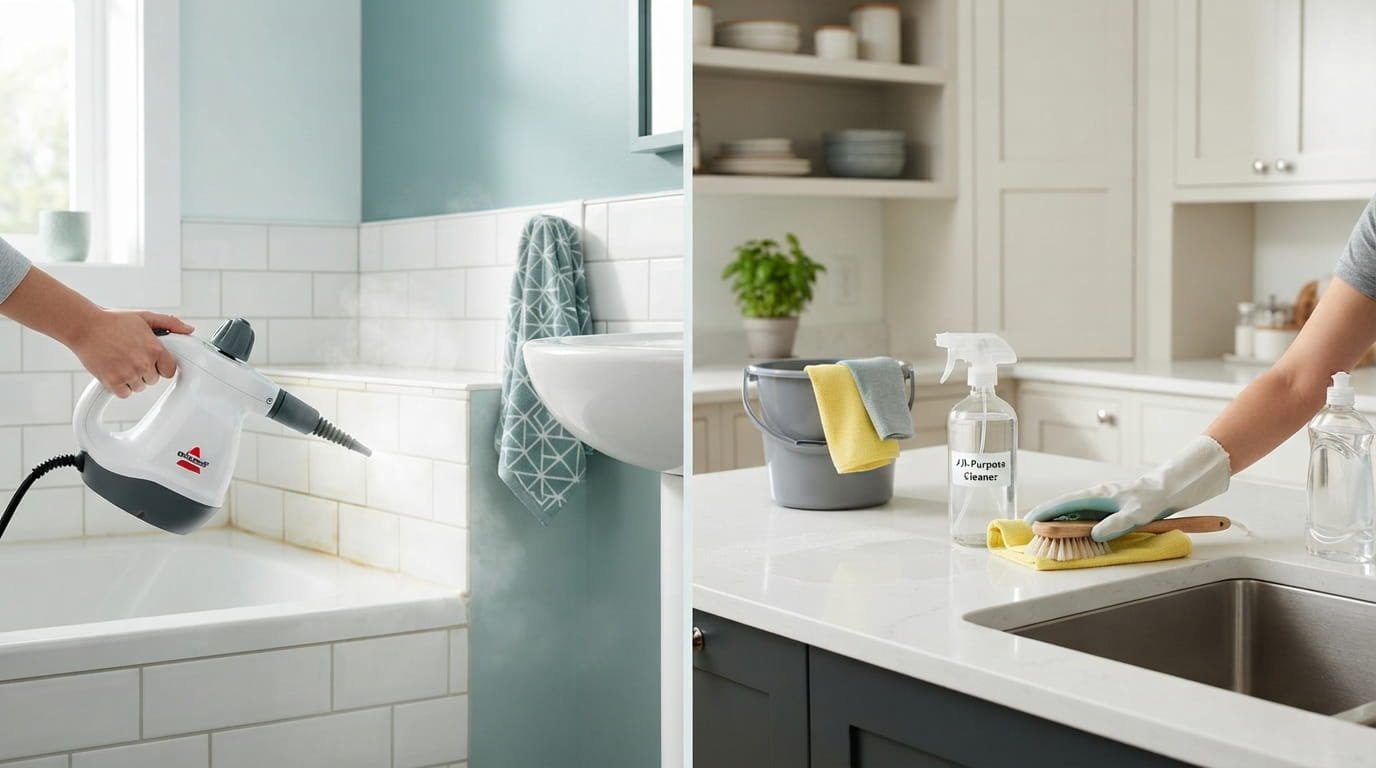
9. Reset Your Cleaning Supplies Before Starting the Deep Clean
Half-empty bottles and worn-out sponges slow down a deep clean before it even starts, since you end up stopping mid-task to find a replacement. Checking supplies first means the actual cleaning goes uninterrupted.
💡 Quick Tip
Replace old sponges and rags before starting. Worn-out tools just spread grime instead of removing it.
Ten minutes of checking supplies saves a frustrating mid-clean trip to the store later.
10. Declutter Digital Clutter Alongside Physical Clutter

A reset doesn’t have to stop at physical spaces, since a phone full of screenshots and an inbox with thousands of unread emails create their own kind of daily friction. It’s an easy add-on once the physical cleaning momentum is already there.
What to clear on devices too
This one takes almost no physical effort, just a bit of time scrolling and tapping delete.
11. Deep Clean Windows and Mirrors While the Light Is Good
A cloudy day makes it nearly impossible to see the streaks you’re leaving behind, which often means redoing the same window twice. Waiting for real daylight makes this task faster and genuinely more effective.
| Cloudy Day | Bright Day |
|---|---|
| Streaks are hard to spot until later | Streaks show up immediately, easy to fix on the spot |
| Often means redoing the same window later | One pass usually gets the job done right |
Avoid direct sun if you can. It dries cleaner too fast and actually makes streaking more likely.
12. Tackle the Garage or Storage Area Last, Not First
Starting with the garage or a storage room can feel overwhelming fast, since these spaces tend to hold the most accumulated stuff with the least organization. Saving it for last means you tackle it with momentum already built up.
Overwhelming, often abandoned partway through.
Tackled with real momentum and clearer decision-making.
By the time you reach it, you’ll already know what your keep-or-toss instincts look like from the rest of the house.
13. Set Up a Simple Cleaning Routine to Maintain the Reset
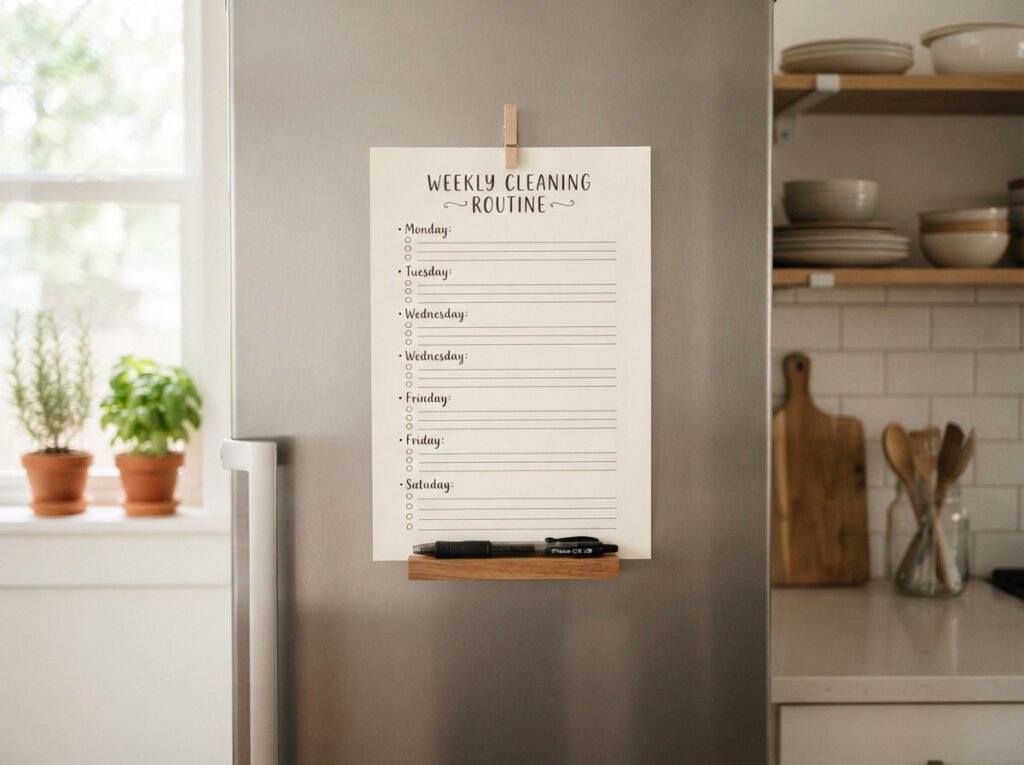
A deep clean without any follow-up routine tends to slide right back to where it started within a couple months. A basic weekly rhythm is what actually protects the work you just put in.
Pick one day a week for a quick surface reset across the whole house.
Rotate one deeper task, like baseboards or the fridge, into that same day.
Keep the routine short, closer to twenty minutes than an hour.
A routine that feels sustainable will actually get followed. One that feels like a chore usually gets skipped by February.
14. Give Yourself a Realistic Timeline, Not a Single Weekend
Cramming this entire list into one exhausting weekend usually leads to burnout partway through, with the last few rooms rushed or skipped entirely. Spreading it over a couple of weeks keeps every task getting the attention it actually needs.
There’s no prize for finishing fast. A reset that actually sticks matters more than one that’s rushed.
15. Do a Final Walkthrough to Confirm the Reset Actually Stuck

It’s easy to assume everything’s done once the last room is checked off, but a quick walkthrough a week or two later shows whether the reset is actually holding or already slipping back into old patterns.
Check back in two weeks later. That follow-up look tells you whether the reset is sticking or quietly slipping.
If clutter is already creeping back in one spot, that’s your cue for where the weekly routine needs the most attention.
Conclusion
A new year deep clean isn’t about perfection in one weekend. It’s about clearing out what quietly built up over the past year and giving yourself a real starting point, one that actually holds up past the first week of January.
Pick a room, work through the list at a pace that feels manageable, and let the small routine you build afterward do the heavy lifting from here. The reset matters less than what you do to protect it once it’s done.
Save this list so you have it ready whenever you’re ready to start fresh, whether that’s January first or three weeks into the new year.