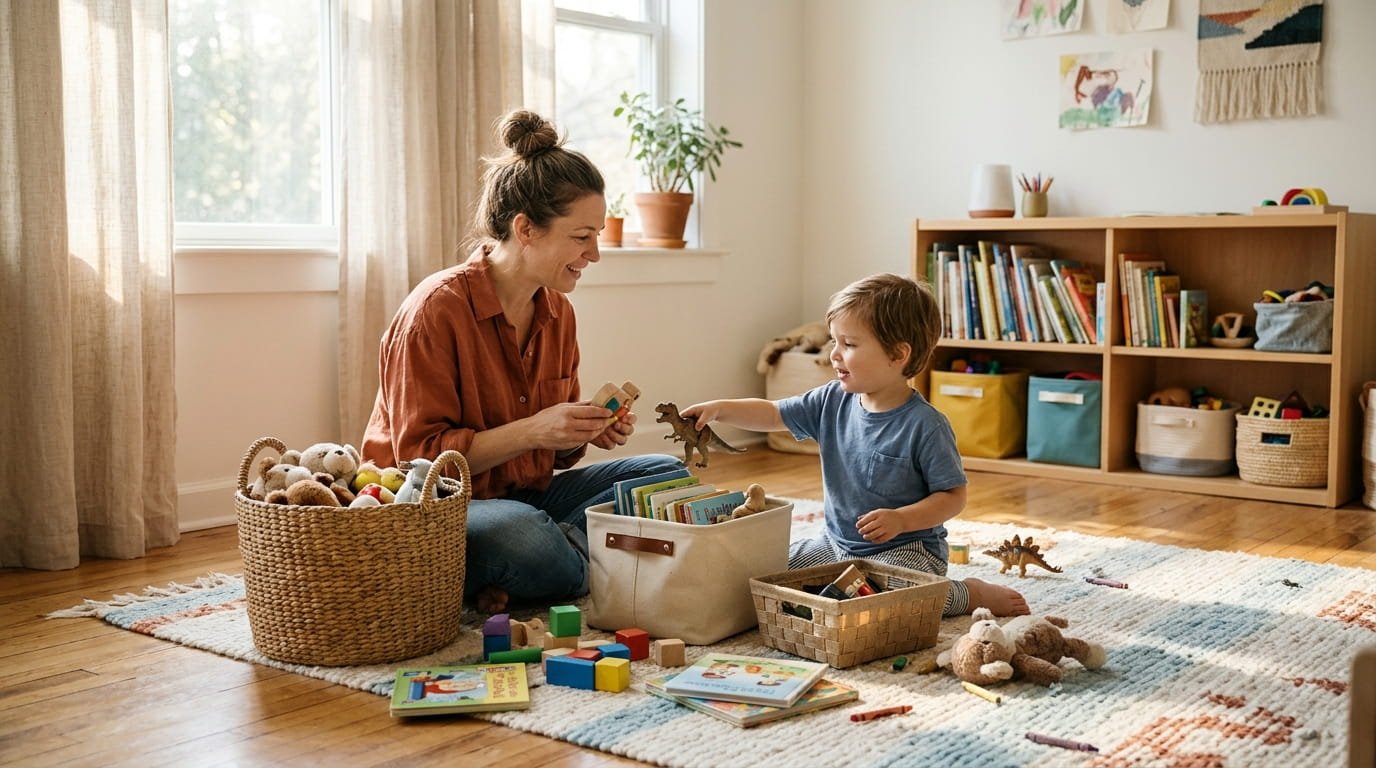
It is a quiet Tuesday evening, and your bare foot finds a plastic dinosaur in the dark hallway. By the time you reach the kitchen, you have stepped over a shoe, two crayons, and a half-finished puzzle.
Most parents know this feeling. Kids bring in stuff faster than anyone can sort it, and the moment you clear one pile, another one grows. Advice that works for a quiet house, like “touch everything once” or “do it in a weekend,” falls apart when someone needs a snack every fifteen minutes.
The way to declutter with kids is to work in small pieces, keep the kids in the plan when you can, and stop before anyone melts down. You do not need a big weekend or a perfect system.
Below are 18 steps in the order a real week tends to go. Start with the first few, skip what does not fit your home, and save the list for the next time a toy lands under your foot.
1. Pick One Small Zone to Start With
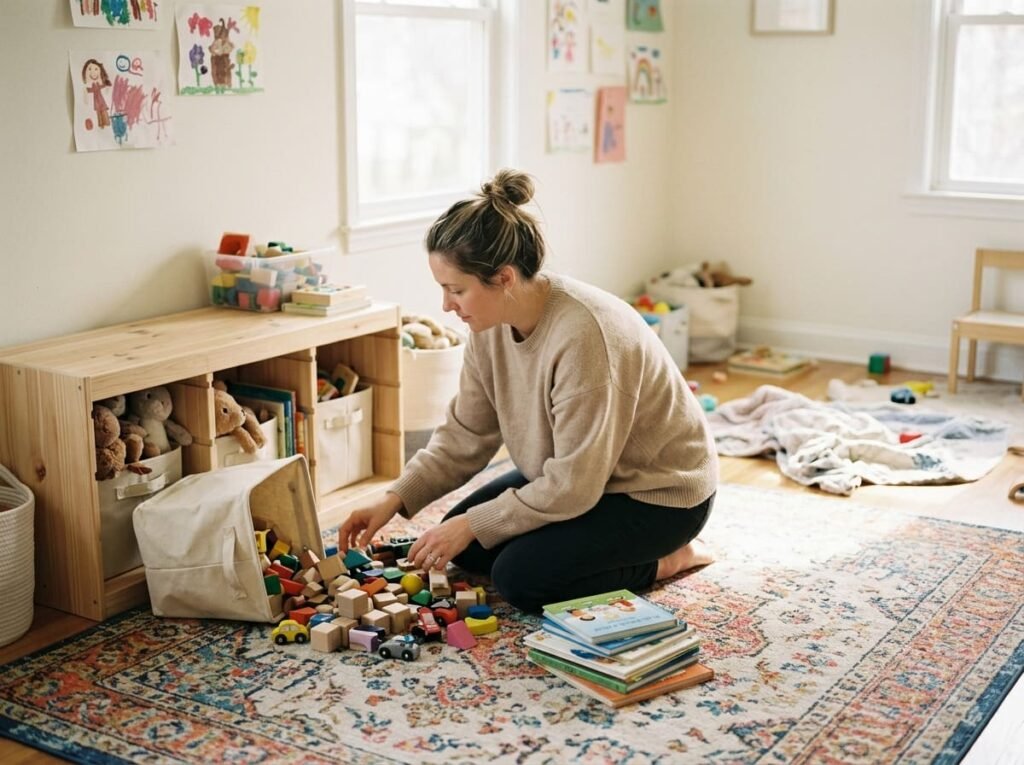
Trying to clear a whole house with kids underfoot is how a plan falls apart by lunch.
Choose one small zone instead, and finish it. A single toy bin, one shelf, or the pile beside the front door is plenty. When it is done, you have proof that it can be done, and a clear spot that makes the rest feel easier.
- Pick the spot that trips you up most often
- Keep it small enough to finish in one short session
- Stop when that zone is done, even if you have energy left
Tomorrow, pick the next one.
2. Gather a Simple Declutter Kit
Nothing kills momentum like leaving the room to find a bag.
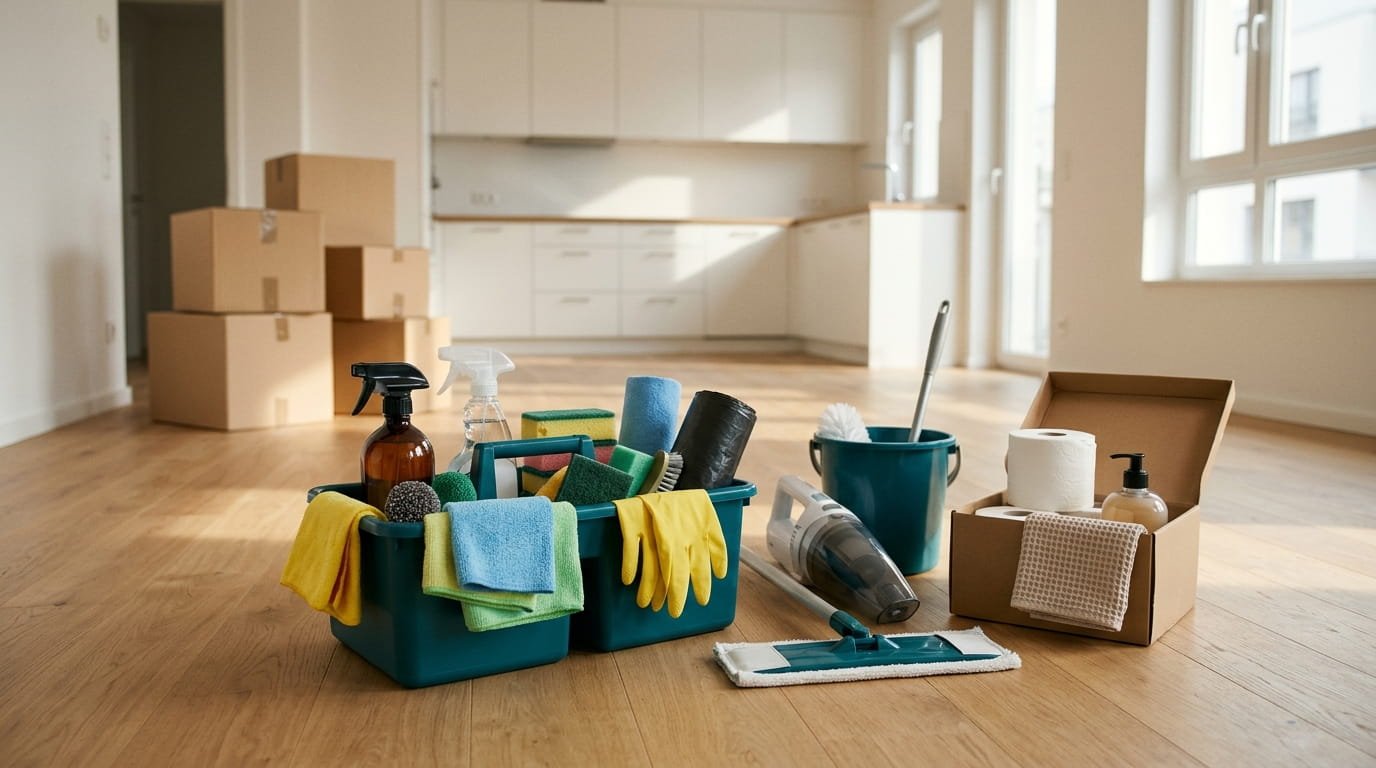
Put a few basics in one box before you start, and carry it to wherever you are working. You do not need fancy containers. A few bags, a marker, and a timer cover most of it. Having everything in one spot also keeps small hands from wandering off with the supplies.
Keep the kit out of reach of little ones if it holds anything sharp, like scissors.
The declutter kit
3. Let Kids Help Where They Can
Deciding what stays and what goes is easier when the person who owns the stuff has a say.
Older kids can often choose their own keep pile. Younger ones can help with simple jobs, like putting stuffed animals in a bag or carrying a box to the car. Give two choices instead of an open question, so nobody gets stuck. Keep your own authority on safety, broken items, and anything that no longer fits their age.
Praise the effort rather than the result, and let go of perfect.
Offer two clear choices, like “this one or that one?”
Give small kids a simple job, such as carrying a bag.
Asking an open question like “what do you want to keep?”
Handing a young child anything sharp or breakable.
4. Run a Ten Minute Declutter Session
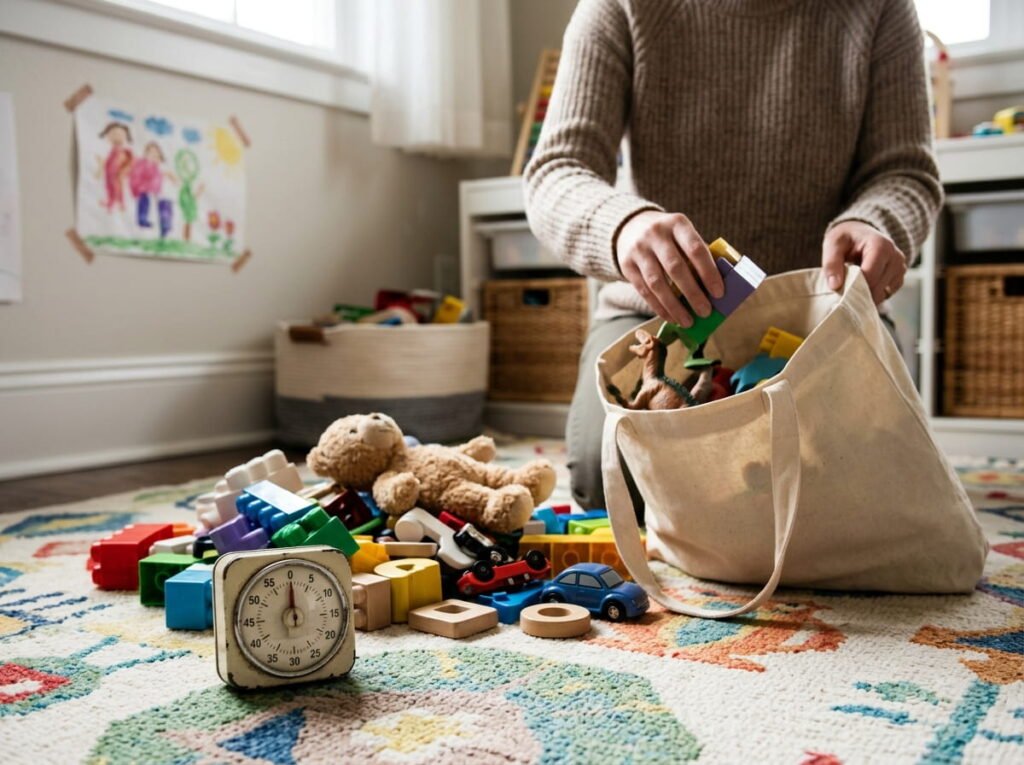
Ten minutes is short enough to start and long enough to see a difference.
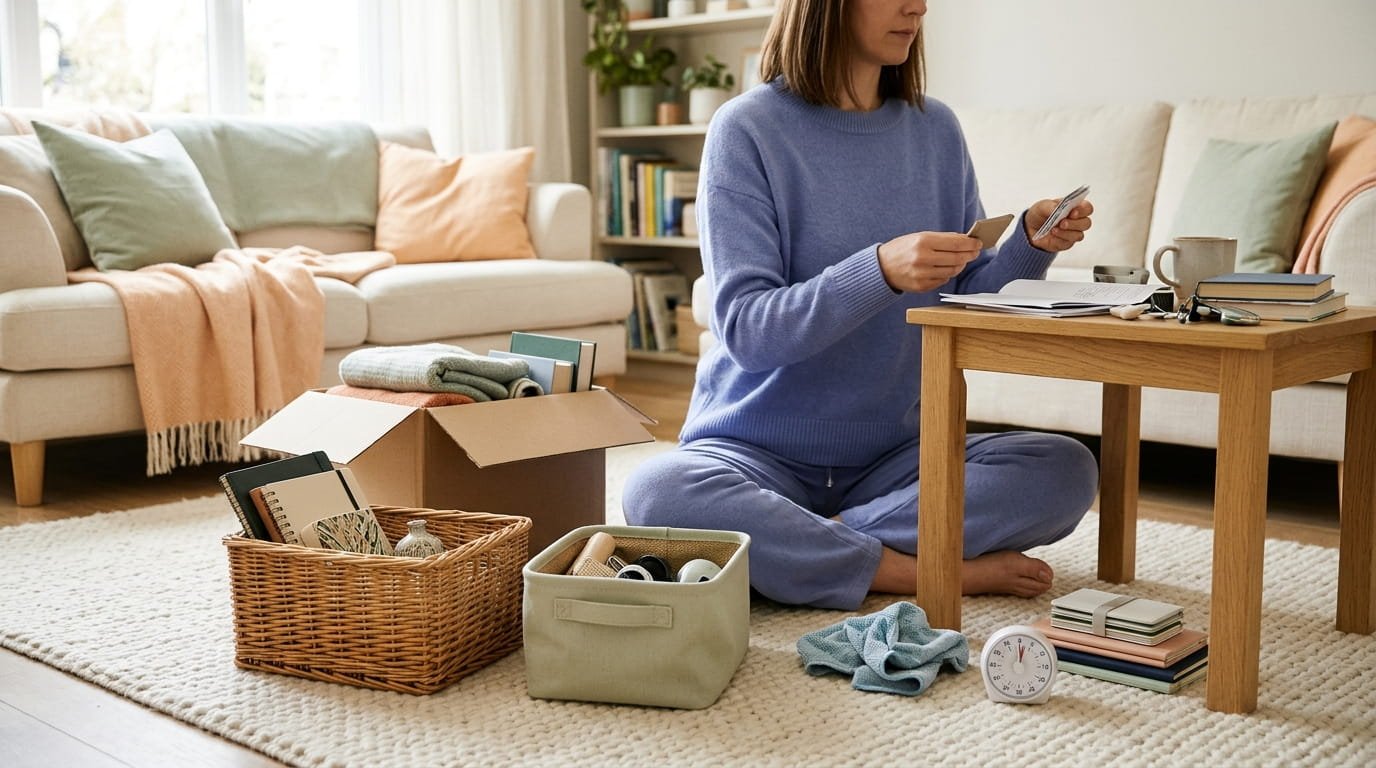
Set a timer, pick your zone, and work until it rings. When it does, stop. That promise matters more than it sounds, because both you and the kids know it will end. Many parents find they can do a lot in ten focused minutes, and stopping on time keeps the next session easy to start.
If the kids lose interest before the timer does, let them go and finish quietly on your own.
Set the timer for ten minutes and pick one zone.
Sort quickly into keep, donate, and toss, and set aside anything that belongs elsewhere.
When the timer rings, stop, and carry the donate and toss bags out of sight.
5. Sort Toys Into Keep, Donate, and Toss
Toys multiply through birthdays, party bags, and the kids’ own collecting, so most homes hold more than anyone plays with.
Dump one bin out on a sheet or a rug, and sort into three piles. Keep what gets played with, donate what is in good shape and outgrown, and toss what is broken or missing pieces. Look for toys with small parts if you have younger children in the house, and keep those out of their reach.
Do not skip the toss pile, because a broken toy that stays in the bin takes up space and goes unused.
6. Use a Maybe Box for the Hard Calls
Some things are not clearly keep or toss, and arguing over them wastes the whole session.
Set up one box labeled “maybe,” and put the hard calls inside. Tape it shut, write a date on it a few months out, and tuck it in a closet. If nobody asks for anything inside by then, the box can go to donation unopened. It removes the pressure to decide on the spot.
Keep the box where the kids will not dig through it, or it will not work.
💡 Quick Tip
Write a review date on the outside of the maybe box. When the date arrives, anything still unneeded goes straight to the donate bag without a second debate.
7. Rotate Toys Instead of Buying More Storage
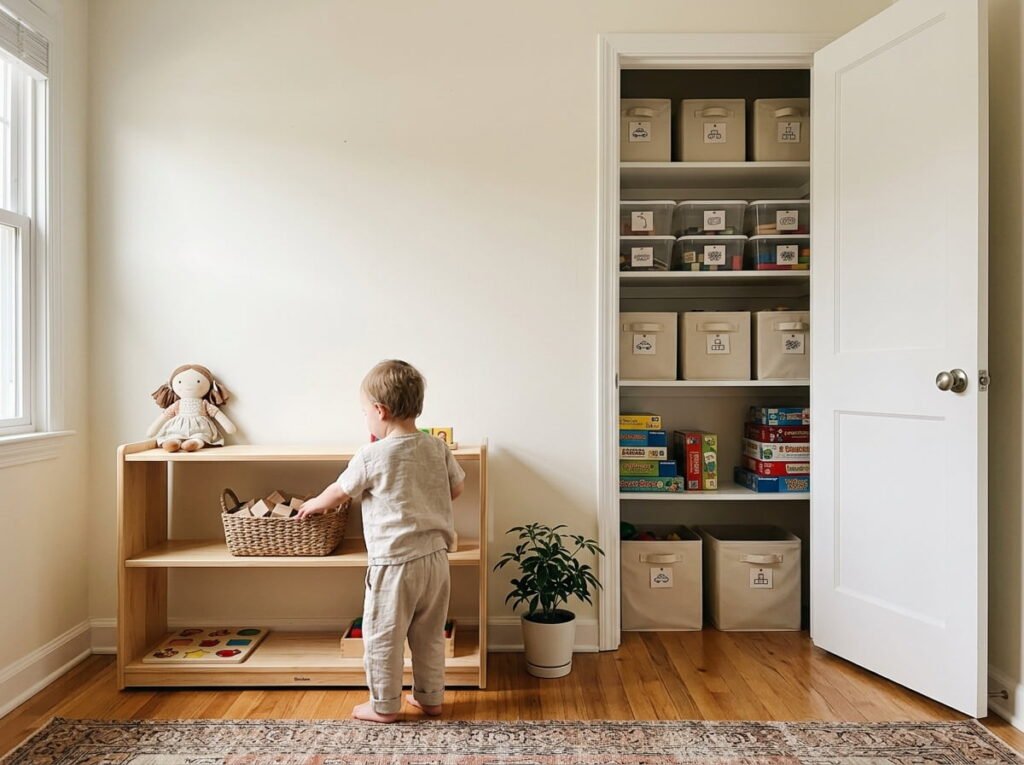
A toy shelf that is always packed does not make play easier. It makes choosing harder.
Keep a small set of toys out, and store the rest in a closet or under a bed. Every few weeks, swap a few. Old toys feel new again, the play space stays tidy, and cleanup takes less time because there is less to put away. You also learn which toys never come back out, and those are good candidates to donate.
Every toy is out at once, the shelves overflow, and cleanup feels endless.
A small set of toys is out, the rest wait in a closet, and swapping them feels like a treat.
8. Compare Open Bins, Lidded Bins, and Shelves
The best storage is the kind your kids will actually use.
Open bins are quick to toss things into, so younger kids tend to manage them well. Lidded bins hide the clutter, but a lid can slow cleanup or pinch small fingers. Shelves show everything at a glance, but they work best for toys with a clear place to go. Pick based on your kids’ age and how much effort you can expect.
| Open bins | Lidded bins and shelves |
|---|---|
| Quick to toss things in, good for young kids. | Lids hide clutter, shelves show every item. |
| Clutter stays visible. | Lids can slow cleanup or pinch fingers. |
| Best for big, mixed toys. | Best for sets, puzzles, and small pieces. |
9. Set a One In, One Out Rule
New things arrive all year, and a simple rule keeps the total from creeping up.
When a new toy or book comes in, one old one goes out. Let your child choose which one, and keep the swap quick. For kids who find it hard, start with a “one in, one to the maybe box” version. The rule is not about getting rid of things for the sake of it. It is about keeping the amount of stuff close to what the space can handle.
When something new comes in, something old goes out, and the kids help choose.
10. Handle Art and School Papers
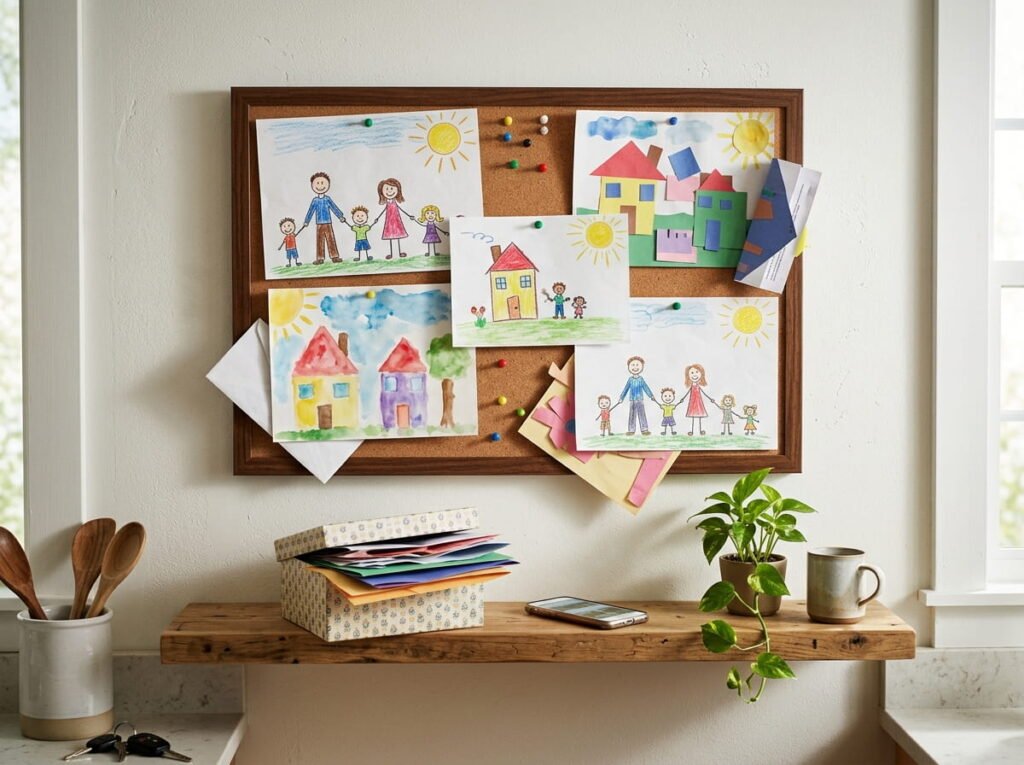
Kids make paper nonstop, and every page feels precious when they hand it to you.
Set up one display spot, like a corkboard or a fridge, for the current favorites. Let new pieces replace old ones. Keep a single box for each child, and drop in only the best of the year. Snap a quick photo of the rest before they go, and recycle them quietly, out of sight.
- Display a few pieces and rotate them often
- Keep one box per child, and cap it at the box
- Photograph what you let go
- Sort school papers weekly, not in a giant pile
- ▸Show a handful of favorites on a board, and swap in new ones.
- ▸Keep one memory box per child, and let the box set the limit.
- ▸Take a photo of pieces you release, then recycle them out of sight.
- ▸Sort school papers once a week so they never become a mountain.
11. Sort Kids’ Clothes by Season
Kids grow out of clothes faster than anyone can keep track, so the drawer fills with things that no longer fit.
Pull everything out at once, and try on anything that is borderline. Make four piles: fits now, will fit next season, hand down or donate, and toss. Keep only what fits now in the drawers, and store the next size up in a labeled bin. A short list of what is missing keeps you from buying duplicates.
Do this at the change of each season, when you are already swapping coats.
12. Create a Donation Station
Donation bags that sit in the hallway for weeks tend to turn into new clutter.
Pick one spot, like a corner of the garage or a closet shelf, and keep a box or bag there all the time. When something is ready to go, it goes straight in. Once the box is full, take it to the car and drop it off on your next errand. Give the kids a role, like carrying the bag, so it feels like a shared habit.
The donation station
13. Plan for Gifts Before Birthdays and Holidays
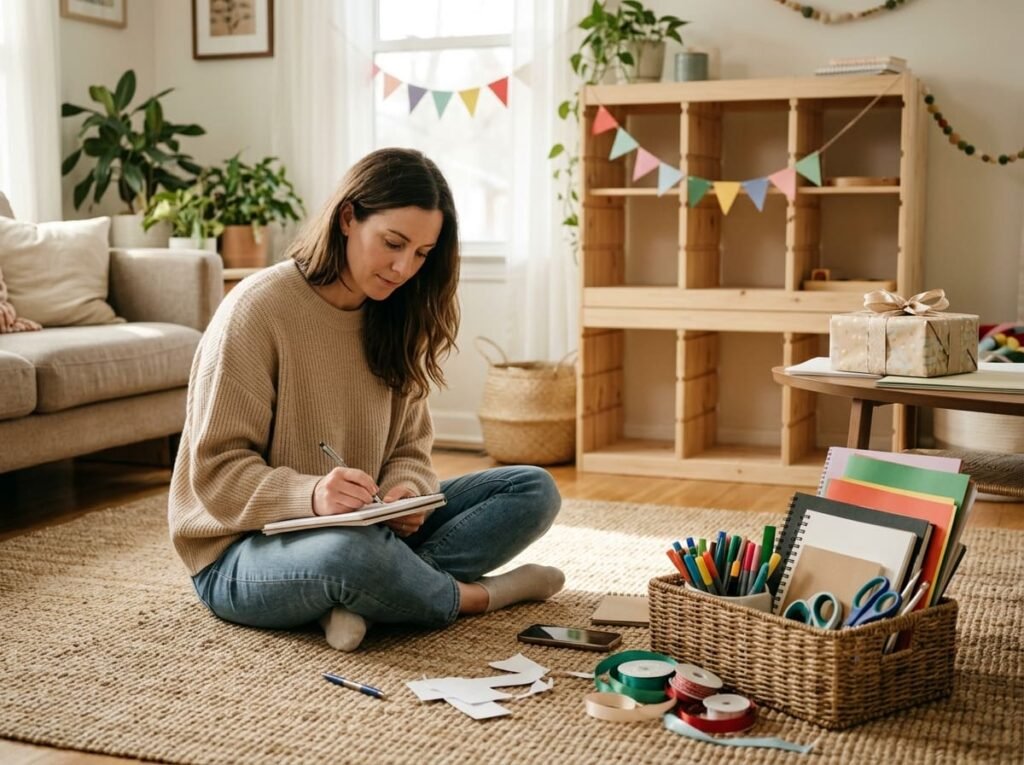
The biggest wave of new stuff arrives on a date you already know.
A few weeks before a birthday or holiday, clear some space and do a quick toy sort. Then let relatives know about experience gifts, a shared wish list, or a specific need. Many families find that consumables, like art supplies or tickets, make the day feel full without adding to the pile.
Keep the message friendly and short, so it sounds like a hint and not a rule.
14. Treat Sentimental Items Gently
Some things are hard to let go of, and that is normal.
First baby clothes, a favorite blanket, or a school project can carry real feeling. Give them their own place instead of mixing them into the daily pile. Choose a small box for each child, and let it hold the things that matter most. Take photos of items you cannot keep, and give yourself permission to decide later.
Decluttering is not about getting rid of memories. It is about making room for the ones you love.
📌 Good To Know
If a decision feels heavy, put the item in the maybe box and come back later. A pause costs nothing, and you can decide again with a clearer head.
15. Build a Five Minute Nightly Tidy
A small daily reset keeps the big declutter from coming back.
Pick a time, like right after dinner or before bath, and set a timer for five minutes. Everyone puts things back where they live, starting with toys, shoes, and dishes. Keep it quick and cheerful, and stop when the timer rings. A short routine that happens every night does more than a long one you skip.
Pick the same time each night and set a five minute timer.
Keep it light, and put on music if it helps.
Turning the tidy into a long lecture or a big project.
Redoing the kids’ work while they watch.
16. Teach Kids to Clean Up, Step by Step
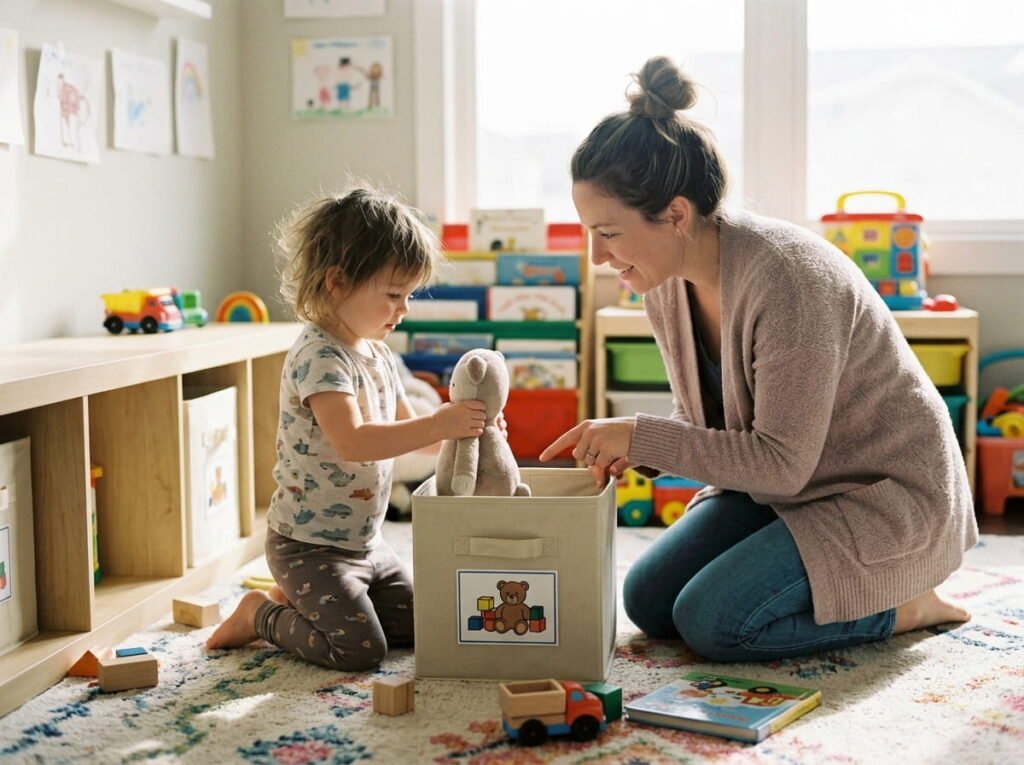
“Clean your room” is a huge job when you are small.
Break it into steps that a child can follow. Start with one simple task, like putting all the stuffed animals in one bin. Then add another, like books on the shelf. Show each step once, do it together a few times, and then let them try alone. Short, clear jobs build the habit faster than a long list of rules.
Match the job to the child’s age, and keep your expectations realistic.
Name one small job, like “all the books on the shelf.”
Do it together the first few times, and show where each thing goes.
Let them try alone, and add the next job once the first feels easy.
17. Give Everything a Labeled Home
Kids clean up more easily when they know exactly where something goes.
Use simple labels with a picture and a word on each bin and shelf. A drawing of a car on the car bin tells a child who cannot read yet where cars belong. Place the bins at kid height, so no one needs a stool. When every item has a home, cleanup becomes a matching game instead of a chore.
One big bin of mixed toys, and a child who has no idea where anything goes.
Small labeled bins at kid height, each with a picture, and cleanup that feels like a game.
18. Keep a One Page Declutter Plan
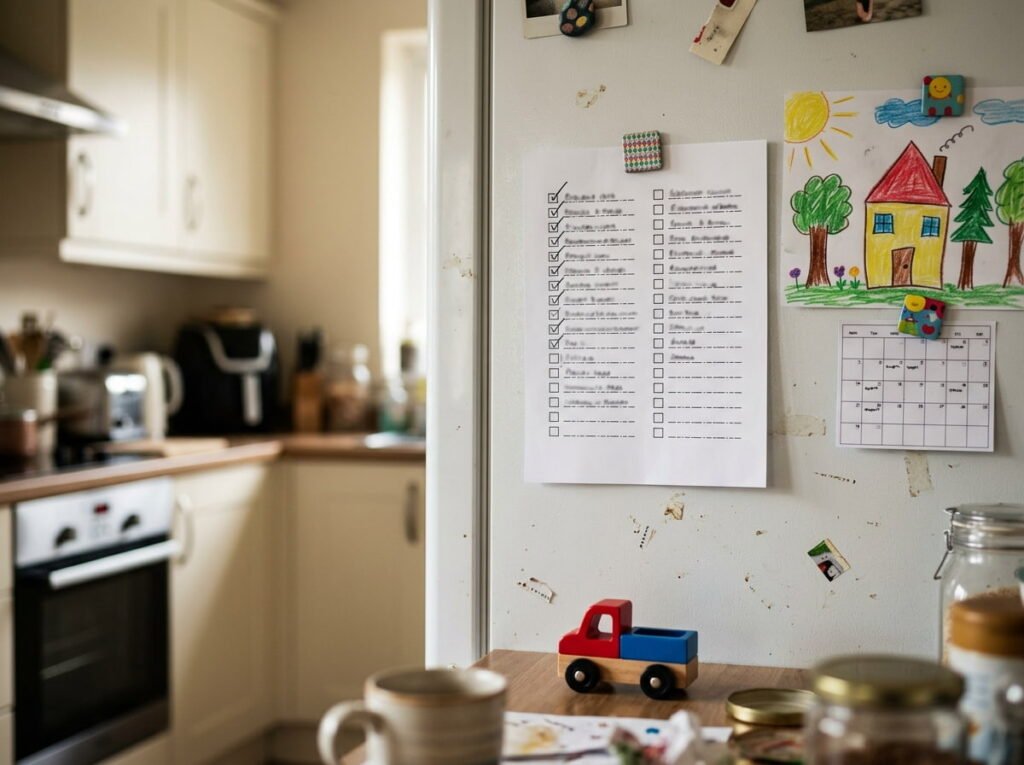
The last step is to write it all down.
Put your zones, your routines, and your rules on one sheet, and stick it somewhere you will see it. Keep it short enough to read in ten seconds. Update it every few months, because kids change fast, and a plan that fit last year may not fit this one.
Your one page plan
Conclusion
A tidy home with kids is not about a perfect weekend. It is about small, steady steps that fit the life you actually have. One zone, ten minutes, and a few simple rules do more than a big plan that never starts.
If you want to declutter with kids, begin with the smallest spot that bothers you most, and let the children help where they can. Keep a maybe box, a donation spot, and a five minute nightly tidy, and the pile stops growing.
A calmer house is made one short session at a time, and you can start with a single toy bin today.Save this list to your Pinterest board so it is ready the next time a toy lands under your foot.