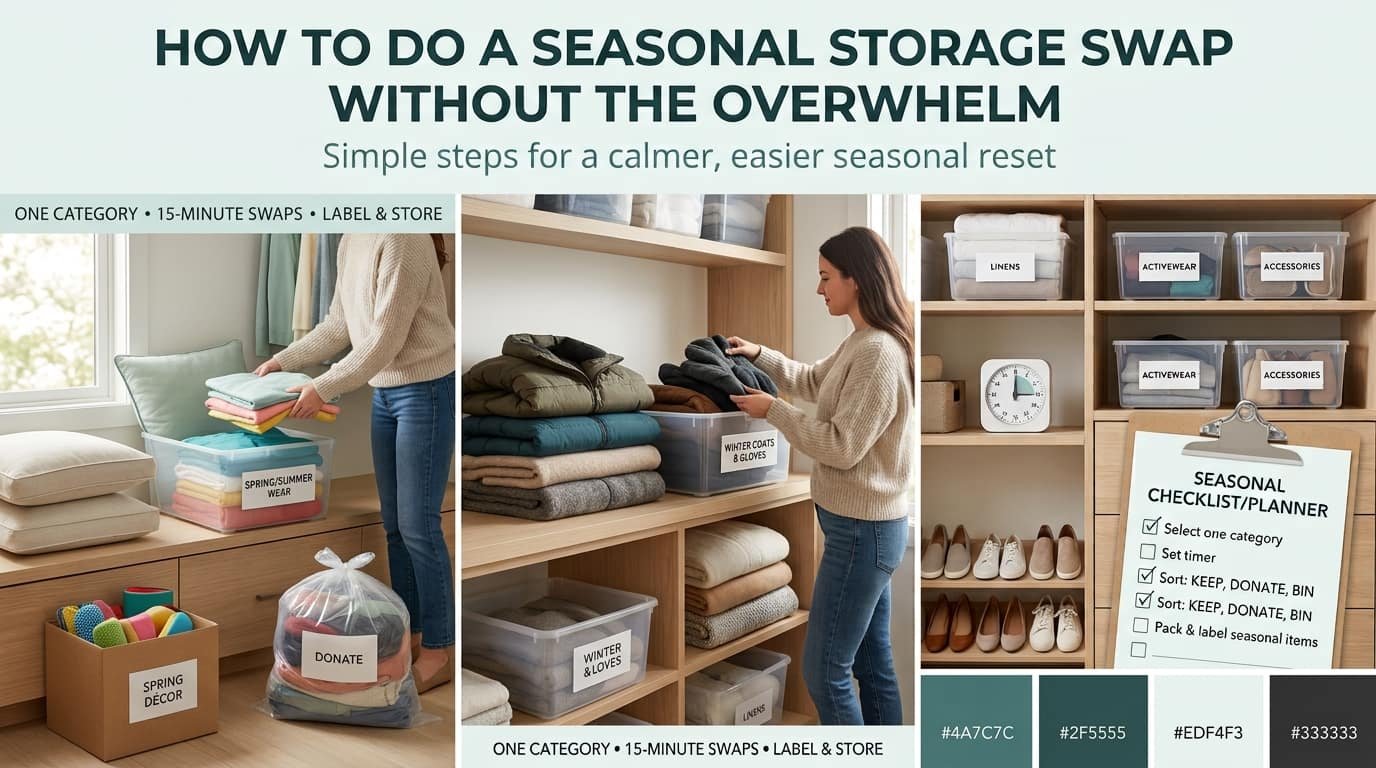
The season changes and suddenly every closet needs to trade places, winter coats for summer clothes, holiday decorations for patio cushions, and somehow it always turns into a bigger project than it should be. What starts as a simple swap ends with boxes scattered across three rooms and a weekend gone.
A seasonal storage swap doesn’t have to mean pulling everything out at once and hoping you find time to put it all back. Breaking it into smaller pieces, tackling one category instead of the whole house, actually gets it done faster than trying to power through in a single exhausting day.
This isn’t about a perfect storage system or matching bins from a store. It’s about a swap that doesn’t leave your house in chaos for a week while you figure out where everything goes. Pick the category bothering you most right now and start there, then let the rest follow at whatever pace actually fits your schedule.
1. Why a Seasonal Storage Swap Feels Bigger Than It Actually Needs to Be
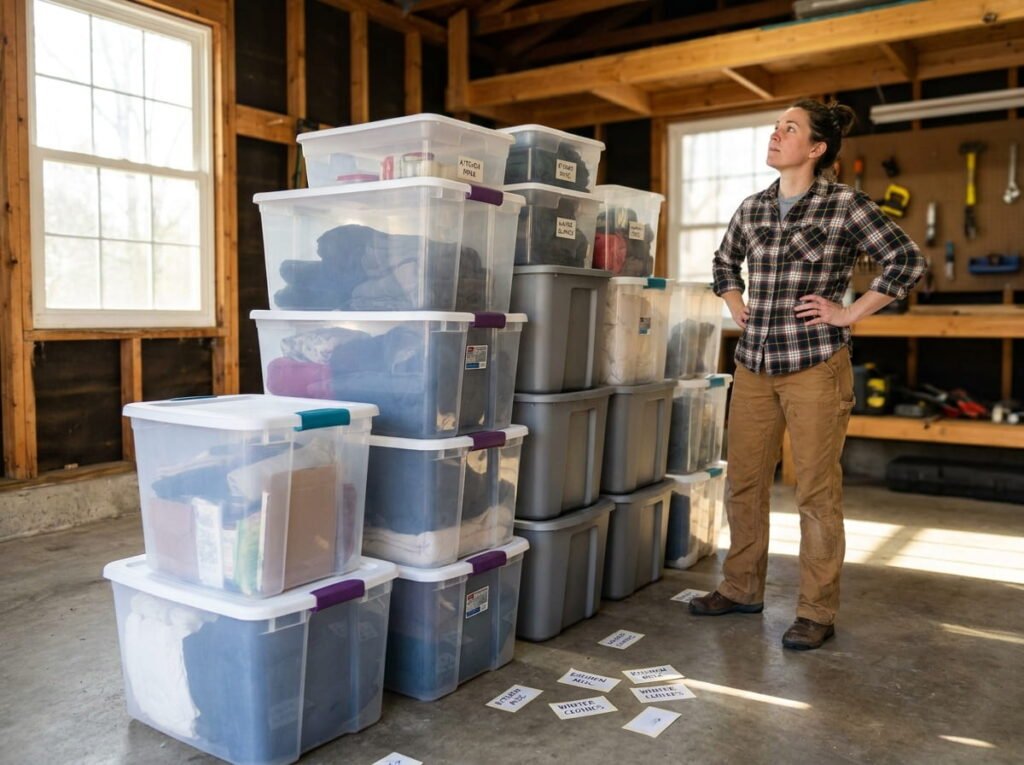
Most people picture the whole swap as one massive task, which makes it easy to keep putting off until the season’s already changed twice over.
A seasonal swap is really several small tasks, not one giant project that has to happen all at once.
Everything below breaks the swap down into pieces small enough to actually fit into a normal week.
2. Doing the Swap in One Category at a Time Instead of the Whole House at Once
Trying to swap clothes, decor, and gear all in the same afternoon means nothing gets a proper amount of attention.
💡 Quick Tip
Pick one category, like clothing or outdoor gear, and finish it completely before starting the next. Half finished categories are what make the house feel chaotic.
A finished category, even a small one, feels like real progress in a way a half touched whole house never does.
3. The Fifteen Minute Rule That Keeps the Swap From Eating a Whole Weekend
Setting aside a full Saturday for the swap often means it either drags on for hours or gets abandoned halfway through when the day runs long.
Set a timer for fifteen minutes and tackle one small section, like a single drawer.
Stop when it rings, even if the section isn’t fully finished.
Repeat the next day, picking up wherever you left off.
Fifteen minutes a day for a week gets through more than a single overwhelming afternoon usually does.
4. Deciding What Actually Needs to Change Before You Touch a Single Box

Not everything in storage needs to swap places just because the season changed. Some items work year round and don’t belong in the rotation at all.
Sorting this way first means you’re only handling the items that genuinely need to move, not the whole contents of a closet.
5. Washing Everything Before It Goes Into Storage, Not When It Comes Back Out
Packing away clothes or bedding dirty means unpacking them next season to a musty smell or a stain that’s harder to remove after months of sitting.
Wash and fully dry everything before it goes into a storage bin.
Store items ready to use the moment they come back out.
Don’t pack anything away with a stain hoping it’ll be fine later.
Don’t store anything even slightly damp.
Future you unpacking clean, ready to wear items is worth the extra load of laundry now.
6. Labeling Bins in a Way That Actually Makes Sense Next Season
A bin labeled just “winter stuff” tells future you almost nothing useful once several seasons have blurred together in your memory.
Better labeling habits
A slightly longer label now saves you from opening four bins next season just to find one sweater.
7. Sorting the One Box You Never Open Before It Joins the Others in Storage
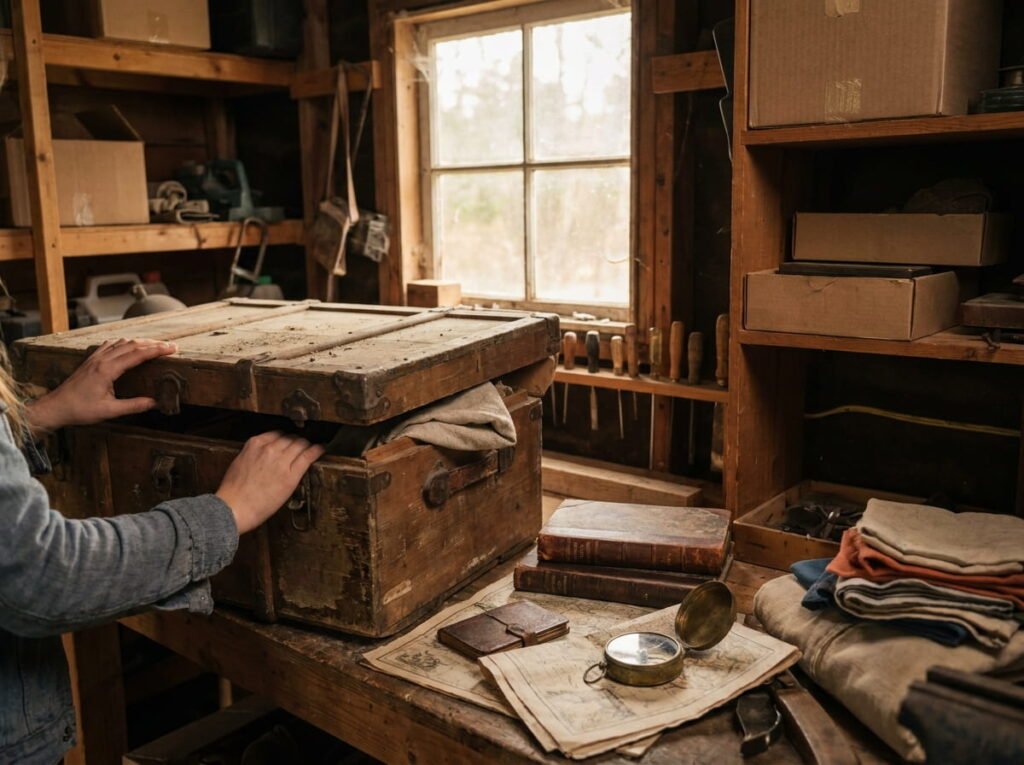
Every household has that one box that gets moved from spot to spot each season without ever actually being opened or sorted.
📌 Good To Know
If a box has been moved untouched for more than one swap cycle, open it. Whatever’s inside either matters or it doesn’t, and you won’t know until you look.
This might be the single most useful five minutes of the entire swap, since that box is often full of things you forgot you even owned.
8. Choosing Bins by What’s Inside, Not Just Whatever Container Is Closest
Grabbing whatever box is nearby means fragile ornaments end up in a flimsy container while sturdy sweaters get the reinforced bin they didn’t actually need.
Matching the container to the contents means less breakage and fewer surprises when everything comes back out next season.
9. Storing Out of Season Items Somewhere You’ll Actually Remember Next Time
An item stored in a random spot because there was space at the moment often gets forgotten entirely by the time the season rolls back around.
⚠️ Watch Out
Storing things in a different spot every year means you’ll spend next season’s swap searching instead of swapping. Pick one consistent location per category.
Once you settle on a spot, keep it the same every year even if it feels slightly inconvenient at first.
10. Doing a Quick Fit Check Before Fully Packing Anything Away
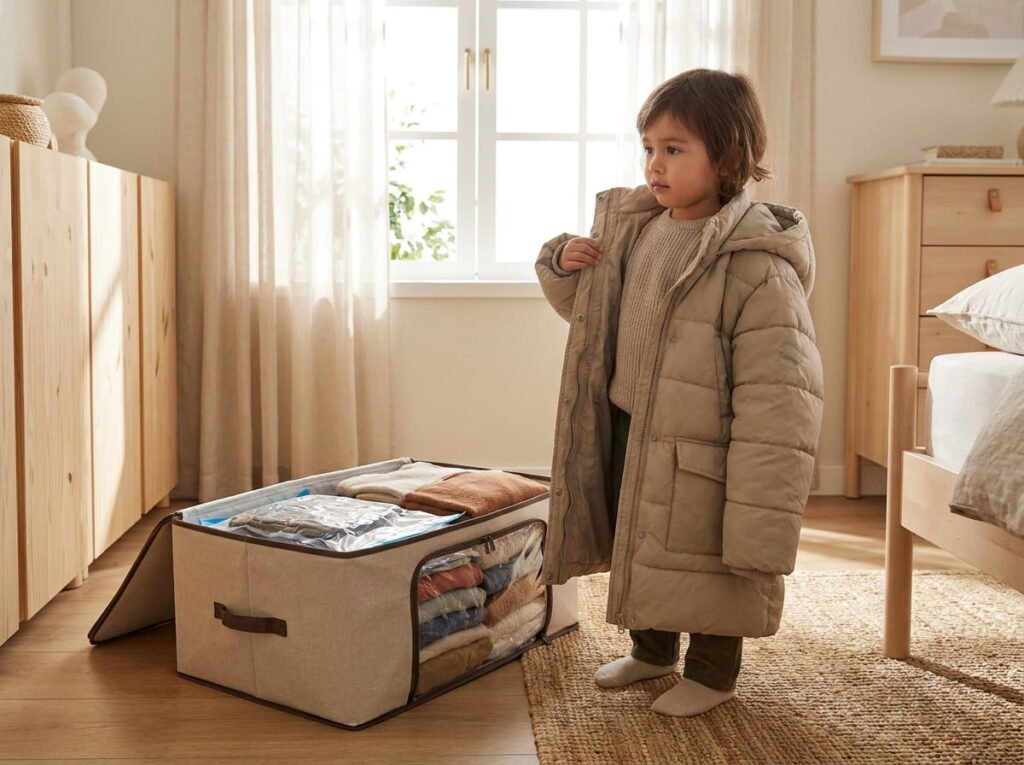
Kids especially outgrow clothes between seasons, and packing away something that won’t fit next time just wastes the effort of storing it at all.
A bin of clothes packed away without checking if they’ll still fit.
A bin of clothes checked for fit, so nothing packed away is wasted space.
A quick check now saves an entire bin’s worth of disappointment next season when nothing actually fits anymore.
11. Under the Bed vs Top Shelf Storage, Which Fits Your Space Better
Not every household has the same storage layout, and the right spot for seasonal bins depends more on what you actually have than any general rule.
| Under the Bed | Top Shelf |
|---|---|
| Good for flat, low profile bins | Better for taller or bulkier containers |
| Easy to reach without a step stool | Keeps floor space and closets clear |
Households with young kids often lean toward top shelves, just to keep bins out of easy reach for curious hands.
12. Setting Aside a Donate Pile the Moment Something Doesn’t Make the Cut
Deciding to donate something and then packing it away “for now” almost always means it just gets stored again instead of actually leaving the house.
- Keep a bag or box specifically for donations during the swap
- Move it to the car or entryway the same day, not later
- Set a rule that nothing sits in limbo waiting for a future decision
- ▸Keep a donation bag or box out during the whole swap.
- ▸Move it to the car or entryway the same day, not later.
- ▸Don’t let anything sit in limbo waiting for a future decision.
An item that makes it back into storage “just in case” usually means the same decision has to be made all over again next season.
13. Why Doing the Swap on the Same Weekend Each Season Makes It Easier Every Time
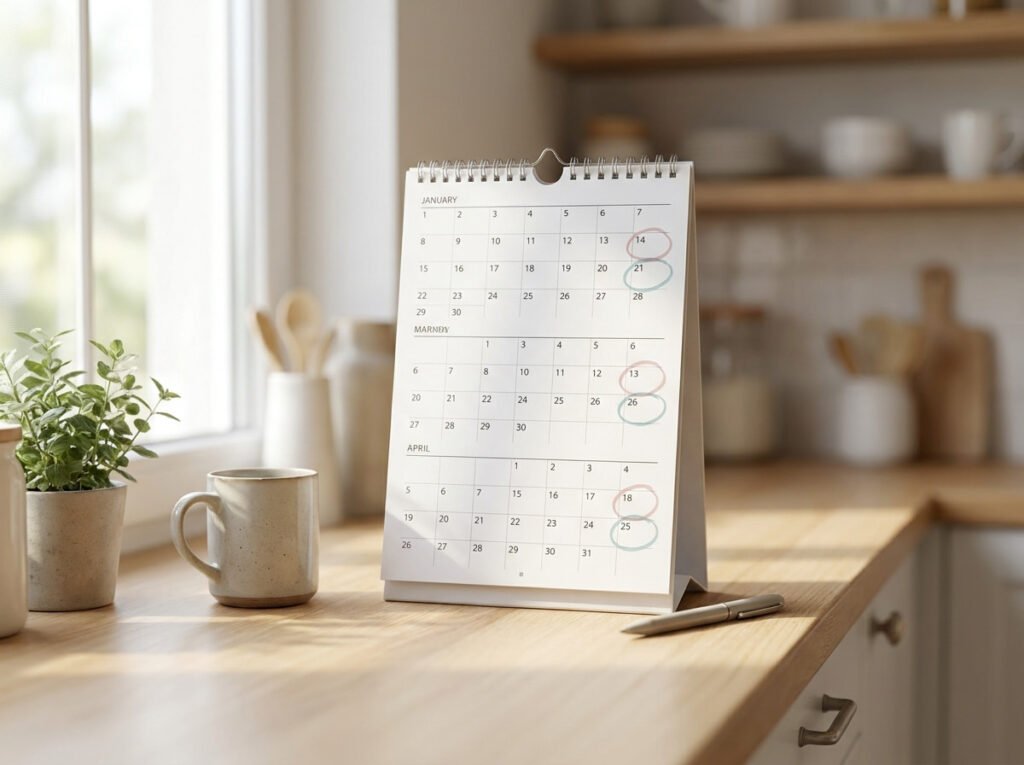
A swap done on a random day whenever you get around to it means starting from scratch each time, with no rhythm or routine to lean on.
A random weekend picked last minute, with no plan or momentum going in.
The same weekend each season, so the swap becomes routine instead of a scramble.
Pick a weekend tied to something predictable, like the clocks changing, so it’s easy to remember without needing a calendar reminder.
14. The Quick Inventory Sheet That Saves You From Buying Duplicates Later
Forgetting what’s already stored away is how households end up with three winter coats when one child only needs one, bought new each year out of not remembering what’s packed.
A quick photo of the list saved on your phone means you can check what’s already stored before ever heading to a store.
15. Keeping the Whole Swap From Turning Into a New Pile of Clutter
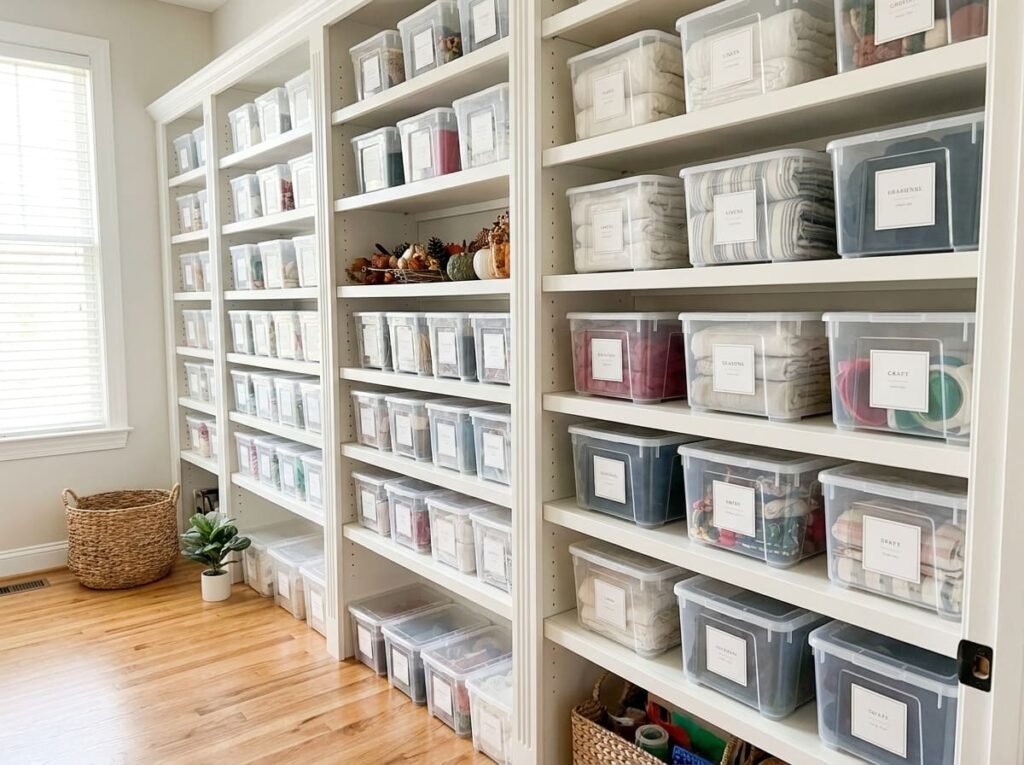
A storage swap done carelessly can end up creating its own mess, half packed bins sitting out for weeks because the last few steps never got finished.
Don’t start a new category until the last bin from the current one is actually sealed and put away.
Finishing each category completely before moving to the next is what keeps the swap from becoming exactly the kind of clutter it was meant to solve.
Conclusion
A seasonal storage swap doesn’t need to take over your whole weekend or leave bins scattered through the house for days. Breaking it into categories, washing things before they go away, and labeling clearly enough for future you to actually understand, all of it adds up to a swap that feels manageable instead of dreaded.
Pick one category to start with this time, and let the rest follow at whatever pace fits your week. Doing it the same way, on roughly the same schedule, each season is what eventually makes the whole process feel automatic instead of overwhelming.
Save this list for the next time the seasons change and it’s time to swap everything over again.