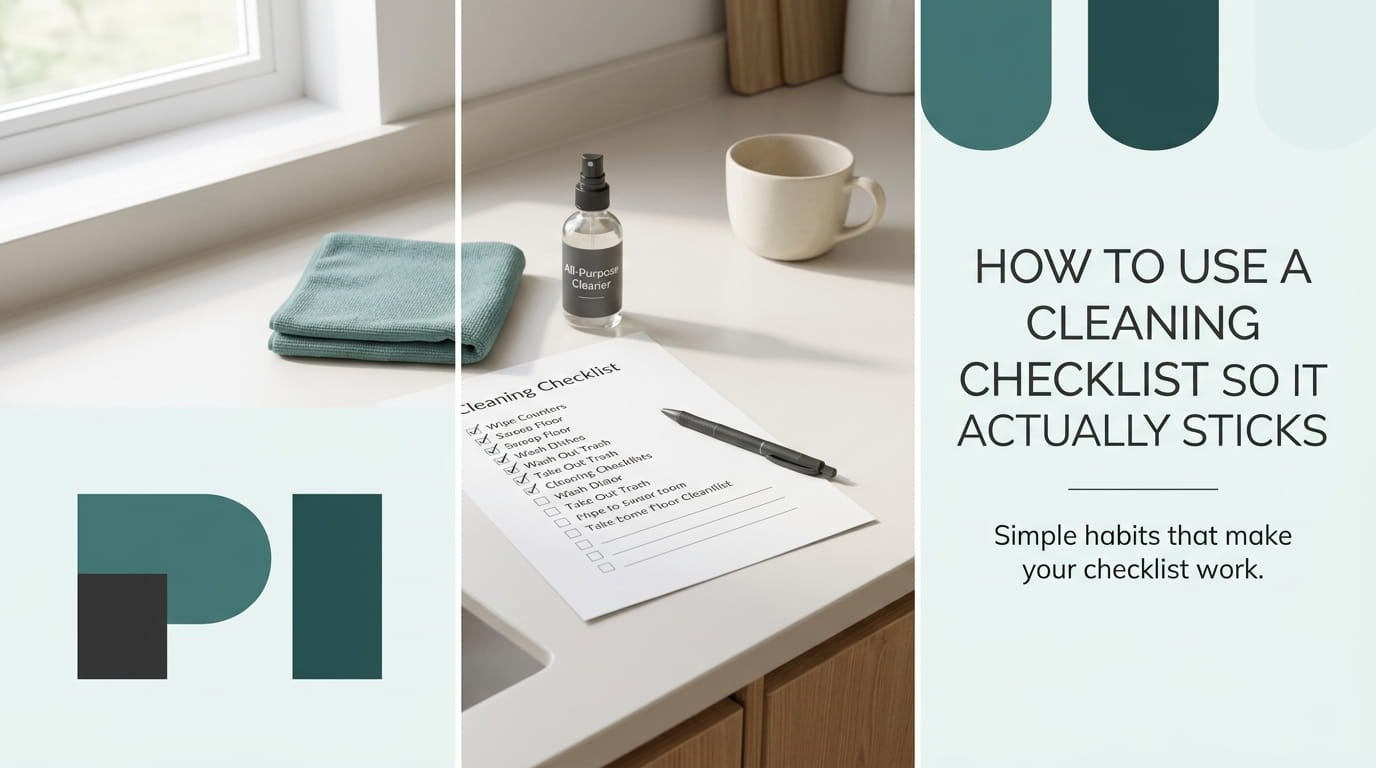
You’ve downloaded the checklist. Maybe three or four of them, sitting in a folder you forgot about or printed once and never touched again. The problem was never finding a good checklist. Pinterest is full of pretty ones. The problem is that nobody tells you what to do with it after you print it, which is exactly where most people quietly give up.
Learning how to use a cleaning checklist isn’t about the list itself. It’s about where you put it, how you break it down, and what happens on the day you inevitably skip it. A checklist that lives in a drawer does nothing. One that’s built around your actual habits, not someone else’s Pinterest board, is a different story.
This isn’t another checklist to download. It’s the missing instructions for making the one you already have actually work, one small adjustment at a time.
See It → Do It → Check It Off
A cleaning checklist works when it becomes part of your routine.
1. Why Downloading the Checklist Isn’t the Part That Fails You
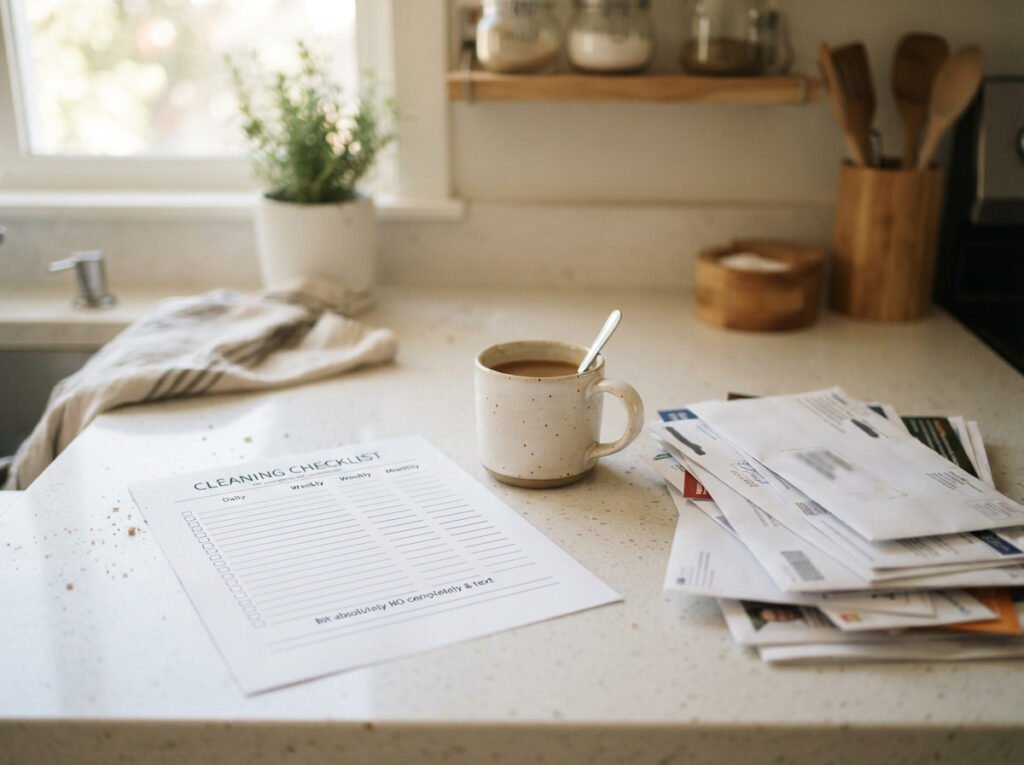
Most people blame the checklist itself when it doesn’t work. Wrong layout, wrong tasks, wrong font. So they download another one, and another, and the cycle repeats without anything actually changing.
The real gap isn’t the design. It’s what happens between downloading it and the first time you’re supposed to use it.
A checklist only works once it has a place to live and a moment in your day to be used.
Everything after this item is about building that place and that moment, not finding a better template.
2. Print It or Skip It, The One Decision That Predicts Whether You’ll Use It
A checklist saved on your phone competes with texts, notifications, and every other app fighting for your attention. A printed one just sits there, visible, with nothing else pulling focus.
That’s not to say digital never works. It just needs more discipline than most people expect.
💡 Quick Tip
If you’ve failed with a digital checklist twice already, print the next one. Don’t try a third digital version and expect a different result.
Printed checklists work especially well for anyone who still writes on paper calendars or leaves sticky notes around the house.
3. The Five Minute Rule That Gets the List Off Your Counter and Into Action
A checklist sitting on the counter isn’t the same as a checklist being used. The gap between the two is usually just a few minutes of avoidance.
Set a five minute rule. The moment you see the list, do one task off it before you do anything else, even something small.
The task itself barely matters here. What matters is breaking the habit of walking past the list without touching it.
4. Where to Actually Post the Checklist So You See It Without Trying
The fridge is the default spot for most people, but by week two it blends into the magnets, the kid’s artwork, and the takeout menus already there.
Pick a spot connected to a task you already do without thinking, so the checklist crosses your path automatically.
Better spots than the fridge
The goal is a spot you can’t avoid, not a spot that looks nice.
5. Why a Checklist With Twenty Tasks Gets Ignored and One With Six Gets Done
A long checklist feels productive to build and exhausting to actually face. Most people quietly stop opening it within a week, not because they’re lazy, but because twenty tasks reads like a whole Saturday lost.
Six tasks feels doable in a lunch break, which is exactly why it gets finished.
Keep daily lists to 4 or 6 tasks maximum.
Save the bigger jobs for a separate weekly list.
Don’t combine daily, weekly, and monthly tasks on one page.
Don’t copy a checklist built for a bigger house than yours.
A shorter list finished every day beats a longer one abandoned by Wednesday.
6. The Time of Day That Makes or Breaks Whether You Follow Through
Morning motivation and evening motivation are not the same thing, and most checklists get built around whichever mood the person happened to be in that day.
Pin the checklist to a specific time slot instead, based on when you actually have energy left over.
Notice which hour of the day you actually have spare energy, not just spare time.
Write that time slot directly on the checklist, not just the tasks.
Keep that same slot for at least two weeks before changing it.
For a lot of people that’s not the morning at all, it’s the twenty minutes right after dinner before the couch wins.
7. Checking Boxes vs Crossing Off Lines, Which One Actually Feels Rewarding

It sounds like a small detail, but the physical act of marking a task done affects whether the habit sticks at all.
Some people feel almost nothing from a small checkbox tick. A bold line through the whole task feels like more of a win.
Try each one for a week and notice which one actually makes you want to keep going.
8. Splitting One Big Checklist Into Zones So It Never Feels Overwhelming
One long list covering the whole house reads like a single massive task, even when it’s really twenty small ones.
Breaking it into zones, kitchen, bathrooms, bedrooms, common areas, changes how the same tasks feel on the page.
| One Long List | Zoned Lists |
|---|---|
| Feels like one huge task | Feels like several small ones |
| Hard to do in short pockets of time | Easy to knock out one zone at a time |
Zones also make it obvious which room has been neglected the longest, without needing to reread the whole list.
9. Why Laminating Your Checklist Changes How Often You Actually Use It
A paper checklist gets a coffee ring, a torn corner, a smudge of cleaner on week one, and it starts looking like something worth tossing rather than keeping.
A laminated version survives all of that and stays usable with a dry erase marker for months.
A wrinkled paper list, replaced every few weeks once it falls apart.
One durable copy, wiped clean and reused week after week.
A five dollar lamination pouch from most office stores is enough for a checklist you’ll use for a full year.
10. The Weekly Reset Habit That Keeps Your Checklist From Going Stale

A checklist built once and never revisited eventually stops matching how you actually live. Maybe you moved a plant, added a pet, or stopped using the guest room entirely.
Ten minutes on Sunday to glance at the list and adjust it keeps it relevant instead of ignored.
📌 Good To Know
A checklist is a living document, not something you set once and never touch again.
Cross off tasks that never get done anyway. If something’s been skipped three weeks running, it probably doesn’t belong on that list.
11. Pairing the Checklist With a Task You Already Do Every Day
Building a brand new habit from nothing is hard. Attaching a new habit to one that’s already automatic is much easier, since the first task reminds you the second one exists.
Coffee brewing, the dog’s morning walk, or brushing your teeth all work as anchor points.
Pick an anchor that takes a few minutes on its own, so there’s actual time for the checklist task to happen alongside it.
12. What to Do the First Time You Skip a Day Without Quitting Completely
One missed day feels like proof the whole system failed, and that thought alone is what makes people abandon the checklist entirely instead of just picking it back up tomorrow.
A skipped day is just a skipped day. Here’s what actually helps when it happens: <div style=”margin:20px 0; color:#333333;”>
- Don’t try to catch up on two days of tasks at once, just start today’s list fresh
- Skip the guilt and go straight back to the same time slot you picked earlier
- If you skipped because the list felt too long, that’s useful information, shorten it
</div>
- ▸Don’t try to catch up on two days of tasks at once.
- ▸Go straight back to the same time slot tomorrow.
- ▸If the list felt too long, that’s a sign to shorten it, not quit it.
One skipped Tuesday has never been the reason a checklist habit actually falls apart. Quitting after it is.
13. Color Coding Tasks by Room So Your Eyes Know Where to Go First
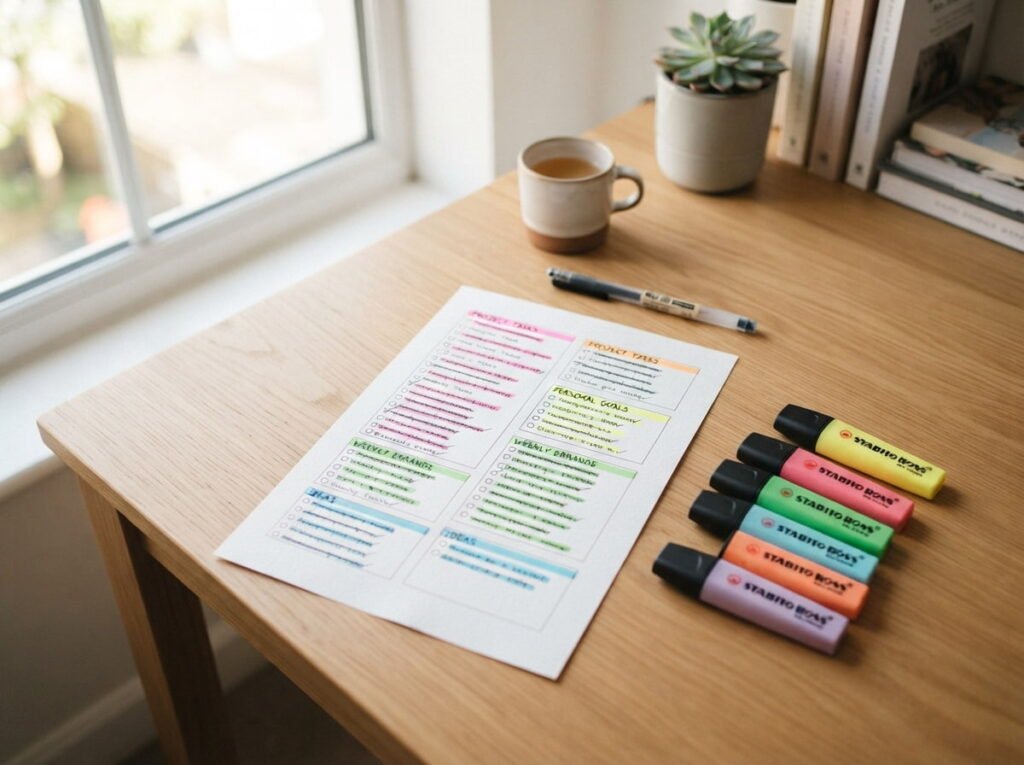
A plain black and white list asks your brain to read every line before deciding what to do first, which slows you down more than it seems.
Color coding by room lets your eyes jump straight to whichever zone you’re standing in.
A basic set of highlighters is all this takes. No special app or printer needed.
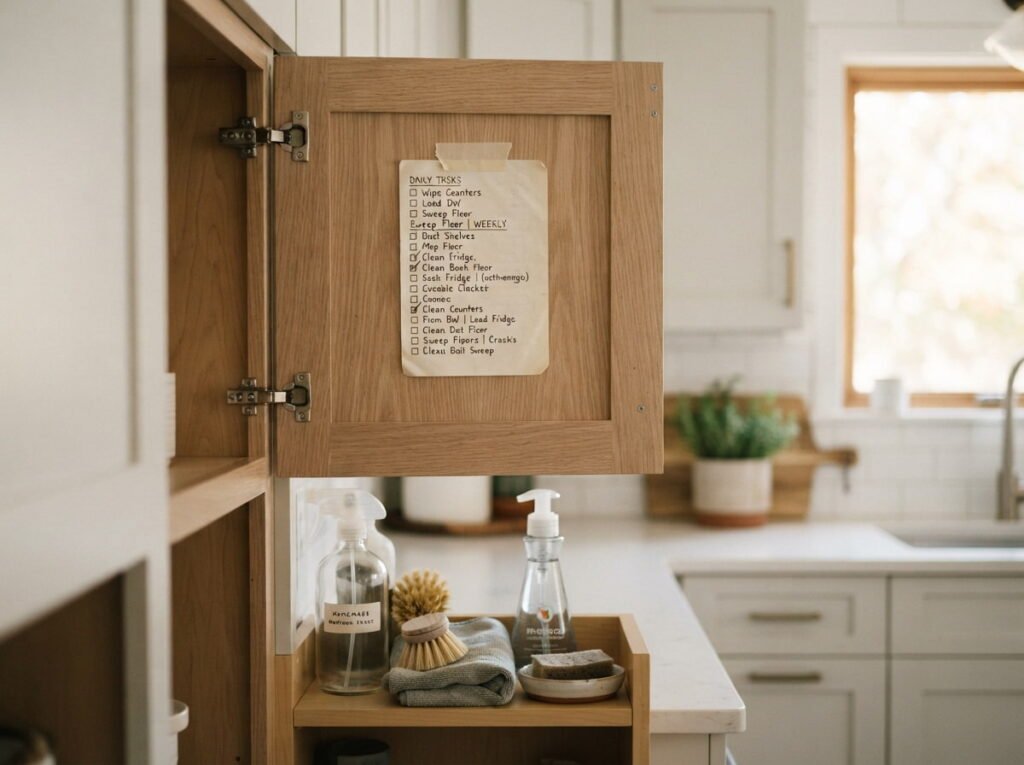
14. Why a Checklist Taped Inside a Cabinet Door Works Better Than One on the Fridge
The fridge gets crowded fast with school papers, magnets, and reminders that pile up until the checklist disappears into the clutter.
A cabinet door you open daily, like the one under the sink or above the coffee maker, stays clear and private.
Why the cabinet door wins
Painter’s tape works fine here and won’t damage the cabinet finish when you eventually swap the list out.
15. Setting a Timer Instead of a Deadline for Each Task on the List
A deadline like “finish by noon” creates pressure without direction. A timer tells you exactly how long to spend and when to stop, even if the task isn’t perfect.
Set a timer for each task, ten or fifteen minutes, and stop when it rings even if the job isn’t finished.
This stops perfectionism from turning a quick task into a half hour project you dread starting next time.
16. Digital App vs Paper Checklist, Which One Actually Gets Finished
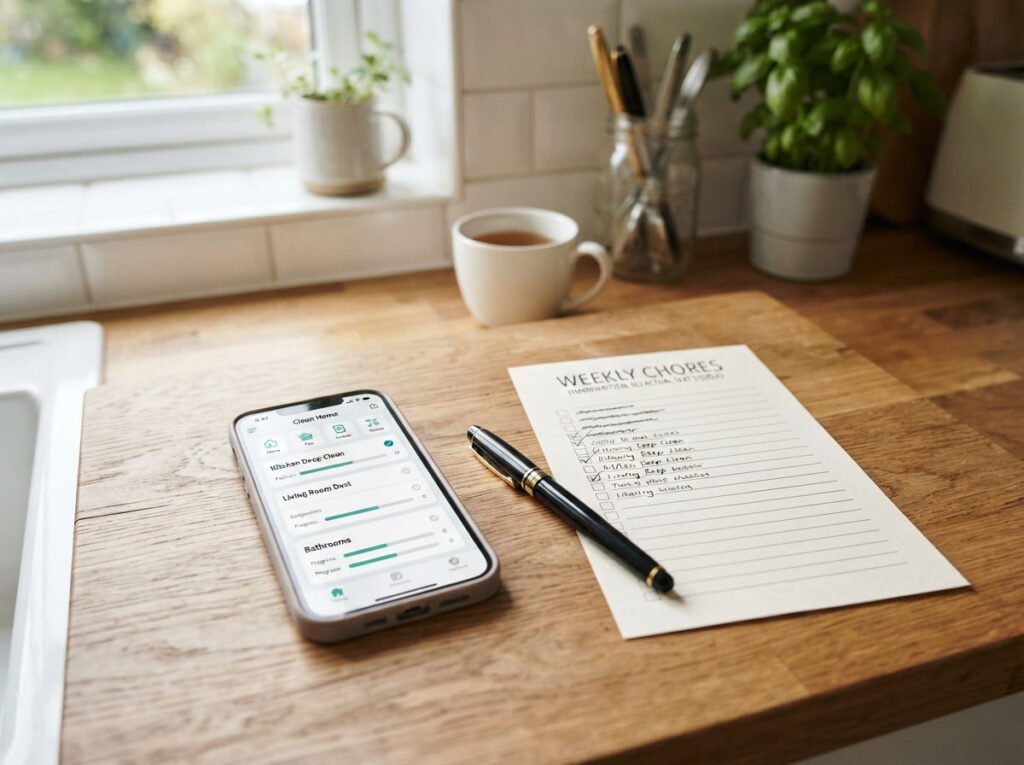
People assume an app must work better since it can send reminders and track streaks automatically. In practice, the extra features sometimes get in the way more than they help.
| Digital App | Paper Checklist |
|---|---|
| Sends reminders automatically | Requires no charging or login |
| Easy to close and forget about | Stays visible until you deal with it |
If you’ve abandoned three cleaning apps already, that’s not a sign to find a fourth one. Try paper instead.
17. Why Reviewing Last Week’s Checklist Matters More Than Starting a New One
Most people toss last week’s checklist without a second look and start fresh, missing the most useful information sitting right there on the page.
A quick glance at what got skipped tells you more than any new list ever could.
Tossing last week’s list and guessing at a new one from scratch.
Circling what got skipped and adjusting next week around it.
If the same task gets skipped three weeks straight, it usually means the task belongs somewhere else on the list, not that you’re failing at it.
18. The Mistake of Copying Someone Else’s Checklist Instead of Building Your Own
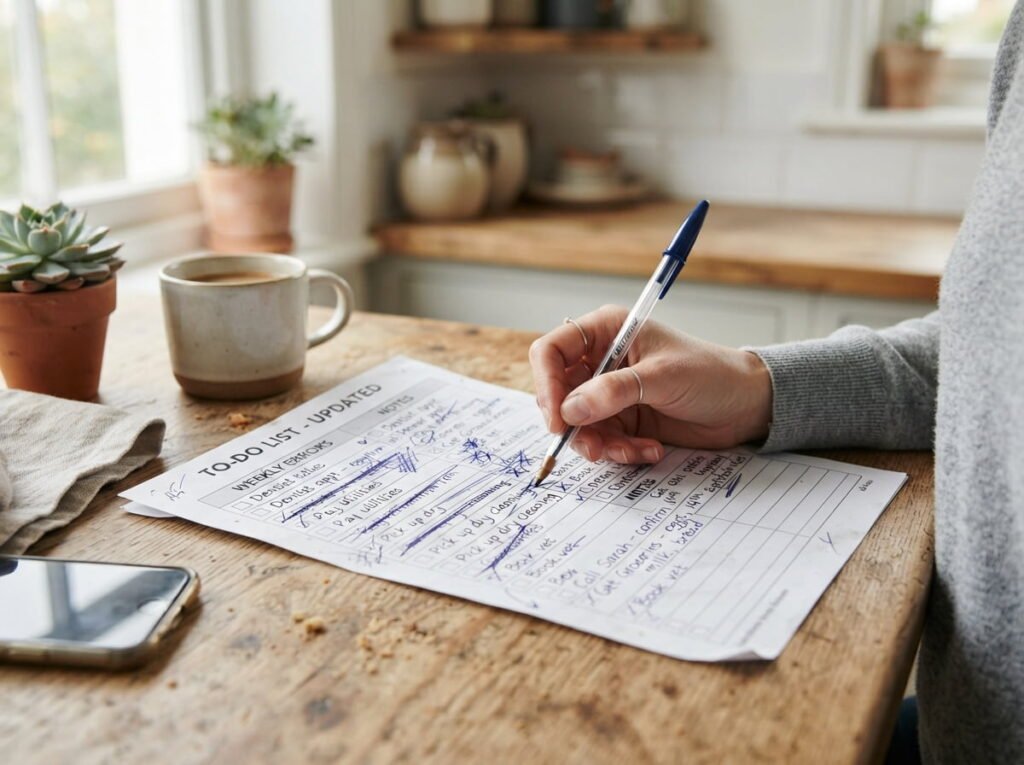
A checklist from Pinterest was built around someone else’s house, someone else’s pets, and someone else’s schedule. Using it exactly as downloaded means half the tasks won’t even apply to your space.
⚠️ Watch Out
A checklist with tasks for a fireplace you don’t have or a yard you don’t own is easy to ignore because none of it feels relevant.
Use a downloaded checklist as a starting template, then delete anything that doesn’t match your actual home before you print it.
19. Letting Kids or a Partner Check Off Their Own Section of the List
One person managing the entire household checklist alone turns into resentment fast, especially when everyone else in the house is capable of doing a few tasks themselves.
Give each family member their own short section with their name on it.
Let kids check off their own boxes, even for small tasks.
Don’t redo their tasks right after they finish, even if it’s not perfect.
Don’t assign more tasks to one person than everyone else combined.
Works especially well for kids old enough to want independence but young enough to still enjoy checking a box.
20. Turning a Finished Checklist Into a Small, Specific Reward

An empty checklist at the end of the week deserves more than just moving on to the next one immediately, especially early on while the habit is still fragile.
Pick a small reward ahead of time, not something you decide in the moment.
Keep it tied to the completed list, like a coffee shop trip or an episode of a show you’re saving.
Skip the reward the one week you don’t finish, without turning it into punishment.
The reward doesn’t need to be big. It just needs to happen consistently enough that your brain starts connecting the two.
Conclusion
Learning how to use a cleaning checklist isn’t really about the checklist at all. It’s about where it lives, how small the tasks are, and what you do the first time you skip a day without giving up entirely. The list itself was never the missing piece. The habits around it were.
Pick two or three ideas from this list, not all twenty at once, and give them a couple of weeks before deciding what’s working. A checklist that survives a bad week is worth more than a perfect one that gets abandoned after three days.
Save this list for the next time your checklist ends up back in a drawer.