
Most cleaning advice assumes you have a free afternoon lying around, which rarely matches how a normal weekday actually goes. Between work, dinner, and everything else competing for your time, a full deep clean feels impossible most days of the week.
A 20 minute cleaning routine works because it doesn’t ask for more time than you actually have. Twenty minutes fits into a lunch break, the time it takes dinner to cook, or the stretch right before bed. It’s short enough that you’ll actually do it, and consistent enough that your house never gets to the point of needing a full weekend rescue.
This isn’t about doing everything every day. It’s about picking the right twenty minutes for whatever your house needs most right now, then building a rhythm that holds up even on the days when nothing goes according to plan. Some of these ideas work daily. Others are better saved for a slower stretch of time once a week.
1. Why Twenty Minutes a Day Beats a Single Exhausting Weekend Clean

A weekend deep clean sounds efficient until you’re three hours in and the whole day is gone, leaving you too tired to enjoy any of your actual time off.
Twenty minutes daily adds up to more real cleaning than one exhausting weekend ever manages.
Everything on this list is built around that twenty minute window, so it fits into a day that’s already full without asking for more.
2. Splitting Your Twenty Minutes Into Four Five Minute Bursts Instead of One Block
Twenty straight minutes can feel like a big ask on a packed day, even though the total time is genuinely small.
💡 Quick Tip
Break it into four five minute bursts across the day, one after breakfast, one at lunch, and so on. The total time stays the same but feels far more manageable.
This works especially well on days packed with meetings or errands, where one uninterrupted block simply isn’t realistic.
3. The Kitchen Reset That Fits Into Twenty Minutes Every Single Evening
A kitchen left messy overnight makes the next morning feel harder before it’s even started, dishes piled up and counters covered in last night’s mess.
Load the dishwasher or wash dishes for five minutes right after dinner.
Wipe counters and the stovetop while something simmers or bakes.
Sweep the floor last, once counters are clear of crumbs.
Waking up to a clean kitchen makes the whole morning feel calmer, even before anything else in the house gets touched.
4. A Bathroom Routine Short Enough to Finish Before Your Coffee Gets Cold

The bathroom doesn’t need a full scrub every day, just enough attention to stay ahead of the grime that builds up fastest.
Doing this before you leave for the day means coming home to a bathroom that never gets the chance to feel neglected.
5. Picking One Zone a Day So the Whole House Gets Covered by Week’s End
Trying to clean the entire house every single day means each room gets a rushed, shallow pass instead of any real attention.
Assign one zone per day, like bathrooms on Tuesday and bedrooms on Thursday.
Give that zone your full twenty minutes of focus.
Don’t try to touch every room every single day.
Don’t rush through five rooms just to say you cleaned.
By the end of the week, every zone has gotten real attention, without any single day feeling overwhelming.
6. The Living Room Reset That Takes Less Time Than One TV Episode
Cushions get flattened, remotes migrate under couches, and coffee tables collect mail and mugs without anyone quite noticing it happen.
Living room quick reset
Twenty minutes covers all of this with time to spare, since none of it requires the depth of a real deep clean.
7. Why Doing Laundry in Twenty Minute Increments Beats One Marathon Sunday

Laundry piled up all week means an entire Sunday disappears into washing, folding, and putting away, with nothing else getting done that day.
📌 Good To Know
Start one load in the morning, fold it during a twenty minute window in the evening. Spreading it across the week keeps any single day from feeling consumed by laundry.
This spreads naturally across your week without ever needing a dedicated laundry day at all.
8. A Bedroom Routine That Makes the Whole Room Feel Calmer in Minutes
A bedroom with an unmade bed and clothes draped over a chair sets a chaotic tone for the whole day, even if nothing else in the room is actually messy.
An unmade bed, clothes on the chair, and a nightstand cluttered with cups.
A made bed, put away clothes, and a clear nightstand ready for sleep.
Making the bed alone takes under two minutes but changes how the whole room feels for the rest of the day.
9. The Entryway Reset That Stops Clutter Before It Piles Up by Evening
The entryway takes the brunt of everyone’s daily comings and goings, shoes, bags, mail, and jackets landing wherever they get dropped first.
- Line up shoes on a mat or shelf instead of scattered across the floor
- Sort mail into keep or toss the moment it comes through the door
- Hang jackets on hooks rather than draping them over a chair
- ▸Line up shoes on a mat instead of scattered across the floor.
- ▸Sort mail into keep or toss the moment it arrives.
- ▸Hang jackets on hooks instead of draping them over a chair.
A tidy entryway sets the tone the moment anyone walks through the door, for better or worse.
10. Using a Timer So Twenty Minutes Doesn’t Quietly Turn Into an Hour
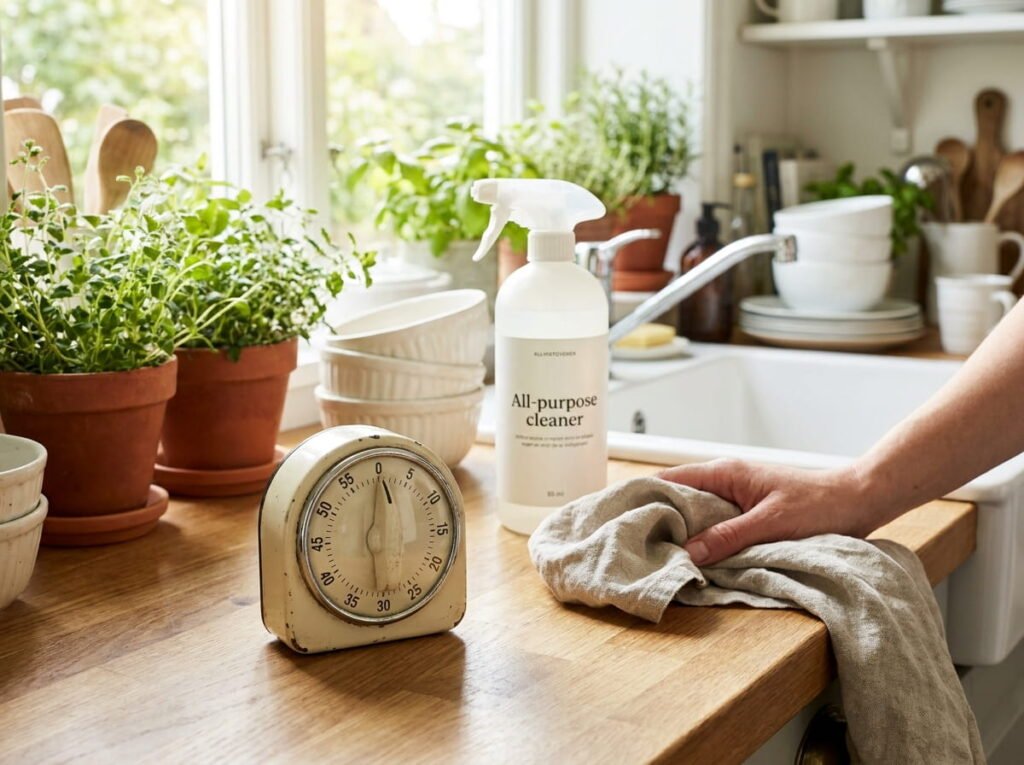
Without a timer, twenty minutes of intended cleaning has a way of stretching into an hour, especially once you start noticing more things that could use attention.
Stopping when the timer goes off, even mid task, is what keeps the routine sustainable instead of quietly becoming another hour long chore.
11. The Home Office Reset That Clears Your Desk Before Tomorrow’s Work Begins
A cluttered desk at the start of a workday adds a small dose of stress before you’ve even opened your laptop.
Clear loose papers into a single tray, sorted or not.
Wipe the desk surface with a quick pass of a cloth.
Set out only what you need for tomorrow’s first task.
Walking into a clear desk the next morning means you’re starting the workday instead of starting with cleanup.
12. Why Skipping a Day Occasionally Doesn’t Undo the Whole Routine
Missing one day of the routine can feel like the whole system has failed, which is exactly the kind of thinking that makes people quit entirely after a rough week.
⚠️ Watch Out
One skipped day is not a broken routine, it’s just a skipped day. Treating it as failure is what actually derails the habit long term.
Pick the routine back up the next day exactly where you left off, without trying to make up for lost time all at once.
13. A Twenty Minute Deep Task Rotation for the Jobs That Don’t Fit Daily
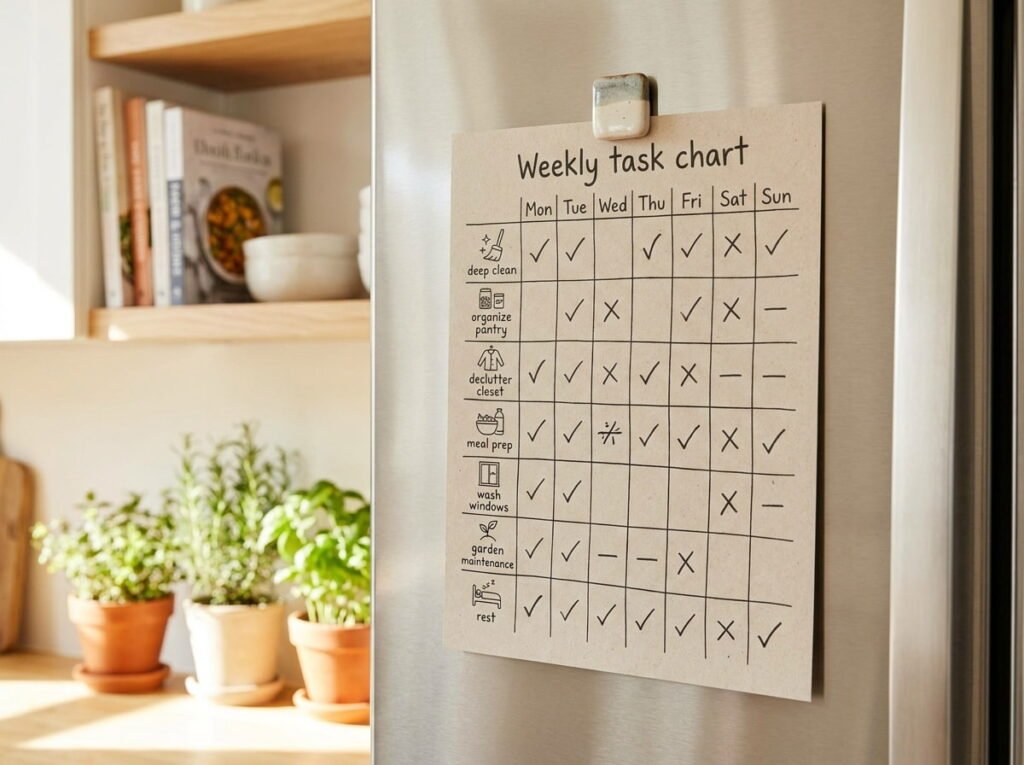
Baseboards, light fixtures, and inside the fridge don’t need daily attention, but they still need somewhere to live in your overall routine.
Rotating one deep task into a few slots each week means these jobs actually get done instead of waiting for a deep clean day that never comes.
14. Matching Your Twenty Minutes to Whichever Time of Day You Actually Have Energy
Forcing your cleaning time into a slot that doesn’t match your natural energy is a common reason the routine falls apart within a few weeks.
Notice which part of your day actually has spare energy, not just spare time.
Anchor the routine to that window consistently.
Don’t force it into early mornings if you’re not a morning person.
Don’t pick a time slot just because it looks good on paper.
For a lot of people that’s not the morning at all, it’s the twenty minutes right after dinner before the couch wins the evening.
15. The Weekend Twenty Minutes That Sets Up an Easier Week Ahead
One focused twenty minute session on a weekend morning can make the entire upcoming week feel more manageable than any single weekday session would.
A Monday that starts already behind, with no plan or prep done.
A Monday that starts calm, thanks to twenty minutes spent Sunday morning.
Use it to review the week’s calendar, set out anything needed for Monday, and do one small reset before the week actually starts.
16. Getting Kids or a Partner to Take Their Own Twenty Minute Zone

Trying to handle every zone yourself turns a manageable twenty minute routine into an hour or more once multiplied across the whole house.
| One Person Doing Everything | Zones Split by Household |
|---|---|
| Twenty minutes per zone adds up fast | Everyone finishes their zone at the same time |
| Resentment builds over an uneven workload | The whole house gets done in the same twenty minutes |
Even a young kid can handle a simple zone like their own toys or the entryway shoe pile, freeing up real time for everyone else.
17. Why a Messy Day Doesn’t Mean You Failed the Routine
A busy day where nothing on the routine got touched can feel like proof the whole system isn’t working, even though one off day says very little about the routine itself.
💡 Quick Tip
A messy day just means today was busy. It doesn’t erase the twenty minutes you put in yesterday or reset anything you’ve already built.
Tomorrow’s twenty minutes still count the same, whether today went perfectly or fell apart entirely.
18. Turning the Twenty Minutes Into a Habit That Sticks Past the First Month
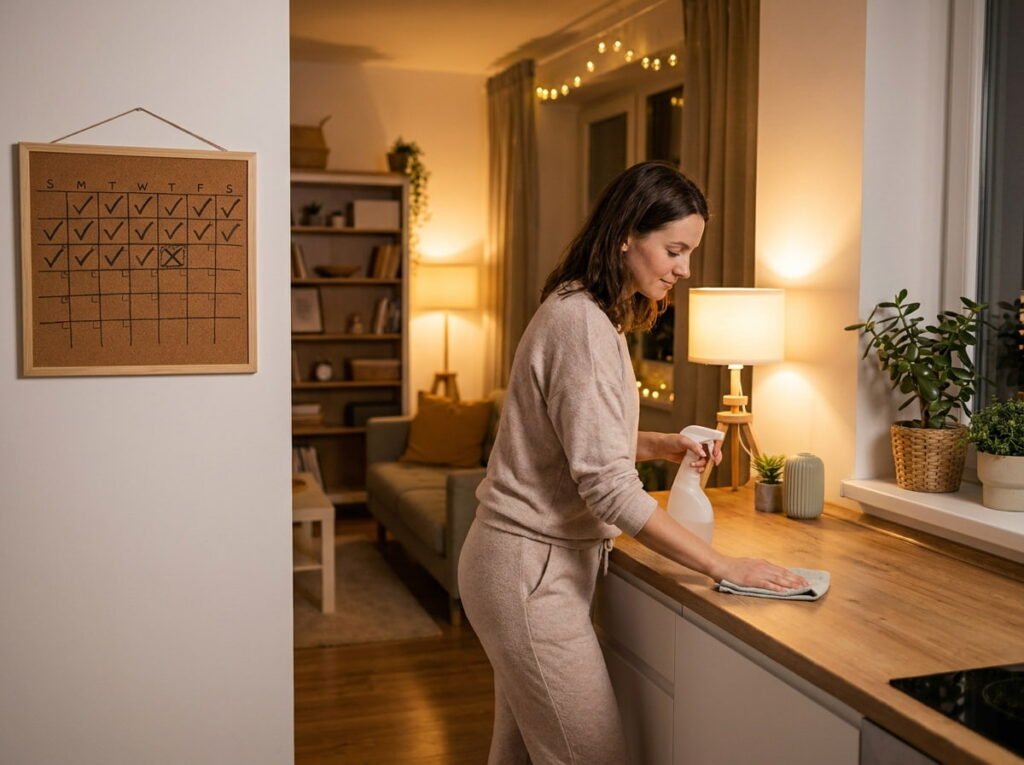
The first few weeks of any new routine feel effortful, and that’s exactly the stretch where most people quit before it actually becomes automatic.
Anchor the twenty minutes to something you already do every day, so it becomes automatic instead of one more thing to remember.
Give it a full month before deciding whether the routine actually works for your life. Most habits need that long to stop feeling like effort.
Conclusion
A working 20 minute cleaning routine succeeds because it asks for what you actually have, not what a Pinterest perfect schedule assumes you have. One zone a day, a timer to keep things honest, and the flexibility to skip a rough day without falling apart. That’s really all it takes.
Give it a full month before judging whether it fits your life. Most days won’t be perfect, and that’s fine. The twenty minutes you put in today still count, even if yesterday didn’t go as planned.
Save this list for the next time your house feels like it’s gotten away from you.