Most cleaning schedules fail for one simple reason. They’re built for a life that isn’t yours. A layout made for someone with a big house and a flexible morning doesn’t hold up if you’re squeezing chores into thirty minutes after work, and a schedule with ten daily tasks just gets ignored after the first week.
The fix isn’t trying harder to stick to one system. It’s finding a cleaning schedule printable that actually matches how your week runs. Some people do better with everything mapped by room. Others need chores tied to time blocks, or split across roommates, or shrunk down to a short list they can finish before coffee gets cold.
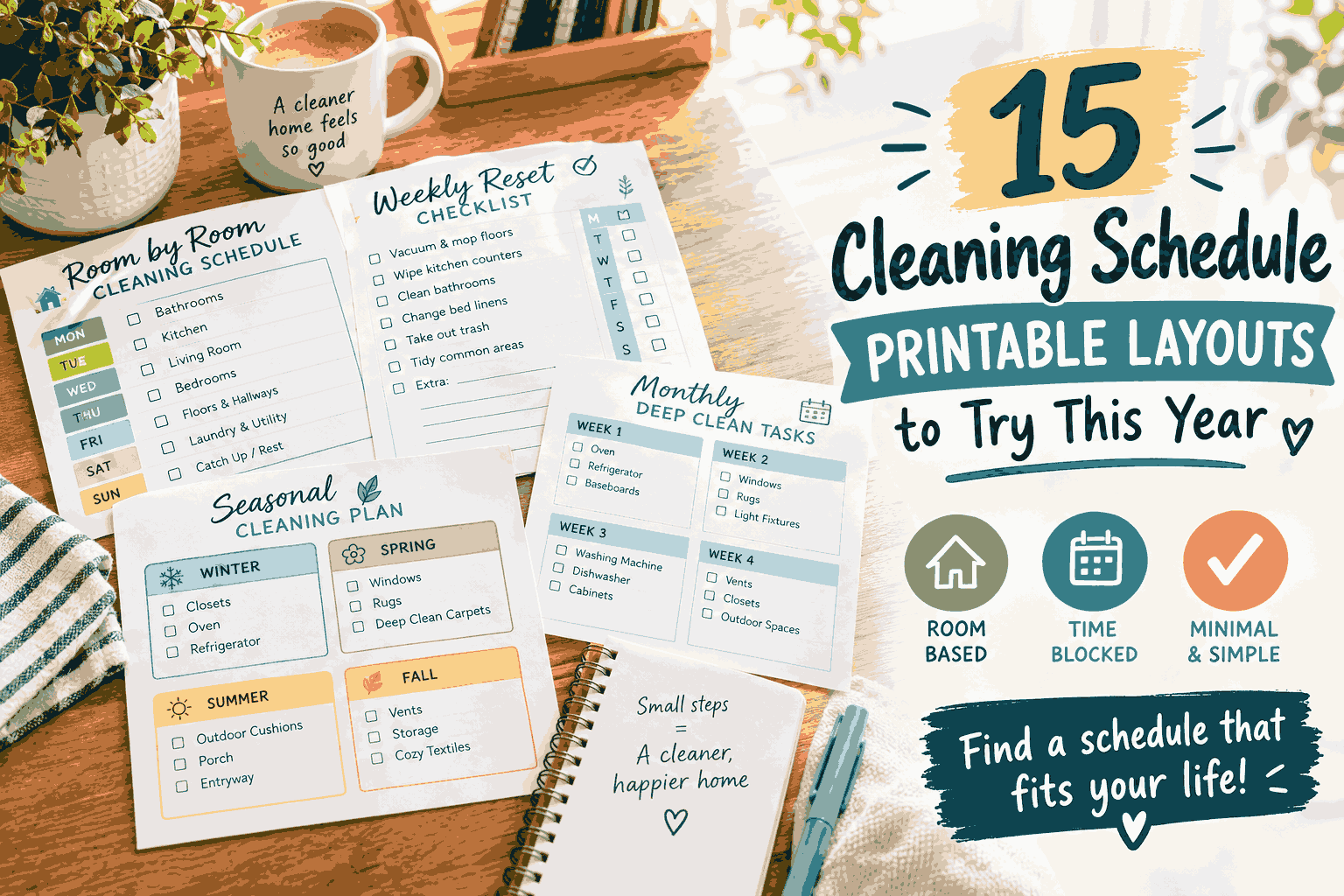
This roundup covers fifteen different layouts, from zone based systems to habit stacked routines, so you can pick whichever shape fits your actual days instead of forcing your days to fit a schedule. Print one, try it for two weeks, and swap it out if it’s not clicking. That’s the whole point of having options.
Find a Schedule That Fits Your Life
Less overwhelm. More checkmarks. A routine you can actually stick with.
1. The Room by Room Layout That Splits Cleaning Across Every Day
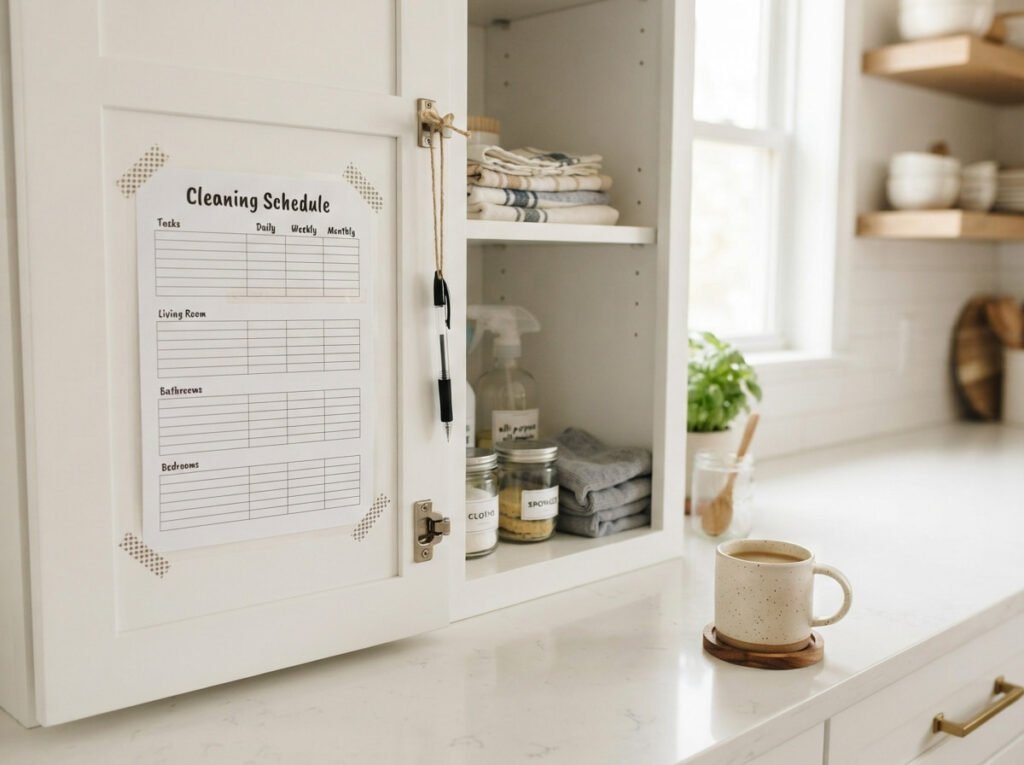
This is the classic setup for a reason. One room gets full attention each day instead of every room getting a rushed once over. Monday might be bathrooms, Tuesday the kitchen, and so on through the week.
- Assign one main room per weekday
- Leave weekends for catch up or rest
- Keep a short daily list for shared spaces
The kitchen table that collects mail all week finally gets cleared on its assigned day instead of never.
2. A Zone Cleaning Layout for Anyone Who Hates Doing the Same Room Twice a Week
Zone cleaning breaks the house into four or five sections instead of individual rooms, so you’re never repeating the same space within the same week. Zone one might cover the entryway and hallway, zone two the kitchen, and it rotates from there.
This works especially well in smaller homes where rooms blend together anyway.
💡 Quick Tip
Group connected spaces into one zone, like a hallway and the closet that opens into it, so nothing gets forgotten.
3. The Fifteen Minute Daily Layout Built for Mornings You Don’t Want to Clean
Some mornings the last thing you want is a chore list. This layout keeps every daily task under fifteen minutes total, so it fits even on the days you’re rushing out the door with coffee in hand.
A cluttered layout with too many steps gets skipped. A short one gets done.
A ten item daily list that gets ignored by Wednesday.
Three quick tasks that actually get finished every single day.
4. A Weekly Reset Layout That Fits on One Page
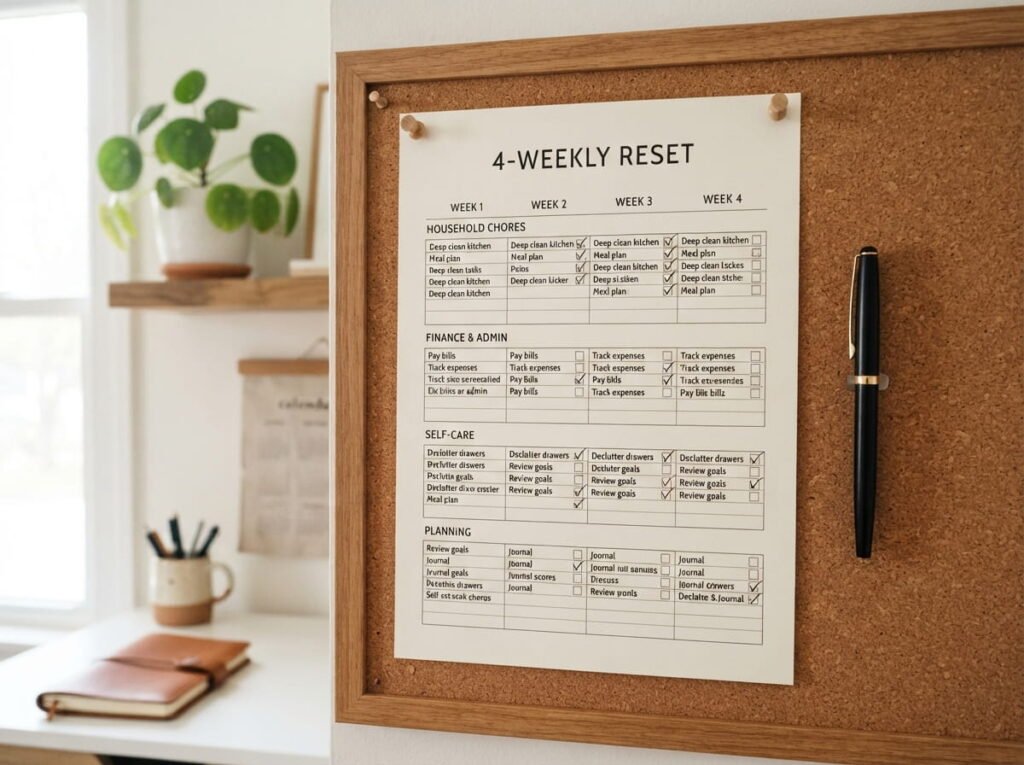
Some people don’t want a daily breakdown at all. They want one page, one weekend, and a short list of what needs attention before the week starts fresh. This layout keeps everything on a single printable so nothing feels overwhelming.
Print it, tape it inside a cabinet door, and check items off as you go.
What the page includes
5. The Monthly Deep Task Layout for Jobs You Always Forget Exist
Baseboards, window tracks, and the inside of the oven don’t fit into a weekly rhythm and usually get skipped for months at a time. This layout pulls those jobs out separately and spaces them across four weekends a month, so nothing waits an entire year.
One deep task a week is manageable. All of them at once isn’t.
6. A Seasonal Layout That Spreads the Big Jobs Across the Year Instead of One Weekend
Spring cleaning as one giant weekend is exhausting and usually half finished by Sunday night. Spreading those same tasks across all four seasons turns one overwhelming project into four manageable ones.
- Assign gutter and window tasks to fall and spring
- Save closet swaps for the start of each season
- Reserve deep carpet cleaning for whichever season your house gets dustiest
Nothing on the list feels like a whole weekend lost.
Assign gutter and window tasks to fall and spring.
Save closet and wardrobe swaps for the start of each season.
Reserve deep carpet or rug cleaning for the dustiest season in your home.
7. The Working Parent Layout That Assumes You Only Have Evenings
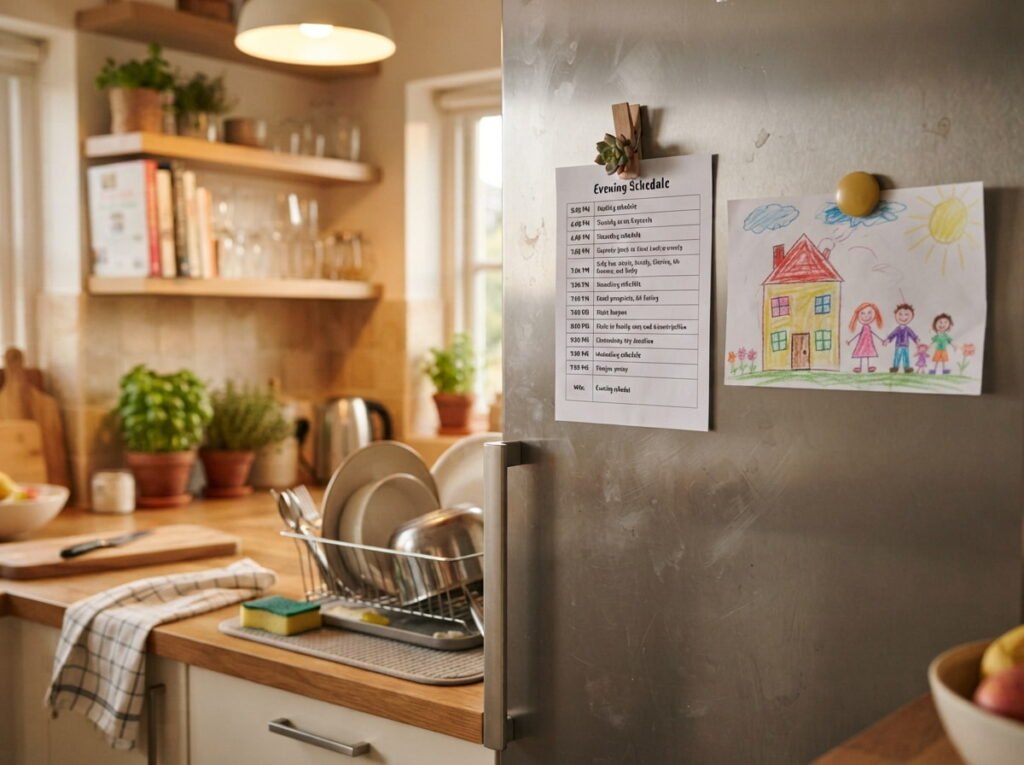
Most cleaning schedules assume free mornings and open weekends, which doesn’t match a house with school pickups and packed evenings. This layout builds every task around a thirty minute window after dinner, plus one longer session on a single weekend day.
Nothing here assumes help is coming or that the house will ever be fully quiet.
A thirty minute after dinner slot.
One longer weekend session, not two.
Free time during the school day.
An empty house on weekends.
8. A Roommate Layout That Splits Chores Without Starting a Fight
Chore charts fall apart fast when one person feels like they’re doing more than their share. This layout assigns tasks by effort level instead of by room, so nobody ends up stuck with every heavy job while someone else gets the light ones.
Rotate the heavy tasks weekly so the same person isn’t always the one scrubbing the bathroom.
| Heavy Tasks | Light Tasks |
|---|---|
| Bathroom scrub, vacuuming | Dishes, wiping counters |
| Taking out trash and recycling | Tidying shared spaces |
9. The Minimalist Layout for People Who Just Want a Short List
Not everyone wants a detailed grid with boxes for every task. Some people just want five lines on a page and the freedom to fill in whatever the week actually needs.
Keep it to five tasks, no more.
A short list you actually finish beats a long one you keep rewriting.
10. A Detailed Layout for People Who Like Checking Off Every Small Task
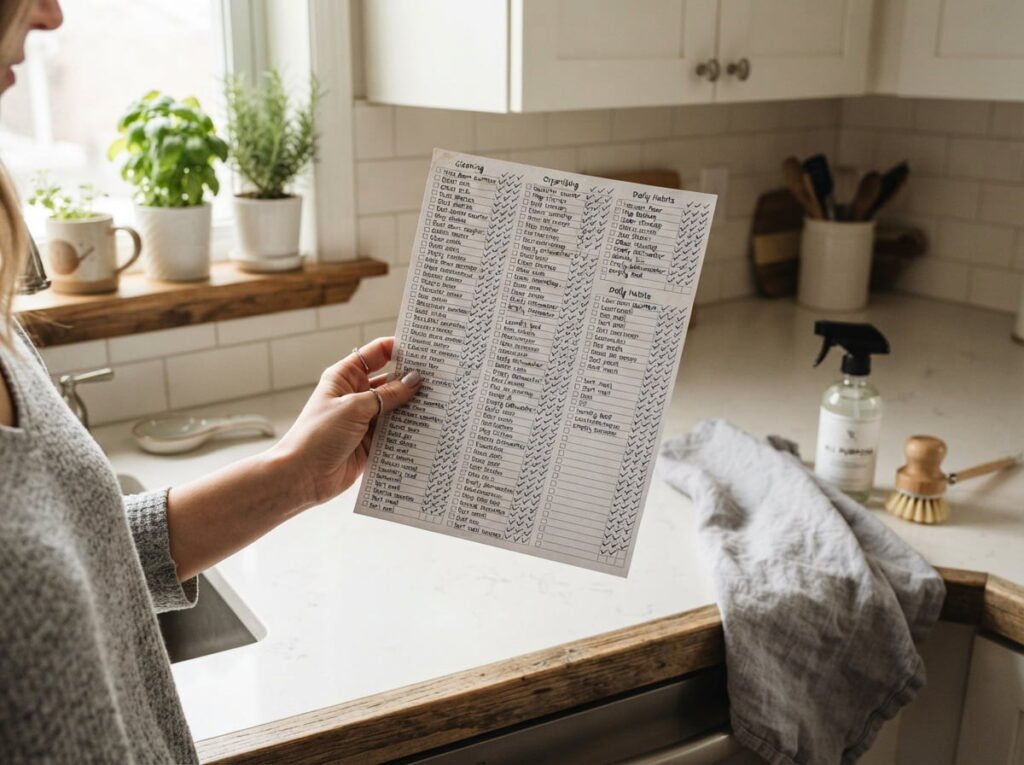
Some people find satisfaction in breaking one big chore into smaller pieces, and this layout is built exactly for that. Instead of “clean kitchen,” it lists wipe counters, load dishwasher, sweep floor, and wipe stovetop as separate lines.
Each small checkmark adds up to a bigger sense of progress through the day.
- ▸Wipe counters and stovetop separately.
- ▸Load dishwasher as its own line item.
- ▸Sweep floor listed separately from mopping.
11. The Time Blocked Layout That Assigns Cleaning to Actual Hours in Your Day
Instead of a list of tasks with no order, this layout drops each chore into a specific hour, the same way a work calendar would. Seven in the morning gets dishes, noon gets a quick tidy, seven at night gets tomorrow’s setup.
It works especially well for people who already live by a calendar for everything else.
12. A Rotating Layout So the Same Chore Never Lands on the Same Day Every Week
Doing bathrooms every single Saturday for years turns a simple chore into a dreaded one. A rotating layout shifts which task falls on which day every few weeks, so the routine feels less like a rut.
Cycle four task groups through a four week calendar instead of fixing them to one day forever.
📌 Good To Know
Write the rotation on the printable itself so you’re not trying to remember which week it is.
13. The Pet Owner Layout That Adds Back the Tasks Most Schedules Skip

Generic cleaning schedules leave out the stuff pet owners deal with weekly, like washing bedding, wiping paw prints off doors, and vacuuming fur that regular vacuuming misses. This layout builds those tasks in from the start instead of leaving you to add them as an afterthought.
The difference shows up fastest on baseboards and under furniture.
A standard schedule with pet hair and messes left off entirely.
Bedding washes, paw wipe downs, and fur pickup built into the weekly rhythm.
14. A Small Apartment Layout Built for Fewer Rooms and Faster Resets
A five room schedule doesn’t make sense in a one bedroom apartment with fewer surfaces to manage. This layout condenses everything into three zones so the whole space gets covered without stretching chores out over days they don’t need to fill.
A smaller footprint means faster resets, not a smaller list of what matters.
Three zone breakdown
15. The Habit Stacking Layout That Attaches Cleaning to Things You Already Do
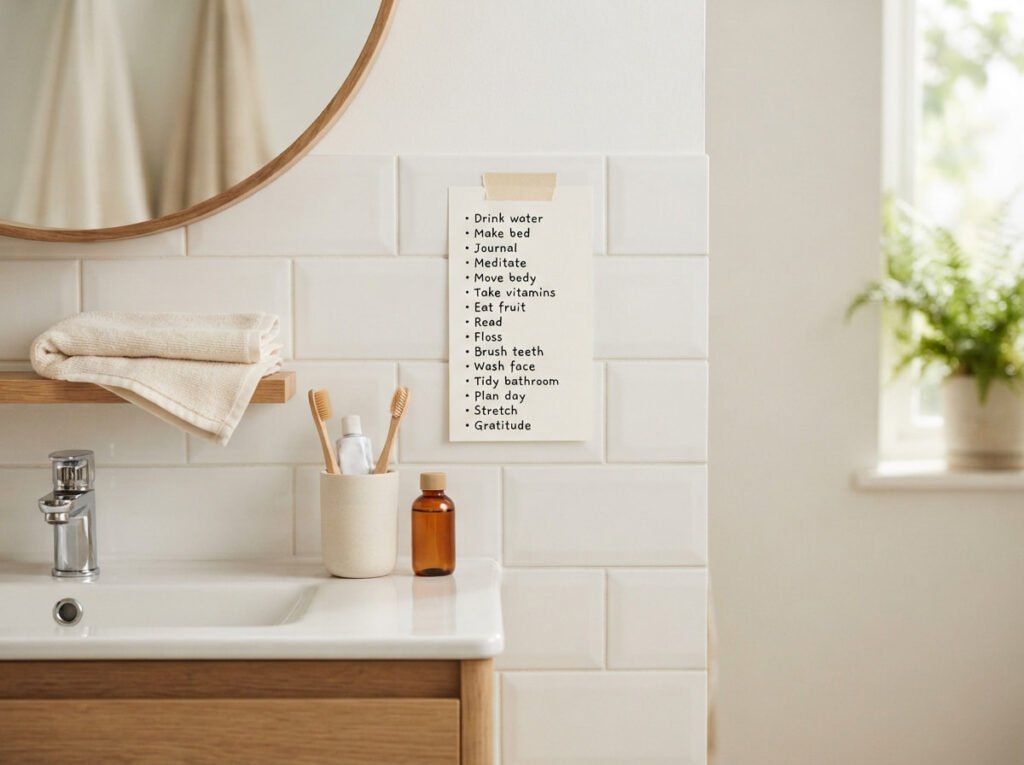
Rather than treating cleaning as its own separate task on the calendar, this layout ties each chore to something already happening in your day. Wipe the bathroom sink while brushing your teeth. Load the dishwasher while coffee brews.
The task gets done because it’s riding along with a habit that’s already automatic.
Conclusion
The right cleaning schedule printable isn’t the one with the most tasks or the fanciest layout. It’s the one that actually matches your week, whether that means fifteen minute daily bursts, one weekend reset, or chores stacked onto habits you already have. Try a couple of these before settling on one. What works for a roommate household won’t work the same way for a small apartment or a house with pets.
Print two or three that caught your eye and test them for a week each. You’ll notice pretty quickly which one you actually stick with versus which one ends up buried under mail on the counter.
Save this list so you’ve got the full set of layouts ready whenever your current routine stops working.