Soap scum builds up faster than most people expect, and by the time you notice the shower door has gone cloudy, it feels like a much bigger job than it actually is. The usual advice online involves either scrubbing until your arm gives out or buying a cleaner that promises everything and delivers barely half of it.
These bathroom cleaning hacks skip both of those problems. They use things already sitting under your sink, and they target the specific messes that show up in every bathroom, hard water spots, soap scum, a shower curtain that’s started to mildew no matter how careful you are.
None of these require a full weekend or a cabinet of specialty products. Some take two minutes. Others need to sit overnight while you do something else entirely. Pick out whatever’s bothering you most in your own bathroom right now and start there, then keep the rest handy for whenever the next mess shows up.
1. The Dish Soap and Vinegar Spray That Cuts Through Soap Scum Fast
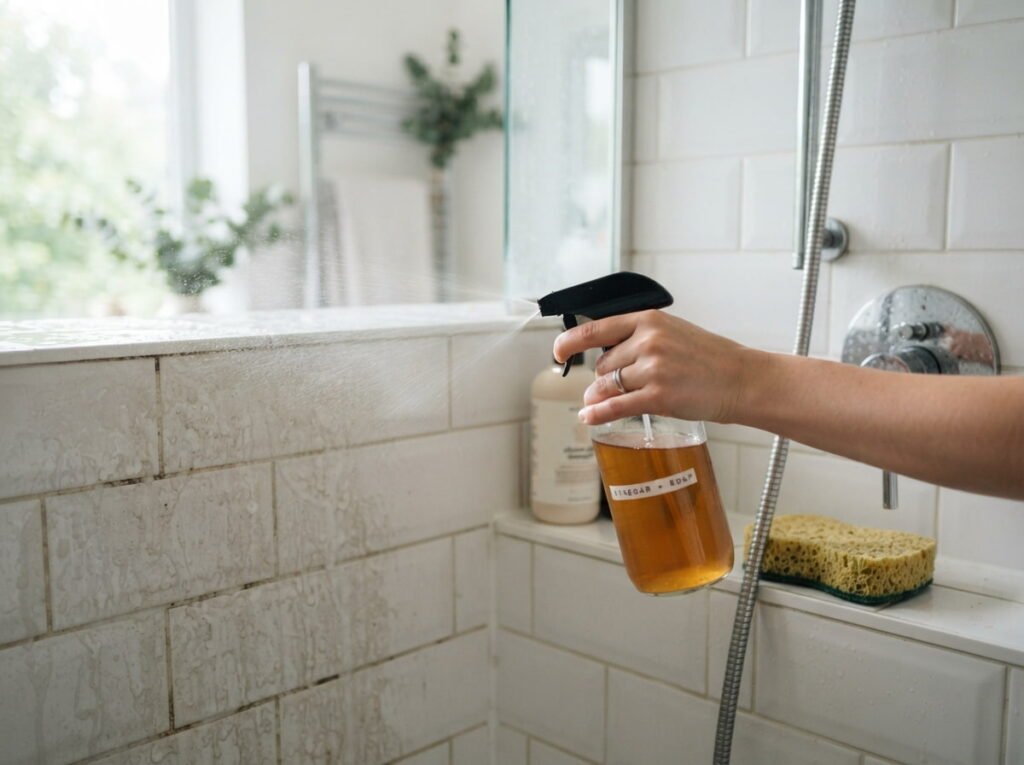
Soap scum is really just soap residue mixed with hard water minerals, which is why regular bathroom spray sometimes barely touches it.
Combine equal parts dish soap and heated white vinegar in a spray bottle and mist it over the buildup.
Warming the vinegar slightly before mixing makes it cut through scum faster than using it cold straight from the bottle.
2. Why a Pumice Stone Works Better Than Scrubbing at Toilet Ring Stains
A stubborn ring at the waterline usually means mineral deposits that regular toilet cleaner just isn’t built to handle, no matter how long you let it sit.
💡 Quick Tip
Wet a pumice stone and gently rub the ring in small circles. It breaks down mineral stains without scratching porcelain the way some abrasives can.
Keep the stone wet the entire time you’re using it, since a dry pumice stone is much more likely to leave marks.
3. Cleaning Grout Lines With a Paste Instead of a Store Bought Spray
Grout absorbs grime in a way tile itself doesn’t, which is why the lines between tiles often look dingy even after the tile surface looks fine.
Mix baking soda with just enough water to form a thick paste.
Spread it directly onto the grout lines and let it sit for ten minutes.
Scrub with an old toothbrush, then rinse with warm water.
Do this monthly on shower grout specifically, since it sees far more moisture and soap residue than grout anywhere else in the house.
4. The Trick for Getting Hard Water Spots Off Glass Shower Doors
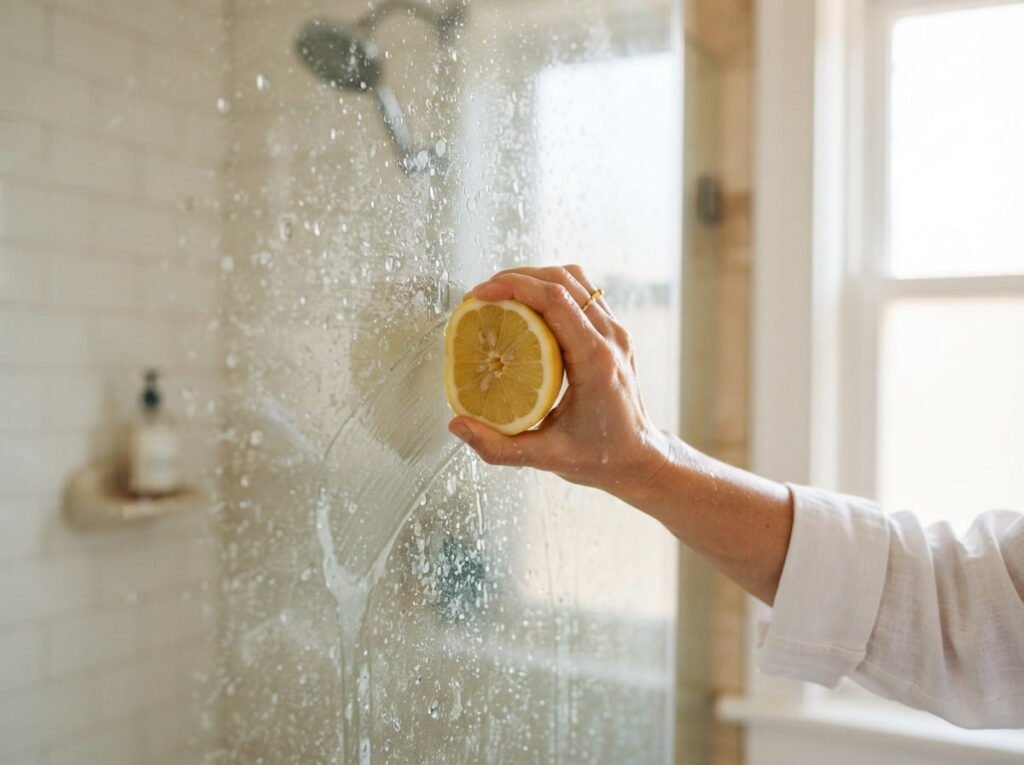
Hard water spots on glass are mineral deposits left behind after water evaporates, and they build up fast in homes with harder water specifically.
A squeegee after every shower is what actually keeps the spots from coming back once the glass is clear.
5. Why Your Shower Head Needs a Vinegar Soak, Not Just a Wipe Down
A shower head with weak, uneven water pressure usually has mineral buildup clogging the tiny holes, something a quick wipe on the outside never touches.
📌 Good To Know
Fill a plastic bag with white vinegar, tie it around the shower head, and let it soak overnight. The buildup dissolves without any scrubbing.
Rinse thoroughly in the morning and run hot water through it for a minute before showering to clear out any loosened mineral bits.
6. Cleaning the Toilet Tank Without Ever Touching a Scrub Brush Inside
The inside of a toilet tank rarely gets cleaned since it’s out of sight, but mineral buildup and mold can quietly collect there for years without anyone noticing.
Pour two cups of white vinegar directly into the tank.
Let it sit for a few hours, then flush a couple times.
Don’t use bleach in the tank, it can damage rubber parts.
Don’t scrub inside the tank, the components are fragile.
Do this every few months and the tank stays clean without ever needing a brush anywhere near the moving parts.
7. The Dryer Sheet Trick That Removes Soap Scum From Faucets
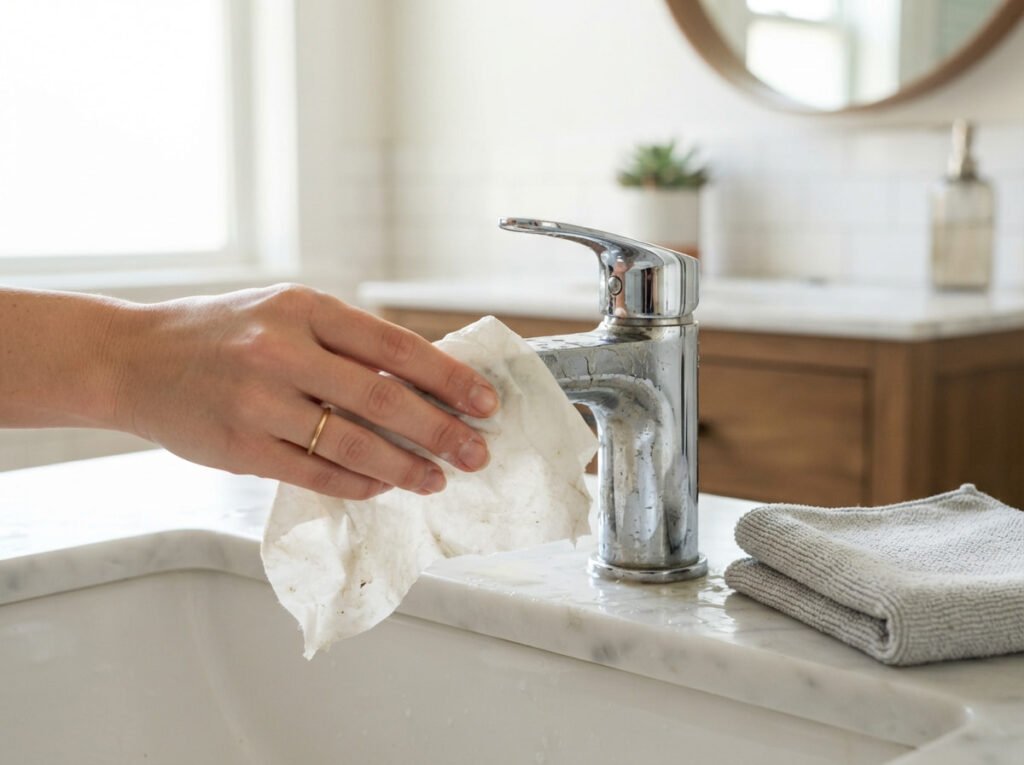
A used dryer sheet still carries enough residue to loosen soap scum on metal fixtures, making it an odd but genuinely useful bathroom tool.
Dryer sheet faucet trick
It works especially well on chrome fixtures, leaving a shine that plain water alone rarely achieves.
8. Wiping Down Bathroom Mirrors Without Leaving a Single Streak Behind
Bathroom mirrors streak more than mirrors anywhere else in the house, mostly thanks to hairspray residue and steam from hot showers building up over time.
Newspaper sounds unusual, but the ink and fiber combination leaves less lint behind than most paper towels do.
9. Why Your Bath Mat Needs Washing More Than You Think
A bath mat sits damp for hours after every shower, which makes it one of the most bacteria friendly textiles in the whole house even though it rarely crosses anyone’s mind.
⚠️ Watch Out
A bath mat left unwashed for weeks can hold onto mold and bacteria even if it looks and smells fine on the surface.
Wash it weekly on a hot cycle, and hang it to dry fully between uses instead of leaving it bunched on the floor.
10. Cleaning Between Bathroom Tiles Without an Old Toothbrush and an Aching Wrist
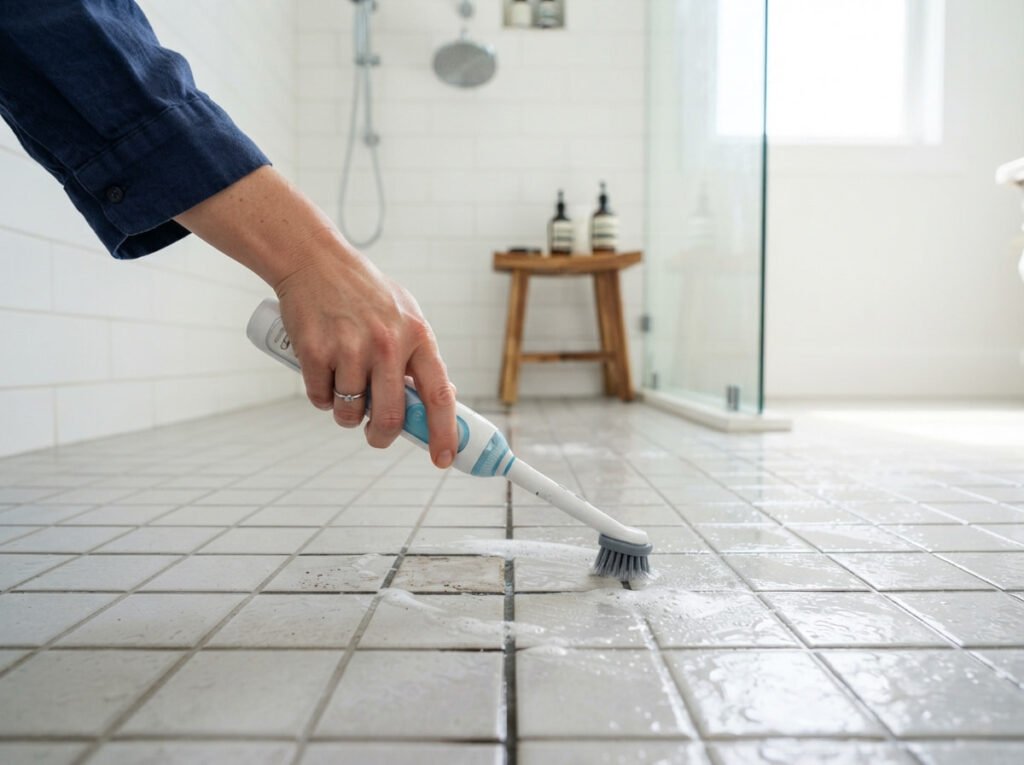
Scrubbing grout by hand with a toothbrush works, but it takes forever and your wrist feels it the next day, especially on a shower floor with a lot of grout lines.
An hour hunched over a toothbrush, wrist aching, grout barely lighter.
A grout brush attachment on an electric toothbrush, done in minutes.
A cheap replacement head with stiff bristles turns an old electric toothbrush into a grout scrubber that does the wrist work for you.
11. The Trick for Keeping Your Shower Curtain Liner Mildew Free
A moldy shower curtain liner is one of the most common bathroom complaints, and most of it comes down to a liner left bunched up and damp after every shower.
- Spread the liner out flat after each shower instead of leaving it bunched against the wall
- Run it through the washing machine monthly with a cup of vinegar added
- Replace liners every six months regardless of how clean they look
- ▸Spread the liner flat after every shower, don’t leave it bunched.
- ▸Wash monthly with a cup of vinegar added to the load.
- ▸Replace it every six months no matter how clean it looks.
Spreading it flat takes five seconds and does more to prevent mildew than any cleaner applied after the fact.
12. Why Baking Soda in the Toilet Bowl Works Better Than You’d Expect
A plain baking soda soak in the toilet bowl handles more than people give it credit for, especially for regular maintenance between deeper cleanings.
The fizzing reaction does a lot of the loosening work before the brush ever touches the bowl.
13. Cleaning a Cloudy Glass Shower Door Without Scratching the Surface
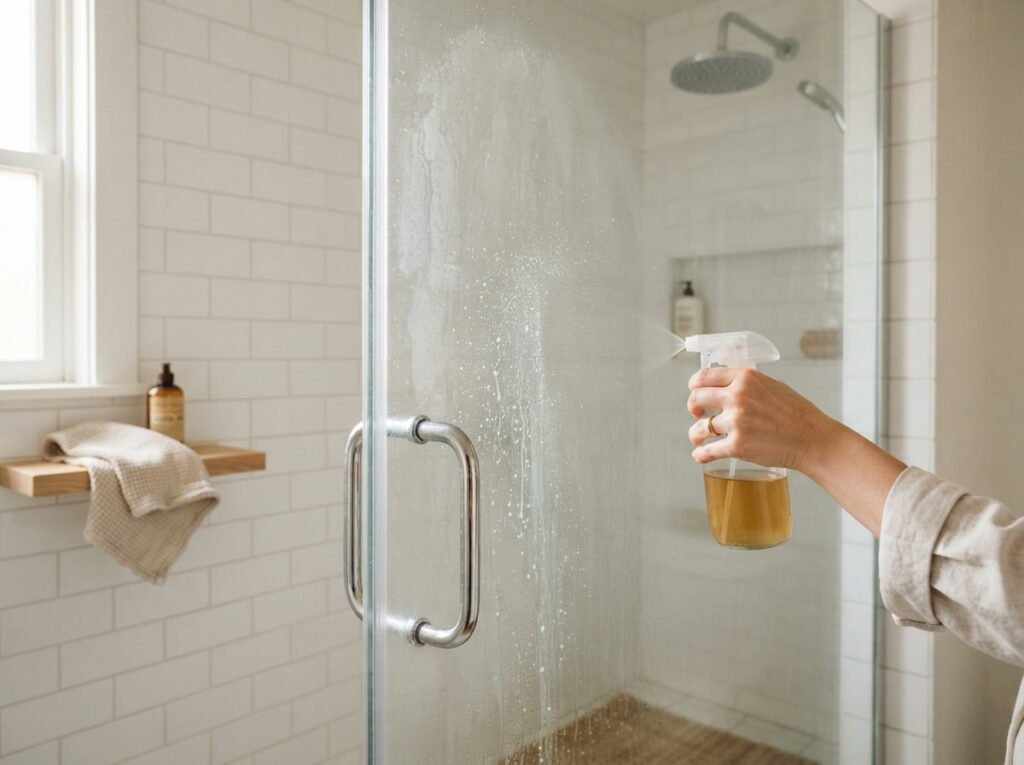
A cloudy shower door can look permanently ruined, but most of the time it’s just heavy mineral buildup sitting on the surface rather than actual damage to the glass.
Heat white vinegar until warm, not boiling, and pour into a spray bottle.
Spray the glass generously and let it sit for fifteen minutes.
Wipe gently with a soft cloth, no abrasive scrubbing needed.
Avoid anything with a rough texture on glass, since scratches make future buildup stick even faster than before.
14. The Simple Trick That Keeps Bathroom Drains From Clogging as Often
Hair and soap scum build up in bathroom drains faster than most other drains in the house, and by the time water’s draining slowly it’s usually already a real clog.
💡 Quick Tip
Pour a kettle of hot water down the drain weekly. It melts soap buildup before it has a chance to trap hair and slow things down.
Pair this with a cheap mesh drain cover that catches hair before it goes down at all, and clogs become much less frequent.
15. Store Bought Toilet Cleaner vs a Baking Soda and Vinegar Combo
Store bought toilet cleaners are formulated for tough stains and disinfecting, but that strength comes with a cost and a smell that isn’t always necessary for a regular clean.
| Store Bought Cleaner | Baking Soda and Vinegar |
|---|---|
| Stronger disinfecting for heavy stains | Gentle enough for weekly maintenance |
| Comes with a strong chemical smell | Costs pennies and smells like nothing |
Save the store bought version for tougher stains and let the natural combo handle everything in between.
16. Why Cleaning the Exhaust Fan Matters More Than Most People Realize
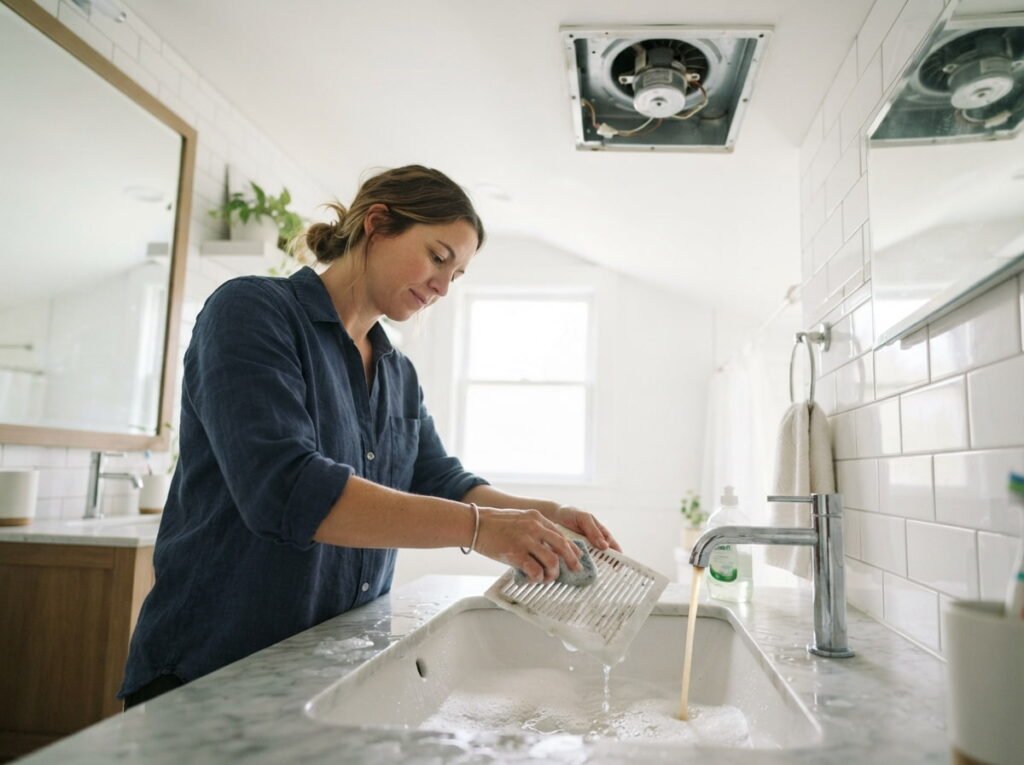
A dusty bathroom exhaust fan doesn’t just look neglected, it actually pulls less moisture out of the air the more buildup collects on the blades and grille.
Turn off power first, then remove and wash the grille cover.
Vacuum dust off the fan blades every few months.
Don’t spray liquid cleaner directly onto the motor housing.
Don’t ignore it, a weak fan leads to more mold elsewhere.
A clean fan does more to prevent bathroom mold than any spray or wipe down ever could on its own.
17. The Right Way to Clean a Loofah So It Doesn’t Hold Bacteria
A loofah hanging wet in a humid shower is one of the best environments for bacteria to grow, even though it feels like it’s just doing its job cleaning your skin.
A loofah hanging damp in the shower, used the same way for months.
Rinsed thoroughly, dried fully between uses, and replaced regularly.
Replace a loofah every three to four weeks, and let it dry completely outside the shower between uses rather than hanging in the steam.
18. Descaling a Showerhead With Something Probably Already Under Your Sink
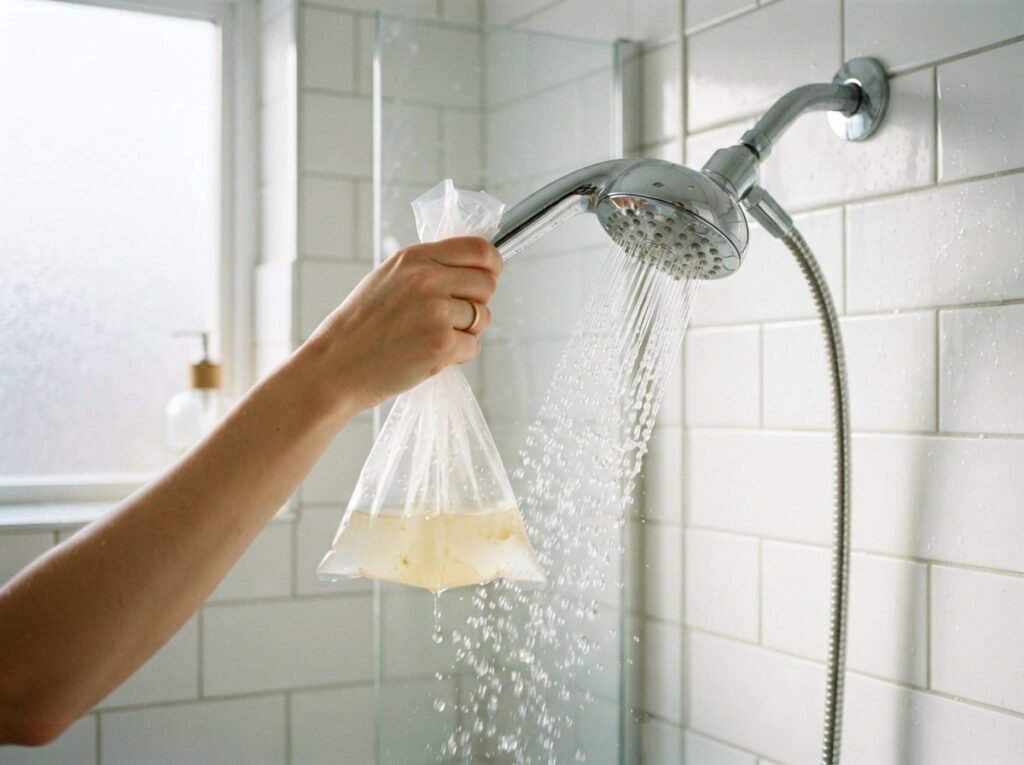
Weak, uneven water pressure from a showerhead is almost always mineral buildup clogging the tiny holes, and white vinegar handles it without any special tools.
Do this every couple months if your water is hard, and pressure should noticeably improve by morning.
19. Why Wiping the Sink With the Same Towel All Week Undoes Your Work
A hand towel used to wipe the sink for days on end spreads bacteria around more than it removes, no matter how often you rinse it under the tap.
Towel rotation basics
Having a few fresh towels on hand makes the swap easy enough to become a habit instead of something you keep forgetting.
20. The Two Minute Reset That Keeps a Clean Bathroom From Sliding Back
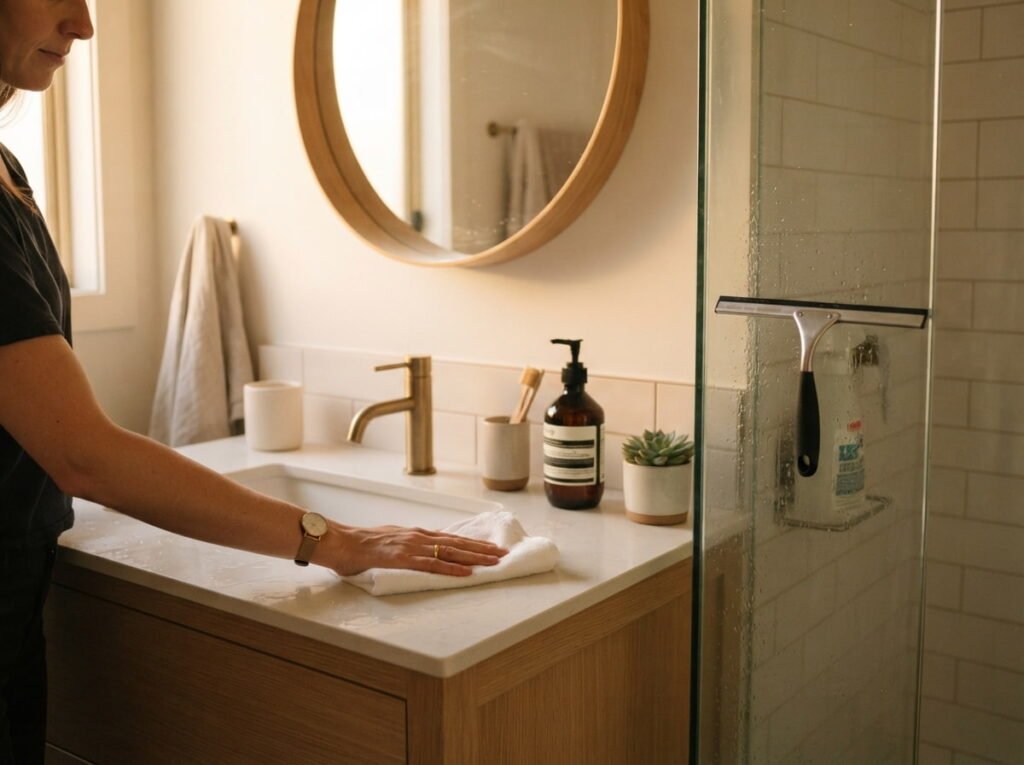
A freshly cleaned bathroom slides back into grime faster than you’d expect if nothing catches the small stuff between deeper cleanings.
A two minute wipe down of the sink and counter each night keeps a clean bathroom from undoing itself within a week.
Wipe the counter, squeegee the shower glass, and hang up any damp towels. Small enough to actually stick as a nightly habit.
Conclusion
The best bathroom cleaning hacks aren’t about buying more products, they’re about matching the right simple fix to the mess actually in front of you. A vinegar soak for a clogged showerhead, a pumice stone for a toilet ring, a two minute nightly wipe down that keeps everything from sliding back into grime.
None of this asks for a full weekend or a bathroom full of specialty sprays. Pick a few that solve what’s bothering you most right now, and let the smaller habits, like swapping towels or spreading the shower liner flat, become automatic over time.
Save this list for the next time your bathroom needs a little extra help.