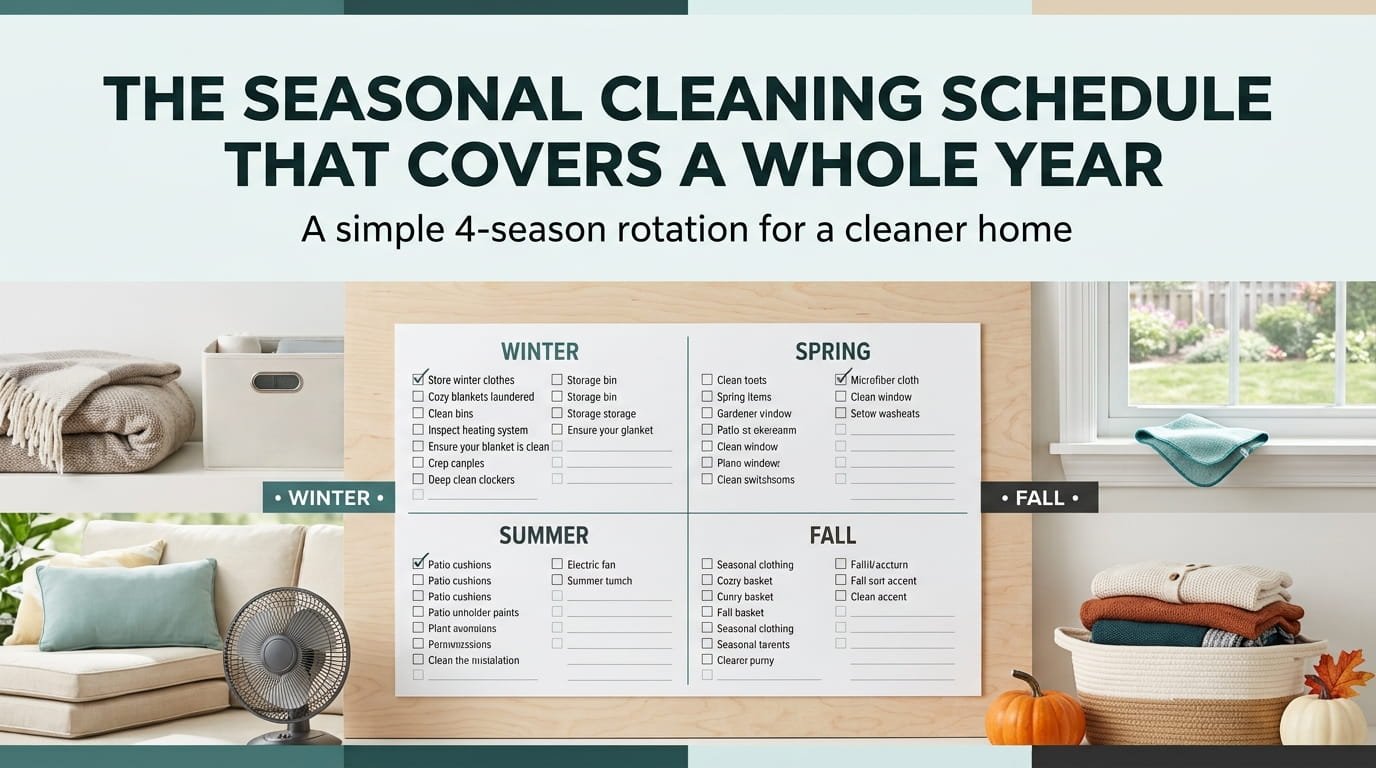
One massive cleaning weekend every spring sounds efficient until you’re three hours in, exhausted, and still staring at half a house left to go. That kind of burst effort rarely lasts, and by August most of what got scrubbed in March needs attention again anyway.
A seasonal cleaning schedule spreads the work across the whole year instead of cramming it into one exhausting stretch. Winter gets its own tasks. So does summer, fall, and the in between months nobody plans for. Nothing sits forgotten for eleven months just because it wasn’t on your radar in April.
This isn’t about doing more cleaning overall. It’s about matching each task to the season where it actually makes sense, so nothing gets missed and nothing gets crammed into a single overwhelming day. Think of it less like a chore list and more like a calendar you build once and reuse every year, adjusting as your home and your life change.
1. Why One Big Spring Cleaning Day Doesn’t Actually Work Long Term

Spring cleaning as a single event puts twelve months of buildup onto one weekend, which explains why it always feels harder than it should.
By the time October rolls around, the windows you scrubbed in April are dusty again and nobody’s thought about them since.
A task done once a year works better spread across four smaller sessions than crammed into one long day.
The rest of this list builds that rotation, one season at a time, so no single weekend has to carry the whole load.
2. Splitting the Year Into Four Deep Clean Seasons Instead of One Marathon
Four seasons, four short lists, each one sized for a normal weekend instead of a full day off work.
Winter, spring, summer, and fall each get their own short set of tasks tied to what actually makes sense for that time of year.
💡 Quick Tip
Keep each seasonal list to five or six tasks. If it grows past that, some of it belongs on next season’s list instead.
This is the backbone the rest of the article builds on, so it’s worth setting up before adding a single task.
3. What Belongs in the Winter Rotation While You’re Stuck Indoors Anyway
Cold weather keeps most people inside anyway, which makes winter the natural season for tasks that don’t need open windows or outdoor access.
Winter rotation tasks
These tasks work well split across a few evenings rather than one long day, since heating bills already make winter feel expensive enough.
4. The Spring Zones That Deserve Attention Once the Windows Open Again

Fresh air changes what feels possible. Tasks involving open windows, aired out rugs, or strong cleaning smells finally make sense once it’s warm enough to ventilate a room properly.
Waiting for spring on these isn’t just tradition. Open windows genuinely make the work easier and the results last longer.
5. Why Early Summer Is the Right Window for Outdoor Adjacent Tasks
Doormats, porches, and outdoor furniture cushions collect a season’s worth of grime, but tackling them in the cold makes no sense when everything just gets dirty again in the wind.
Early summer, before the heat peaks, is the sweet spot for this kind of task.
Scrub down doormats and entryway tile before summer traffic picks up.
Hose down or vacuum outdoor cushions before they’re used all season.
Wipe down porch light fixtures where bugs collect over the year.
Doing these before the heat sets in also means less sweat and fewer bugs while you work.
6. What Fall Cleaning Should Actually Prepare Your Home For
Fall isn’t just about pumpkins and cooler air. It’s the last real chance to prep the house before everyone starts spending more time indoors again.
Getting this done before the first cold snap means one less thing competing for attention once everyone’s stuck inside together.
7. Building a One Page Yearly Calendar You Actually Check
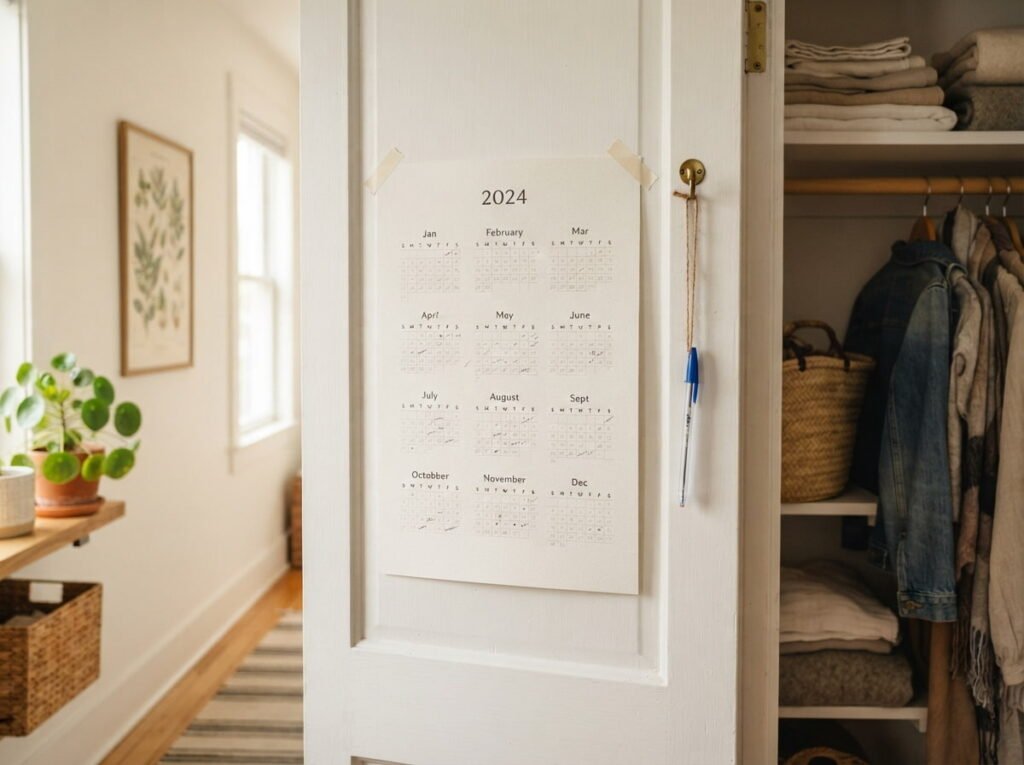
A cleaning plan scattered across four separate lists is easy to lose track of by the second season, especially once the excitement of setting it up wears off.
One page with all four seasons visible at once solves that, since you can see the whole year without flipping through anything.
| Four Separate Lists | One Yearly Page |
|---|---|
| Easy to lose or forget by summer | Whole year visible at a glance |
| No sense of the bigger pattern | Easy to spot a season that’s too packed |
Tape it inside a closet door or keep it in the front of a planner you already flip through regularly.
8. Why Assigning One Deep Task Per Month Beats a Single Overwhelming List
Twenty tasks sitting in a single seasonal pile still feels like too much, even when they’re spread across three months technically.
Breaking it down to one real deep task per month makes the whole system feel manageable instead of looming.
Pick one deep task per month, like the oven in January or the closets in April.
Give it a specific weekend, not just “sometime this month.”
Don’t stack three deep tasks into the same weekend.
Don’t leave a whole season’s tasks undated until the last week.
One task a month adds up to twelve real deep cleans a year without a single weekend feeling like a marathon.
9. The Rooms That Only Need Attention Twice a Year, Not Monthly
Not every space needs the same rotation. The guest room, the attic, and the linen closet rarely see enough use to justify frequent attention.
📌 Good To Know
Low traffic spaces like guest rooms and attics only need a real deep clean twice a year, spring and fall works well for most homes.
Putting these on the same monthly schedule as high traffic rooms wastes time better spent elsewhere in the house.
10. Rotating Which Season Gets the Closets So Nothing Gets Skipped Forever

Closets have a habit of getting pushed to “next season” indefinitely, since they’re not visible the way a kitchen or living room is every day.
Closets pushed to “next season” for two years running, still untouched.
Assigned a fixed season, so they’re addressed once every year without fail.
Winter works well for closets specifically, since you’re already swapping out seasonal clothing anyway.
11. Why Baseboards and Vents Belong on a Seasonal List, Not a Weekly One
Baseboards and vents build up dust slowly enough that checking them weekly wastes effort on something barely changed since last time.
- They collect dust at a pace that only shows up after several weeks
- A seasonal pass catches everything a weekly check would miss anyway
- Vents specifically affect air quality more than most people realize
- ▸Dust builds slowly enough that weekly checks waste time.
- ▸A seasonal pass catches everything weekly checks would miss.
- ▸Vents affect air quality more than most people realize.
Fall is the best time for this one, right before heating systems start running full time again.
12. Matching Deep Clean Tasks to the Weather Instead of the Calendar Date
The calendar says spring starts in March, but a late cold snap can make outdoor tasks pointless no matter what the date says.
Build in a two week buffer around each seasonal task so a stretch of odd weather doesn’t throw off the whole rotation.
13. The Appliance Deep Clean Rotation Most People Forget Entirely
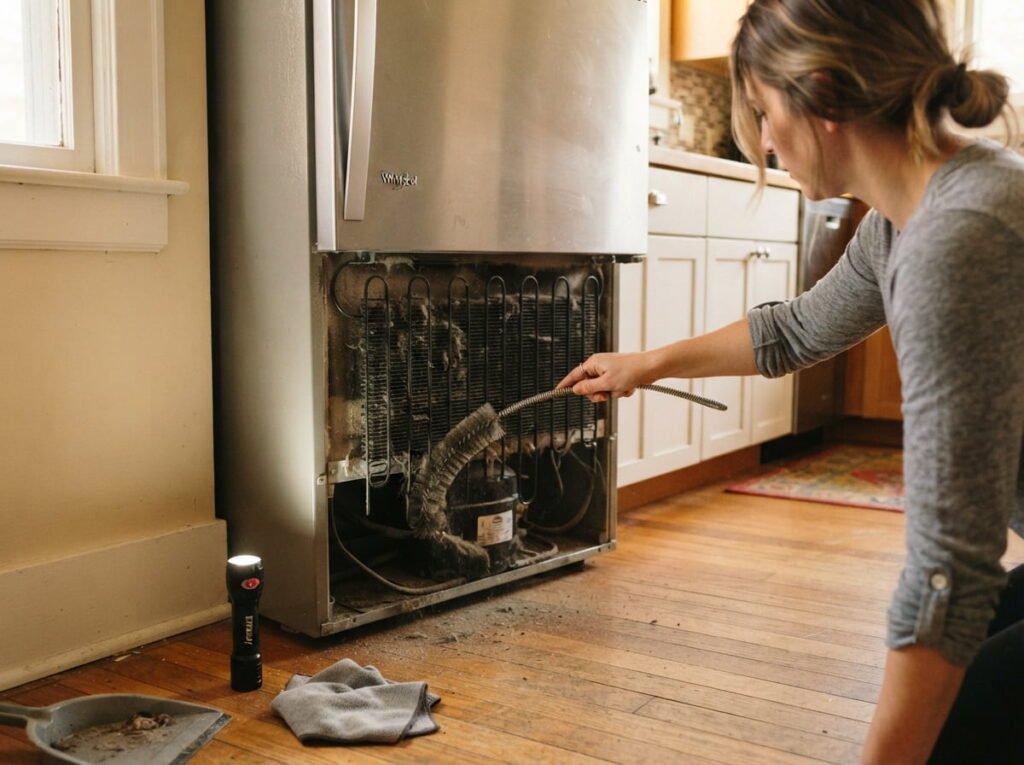
The oven gets attention because spills are obvious. The dishwasher, washing machine, and refrigerator coils rarely cross anyone’s mind until something smells off or stops working right.
Appliances to rotate in
These tasks take fifteen minutes each but rarely happen unless they’re written down somewhere specific.
14. Why Reviewing Last Year’s Rotation Makes This Year’s Plan Better
The first year of any seasonal system is really just a rough draft, even if it feels solid at the time you build it.
Same rigid rotation every year, regardless of what worked or didn’t.
Adjusted rotation based on which months actually got skipped last year.
Spend twenty minutes each December looking back at which months got skipped, then shift those tasks somewhere more realistic.
15. Building in a Buffer Month for the Season You Always Fall Behind On
Everyone has one season that consistently falls apart, whether it’s a busy work stretch, holiday chaos, or just the season you dread most.
⚠️ Watch Out
Trying to force a busy season to keep pace with the others usually means the whole system gets abandoned instead of just one month.
Give that one season fewer tasks on purpose, or push its work into a lighter buffer month instead of pretending it’ll go differently this year.
16. The Difference Between a Seasonal Task and a Once a Decade Task
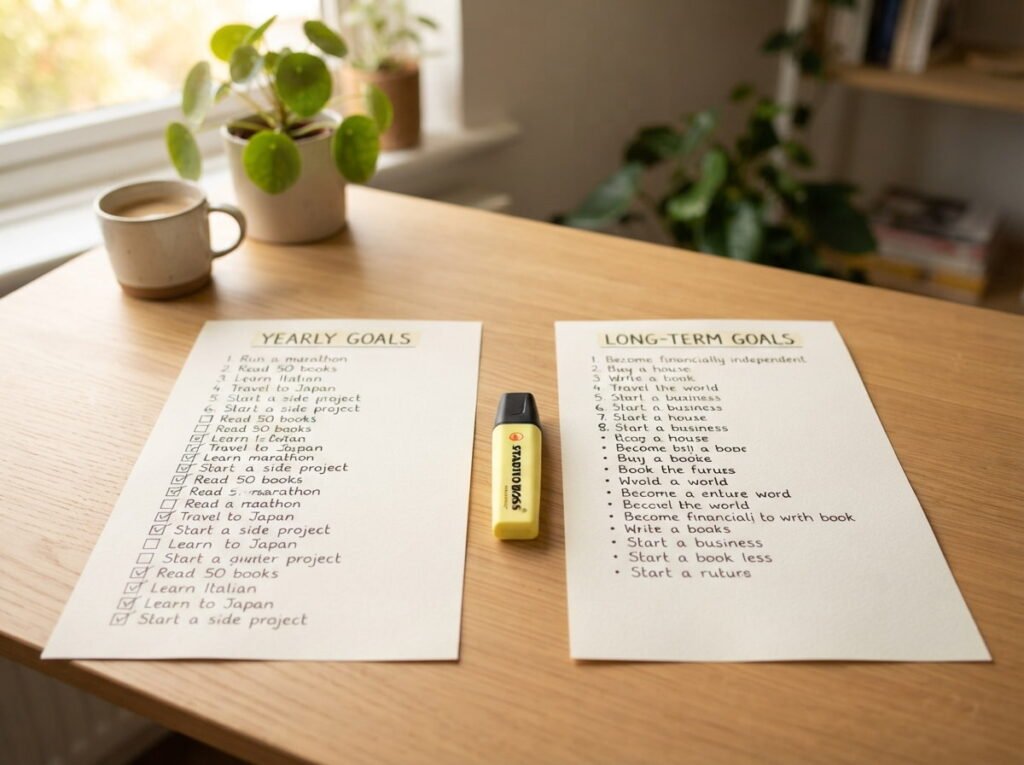
Not everything on a “big cleaning” mental list actually needs yearly attention. Some tasks get lumped into seasonal rotations when they really only need doing every five or ten years.
Keep true seasonal tasks like vents and closets on the yearly rotation.
Move rare tasks like deep grout resealing to a separate long term list.
Don’t add rare tasks to every seasonal list out of guilt.
Don’t let a once a decade job crowd out tasks that need real yearly attention.
A separate long term list, checked once a year, keeps these from cluttering up the rotation that’s supposed to stay light.
17. Color Coding Your Calendar by Season So the Whole Year Is Visible at a Glance
A calendar with every task written in the same black ink asks you to read line by line just to figure out what season you’re even looking at.
One glance at the calendar tells you which season is coming up and what’s left to finish, without reading a single word.
18. Why Pairing Seasonal Tasks With Existing Holidays Makes Them Easier to Remember

A task tied to “sometime in October” is easy to lose track of. A task tied to Halloween prep or the week before Thanksgiving sticks because it’s anchored to something already on your radar.
Pick a holiday or seasonal marker close to when the task is due.
Write the task next to that marker on your calendar instead of a plain date.
Let the holiday itself become the yearly reminder going forward.
Clocks changing, the first frost, or back to school season all work as natural anchors depending on the task.
19. Printable Calendar vs Phone Calendar for Tracking a Yearly Rotation
A phone calendar sends reminders automatically, but a notification is easy to swipe away during a busy week and forget entirely.
| Phone Calendar | Printable Calendar |
|---|---|
| Reminders are easy to dismiss and forget | Stays visible on a wall or inside a planner |
| Syncs across devices automatically | Easy to glance at the whole year at once |
Some people do best combining both, a printed yearly overview plus phone reminders the week each task is actually due.
20. Closing Out a Season the Right Way Before Starting the Next Rotation

Jumping straight into the next season’s tasks without checking off what’s left from the current one is how small jobs quietly pile up unfinished.
Spend ten minutes closing out each season, finishing or rescheduling anything left, before starting the next one.
A clean handoff between seasons is what keeps the whole rotation running for years instead of quietly falling apart after one.
Conclusion
A seasonal cleaning schedule works because it matches the task to the time of year instead of forcing everything into one exhausting weekend. Winter gets the closets. Spring gets the windows. Fall gets the vents before heating season starts. Nothing sits forgotten for months just because it wasn’t on your mind at the right time.
The system doesn’t need to be perfect the first year. Review what worked in December, shift the tasks that kept getting skipped, and let the rotation get a little more realistic each year. A plan that bends around your actual life will outlast one that demands perfection from the start.
Save this list for the next time you’re ready to build a rotation that actually holds up all year.